
The Yellow Social Media Report 2018 states:
Multiplying average time spent by average usage occasions indicates that the typical user is spending almost 10 hours a week on Facebook.
Do that for an entire year? That’s 520 hours (nearly 22 days) of your life.
Now stop and ask yourself this question:
Is this time well spent?
Probably not.
As a new years resolution, I decided that I wanted to spend less time on social media and my phone.
Instead of shedding kilograms of fat, I started shedding hours of wasted time online.
Now you may laugh and say, “Ha! New years resolutions don’t work. No one ever sticks to them!”
But I’m here to tell you that I didn’t fall off the bandwagon on day 3 of the new year.
It’s been 3 months and I’m still going strong with my digital diet.
But it required a little prep work to be able to stick to this.
So here’s what I did, step-by-step, to reclaim the precious hours of my life and scale back my time on social media:
When someone sets out to lose weight, it’s a good idea to learn about what foods to eat (and avoid) and exercises to do.
So before going on my digital diet, I set out to learn all about technology and my brain. I created my own crash course/curriculum to do this.
Over several months, I read a number of books and articles and watched documentaries that explored what smartphones and social media are doing to our brains.
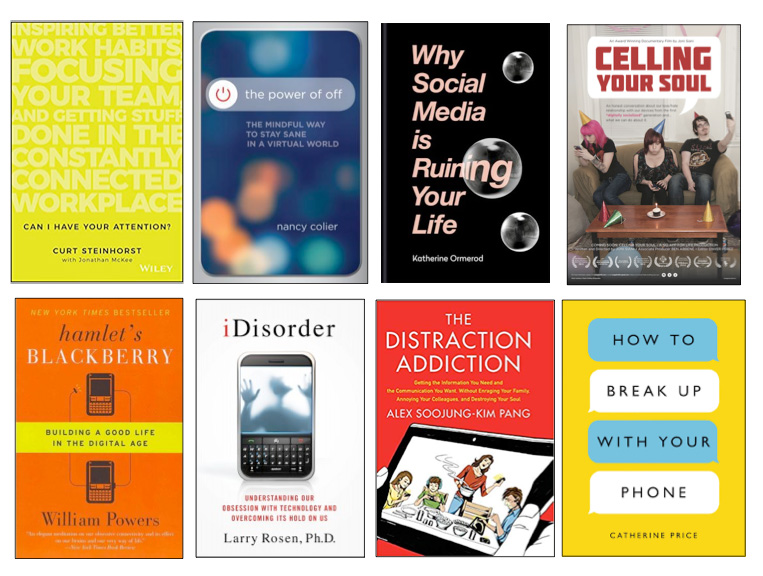
Here is a list of some of the resources I accessed:
• Can I have your attention? by Curt Steinhorst
• The power of off by Nancy Colier
• How to break up with your phone by Catherin Price
• Why social media is ruining your life by Katherine Omerod
• Celling your Soul (Documentary)
• Hamlet’s blackberry by William Powers
• iDisorder by Larry Rosen
• The distraction addiction by Alex Soojung-Kim Pang
These resources gave me knowledge. And that knowledge gave me incredible power.
You see, having an awareness of the strategies app developers use to hook us in built my psychological resistance. I knew what I was up against. I was now armed with strategies to better manage these addictive technologies.
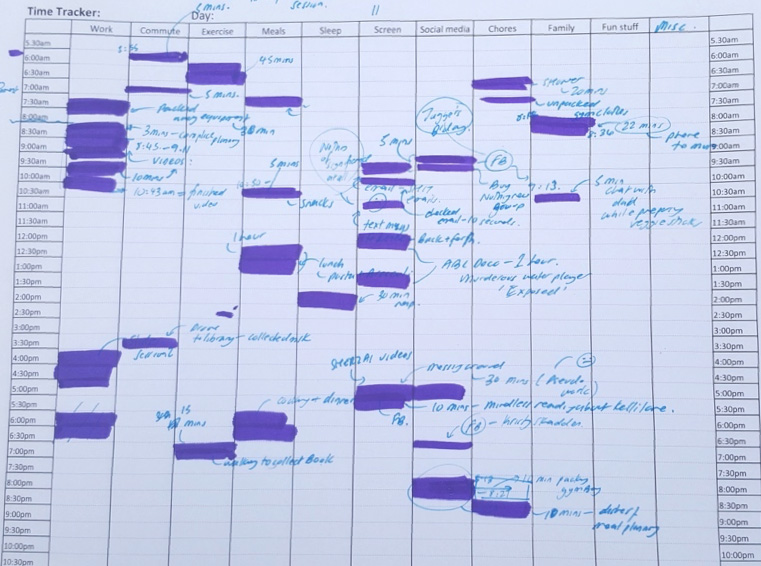
For several days, I tracked every single thing I did and for how long I engaged in the task. Every time I checked my phone or social media, I wrote it down.
I also started to notice how I felt before and after going on social media. To my surprise, I often felt flat or anxious after spending time on Facebook.
Did tracking my time and emotions feel like a chore? Yes! Absolutely.
However, the data I gathered gave me a good dose of reality.
A few things became clear to me, which I’d previously been in denial about:
• I was spending too much time on social media
• I was messing with my emotions and energy levels by going on there
• I was easily distracted, especially when I was doing challenging work
• I was mindlessly using my devices like an addict
• Yes, I was an addict!
Those harsh realisations propelled me to take the next few steps.

Over the Christmas break, I stayed in a shack out in the bush for a few days.
I had no phone reception in this location. I also left my laptop at home.
Basically, without planning to do so, I experienced a digital detox.
The first day was a bit hard going. I experienced some withdrawal symptoms. I felt slightly anxious and irritable. The urge to check social media and my email was there but I couldn’t. So I just noticed the thoughts and feelings come and go.
The good news is it didn’t take long for my brain to recalibrate.
I started to feel calmer and more in control. Slowly but surely, I felt like I was reclaiming my brainpower and regaining my focus.
When I arrived home from my digital detox, I contemplated deleting my Facebook account. I sat down and drafted a final post saying goodbye to my Facebook friends (“See you in the real world folks!”). But I never posted it.
Ultimately I decided to keep my Facebook account. Why? Because it’s a useful tool. I use it regularly for my business, to organise community events and to communicate with people.
I remembered the words of philosopher Henry David Thoreau:
Men have become the tool of their tools.
I figured I just had to get better at using my digital tools (i.e. email and Facebook). Intellectually, I knew what I needed to do. Now I just needed to implement these strategies.
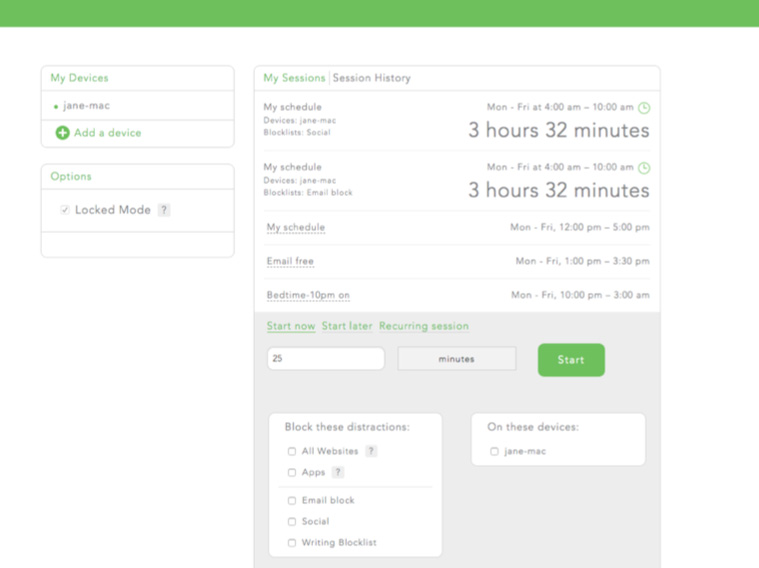
So I setup an Internet Blocker app called Freedom. I configured the settings so I would be locked out of social media for the majority of the day.
This one off, one time action (i.e. setting up the blocker app) turned out to be a game changer. I no longer had to decide whether to go on Facebook or not. The app was doing the hard work for me.

Have you noticed that everyone has perfect, amazing lives on Facebook and Instagram?
It’s easy to forget that people generally only share the best bits of their lives on social media. It’s all a big show. Everyone is constantly in performance mode!
Why is this a problem?
One thing I had learnt back at Step 1 (the crash course/education stage) is that it’s in our biology to trust what we see with our eyes. This makes living in a highly curated Facebook or Instagram world slightly dangerous.
So I did several things to protect my psyche:
1) I unfollowed some people;
2) I deleted some people; and
3) I started following inspiring experts (e.g. world leading neurologists, comedians and artists).
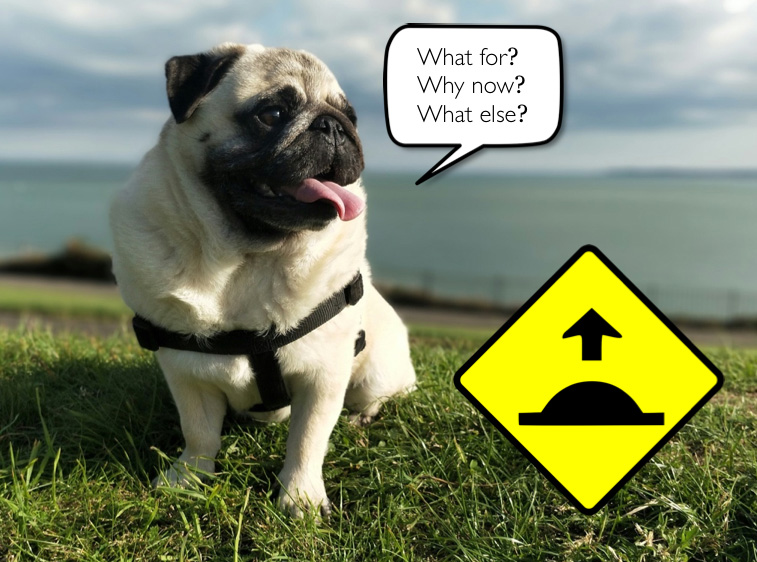
In her fantastic book How to break up with your phone Catherine Price talks about the need to install speed bumps when going on a digital diet.
Speed bumps are small obstacles that force you to slow down and think carefully before going on your phone.
So here are a few speed bumps I installed:
This is a simple acronym to get you thinking about three questions before checking your phone.
W: What for? What are you picking up your phone to do?
W: Why now? Why do you have to do it now? Can it not wait?
W: What else? What else could you do right now besides check your phone?
Another strategy I employed was asking myself this simple question:
How am I going to feel after going on here [social media]?
Based on experience, I knew the answer was likely to be one of the following:
• “Anxious”
• “Depressed”
• “Flat!”
• “Meh”
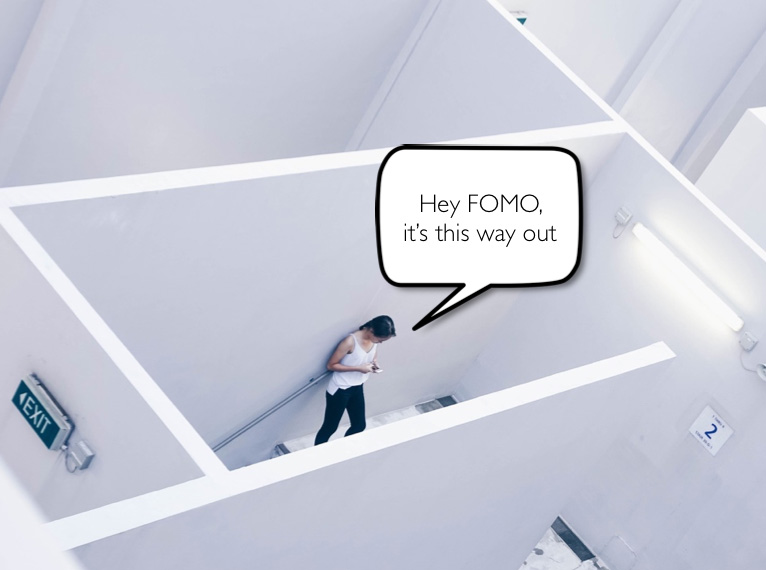
Instead of worrying about what I could be missing out on online, I reframed my thinking.
I contemplated what I was missing out on in real world.
If I spend my precious life energy on social media, what am I going to be missing out on in real life? What awesome new skills and projects can I work on if I don’t go online?
I brainstormed a list of screen-time alternatives:
• Learn a new language
• Learn to cook plant-based meals like a pro
• Take my fitness and health to the next level
• Write a book
• Create artwork
• Write a comedy show
• Create new talks and online courses
• Participate in online courses
• Get through my growing stack of library books
By spending less time online this year, I’ve been able to do the following:
• I created a new product (the Procrastination Emergency Kit)
• I’m mastering the art of plant-based cooking
• I created a new mind map on strategies for plant-powered living
• I am learning a new language (Italian)
• I’m exercising more
But not only that, I feel much, much better about myself. Why?
• I’m not constantly making upward comparisons
• I’m no longer multi-tasking (switching from my work to Facebook)
• I’m able to focus for a sustained period of time
Going on a digital diet has been life changing for me. I’ve reclaimed my mental environment. I’m in control of technology rather than technology being in control of me.
Like someone who starts eating lots of vegetables and exercising after being sedentary and eating junk food for years, I feel fantastic. So even though they say most diets don’t work, the digital diet is one diet that I will be sticking to!

The other day, I was getting my haircut when my hairdresser told me something her 15-year-old son had said. His words took her completely by surprise. He said:
“Mum, I need to try harder this year.”
I hear those words a lot. Try harder.
I hear them from students who want to do better at school and from teachers who are trying to motivate students (“You need to try harder”).
But what does it actually mean to “try harder”?
The problem is that this advice is too vague and abstract.
If you don’t have a clear picture of what ‘trying harder’ looks like, you’re in dangerous territory because you’re attempting to motivate yourself towards an abstraction.

In the book Tiny Habits, Professor BJ Fogg explains the problems associated with motivating yourself to achieve a vague goal. He writes:
“You’ve probably seen a well-meaning public-health poster in the doctor’s office that shows lots of colourful vegetables with the headline: EAT THE RAINBOW!
At first glance, you think: Yes, I need to eat better food. But then you’re not sure what practical steps to take. How much green and how much red? That means salad and apples, right? It can’t mean mint ice-cream and red licorice, can it? You are motivated to “eat the rainbow,” but maybe you don’t know how. You feel frustrated and end up being a little hard on yourself.”
I didn’t want my hairdresser’s son to feel frustrated and annoyed with himself. He clearly had good intentions.
I asked my hairdresser, “What does trying harder look like for your son? If he’s trying harder, what is he doing?”
She said she wasn’t sure. So, I kept asking questions.
“Does it look like him sitting down and testing himself with flashcards before a test? Taking notes in class? Listening to the teacher instead of chatting with his mates?”
The answer was clear. She said, “Listening to the teacher! He needs to start listening to his teachers.”
I also mentioned that it would help if he learnt his teachers’ names (you’d be surprised how many teachers tell me their students don’t know their names).
Remembering a teacher’s name, staying focused on what they have to say, resisting distractions, taking notes and reading your textbook may sound easy, but these are skills that require continuous practice.
If you’re not used to doing them, they can feel hard.
Even with years of practice under my belt, understanding new ideas still feels hard. These days, reading feels like weightlifting for my mind!
After getting my haircut, for the next 24 hours, I kept thinking about those words “try harder”.
Something was bugging me about it because I felt it wasn’t helpful to tell yourself to “try harder”. . . and then, like a bolt of lightning, the answer hit me: my hairdresser’s son doesn’t need to try harder. He needs to focus on doing a few specific hard things.

By ‘specific hard things’, I mean concrete behaviours he can do right now (or at a specific point in time) to improve his understanding of his school subjects.
For example, if he wanted to start a home study routine, here are some concrete behaviours I’d recommend he try:
These are just a few behaviours that come to mind when I think about “trying harder” with your studies.
Doing these concrete behaviours just once won’t make you go from good to great. But you’ll be surprised by how much meaningful progress you can make in a single, effective study session.
We live in a world where comfort and convenience are increasingly normalised. We expect things, including learning, to be easy.

You don’t have to cook (thank you Uber Eats).
You don’t have to move (thank you car).
You don’t have to experience boredom (thank you social media and Netflix).
You don’t even have to use your brain anymore (thank you ChatGPT and Claude).
By outsourcing tasks that require physical and cognitive effort, we may save time, but there are hidden costs.
People are losing their skills, destroying their health, and atrophying their brains, all while being flooded with unhealthy levels of dopamine. I’d even go as far as saying that people are losing their lives and what it means to be human.
In every moment, we have a choice: we can do the easy thing that gives us a quick dopamine hit, or we can do the hard thing that gives us a slow and healthy release of dopamine.

When you wake up, you can scroll on your phone or do some physical activity.
At the end of the day, you can order takeaway that is engineered to light up the reward pathways in your brain, or you can prepare a healthy homemade meal.
When you’ve got a spare 30 minutes, you can watch some YouTube or go for a walk outside.
You can use ChatGPT to write your essay, or you can use your brain and build your skills.
You can talk to an AI chatbot and have a friction-free relationship, or you can organise to meet up with a friend.
Every time you choose the hard thing over the easy thing, you build your confidence. You can trust yourself to do hard things and survive them. Over time, as you build your skills, those hard things don’t feel as hard as they once did.
For instance, if the Internet goes down and you’re not dependent on ChatGPT, you know you’ll be okay. You can rely on yourself to think and entertain yourself (thank you brain).
This is why I’m committing to doing hard things this year. I’m challenging myself, and I know I’ll be better for it.
Just to be clear, I’m not talking about self-harm or inflicting extreme pain on myself.
I’m referring to activities that bring up a cringey discomfort and make me think, “Ahhh, I don’t want to do this!”.
These include activities that require sustained focus and/or mental and physical effort, such as writing an article, going for a run, riding my bike to the shops, and meditating.

The simplest way is to ease into doing those hard things. Turn those hard things into tiny habits.
Here is a list of tiny habits for hard things I’m focusing on doing:
Some of these things may not seem like much, but all of these behaviours require mental and physical effort. Remember, there’s a much easier alternative: sitting, tapping, swiping, and scrolling on your phone.
For instance, I don’t need to chop vegetables and cook my meals. I could eat out or order food to my door. This would save me time and effort (cooking my meals can feel like a part-time job).
But I know I would suffer at some point (physically, mentally, and financially).
Chopping vegetables and cooking take effort, but it helps me cultivate calm. When done with a focused mind (not listening to podcasts or talking on the phone), I really enjoy these activities.
If I were to outsource these activities, I’d be going backwards, because I’d most likely lose my valuable cooking skills over time.
Similarly, writing articles like this one feels hard. But hard doesn’t mean bad. It’s satisfying to focus my mind, wrestle with ideas, and write.
Many of us mistakenly believe that an easy life is a better life. But it’s not. A life where you are constantly pursuing pleasure and taking the easy path can lead to anhedonia.
Anhedonia is the inability to experience pleasure in things that were once pleasurable (e.g., a homecooked meal or a sunset). Some people describe it as life in greyscale.

It turns out the more pleasure we pursue, the more pleasure we need and the more pain we experience.
It may sound counterintuitive, but pursuing hard things makes you feel more motivated and more positive about life.
As humans, we want to challenge ourselves. We’re wired for it.
Psychiatrist Dr Anna Lembke encourages us to take on difficult, even painful, activities as a way of “aligning our primitive wiring with our modern ecosystem”. She writes:
“We are survivors. We’re wired for struggle, especially of physical nature. Yet we live in a world in which we’re largely insulated from pain. And not just pain, but also discomfort of any kind. Everything is supplied to us at the touch of a finger. Now we struggle just to get up off the couch. Our modern ecosystem incentivizes inactivity. Inactivity breeds lethargy. Lethargy breeds anxiety and depression. We must fight against this.”
So, forget trying harder. Work out a few hard things you want to do and focus on doing them instead.

It has made me a calmer, better focused, happier, more mentally flexible, and creative person.
It takes anywhere from 20 to 45 minutes to do this practice, but trust me, this morning practice is time well spent.
It usually feels hard at first, but by the end, I feel strong, confident, and clearer in my thinking. As clichéd as it sounds, this practice helps me be the best version of myself.
What simple morning practice am I talking about?
I’m talking about my movement practice.
Before I do any work (e.g., check my email or messages, read the news, or deliver a presentation), I make myself do some physical activity.
I usually run on a treadmill, ride a stationary bike, or lift heavy weights.

I can’t say I’m leaping out of bed with joy at the thought of exercising. There’s always a little voice in my head that grumbles, “Ugh, do we have to do this?”
But I push forward and lace up my running shoes because I know that by the end, I’ll feel amazing.
Twenty minutes into my movement practice, my husband says he can hear me ‘whooping’ with joy from the other end of the house.
The natural ‘runner’s high’ people talk about is real.
I can relate to Cultural Historian Vybarr Cregan-Reid when he describes his running highs in the following way:
“They are as strong as bootleg whisky. They make you want to stop everyone that you pass and tell them how beautiful they are, what a wonderful world this is, isn’t it great to be alive?”
The amazing thing is that a year ago, I couldn’t run for more than a minute without being completely out of breath. Now I can run for 45 minutes nonstop. And I’m hooked.
How did I get here? And more importantly, how can you cultivate a movement practice that leaves you feeling energised, less stressed, and in a great mood?
Do you remember, as a child, running around the playground, swinging on the monkey bars, and playing games like Chasey?
You did these things naturally and effortlessly, and you enjoyed doing them. No one had to force you to move.
You ran for the sake of running. You ran because it made you feel good and fully alive.

This is what movement does for me. It makes me feel excited about life.
I’ve discovered this is the key to building a long-lasting movement practice: you have to find delight in moving your body. And you have to hang in there for long enough for the delight to show up.
You see, the delight probably won’t be there straightaway. Instead, what you’ll usually find is that there’s some discomfort and resistance for the first 10 – 15 minutes of your movement practice.
But if you persist, trust me, the delight will come knocking at your door and sweep through your house like a group of wild party animals.
Just to be clear, you don’t have to run to experience this delightful feeling. Any moderate-intensity physical activity, such as riding a bike, dancing, and swimming, will do the job.
In the book The Joy of Movement, psychologist Dr Kelly McGonigal makes it clear that you can achieve a natural high from any sustained physical activity.
She says the key to experiencing this ‘exercise induced euphoria’ is to put in the time and effort. She writes:
“You just have to do something that is moderately difficult for you and stick with it for at least twenty minutes. That’s because the runner’s high isn’t a running high. It’s a persistence high.”

The thing about movement is that it takes effort. But that effort is what delivers the delight!
When you do hard things for a sustained period of time, your brain rewards you by serving up a cocktail of feel good chemicals, such as dopamine, endorphins, serotonin, noradrenaline, and endocannabinoids.
From an evolutionary perspective, this makes sense.
Life for our ancient ancestors was hard work and often dangerous. To survive, they had to forage and hunt for food, find water, build shelters, and run from wild predators.
These neurochemical rewards (e.g, dopamine and serotonin) would keep them going. And keep going they did!
Hunter-gatherers clocked up thousands of steps each day. They were constantly on the move because their survival depended on it.
But here’s what I find really interesting . . .
Despite being incredibly active, hunter-gatherers’ brains were wired for comfort and laziness. This wiring served them well, especially when food was hard to obtain. Conserving energy through sedentary behaviour was a survival trait.
This explains why most of us feel resistance to the idea of physical exercise.
Fast-forward 30,000 years to today: our modern environment is completely different from that of our ancient ancestors, but our brains are still the same (i.e. wired for comfort).

Want food? You can order it with the tap of a button. In our modern world, you don’t have to move much, if at all.
Because of our ancient wiring, some resistance to physical activity will always be there. We just have to push ourselves to do the hard things first (e.g., exercise), knowing that the rewards will come if we persist for long enough.
As you start moving your body, during those first few minutes, you may find yourself thinking, “Why am I doing this? This doesn’t feel good!”
To which, I say: Can you feel your heart pounding in your chest? Can you hear yourself huffing and puffing? Is that sweat dropping off your face and onto the ground?
Fabulous! You’re on the right track. Hang in there. It won’t be long before your mood starts to shift in a dramatic way.
I have come to love the feeling of my clothes soaked in sweat after I exercise. There was a time when I thought that was gross. But not anymore.
Those sweaty, stinky clothes are evidence that I’ve worked hard. It’s proof that I pushed myself and the feel good chemicals are flowing through my brain and will continue to do so for the next few hours.
In The Official Dopamine Nation Workbook, psychiatrist Dr Anna Lembke explains what happens at a neurochemical level when you do hard things. She writes:
“While engaging in these kinds of painful activities [exercise, meditation, ice-cold water plunges, etc], our dopamine levels rise slowly over the latter half of the activity and remain elevated for hours afterward before going back down to baseline, without ever going below baseline.”

This is why Dr Lembke starts her day by avoiding her phone and doing the hard things first. She said on a recent podcast interview:
“I won’t even go on my laptop until I’ve exercised, eaten breakfast, I’ve read a paper that gets delivered to my house, I’ve made my bed . . . I’ve done all the things I need to do to centre myself for the day.”
Similarly, I equate my movement practice with getting my brain ready for the day and accessing parts of myself that would otherwise lie dormant.
Sometimes movement helps me to experience a wonderful flow state. I feel in tune with my mind and body. Things just feel easier.
But even if I don’t reach a state of flow, moving helps me be more present and show up as the best version of myself in the other areas of my life, such as my work and when I’m with my family.
My movement practice is something I’ve come to genuinely enjoy. It’s not something I need to rush through to tick off a list.
If you’re reading this and thinking “But I don’t like movement” and “I’m not an athletic person”, I get it because I wasn’t always a super active person.
There was a time when movement felt like a grind. I felt clumsy and awkward. It was something I just had to get done.
So, what led to this dramatic shift in how I related to movement?
I shifted from training for my appearance (to stay lean) to training to feel good.
Psychologists would say I became intrinsically motivated to move rather than extrinsically motivated.
When you’re extrinsically motivated, you’re moving to lose weight, achieve a particular look (e.g., the fitness influencer look), or have a sexy body. You’re trying to reach some place in the future, and it often takes you to a place of misery.
In my early twenties, I became friends with a businesswoman who was also a female bodybuilder. I was inspired by her discipline and focus, so when she invited me to attend a Bodybuilding competition, I jumped at the chance. I thought, “Why not?”
I should point out that this was in the pre-social-media era, when you couldn’t easily watch videos of people flexing their muscles online. You had to go to competitions like these, or watch a documentary (rented from a video store), to get a glimpse into the world of bodybuilding.
As we sat in the audience at the Bodybuilding Championships, one perfectly chiselled body after another walked onto the stage and flexed their muscles. I felt inspired.

Without knowing what went into getting visible abs and perfectly toned bodies like these, I remember thinking, “I want a body like that!”
A couple of hours later, the judges announced the bodybuilding champions, and shortly after, the party kicked off as everyone hit the dance floor, including the bodybuilders I had watched strut their stuff across the stage.
At one point, I found myself dancing next to the Female Bodybuilding Champion. She was holding her massive trophy, and I couldn’t help but notice that her face had a pained expression and she was struggling to move and stay upright.
She’d just been crowned Bodybuilding Champion of the Year, so I thought, “Why is she looking so sad and weak?”
I spun around, told her she looked amazing, and congratulated her. I then asked her (shouting over the loud music) how she was feeling. Her answer took me by surprise. She said:
“I’m so tired and hungry. I just want to go home and eat a pizza!”
That’s when I realised she had been starving herself for the competition, and just like that, the idea of achieving a body like hers quickly vanished from my mind.
To achieve the ‘perfect’ look, bodybuilders and fitness influencers often severely restrict their diets, which can be harmful.
In the book How Not to Die (Too Soon), Professor and Personal Trainer Devi Sridhar states:
“For most women, achieving visible abs requires an extremely low body fat percentage (less than 17 per cent, below the 20-23 per cent healthy range), which is often linked to irregular menstruation, brittle nails, feeling faint and disrupted hormone production.”

So, unless you want to feel faint and constantly crave pizza, think twice before setting a goal to look like a bodybuilding champion or a fitness influencer!
When the focus is on aesthetics, you undermine the joy of movement.
In the DW documentary Muscles – More than Power and Pumping Iron, social media influencer and former Bikini model champion Sophia Thiel shared her experience of training to achieve the ‘perfect’ body. She states:
“When you train for the sake of your appearance, it can quickly tear you apart and take away all the joy that the sport normally brings with it.”
Post competition, Sophia found it difficult to maintain her competitive form and stick to her competition diet. Her weight began to fluctuate, and the nasty online comments about her appearance started to take their toll on her mental health.
At some point, Sophia shifted her focus from her appearance to how lifting weights made her feel. She said:
“Today my motivation for working out is very different. It brings a lot more balance to my life. I can deal with stress better. The way I carry myself is completely different, which gives me self-confidence. My sleep and concentration are better too. In other words, training improves my quality of life.”

Making the mental shift, like Sophia did, from wanting to look good to feeling good, is a total game-changer.
But in our image-obsessed world, it’s easy to lose sight of the mind and mood-altering effects of physical movement (spending less time on social media and unfollowing fitness influencers can help with this mental shift).
Harvard Professor John Ratey sums it up nicely when he says physical exercise is like “a little bit of Prozac and a little bit of Ritalin”. It does wonders for your brain (especially your attention and mood) with no nasty side effects.
To sum up
Instead of reaching for your phone first thing in the morning, try reaching for your running shoes, a set of dumbbells, or a yoga mat.
Developing a morning movement practice is one of the simplest and most powerful things you can do to benefit your brain and improve the quality of your life.
But the key is to find delight in moving for the sake of moving. You need to persist with the movement for long enough – at least 20 minutes – for your brain to reward you with a dose of feel good chemicals.
When movement becomes inherently enjoyable, you’ll find yourself doing it more often. Before you know it, it will be a non-negotiable part of your day. In the words of Dr Kelly McGonigal, “regular exposure to exercise will over time teach your brain to like, want, and need it”.
Image 6: “2013 Fall Classic Natural Bodybuilding Competition – U.S. Army Garrison Humphreys, South Korea – 28 Sep 2013” by USAG-Humphreys is licensed under CC BY 2.0.

For context, she was a sales manager who used a BlackBerry phone for work (a fancy, expensive device at the time).
Every minute of the interview, her phone pinged with a notification or she received an email alert on her laptop. She’d glance at one of her devices and, with a panicked look, say, “I need to answer this!”
It was an awkward and disjointed conversation, full of stops and starts. I have to admit, her behaviour annoyed me. I soon realised I wasn’t the only person feeling this way.
The sales manager mentioned that she had a 4-year-old daughter who would get upset with her.
She told me that her little girl would beg her to put her phone and computer away. She’d tug at her clothes and cry, “Mummy! Mummy! Put your phone away!”

I appreciated this woman’s honesty, especially when she said to me:
“On the weekend, I’m with my kids but not truly with them… if you know what I mean”.
I knew exactly what she meant.
That was over 10 years ago. Fast forward to today, and we’re all a bit like that sales manager. But things are a lot worse now.
Instead of being overwhelmed and distracted by phone calls and work emails, we’re dealing with powerful Big Tech companies that hijack our time, energy, and attention.
They’ve made us weak-willed and impulsive.
We’re now in a position where distraction is something we crave rather than put up with.
When we have a gap in our schedule or we have to wait in line, what do most of us do? We reach for our phones without even thinking.
Rather than be alone with our thoughts, we desperately try to fill the space with ‘phone snacks’.
When we feel confused, frustrated, or bored, we run to our devices to escape the discomfort and our brains reward us for doing so.
Every time we switch tasks, our brain releases a little shot of dopamine.
It’s these quick hits of dopamine that train us to crave checking our phones and, ultimately, multitasking.
In an environment of unrestricted tech use, my brain is like a wild monkey. It wants to run around, make a mess, and explore many different things all at once.

I can relate to Dr Nancy Colier when she writes in The Power of Off, the mind on technology is like a “wild, locked-up monkey that’s drunk two bottles of wine chased by a shot of Scotch and been stung by a whole swarm of bees”.
When I start multitasking (and it doesn’t take much to get me going), I feel amped up, frenzied, and agitated. My energy feels a little crazy.
Research shows that as we quickly switch from one task to another, we rapidly deplete our finite mental resources and put our brains under a lot of stress.
But it gets worse . . .
When we multitask, we also experience what researcher Sophie Leroy calls Attention Residue.
In a research paper called Why is it so hard to do my work? Leroy explains Attention Residue as the extent to which your attention is only partially focused on the current activity because a prior activity (the task you rapidly switched from) is still holding part of your attention.

Why does this matter?
Leroy’s research found that when you experience Attention Residue, your performance suffers.
It’s as if you’ve taken a big dollop of the previous task and put a thick slather of it all over the current task, thereby making a mess of the present moment.
The good news is we can stop messing with our precious moments by focusing on one task at a time.
In his excellent book Time Surfing, Zen Monk Paul Loomans encourages us to focus on one task at a time, with minimal interruptions, and do it until completion. He says if we do this, we will experience a sense of calm and pleasure in everything we do.

Even tasks we consider boring or mundane (e.g., peeling potatoes or cleaning your room) can be transformed into artistry when you are truly present.
Part of the problem is that we’re often in a rush to get to the next thing on our to-do lists. But as Loomans warns, “Rushing is like gulping down time. You’re not living for now but for later”.
To counter this frenetic urge to race ahead, Loomans suggests that we accept whatever we are doing as “the activity of the moment”. In other words, we view the task before us as the most important thing we can be doing in this moment and we forget the rest.
It’s a simple but powerful mental shift.
I’ve noticed that when I accept whatever I am doing as the thing I should be doing right now, I no longer feel the urge to work with such intense energy. I feel calmer. An added bonus is that when I slow down, I make fewer mistakes and tend to do a better job.
At the heart of it, doing one thing at a time means showing up to life and being present, to the good stuff but also the painful, boring bits.
If you find yourself reaching for your phone more than you’d like, ask yourself this question:
“Am I reaching for my phone to escape the present moment?”
For me, the answer is usually yes. I’m trying to avoid the discomfort of life. But life tends to be more meaningful and enjoyable when I stay fully present to what’s happening around me, with my phone out of sight.
Technology will dominate your life, and multitasking will be an issue unless you have strategies to protect your time, energy, and attention.
What motivates me to set limits on my tech use (specifically my phone) is a desire to feel calm, grounded, and focused. I also want to live a life of substance, not one in which I am constantly chasing instant gratification.
Here are the strategies that I am currently practising to help me decrease multitasking and cultivate calm:

When I’m with someone or working on an important task, I put my phone away and keep it out of sight. I want to be fully present with the person I’m with or the task at hand. Why?
Because attention is how we show others they matter.
When someone is checking their phone in a social situation, it communicates “I’m more interested in what’s happening on this screen than I am in you”.
When I think back to the interview with the sales manager, it would have been a better experience for everyone if she had put her phone on silent, left it in her bag, and closed her laptop.
There would have been fewer times saying “What was the question again?” and “Sorry, I can’t remember what we were talking about”.
We probably would have felt more connected, too.
Note: Even when my phone isn’t within arm’s reach, I can still catch myself rapidly switching between web browsers and tasks. However, I’ve noticed that my multitasking significantly increases when my phone is within arm’s reach.
You’ve probably heard of intermittent fasting, where you have a window for eating (e.g., 10am to 6pm). But have you heard of phone fasting?
Phone fasting is a period during the day when your phone is not within reach.
As TJ Power states in The Dose Effect:
“A phone fast enables your dopamine to replenish and creates the opportunity for connection and restoration.”
So, as an experiment, for 30 days, I phone fasted from 8pm until 12noon the next day (allowing myself to make urgent calls if needed). I discovered that this made a big difference to my ability to focus. I also experienced a sense of calm like never before.
At the start of the day, I create a ‘Wish List’ (another wonderful concept from Paul Looman’s Time Surfing book).
I write down all the things I’d like to do in the day, but there’s no pressure to do all of them. I then put the list away, and depending on how I feel, I listen to my intuition and trust myself to choose the right activity to begin with.
Before I start a work session, I also declare what I intend to do (e.g., “Chop vegetables for curry” or “Write for 45 minutes”). If possible, I also like to share what I plan to do with another human (I use an online coworking community called Cave Day to do this).

After every 25-30 minutes of work, I aim to take a short movement break (usually 2-5 minutes in duration). This helps me to stay energised and alert. But most importantly, it gives me a brain boost.
What I wish I had understood when I was younger is that you can’t focus for hours on end. It’s not humanly possible because your brain has a finite amount of attentional resources. This means as you focus on doing a task, your attentional resources get depleted (and if you multitask, you accelerate the depletion even more!).
However, research shows you can boost your attentional resources by taking short breaks or, as Paul Loomans likes to call them, ‘breathers’.
A ‘breather’ is any activity that allows you to get out of your head and grounded in your body.
Some of my favourite breather activities include going for a short walk, chopping vegetables, or riding my bike to pick up a package from the post office. These activities allow my brain and thoughts to roam free.
Although many of us default to checking our phones during breaks, resist the urge. The problem with using your phone on a break is that you’re still in your head. This means you’re churning through your attentional resources instead of replenishing them.
The sense of calm and pleasure I experience when I stop multitasking and focus on doing one thing at a time is second to none.
But in the age of the Attention Economy, with so many companies trying to hijack our attention, it takes discipline and practice to stay focused.
Without strategies in place to protect your focus, the default will be multitasking and its friends – chaos, stress, and fatigue.
We may not have a 4-year-old child tugging on our clothes when we’re using our phones. But perhaps we should all listen to the wisdom of that little girl and put our phones away.