

Then consider boosting your happiness and wellbeing.
Research shows that happy students tend to be better students. When one is feeling good about themselves and their life then they are more likely to experience greater creativity and mental clarity as well as better relationships.
When you’re in a better mood, it’s also a lot easier for you to focus on what you need to do. By not being distracted, you’re productivity levels can go through the roof.
Now the great thing about happiness is it’s not like you are born happy or unhappy and that’s that.
We are all born with different happiness set points with genetics accounting for 50% of the difference in happiness between individuals and life circumstances (where you live, how much money you have, etc) accounting for 10%. The final 40% comes down to the choices we make in our day-to-day lives.
The great news is there is a lot you can do to improve your happiness and wellbeing, even when you study.
I realise for many students studying can be a painful and boring process. But I want you to consider that there are simple things you can do to boost your happiness/wellbeing and therefore boost your ability to learn information when you study.
Here are several different things you can experiment with:
 The best gift you can give your mind is exercise. Research shows exercise sharpens our thinking, boosts our creativity and lifts out mood.
Exercise not only helps you to process the information you’ve just learnt but it can also help you to generate new ideas and work through problems if you’re stuck.
A study at Stanford University found that walking (as opposed to sitting) increased creative outputs by 60%. The researchers concluded that if you need to come up with new creative ideas, then you should incorporate walks into your day.
It’s best not to compare. Usually when you compare your grades, looks or circumstances to others, you just end up feeling bad (I know I do).
Instead you want to aim to focus on your own performance and progress. As happiness researcher Sonya Lyubomirsky states:
“The goal is to rely a little less on others when determining your self worth and to rely a little more on our personal standards.”
Does your list of things to do feel like it never ends?
Having too many things to do over the course of the day can weigh heavily on your mind and leave you feeling overwhelmed.
 So here’s a tip . . .
Make it no bigger than 3 items on a post-it note.
Now I’m not saying you shouldn’t be ambitious and aim high. But if you have a huge to-do list that feels impossible to get through, you’re going to feel frustrated and demoralised at the end of the day. You also run the risk of spreading your attention too thin.
Having just 3 things to do on your list can help you to focus your mind on what matters most. It also increases the likelihood that you’ll feel a sense of satisfaction and accomplishment at the end of each day.
Sometimes we can fall into the trap of focusing on what we don’t have rather than on what we do have. When you focus on what your life lacks, chances are you’ll feel less satisfied with your lot in life.
However gratitude seems to be the antidote to all of this.
Gratitude is the simple act of looking for the good in situations.
So ask yourself this . . .
What are three good things that happened today?
Ask yourself this question everyday for a month and see how you go. You may be surprised how this simple exercise shifts your perspective.
Would an olympic athlete eat a bucket of greasy chicken before they competed? Of course not. They would be asking for trouble.
Similarly, it’s a good idea to avoid eating processed foods (chips, chocolates, cake, etc) before a study session.
 Coaching Psychologist Dr Anthony Grant states:
“. . . a diet of junk food deprives the brain of the essential nutrients required for physical and mental wellbeing. This could even be turning some us into addicts, complete with mood swings that addiction entails”.
Before studying, stick to eating natural, healthy snacks (vegetable sticks with a healthy dip, fruit toast, fresh fruit, etc).
If you have other ideas or strategies you use to boost your happiness and wellbeing, please let me know in the comment section below.

But just to be clear – this car wasn’t in bad shape when I first got it. I turned this car into a jalopy through neglect and ignoring basic warning signs.
Whenever I gave my friends a lift in this car, I remember that they always looked visibly uncomfortable. They’d say with a nervous laugh:
“Jane, what’s that strange rattling sound?”
“Why is there a red warning light on your dashboard?”
I wasn’t fussed about the red light or the strange rattling sound.
Somehow, I’d missed the adulting lesson on basic car maintenance.
For many years, I never bothered to get my car serviced. I drove it to the point where it rattled and shook violently, the engine would cut out while driving, and the brakes squealed at a painfully high pitch.
It got to the point where I could no longer ignore these problems, but by then, it was too late. My car was beyond repair and could only be salvaged for scrap metal.

I’m embarrassed to share this, as that’s no way to treat a car that gets you from A to B and uses the Earth’s finite resources. But stay with me because there’s an important point I want to make, and it’s this. . .
When I was younger, I engaged in several unhealthy lifestyle practices. Whilst I never smoked, took drugs, or consumed alcohol, I ate huge amounts of processed junk food (I didn’t know how to cook).
I also frequently sacrificed sleep to pull all-nighters to complete my assignments (I struggled with procrastination).
My body seemed resilient. It appeared capable of handling the shocks. But over time, I started feeling tired and rundown. Still, I kept pushing myself like my old car. The only time I could rest was when I got sick.
These days, everything’s quite different.
I am physically unable to thrash my body around like an old jalopy.
Something as simple as consuming too much salt or sugar can send my brain spiralling out of control.
I was reminded of this a couple of weeks ago when I visited a friend in hospital. Because I was spending a lot of time at the hospital, my usual routines of grocery shopping and cooking from scratch were disrupted.
But then to make matters worse, I was given $80 worth of vouchers to spend at the hospital cafeteria. I thought, “How bad can hospital cafeteria food be?”.
It turns out really bad.
Cheese kranskys (sausages), heaps of salty hot chips, deep-fried chicken, and soft drinks were the main options at this hospital cafeteria.
Unhealthy food seemed completely normalised in this hospital environment. My jaw dropped when I saw a patient order not just one but five cheese kransky sausages!
In this hospital setting, I also started to eat poorly. It was on my third day of eating hot chips from the hospital cafeteria when I noticed that these chips weren’t doing me any favours. I was feeling off my game.

So I decided enough was enough. I gave the remaining hospital food vouchers to a homeless man who was hanging around the cafeteria, desperate for a feed. It was back to home cooked meals for me!
This greasy processed hospital food had a ripple effect on the rest of my life. I slept badly, which impacted my ability to run the next morning (my joints hurt). I felt resistance to using my treadmill desk because everything felt much harder than usual. Since I was moving less, I was more distracted.
I know all this might sound a bit dramatic, especially to those of us who enjoy a few hot chips (e.g., my husband). Given my friend was in a hospital bed and couldn’t walk, I am fully aware of how lucky I am to be able to run in the first place (even with sore joints).
The point I’m trying to make is this . . .
I also know that small decisions, like eating too many hot chips or staying up late, can add up and take their toll on your mind and body. These tiny decisions can have a big impact on the way you feel.
When I was younger, I could eat whatever I wanted and still feel pretty good. Sometimes I’d feel a bit off, but not in a noticeable way.
As Dr Randy J Paterson states in his book How to Be Miserable in Your Twenties:
“In your twenties, some people can do practically anything to their bodies, experience no immediate physical consequences, and feel emotionally more or less well. Random sleep cycle, sedentary lifestyle, lousy diet, 90 percent of the day staring at screen, binge-drinking, isolation, the works. The body doesn’t completely fall apart, and the mind, while not thrilled, hangs on.
Later on, the effect is more immediate. Live exactly the same way at thirty-five, at forty-five, and things don’t go so well. Take a middle-aged car and drive it aggressively down jolting roads, loaded to the max, old oil clogging the engine, and it’s not going to last long. The baseline mood at forty-with no maintenance, no exercise, no dietary adjustment, no stability, and no social life- is misery. ”

Like a car, the human body requires regular basic maintenance. I see this basic maintenance as a collection of small behaviours that leave me feeling calm, grounded, and focused.
Here are a few things I need to do to keep myself running smoothly:
Every now and then, I’ll abandon these behaviours. I’ll have a day where I eat and do whatever I like. I’ll order takeaway, sit on the couch and binge-watch a series until late at night. I usually pay for it the next day, but it also gives me a better appreciation of these healthy practices and what they do for my body and mind.
It’s all about tuning in and noticing how certain things make you feel. For example, when I was in my mid-20s, I noticed every time I ate deep-fried chicken, I experienced sharp stomach pains.
That was like the red warning light on my car dashboard going off in my body. But instead of ignoring it, I paid close attention. Eventually, I decided it wasn’t worth the pain. So I stopped buying greasy deep-fried chicken and eventually went plant-based, which immediately improved my mental and physical health.

There’s no doubt that modern life can be hectic and stressful. When you’re rushing from one thing to another, it’s easy to overlook the basics and ignore the warning signs.
I’m not proud of how I treated my first car, but I learnt from the experience. Now I make sure I get my car serviced regularly. This saves me time, money, and stress in the long run.
Similarly, we need to pay attention to the way in which we look after ourselves. By dedicating time, energy, and attention to the small things that make us feel better, our experience of the present moment becomes richer. As longevity researcher Dan Buettner says, “You can add years to your life and life to your years”.
“Suzuki Swift 1.3 GTi 1990” by RL GNZLZ is licensed under CC BY-SA 2.0. (used in image 1)
“Scrap yard 22l3” by Snowmanradio at English Wikipedia (Original text: snowmanradio) is licensed under CC BY-SA 3.0. (used in image 2)
“KFC Wicked Wings” by avlxyz is licensed under CC BY-SA 2.0. (used in image 5)
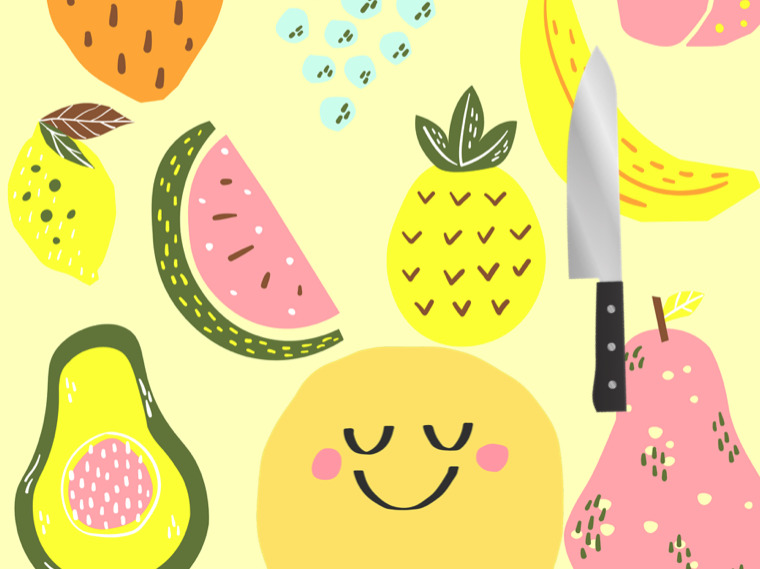
Over the years, I’ve experimented with a range of weird and wonderful stress-busting activities, including yoga, pilates, meditation classes, floatation tanks, massages, acupuncture, and sound healings (to name a few).
I’ll be the first to admit that cash-grabbing wellness gurus and advertisers have sucked me in.
In our capitalist culture, we’re sold this idea that in order to relax, we need to spend big dollars. But I now realise that the best relaxation experiences are cheap or free.
I’ve created rituals around cooking that help me stay calm, grounded, and focused throughout the day.
These days, cooking is my number one way to relax. My kitchen is my happy place, and it can be your happy place, too.
Perhaps this sounds a bit strange. But hear me out.
I haven’t always found cooking to be relaxing or particularly enjoyable.
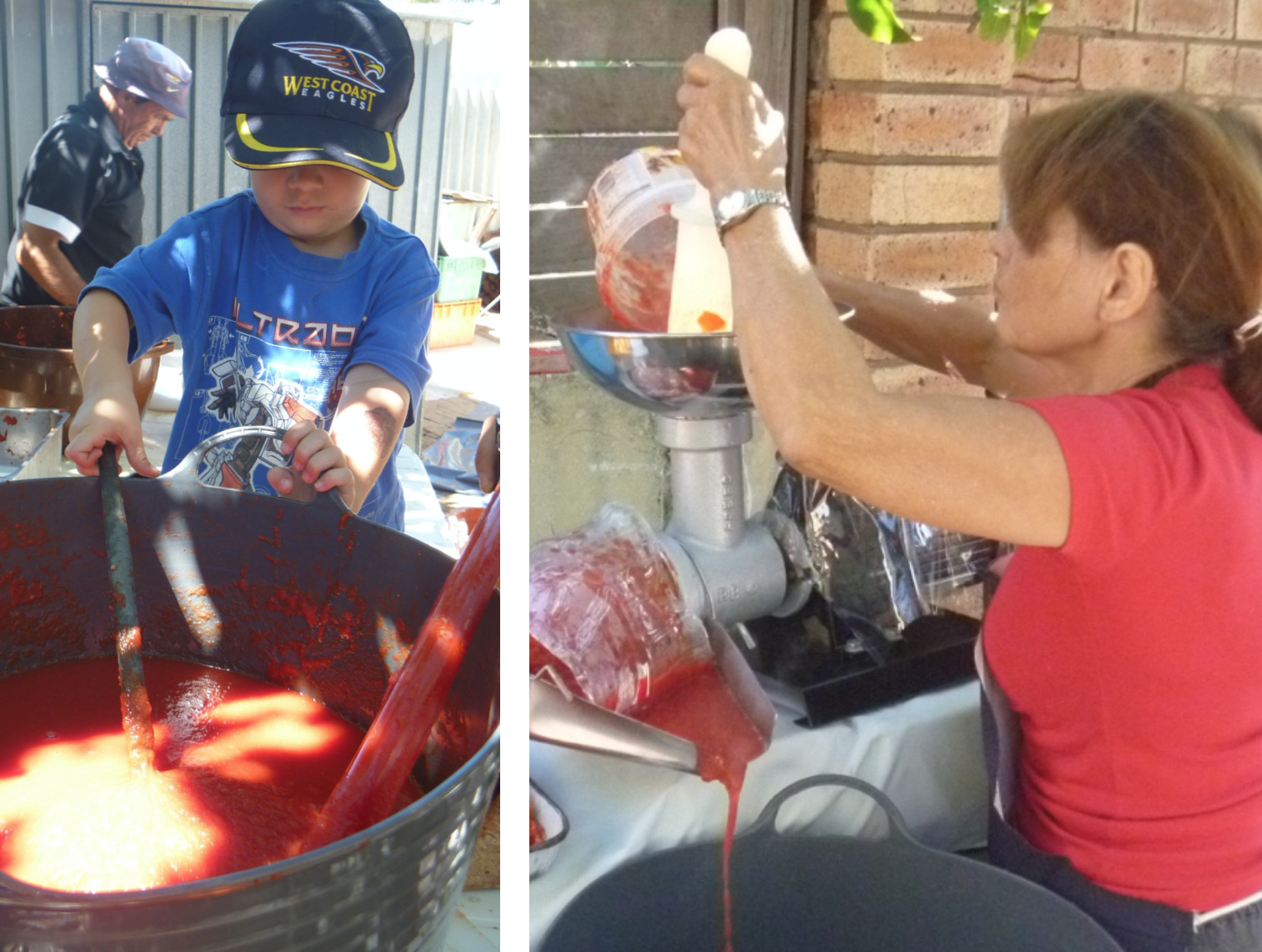
Being half Italian, I used to get involved with the occasional food tradition, such as tomato sauce-making day. But it wasn’t like I grew up with the delicious smells of homecooked food wafting through the house.
My teenage years and early twenties were filled with processed junk foods: a dizzying array of Hungry Jacks combos, greasy fish and chips, and takeaway meat lovers pizzas.
Cooking was a relaxation practice I stumbled upon much later in life.
Since upping my kitchen game and trading the expensive wellness activities for a sharp knife, solid chopping board, and fresh vegetables, my savings and confidence have grown.
To emerge from the kitchen in a calm and tranquil state, a few conditions have to be in place:
1. You cannot feel rushed
2. Your kitchen counter must be clean and clutter-free
3. You need a sharp knife to chop with
4. Your phone must be out of sight (like most things in life, it’s best not to multitask)
If these conditions are met, cooking can feel like a meditation or an empowering yoga class.
I’m not the only person who feels this way.

In the book ‘Uncook Yourself: A Ratbag’s Rules for Life’, Nat’s What I Reckon shares how he cooks his way through tough times. He writes:
“I reckon getting in the kitchen and un-cooking yourself from the tough moments in your head every now and then is a way better self-help routine than throwing five grand at some short-lived back pat from a cash grabbing blowhard at a self-help seminar just to tell you you’re not doing life right.”
One reason is you need to focus your mind.
When chopping with a sharp knife, you must pay attention to what you’re doing. If you get distracted, and I have (many times), you might pay the price with a cut to the finger.
Chopping is also a repetitive activity that delivers an immediate outcome. One minute, the bok choy is on the chopping board in full form; the next, it has been chopped and is ready for tonight’s stir-fry.
Cooking also requires you to slow down.
When you’re online, you tend to jump around in a frenzy. But when you’re cooking, you have to follow a recipe step-by-step. This requires focus. This focus helps to clear your mind.
Cooking also gives you a sense of control, power, and agency. As food journalist Michael Pollan says:
“Eating out breeds helplessness, dependence and ignorance, and eventually, it undermines any sense of responsibility.”
When you cook, you’re in control of the process (not some big corporate fast food company). Plus, compared to that commodified wellness experience, cooking is super cheap (all it costs is the price of a few ingredients).
It also produces a nourishing meal at the end. That meal will give you energy, help regulate your mood, and keep you calm and steady.
In the book ‘The Food Mood Connection’, Uma Naidoo argues that to decrease anxiety, you should pay attention to what you’re eating. She writes:
“A crucial part of battling anxiety is making sure your diet is full of foods that are calming and free of foods that put you on edge.”
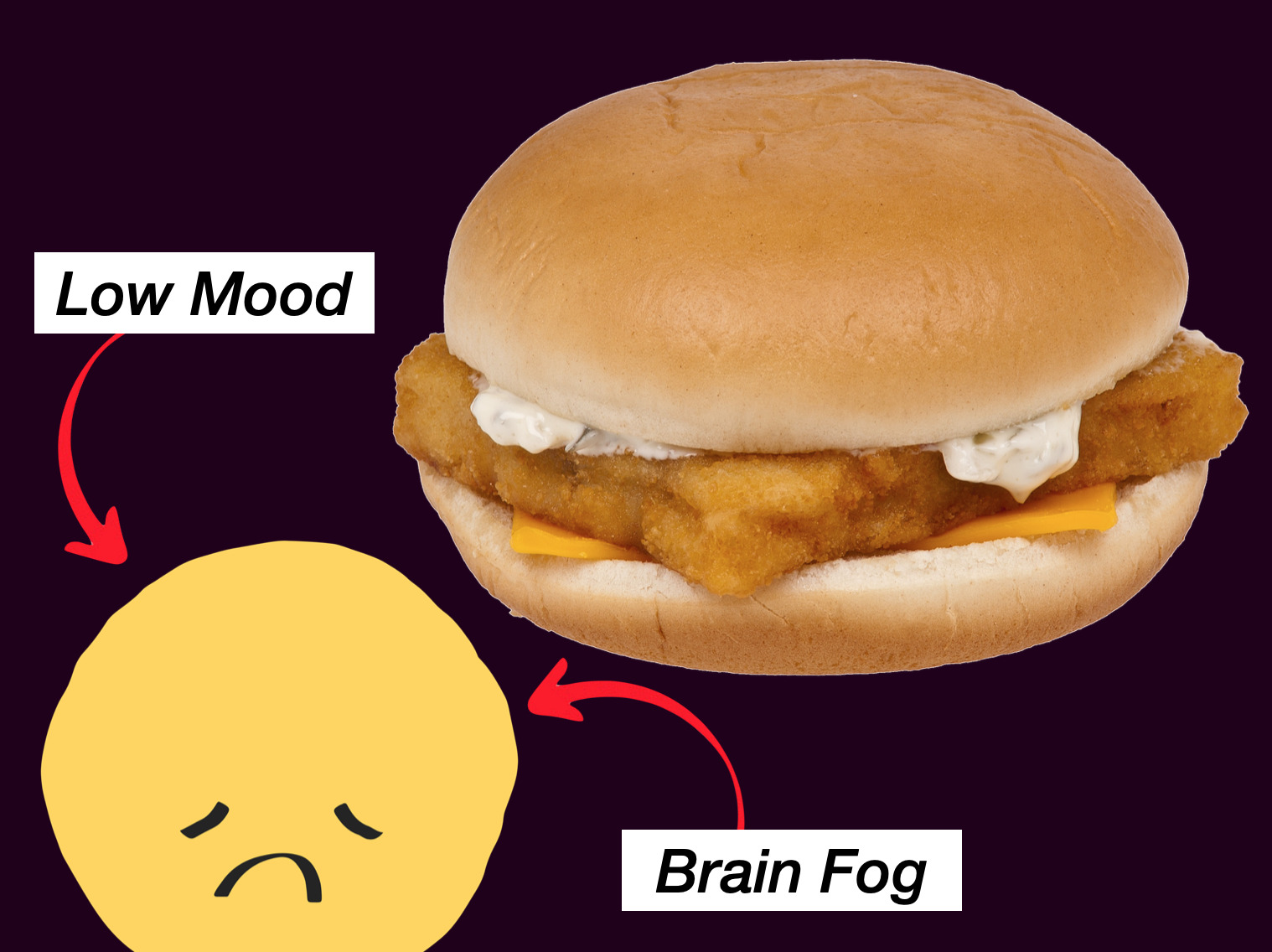
Fast foods and highly processed foods. These foods (e.g., greasy hot chips and baked goods) are problematic because they lack fibre and the fragile micronutrients and phytochemicals needed for good brain health.
Naidoo recommends increasing your fibre intake by consuming more plants and whole foods, such as beans, brown rice, baked potatoes with the skin on, broccoli, pears, apples, and oats.
A few years ago, I delivered a talk called ‘Rediscovering the Ancient Art of Thrift’ at a local library. In my presentation, I shared the thrifty practice of avoiding eating out and cooking meals at home.
At this point in the presentation, an elderly gentleman put up his hand and said:
“But vegetables are expensive. Why not just get McDonald’s? It’s cheap, and there’s no cleaning up at the end.”
I immediately thought of a friend who, at the time, ate only McDonald’s (for breakfast, lunch, and dinner). His housemates had confided in me that his feet had developed a pungent odour.
Although my diet was far from perfect, I was concerned. If my friend kept going down this path, I could see him heading for serious trouble.
Fast forward a year: How was my friend doing?
He was not well.
He had put on a significant amount of weight and seemed depressed, rarely leaving his room except to get his next McDonald’s meal (back in those days, there was no Uber Eats).
I explained to this elderly gentleman in the library workshop:
“Maybe you’ll save a bit of time and money in the short term [buying the fast food], but eating processed food will cost you down the track. It will cost you in medical bills and poor health. Your quality of life will suffer.”
He nodded, but I could tell he wasn’t entirely convinced.
Until you’ve cut out the processed junk food, allowed a couple of weeks for your tastebuds to readjust, and developed the habit of home cooking, it’s easy to be sceptical. After all, we live in a world that values convenience. Opening an app, pressing a button, and having dinner delivered to your door in less than 20 minutes has some definite appeal.
But every time you order Uber Eats, you miss out on a valuable opportunity to practice slowing down and calming your mind. You also undermine your cooking skills.
If you haven’t developed the habit of cooking or cooking makes you feel anxious, there are a few simple things you can do to cultivate calm and confidence in the kitchen:
Cooking is a messy process. While I may start with a clean kitchen bench, it quickly becomes a mess. That’s how the process goes (I try to clean as I go).
It’s also okay to mess up a meal. Not every meal is going to be an absolute winner. In ‘The Four Hour Chef’, Tim Ferris encourages the reader to see meals that don’t work out as cheap cooking classes. Learn the lesson and move on.
When you think of cooking as one activity, it can feel overwhelming. I divide the cooking process into two stages:
1) Preparing the mise en place: chopping vegetables, taking out utensils, etc, and
2) Pulling it all together: cooking the dish.
In the morning, I take out all the ingredients for a dish so they are ready to go when I need to take a break from my work. I chop earlier in the day and cook the dish in the afternoon/early evening.

If I’m overwhelmed by the idea of chopping vegetables, I break it down to chopping just one vegetable at a time. I’ll say to myself:
“Just chop the capsicum. That’s all you need to do.”
It’s not fun chopping with a knife with a dull blade. A sharp knife combined with a lovely chopping board makes all the difference.
Learning basic chopping skills is a game changer. With the proper technique and a sharp knife, there’s no need to worry about cutting yourself. You can chop with ease.
I took a chopping skills course with the online cooking school Rouxbe, but you can find YouTube videos teaching you good chopping techniques.
You’re not running a restaurant. You don’t have to rush to get meals out to hungry customers. Take your time and enjoy the process of chopping each vegetable.
If approached with the right mindset, cooking can deliver a sense of calm and ground you in the present moment. You also get to experience the mental and physical benefits of a nourishing home-cooked meal. The bonus extra is saving a bit of money.
So, what are you waiting for? Pull out some ingredients and start cooking today.
This is no accident. This is a deliberate design decision.
It’s the same reason why fast food logos are often warm reds, yellows, and orange tones. These colours jump out at us. They create a sense of excitement and urgency.
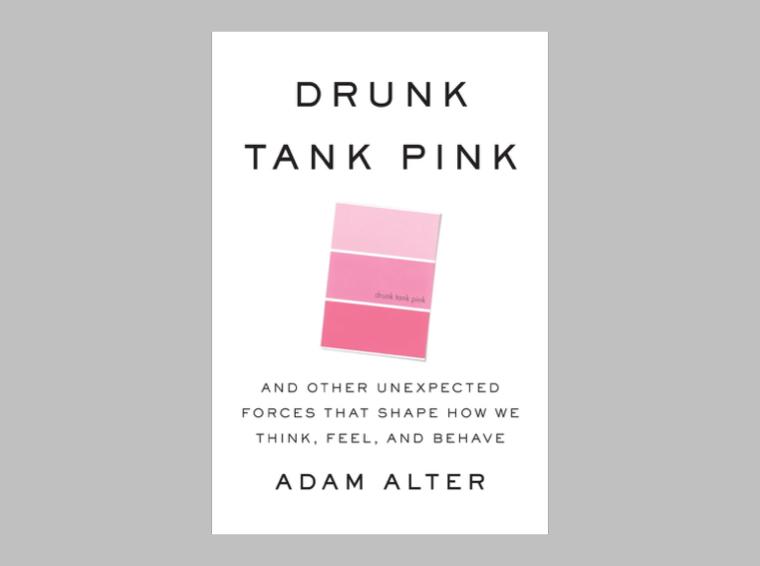
In his book Drunk Tank Pink, Dr Adam Alter argues colour is a hidden force in our lives that can shape the way we think, feel, and behave.
In this blog, I’m going to explore how you can use colour as a tool to help you study more effectively and keep your brain focused and engaged on the task at hand.
There is whole field of research dedicated to exploring the impact of different colours.
One fascinating study looked at the impact of a particular tone of pink (Baker-Miller Pink/Drunk Tank Pink) that appeared to sap people of their energy. Researcher Dr Alexander Schauss found staring at this shade of pink could lower people’s heart rate and pulse compared to staring at other colours.
A 7-month trial was conducted in which prison confinement cells were painted in this pink shade. According to Dr Schauss, when people were exposed for just 15 minutes to this pink colour in their prison cell, it made them more relaxed, less aggressive, and reduced the incidence of violent behaviour.
But before you race off to the hardware store to buy a tin of pink paint, you need to understand a few simple things about the psychology of colour.
The research suggests that colour can act as a powerful trigger. It can cue different emotions, thoughts, and behaviours. For instance, when you see a red Stop Sign or light, this captures your attention.
But how we react to colour also comes down to personal preference and particular contexts. Colour can have different meanings in different contexts (e.g., on Valentine’s Day red generally symbolises romance rather than “Danger! Look out!”).
The bottom line is this: when it comes to colour you need to experiment to see what works for you.
Colour can evoke particular states (e.g., a state of calm or alertness). It can also perk up your brain and transform a dry, boring subject into something that’s a little bit more novel and interesting for your brain.
Below I share 9 ways you can use colour to study and work more effectively.
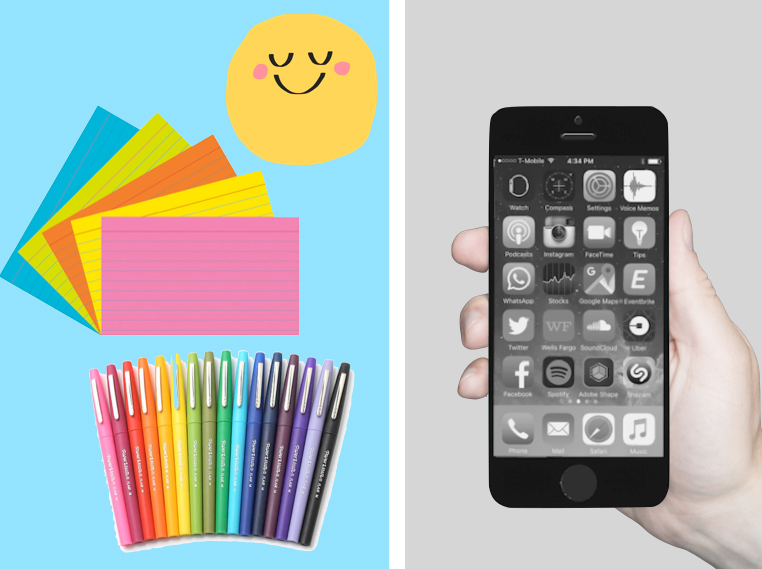
There’s something about a brightly coloured post-it note that captures our attention. This is why I love using post-it notes to help focus my mind and stay on track.
On a post-it note, I create a list of no more than three things that I need to do. Once I’ve completed those tasks, I scrunch up the post-it and throw it in the bin. This action feels surprisingly satisfying! I’ll then grab a fresh post-it note (often in a different colour) to create a new list.
If I’m not sure how to get started with a task (e.g., Task: Write blog post on colour), I’ll grab another post-it note and I’ll scribble down the first tiny action I can take to kick-start the process (e.g., Tiny action: Open Word document).
If you have trouble finding your study materials for each subject and they all look the same or are scattered all over the house, you can use colour to make it easier for you to find what you need.
Try assigning a particular colour to a subject. This makes it easier to stay organised and identify your materials. At home, I assign a light blue to my exercise files and folders. When it’s time to plan my workout for the day, I look for my light blue files and folders.
A simple and cheap way to colour code your materials without investing in brand new stationery is to gather a collection of paint swatches from your local hardware store. You can repurpose these as labels by cutting them into smaller sections and sticking them on your files, notebooks, etc.
Testing yourself with flashcards is a highly effective way to study for a test and/or exam. You can create your own flashcard decks by purchasing index cards in a range of different colours.
Try assigning certain colours to different subjects. Alternatively, you can simply pick a colour you want to work with depending on how you feel.
There are no hard and fast rules. Feel free to mix up your flashcard colours to keep things fresh for your brain.
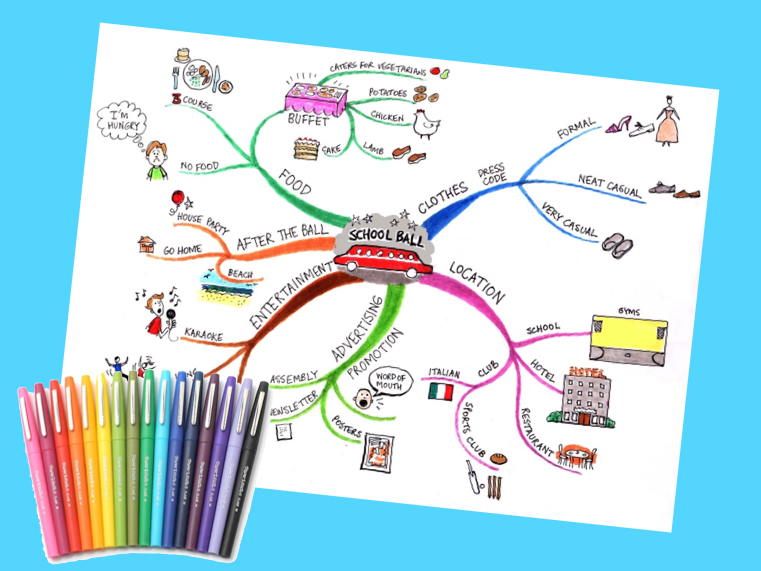
Creating a mind map on a topic is a simple way to combat study fatigue and inject a little colour and creativity into your study sessions.
Although using different coloured pens isn’t absolutely essential for mind mapping, it’s well worth doing. I use different colours to create the different branches on my mind maps.
I have dozens of colourful mind maps at home. Despite my lack of drawing skills, these mind maps look great and are fun to review primarily due to the different coloured branches.
It’s important that you feel good in your study environment. If you feel good in your study space, you’re more likely to sit down and study there.
I’ve decorated my workspace by putting up colourful posters, inspiring and funny pictures, and artwork on my walls.
If you don’t have access to artwork/posters, you can print out colourful pictures and quotes of things that make you feel good. The addition of a few indoor plants can also help to liven up your space as well as purify the air.
Fluorescent highlighters feel really good to use. It can feel both fun and satisfying to strike things off your to-do list. You can also use these pens to time block different tasks/events in your diary and draw your attention to important tasks that you need to do.
Word of warning: When it comes to studying for a test or exam, I don’t recommend highlighting your books and/or notes as a way to learn. I know it feels good but research shows it’s an ineffective way to learn.

Red pen is often associated with failure and criticism. This is why seeing a teacher’s comments scribbled in red pen can trigger negative emotions in many of us.
Generally, we don’t like reading comments written by others in red pen. It feels nasty! But it turns out if you use a red pen to correct your own work, this can help you to pick up more errors.
Dr Adam Alter discusses one study that looked at the difference between using a blue pen and a red pen to correct an essay. Students who used a blue pen picked up on average 19 errors. In contrast, students using a red pen picked up an average of 24 errors.
But using a red pen has its limitations! If you are trying to solve a problem or taking a test, using a red pen can backfire by activating ‘avoidance motivation’. This is a distracting state of mind that can impair a student’s ability to solve problems and increase stress levels.
As a rule of thumb, use a blue or black pen when solving problems and taking tests. But when you need to cast a more critical eye on your work (e.g., in the proofreading phase), switch to using a red pen.
A lot of us use our phones as an easy way to escape from the boredom and discomfort we experience when doing our work. The apps on our phones are like candy. They are designed to be highly addictive and hijack our attention.
This is where you can be strategic with how you use colour: you can make your phone look more like a tool (and less like a toy) by turning on greyscale mode.
Viewing your phone in greyscale is a completely different experience to using it in full-colour mode. As a year 8 student recently shared with me:
“When I made my phone greyscale, it made it really boring to use.”
Try it and see for yourself!
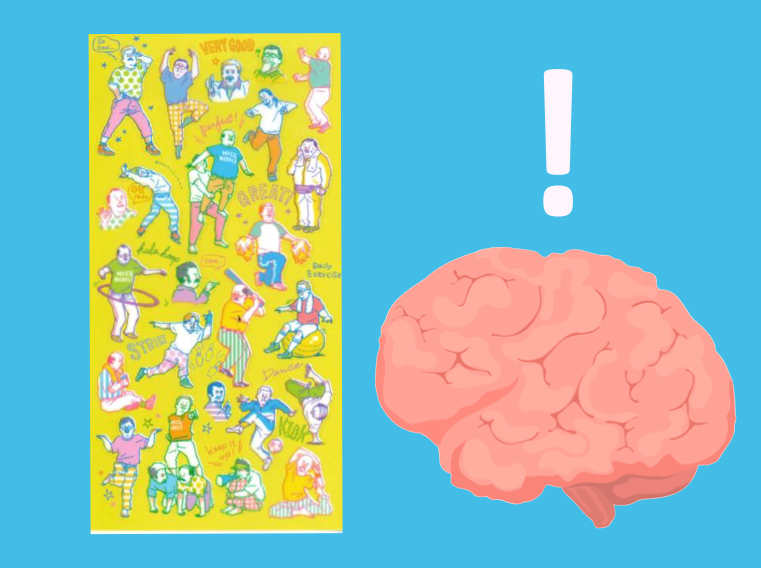
This strategy may seem juvenile. If it reminds you of being back in primary school and receiving gold stars, hear me out.
Too often we don’t stop to acknowledge and appreciate ourselves for accomplishing tasks. We finish one thing and we immediately shift our focus to the next task on our to-do list.
When you work this way, your work routine can quickly become soul destroying and your motivation can take a dive.
This is why every so often I pull out my fun stamps and colourful sheets of stickers. After completing a task, I pause and acknowledge what I’ve done by giving myself a stamp or a fun sticker. It’s a little celebration.
For some reason, my brain responds particularly well to quirky Japanese stickers featuring ogisan (Japanese grandfathers) exercising. We’re all different, so explore what stamps and stickers work for you.
Colours are lot of fun! Incorporating a little more colour into your studies and work life can take things to the next level and perk up your brain when it needs a little motivational boost.
But the colours that I like may not be the colours that you like. Your colour preferences may also vary from day to day. Notice the colours that make you feel good and have fun seeing how you can incorporate them into your study sessions.