
When my competitive instincts kick in, I feel like a desperado. It’s an old feeling from childhood where I feel like I’m constantly falling short (not good enough or smart enough).
Over the past few years, I’ve trained myself to focus on running my own race. I’ve had to learn to do things my way. As it turns out, when you live this way you feel better about yourself and less anxious too.
When I was 17 years old, I was struggling to figure out what I wanted to do with my life (“Should I be at Law school? Should I quit and get a job?”).
To keep depression at bay, I forced myself to exercise in the park every Sunday.
That’s where I met a wise woman who happened to be a family lawyer.
Over the course of a year, we became friends exercising in the park. I confided in her that I was struggling at university.
“I’m not sure if Law school is the place for me”, I said.
I also mentioned to her that I had failed my first test but I stopped short of telling her my mark (only 5%).
It must have been obvious that I was in need of a bit of a confidence boost because the following Sunday she rocked up to the park with an old record in her hand.
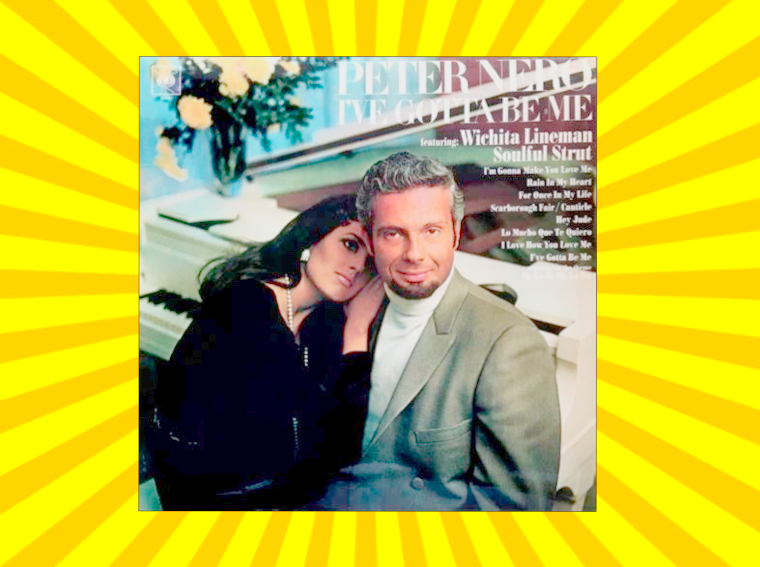
The track was called I’ve gotta be me.
She said “This is for you. Listen to it when you get a chance”.
Back in those days, there was no Spotify or music streaming services. In order to listen to this record, I had to go to Cash Converters (a secondhand pawn shop) and purchase a clunky stereo system with a record player.
I listened to the song hoping to have some earth shattering realisation about what to do with my life. And when it never came, I listened to it again and again. Still nothing.
“What is she trying to say to me with this song?” I cried.
Looking back, it’s so obvious what she was trying to say (“Be yourself! Follow your dreams! Don’t give up!”).
The problem was I was treating listening to this song like it was an assignment to analyse a poem or a piece of abstract art. I was overthinking it.
Looking back, it didn’t matter that I didn’t fully understand the lyrics. I was really touched by this lawyer’s kind gesture.
Law school felt like such a cold and competitive place at times. Coming from a working class family, it was easy to feel like you were invisible and didn’t belong there.
Yet here was this woman (a successful family lawyer) encouraging me to be myself and keep going. That meant a lot to me.
Two decades later as I listen to the track, I get it.
It’s powerful to live life on your own terms.
What they don’t teach you in school is it’s far more rewarding to collaborate and cooperate and forge your own path forward in life than it is to compete against others and follow the herd.
It’s also a lot more fun and energising to run your own race and focus on your own progress.
It’s possible to run your own race, even if you have shaky confidence. In fact, running your own race will help you to build rock solid confidence. So the sooner you learn to do this, the better.
Here’s how you do it . . .
Instead of competing and comparing yourself against your friends or some other poor soul in your class or workplace, start competing against yourself. Compare you to you.
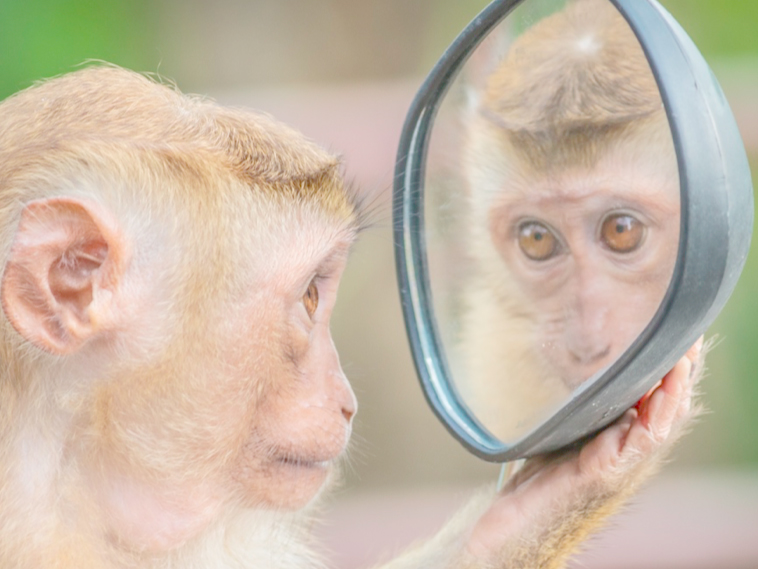
A simple habit you can develop is tracking your wins each day in a notebook. I do this just before going to bed (my notebook is on my bedside table).
This simple practice helps build momentum. As Dr Benjamin Hardy says “[When you cultivate this habit] you feel like you’re always winning and making progress.”
If you write down three wins every day, by the end of the week you’ll have 21 wins down on paper. If you keep this practice up and look back over your entries, something shifts. Instead of feeling like a desperado, you’ll be feeling like a champion.
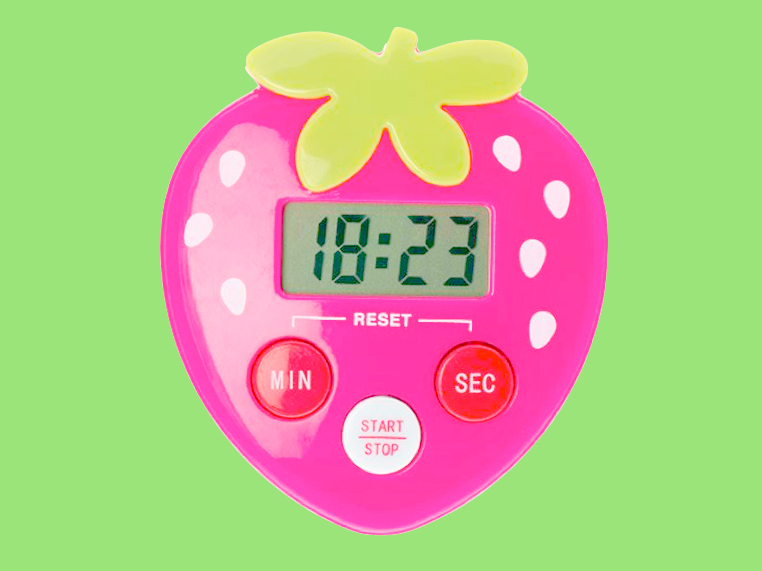
If you must have some opponent to compete against, make your opponent an electronic timer. Challenge yourself to compete against the timer.
“Can I empty this laundry basket (putting away my clothes) in under 5 minutes?”
“Can I vacuum the house in under 12 minutes?”
“How many words can I get down on the page in 25 minutes? Let’s go!”
When I’m lacking motivation, this is one way I get moving with various tasks. Timers can also help you stay focused on a task for a period of time and time your rest breaks.
Another way you can challenge yourself is with music. You can create a 25 minute or hour long playlist and use it to time your work sessions. If it’s a small task you need to complete (under 5 minutes), use an upbeat song to help you get it done.
In The Ultimate Time Management Toolkit Risa Williams recommends selecting songs with no lyrics and that don’t have any sad emotions associated with them. When it comes to your schoolwork, try to keep the music light and upbeat without being overly distracting.
The biggest mistake people can make when it comes to achieving their goals and creating new habits is to push themselves too hard.
I’ve been sitting at this computer for over an hour and I’ve ignored the last two timers that have gone off. Why? Because I’m in a flow state. When I started writing this blog, it was slow and painful. But now the ideas are flowing and I’m into it.
But I know I need to stop soon. If I don’t, I’m going to fry my brain.
As Greg McKeown says:
“You’re trying make sure that you don’t use up more mental energy than you can recuperate each day and each week. You want to be able to sustain the pace and get the job done. This is in contrast to being intermittent in your effort when you go big for a couple of days and then you can’t even work on it after that because you fried your brain, and you can’t get back to it.”
In a nutshell, think of this race you’re running as being a marathon (not a 100 metre sprint). Pace yourself.
Spending too much time on social media or following the wrong people online is the equivalent of pulling a hamstring when you’re out running your own race. It will mess with your mind and take you off course.
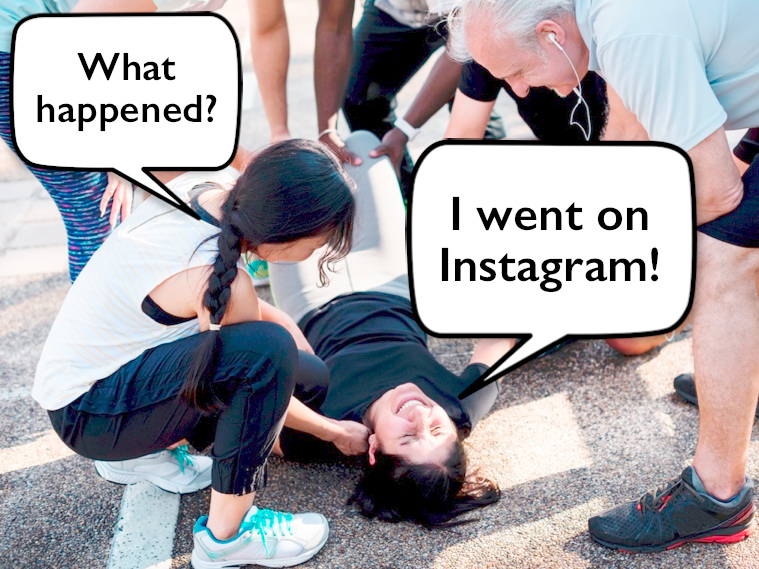
One of the problems with social media is it is designed to have you engage in upward comparisons. It puts you in a state of mind where you are constantly seeking approval from others.
Instead of focusing on what you need to do to move forward with your goals, you’re wasting time and energy following what others are doing. You get pulled into the outrage machine. Very quickly you can lose sight of your goals.
When you spend too much time on social media, your perception of reality also gets warped. Being exposed to envy inducing perfect pictures and posting only the best parts of our lives can make us forget that life is indeed very messy! In the book Disconnect Jordan Guiao explains:
“It is travel without the sixteen-hour flight, the fit body without the six-days a week workout regime and birthday parties without the crying babies. These approximations of reality start to become our new normal. As we edit out the messiness and ugliness of real life, we begin to forget that this messiness and ugliness exists for others too.”
Guiao recommends asking yourself whether the people you are following add value to your life. He says:
“Periodically reassess who you follow on social media and why. Is an influencer offering valuable advice and insights or just posting pretty pictures that make you feel bad about yourself? Do you think about their content when you’re offline? Does it serve you to comment on others’ posts if you are only doing it to seek their approval? What are you gaining from these interactions – and what are you losing?”
When you decide to ditch the pretty pictures and unfollow the influencers, you’ll notice a dramatic shift in how you feel about yourself and how you’re tracking in life.
If you’re like me, competing against others will leave you feeling desperate, insecure, and chaotic. So, why not start playing your own game?
Stay true to yourself. Do it your way. Set your own rules and path.
Using a timer or a song can be a simple way to get moving with a task. Reducing time spent on social media will help you to stay focused on what you truly want without getting distracted by all the noise and drama that’s playing out online.

Not smart enough.
Not pretty enough.
Not successful enough.
This feeling of inadequacy drove me to work in unsustainable and unhealthy ways. I felt desperate to make something of myself in this world.
It took doing a PhD to make me realise why I felt this way and learn how to escape the trap of workaholism and materialism.
Now I can say that I feel satisfied with myself and my lot in life. I am enough. I have enough. I feel successful according to my own definition and metrics of success.
In this article, I share a cautionary tale and a radical approach that can help you feel successful just as you are.
When I was a university student, my good friend became a rep for a multi-level marketing company.
This gave me a glimpse into a world of people at a whole other level of desperation to become “successful” according to Capitalism’s definition of success (i.e., having lots of money and material goods).
As a poor law student, I was invited to several multi-level marketing ‘parties’. The aim of these parties was to get you to buy the products (e.g., makeup, skin creams, and vitamin supplements).
There were also more hardcore gatherings that focused on signing you up to become a rep for the multi-level marketing company, so you’d recruit more people to the scheme and sell more products.
A rep high up in the multi-level marketing company would facilitate these recruitment drives in the comfort of my friend’s family home.
The reps were always impeccably dressed as they sold a grandiose vision of being a sales rep (e.g., international travel, limousine rides, and a life of leisure).

The underlying message being peddled was:
“If you join us, you’ll be making money in your sleep!”
It sounded too good to be true. And that’s because it was.
This particular multi-level marketing company encouraged the reps to engage in personal development through reading.
My friend’s reading list included titles such as Reject Me – I Love It!, How to Win Friends and Influence People, and The 7 Habits of Highly Effective People.

Taped to the walls of her family’s home were cut-out pictures from magazines of luxury cars, cruise ships, and attractive women dressed in stylish clothes. Smack bang in the centre of the wall was a massive hand-drawn picture of a diamond.
When I asked why these images were on the walls, I was told they were reminders of why they were working so hard. The walls were like a massive vision board for the family. These images represented what a “successful” life looked like.
These images made me feel sad and uneasy, because in my eyes, my friend had already achieved so much in her life. She was already successful.
It was even more unsettling when the selling of products moved beyond the multi-level marketing parties and into informal social gatherings.
One social gathering I will never forget. It haunts me to this day.
For some context, I was in my early twenties, and I felt quite insecure about my appearance. Like most young people, I was still figuring out who I was, and what I wanted to do with my life.
So when my friend casually pointed out after a meal that I had bad acne, but she had a skin cream she could sell me, this left me feeling hurt and confused.

I was in a difficult position: did I purchase the expensive skin cream to maintain our relationship? Or did I say no to buying the skin cream, embrace my acne, and potentially hurt my friend’s feelings in the process?
It was a difficult and messy situation I wouldn’t wish on any young person.
My younger self didn’t have the skills or tact to handle this situation with the care it needed, and sadly, our friendship didn’t survive.
I understand why my younger self felt so confused during this period. I can clearly see the lies the multi-level marketing company pushed.
Before I go any further, I want to be clear that my friend and her family, who were reps for this multi-level marketing company, had no malicious intent.
They were good people who were desperate to make a better life for themselves. They were victims of a predatory corporate structure that peddled a bunch of lies to hook people in.
One of the big lies that this multi-level marketing company pushed was the idea that ‘You’re not enough’.
Another big lie was that to be happy and successful, you need a flash car, a fancy house, and lots of money. Oh, and don’t forget the expensive skin creams.
If you don’t have those things, you’re a loser. So, you better hop to it and start selling products and recruiting reps!
Of course, this isn’t just the world of multi-level marketing companies. This is the dominant message of mainstream consumer culture and advertising.
In our lives, we may not be selling skin creams and vitamins for a multi-level marketing company, but we are trading our time and life energy for money. Money that can buy us stuff that advertisers convince us we need.
Ads don’t just sell us products. They sell us particular ideas of success. They tell us what we should value and what is normal. They tell us how we should live our lives.
In the world of advertising:
But we should pause and question these ideas. Why? Because the research paints a very different picture of what brings us happiness and fulfilment (Spoiler alert: it’s not more stuff).
The pictures of luxury goods that were taped to the walls of my friend’s home illustrated what all of us are told to value.
We live in a consumeristic and capitalist culture that celebrates materialistic values. This set of values focuses on extrinsic pursuits such as striving to obtain money, possessions, and an attractive appearance.
Living in this culture, it’s extremely difficult to not internalise these values.
However, research shows that being highly oriented towards materialistic values is harmful to psychological health and personal wellbeing.
Why would it be that pursuing diamonds, nice clothes, and social status fails to make us happy?
In his book The High Price of Materialism, Social Psychologist Dr Tim Kasser argues that our wellbeing comes from satisfying our core psychological needs (i.e., needs for security, competence, and connections to others) and orienting one’s life around materialistic pursuits is a poor way to get these needs met.
Other research has found that once our basic to moderate needs are met, more stuff doesn’t bring us additional happiness.
Evidence for this is all around us. Just look at Billionaires like Elon Musk, Donald Trump, and Sam Altman. Do these people look happy to you?

The people above look restless and miserable, except for Australian gardening show host, Costa Georgiadis (Note: he is not a billionaire and I can’t imagine he’s aspiring to become one).
Others have argued that the reason wealthy people can have so much but still not be happy is because their expectations keep rising. In other words, the more you have, the more you want more.
This is why the author of the book The Psychology of Money, Morgan Housel, argues that the most valuable financial skill you can have is not budgeting but not having to impress other people.
That’s right. Not having to impress other people is the most valuable financial skill you can cultivate.
If you can determine what success means to you, then you free yourself of the trap of trying to get other people’s attention by acquiring more and more fancy stuff.
Not feeling the need to impress other people is a goal well worth pursuing, especially when you realise that no one cares about your house, car and stuff as much as you do.
I want to invite you to join me in a world where I’m enough, and you’re enough.
In this world, if you do the work, you can feel successful, just as you are, today.
You don’t have to wait until you reach the top spot in your class, school, sport, or company. You don’t even need a lot of money or stylish clothes.
How can we feel successful just as we are, with all our imperfections?
In his excellent book Where the Light Gets In, mindset coach Ben Crowe says the secret is to live in alignment with your values and create your own metrics for success.

He believes that if you live in alignment with your values, you are successful. Simple as that.
Instead of plastering your walls with images of all the material items you dream of having, Crowe encourages us to develop a ‘Success list’. The question to ask yourself is,
Before you can answer this, you need to get clear on what you value (i.e., what’s most important to you).
For me, I value my freedom, health, growth and learning, relationships, and community.

With these values in mind, I know I’m being successful when:
Crowe describes what he believes to be a ‘successful life’. He writes:
“It’s a world full of relationships, experiences and memories. A world of confidence and happiness. Most importantly, it’s a world where we determine what success means for ourselves, not by anyone else’s measure. And finally, it’s where success can be in the present moment, not in some future state we may never arrive at.”
Instead of focusing on what you want to have, your focus is on how you want to be and the behaviours you need to engage in to be that person.
I’m not sure if my friend ever made it to the top tiers of the multi-level marketing company, but if she did, I know the feeling of satisfaction or happiness wouldn’t have lasted long.
I once heard Hollywood Psychotherapist Phil Stutz say in an interview, “You’ll never be satisfied in our [Capitalist] culture”.
Just as a multi-level marketing company is set up to make those at the bottom feel desperate to achieve more, consumer culture is designed so most of us never feel satisfied with what we have.
The only path to happiness and fulfilment is to create our own metrics for success; otherwise we will constantly want more because of the powerful influence of advertising.
In the fictional book Alan Opts Out, advertising executive Alan thinks to himself:
“What was an ad man, really, but a homegrown terrorist, convincing people that their lives were not worth living unless they bought new stuff?”
This same advertising executive comes to the conclusion that “you can get by with less than what you have” and that most of us would be happier if we did.
When you feel like you’re enough, you feel happy with yourself and your lot in life. You’re more at ease with yourself. You still want to get out of bed and do stuff, but that desperate energy to get more and be more doesn’t surge through your body.
There’s no need to wait until you get a great job, reach a certain number of subscribers, or earn a PhD to feel successful. Create your ‘Success list’ and start feeling successful today.

Unless you’re a superhero in a Marvel film, no one benefits from exposure to asbestos, lead paint, tobacco, and radioactive substances.
Toxic products are just like toxic people. It’s best to steer clear of them if you can.
If you can’t avoid them, then it’s wise to take precautions and minimise your exposure as much as possible.
Only a small child or a foolish adult would handle asbestos or a radioactive substance with their bare hands.
But I want you to consider that millions of people all around the world are constantly exposing themselves to another class of toxic products and they are unaware of it. What’s unique about these products is that the harms are invisible.
Exposure to these toxic products can result in:
I’m talking about social media platforms, such as TikTok, Facebook, and Instagram.
Over the years, I’ve read extensively on the invisible harms linked with social media. As someone who was an early adopter of Facebook, I’ve seen these harms firsthand.
I was addicted to social media until I read the book Ten Arguments for Deleting Your Social Media Accounts Right Now. I read this book in a day. The book had such a profound impact on me that I deleted all my social media accounts that evening back in November 2020.
I firmly believe now that social media is the mother of all toxic products and it’s time we started relating to it in this way.
As it turns out, I’m not alone in my thinking.

In a 2024 New York Times article, the US Surgeon General Dr Vivek Murthy stated that warning labels should be placed on social media platforms, similar to the warnings that appear on cigarette packs. He wrote:
“It is time to require a surgeon general’s warning label on social media platforms, stating that social media is associated with significant mental health harms for adolescents. A surgeon general’s warning label, which requires congressional action, would regularly remind parents and adolescents that social media has not been proved safe.”
He also wrote:
“Adolescents who spend more than three hours a day on social media face double the risk of anxiety and depression symptoms, and the average daily use in this age group, as of the summer of 2023, was 4.8 hours. Additionally, nearly half of adolescents say social media makes them feel worse about their bodies.”
Mental health issues are just one of many toxic by-products created by social media platforms.
The Center for Humane Technology has created a Ledger of Harms that details the hidden costs linked to social media, including a polluted information ecosystem that makes it hard for people to make sense of complex issues.
Under the heading ‘Making sense of the world: Misinformation, conspiracy theories, and fake news’, it states:
“A broken information ecology undermines our ability to understand and act on complex global challenges from climate change to COVID-19.”
This is why I believe social media is the mother of all toxic products. By fragmenting our attention and impairing our ability to understand complex issues, it becomes increasingly difficult to solve the massive challenges of our time.
We’ve placed too much trust in social media platforms without fully understanding how they work and what these apps are doing to our brains, relationships, and society.
Even if you understand the hidden harms, you may think that they don’t apply to you. That somehow you are immune to the risks.
I’ve lost count of how many times I’ve heard my friends make comments like:
There’s a reason why many parents working at big tech firms like Facebook and Instagram don’t let their children use the apps they work on.
It’s because they know these platforms cause harm.
For too long, we have naively trusted social media to be on our side. We believe what we see in our feed is a reflection of society. But it’s not.
Your feed is curated by the algorithm to keep you clicking, scrolling, and posting for as long as possible. This is why it feeds you outrageous content. Outrageous content hijacks your amygdala (the fear centre of your brain) and captures your attention.

The more data these companies can extract from you, the more profit they make. That’s the business model of Big Tech.
Put simply, Big Tech does not care about your wellbeing. It doesn’t care about supporting you with your goals or presenting you with accurate information that will help you make sense of the world.
As Philosopher James Williams writes in his book Stand Out of Our Light:
“There’s a deep misalignment between the goals we have for ourselves and the goals our technologies have for us.”

It’s time we said enough is enough to these Silicon Valley tech bros and their relentless pursuit of amassing more and more wealth through their addictive platforms at the expense of our collective wellbeing.
It’s painfully clear that a small handful of tech companies are hurting millions of people and bringing down society. As Jaron Lanier states:
“Bringing down a society to get rich is a fool’s game and Silicon Valley is acting foolish.”
These tech bros got rich because they captured our attention and we gave them our data. But we don’t have to put up with this. There is another way.
The Australian government is leading the way with a social media ban for under-16s. It’s a bold move that Big Tech companies are not happy about.
From December 10, all Australians under the age of 16 will be banned from using social media, such as TikTok, Instagram, Facebook, X, and Snapchat.
But why should this ban only apply to teens under 16?
Everyone would be better off by taking a break from these platforms.
As young people move away from social media, I encourage everyone, especially parents, teachers, and older siblings, to try taking a break from these apps too.
Your self-imposed social media ban doesn’t have to be forever. It could be for just 30 days.
If you’re thinking, “30 days! Why so long?”, here’s why . . .
You need to be off social media for a while to clear your head and see how crazy it all is.
What I discovered by deleting the apps is that when I used them they scrambled my brain. When I was on the platforms, they made me performative, jealous, and desperate for attention.

But it’s difficult to see it when you’re under the spell of these mind controlling platforms. Like a person exiting a cult or sobering up from alcoholism, you need to step back and gain some distance to recognise the toxic impact it’s having on you.
If, after 30 days, you feel stronger without social media in your life, you have the option of extending your ban. Or you can delete your accounts. The choice is yours.
There are several other reasons why taking an extended break from social media is well worth doing.
Firstly, this is a powerful way to show solidarity with young Australians as they go cold turkey on addictive tech.
This transition won’t be easy, especially for heavy users of the apps. By joining the under-16s in taking a break from the apps, we can better understand what they’re experiencing and offer support and compassion.
It’s also an opportunity to get to know ourselves better and live more authentic and free lives.
In Ten Arguments for Deleting Your Social Media Accounts Right Now, Jaron Lanier says:
“To free yourself, to be more authentic, to be less addicted, to be less manipulated, to be less paranoid…for all these marvelous reasons, delete your accounts.”

Big tech companies want you to think that without social media, there will be no internet or support groups to help you through tough times. That you will be isolated and lonely without their apps.
But don’t believe the lies.
The Internet will still be there to use and explore. You’ll have chat groups, friends you can email, text, and call, and meet-ups you can attend.
Trust me when I say this: you will adjust and get to know yourself better by taking a break from social media.
Whether you are forced to get off social media by the government or you voluntarily decide to take an extended break, here are my suggestions for a smooth transition off these addictive platforms:
Initially, leaving social media will feel hard. You will find yourself picking up your phone to open the app to start scrolling, but it won’t be there.
You will most likely feel a sense of loss (I did). Expect to feel restless and irritable to begin with.
But these feelings will pass.
What is happening is your brain is adjusting to a new, lower level of mental stimulation. It’s adjusting to a world where it doesn’t constantly receive quick hits of dopamine.
At some point, the discomfort will disappear and be replaced with a feeling of calm.
During this time of adjustment, treat yourself with extra care. Spend time outdoors, go for walks, get good sleep, fuel up on nutritious meals, and do things with your hands (write, draw, colour in, etc).
Engage in activities that connect you to yourself, others and the world around you.
When you engage in healthy lifestyle practices, your brain releases a balanced cocktail of chemicals (including dopamine), which leaves you feeling good rather than anxious.
When you wake up, resist the urge to check your phone right away. Even if you don’t have social media on your device, there are plenty of other ways to get quick dopamine hits, like messaging friends, checking your email, or reading the news.
When you check your phone or email first thing, it puts you in reactive mode. You also risk crashing your dopamine system, leaving you feeling sluggish and flat.
I like to start the day with some form of physical activity, such as going for a run on my treadmill or riding my bike, or tidying up my space. These activities provide a slow release of dopamine, helping set me up for the day ahead.
Some academics say generative AI is like crack cocaine for social media addicts. For this reason, it doesn’t make sense to replace social media with an anthropomorphic chatbot (e.g., ChatGPT) that sycophantically tells you what you want to hear and provides a friction-free ‘relationship’.
Life and human relationships are messy. But unlike AI chatbots, these things are real.
Time gained by stepping away from social media is best spent in the real world with real humans.
Be proactive about your social life. Text or email your friends to organise catch-ups. Take delight in hearing about what they’ve been up to.
Instead of getting a picture-perfect, curated version you’d see online, you’re more likely to receive a raw and refreshingly honest account of what’s been happening in your friend’s life.
Without social media, you’ll find yourself with a lot more free time. Use that free time to teach yourself a new skill or explore a new topic.
When I left social media, I joined a local Yoga studio, upped my kitchen game (learning how to cook delicious plant-based meals) and enrolled in free online courses that would increase my knowledge and skills.
How will you get your news? By heading straight to online news sites.
I have several online news sites loaded into my streamdeck to stay up-to-date with what’s going on in the world (e.g., Democracy Now, Al Jazeera, Guardian, All Sides, and ABC). All I need to do is hit a button, and I’m reading the news with the peace of mind that I’m no longer in a filter bubble.
There will be times when you feel lonely, bored, and sad. Instead of trying to suppress or numb these emotions, journal or draw what you’re feeling and thinking.
You could also write a letter to yourself. If you don’t know what to write, here are some prompts to get you started:
Whatever you would normally post and share, you’re now sharing with an audience of one: yourself. The good thing is there’s no need to worry about offending anyone or being cancelled. You can fully express yourself without the fear of being judged by others.
There are many toxic products in the world that we need to be aware of, and social media is another one of them. We need to treat it with extreme caution, as no one is immune to the harms caused by these platforms.
In the book The Anxious Generation, Dr Jonathan Haidt asks the question:
“What would the sages advise us today about managing our phone-based lives? They’d tell us to get off our devices and regain control of our minds.”
Australian teenagers under 16 will soon be banned from social media, but the rest of us can choose to leave the platforms freely.
In the spirit of reclaiming your mental freedom, I challenge you to run a tiny experiment where you refrain from using social media for at least 30 days.
As your brain adapts to a lower level of stimulation, you’ll experience a sense of freedom, satisfaction, and calmness. You’ll notice your life force, energy, and focus returning to you once again.

I had one of these dreams the other night.
My anxious exam dreams usually go something like this . . .
I’m back in high school and I’m not having a fun time.
I’m freaking out because this exam is in just a few hours. So I’m scrambling. I’m cramming. I’m feeling desperate.
But what I’m doing isn’t working. I’m looking at the page and nothing is going into my brain. I’m filled with this sense of impending doom. But just before I enter the exam room . . . I wake up . . . Phew!
It was just a dream.
I graduated from high school two decades ago!
These dreams usually occur a few weeks before I need to deliver an important presentation. I’m not big on interpreting dreams, but here’s what I believe my subconscious is trying to tell me: “Lift your game. It’s time to start preparing!”
Delivering a presentation is similar to taking an exam. Both activities require you to exert mental effort and be well prepared. They can also bring up a lot of anxiety.
When I deliver a presentation, I have to recall a large amount of content from memory. I also need to keep an eye on the time because running into recess or lunch is not a smart move!
I have to be organised and make sure I have all my props and equipment. I also need to stay calm because if I look stressed, this will make the audience feel stressed and concerned about my wellbeing.
Just like you can’t wing a 3 hour long exam, I can’t afford to wing a presentation in front of a group of 200 students.

I believe the strategies that help me to memorise and deliver presentations can also help you to ace your exams.
Below I share simple things you can do to recall information under pressure and remain calm and grounded in strange and unusual environments.
Some of these strategies may seem a bit over-the-top. But my job is to present ideas to others. If I bomb out, I usually won’t get a second chance to present at the school again. This is why I strive to do my best every time.
When you leave things to the very last minute and feel rushed packing up your gear, there’s a good chance you’ll forget something important.
This is why I gather all my props the night before a presentation. Just before I go to bed, I lay out the clothes I’m going to present in. This means I don’t have to waste my brainpower on this small stuff in the morning.

Just like you need to think quickly in an exam, I need to be able to think quickly on my feet when I present. A solid 8 hours of quality (uninterrupted) sleep helps me to do this.
If I mess with my sleep, I mess with my ability to think.
I’ve developed a strict bedtime routine – I go to bed at the same time and I wake up at the same time. My phone is on silent and charging in another room when I sleep.
Now is the time to develop good sleep habits. Aim to get a minimum of 8 hours of quality sleep each night.

Consider doing some light exercise (nothing too strenuous) before an exam.
Before I deliver a talk, I’ll run on my treadmill or ride my bike for 20-30 minutes. Not only does this make me feel powerful and strong, but it puts me in a positive frame of mind.
It’s a fine line though. If you push yourself too hard (which I have done in the past), you’re going to feel exhausted. You need to make sure you don’t overdo it.
If I do happen to push myself too hard (which doesn’t happen very often as I’ve learnt what works for me), I’ll take a quick 20 minute power nap to re-energise before a talk.
If I’m feeling a bit nervous about delivering a presentation, I don’t make a big deal about it. I view a bit of nervous energy as a good thing.
I think, “I must be excited”.
I’ve also come to see a bit of nervous energy as better than being completely chilled. If I’m feeling super relaxed, I can’t muster enough energy to inject into the room. I’ve also noticed my thinking isn’t as sharp.
If you’re feeling nervous about an exam, say to yourself, “I’m feeling excited!”.
Before I deliver a presentation, I’ll sit and breathe deeply for 2 – 3 minutes. This helps me stay calm, grounded, and focused.
I also put my phone on airplane mode so I’m not distracted by any random texts or calls. At this point, I need to stay in the zone and I can’t have anything throw me off my game.
In the 30 minutes before the exam begins, you need to protect your mental state. Take some deep breaths, put your phone away, and shut out the world around you. Wearing a pair of headphones can also help.

Your brain needs fuel to think and function well. Where does it get that fuel from? Food. So whatever you do, don’t skip breakfast or lunch before an exam.
Before I present, I make sure I eat a healthy meal an hour beforehand. If the talk is at a strange time, I’ll make myself a healthy smoothie. This gives me the energy I need to deliver high energy presentations.
I once cooked up and ate a big vegan schnitzel before I had to deliver an important presentation. I’d never consumed one of these processed schnitzels before, which must have been packed full of salt because I kept sipping on water before the talk.
I remember that I was freaking out because of the unexpected impact of this salty vegan schnitzel. I was thinking, “How am I going to do this? I’m going to need to go to the toilet! Why did you think it was a good idea to eat a vegan schnitzel right before a talk?!”
Luckily, I managed to deliver the talk without any problems. But it was a close call.
I learnt an important lesson that night . . .
Don’t experiment with any new or strange foods before giving a talk. You’re asking for trouble.
Work out what foods make your brain feel good and then stick to those foods before each exam.
If you feel hungry, sleep deprived, or you have a full bladder, these things are going to create some discomfort. It will be hard to concentrate and recall information in the exam.
This is why I always make sure I take care of the basics (e.g., having a healthy breakfast or snack) before I deliver a presentation.
Give yourself plenty of time to get to the exam room. There’s nothing worse than feeling rushed, stressed or getting lost.
This is why I like to set up for a job at least 30 minutes before I need to present. This gives me plenty of time to avoid any technical problems and get grounded.
Since I don’t rely on any notes or palm cards when I present, I need to know my content back to front and inside out.
How do I learn the content?
I use a combination of three highly effective study strategies:
1) Dual coding (using words and pictures to help you learn);
2) Active recall (bringing information to mind); and
3) Spaced practice (spacing out your study, not cramming).
These three strategies are much more effective than rereading and highlighting my notes. I recommend you use these study strategies to prepare for your exams.
Research shows physical movement, including the use of gestures, helps improve understanding and boosts memory.

Whether you’re trying to learn a new concept for an exam or memorise a presentation, don’t be afraid to use your hands and body. Think about what you’re saying. Can you apply a gesture or move your body to help you memorise and improve your understanding of a concept?
You can read more about the power of gestures and movement when it comes to learning here.
Before each exam, keep away from people and places that drain your energy and stress you out. Avoid energy vampires (i.e. people who drain your mental energy and make you feel a bit out of whack) as much as possible. Don’t waste your brainpower on these toxic people. You need all your brainpower for your exams.
Sometimes things will go wrong that are completely out of your control. And you have to just roll with it and do the best job you can under the circumstances.
For example, a few years ago, I did a job where nothing seemed to go to plan. The school receptionist was rude and unhelpful. The venue for the talk wasn’t booked. The students didn’t have chairs to sit on. To make matters worse, it was a boiling hot day and the air-conditioner wasn’t working.
What was I supposed to do?
Having a meltdown wasn’t going to help.
In times like these, you need to remain calm and focus on the things you can do to make things better going forward.
If you have two exams on the same day, you need to think about how you’ll manage your energy levels. You need to conserve your energy.
For instance, if I need to deliver two or three different talks in a day, I manage my energy levels by taking deep breaths, frequent sips of water, and power naps where possible.
Preparing to sit an exam is like preparing to go on stage for a performance. If you can use some of the strategies listed above, you can stay calm, energised, and grounded, which will make a big difference when it comes to recalling information in the exam.
Which strategy will you test out to stay calm and enhance your performance in your next exam?