
They say the way you start the morning often sets the stage for the rest of the day.
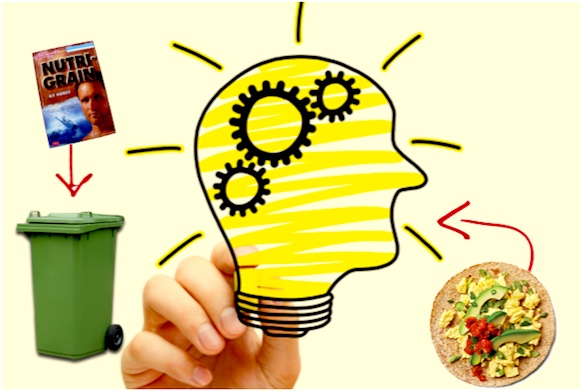
Here’s how I used to start my day: with a bowl of nutri-grain cereal.
In my naivety, I believed the marketing messages that this was the food of iron men and women. I believed it would help me power through the school day like a champion.
Then one day it hit me: This sugary cereal wasn’t making me stronger or sharper like a disciplined athlete.
At 32 grams of sugar per 100 gram serve (that’s a staggering 32% sugar), it was creating a fog in my brain, messing with my mood and predisposing me to type 2 diabetes and obesity.
So a few years ago, I decided to make a small change to my breakfast routine. I started to make my own muesli.
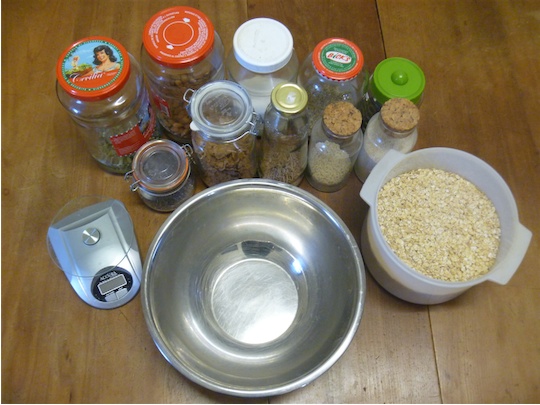
What struck me was just how easy and cheap homemade muesli was to make. It was also surprisingly delicious.
Powered by homemade muesli, I noticed that my thinking sharpened. My mood became steadier. The quality of my whole day improved.
And here’s the thing: you can have this too if you start the day with a wholesome breakfast.
“But breakfast is a waste of time!”
I hear students say this all the time. “Why eat breakfast when you can sleep in for another 30 minutes?” they say.
But as the authors of the book “Thug Kitchen” state:
“You’ve heard this a million times but it’s true: breakfast is the most important meal of the day. Consider the fact that when you wake up, you haven’t had anything for 6 – 8 hours…so you really think it’s OK to coast along on nothing until lunch?”
Studies have also found students who skip breakfast don’t do as well on tests and exams as other students. Why? For the simple reason that their brains aren’t functioning particularly well.
Here’s the good news…
You don’t have to be a fantastic cook to prepare healthy, quality breakfasts. Once I mastered muesli making (and it’s pretty easy to master!) I started to experiment with other homemade breakfasts.
The breakfasts I routinely make are quick and easy and require beginner level cooking skills.
I don’t make beautiful looking meals that you’ll find in glossy food magazines. I don’t have the time, energy or patience for that. What matters most is that my meals taste good, are packed full of nutrients and leave me with a clear mind.
Here are my favourite brain boosting breakfasts:
1. Homemade muesli
My basic muesli recipe is as follows:
400 grams of oats
50 – 100 grams bran flakes and/or rice puffs
80 grams of pepitas
80 grams of sunflower seeds
150 grams of nuts (almonds and macadamias are good)
50 – 80 grams of dried fruit (I use currents)
50 grams of coconut
50 grams of sesame seeds
Half a teaspoon of cinnamon
Throw these ingredients in a bowl and stir around. Store in a container.
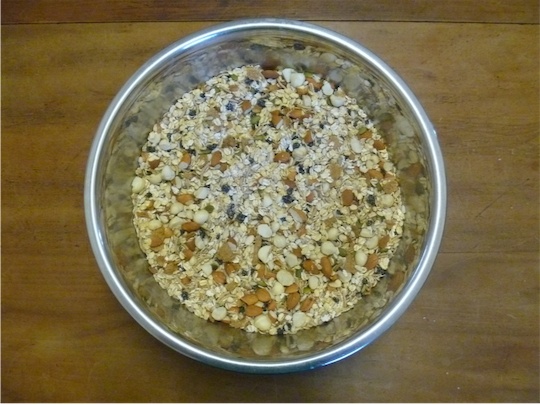
If you buy these ingredients in bulk it will save you time and money.
But a word of warning about buying in bulk: store your ingredients in the freezer for 2 – 3 days before making your muesli. Often moths can get into bulk bags so you want to make sure you eliminate them (unless of course you want some extra protein!)
2. Basic cooked breakfast
You don’t have to spend $20 at a café to enjoy a delicious cooked breakfast. For very little money, you can make your own.
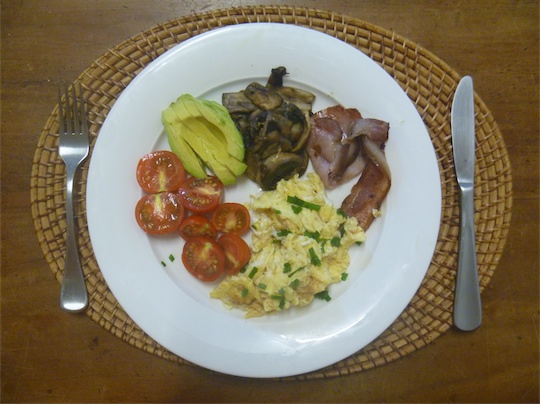
I like to keep things simple by scrambling some free-range eggs. I then add any of the following sides:
half an avocado
some fresh cherry tomatoes (halved)
cooked mushrooms and spinach
nitrate free bacon
a few slices of halloumi
a hash brown
homemade baked beans
You may have noticed that I don’t have any toasted bread with my cooked breakfast. The reason is bread makes me sleepy.
You want to start to tune into your body and notice how certain foods make you feel. Tailor-make your breakfasts accordingly.
3. Simple smoothie
If you don’t like the idea of breakfast or you’re in a rush, then start with a simple smoothie.
Here’s what you need to do:
Take your smoothie ingredients. Place in blender. Press button. Done.
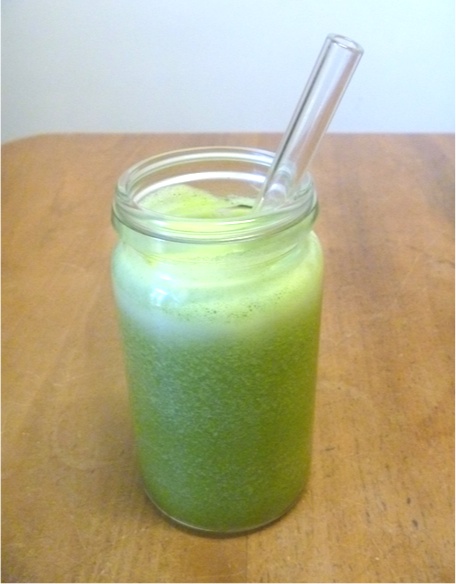
I find the key to making a good smoothie is to adhere to the basic principle of less is more. If you use a few quality ingredients, it usually tastes pretty good.
Throw in too many different fruits and vegetables and you may end up with a grey looking sludge of a smoothie. So keep things simple!
Here are my two favourite smoothies:
The Kermit: Green smoothie (created by the Margaret river bakery)
Ingredients: 1 cup of freshly squeezed orange juice, 1 apple, 1 lime, half an avocado, 10cm piece of cucumber, small bunch of spinach, handful of mint leaves and some ice-cubes.
Choco-banana smoothie
Ingredients: a handful of almonds, 200 grams of water, 1 tablespoon of cacao powder, 1 frozen banana (cut into chunks) and 1 tablespoon of chia seeds. Top with cacao nibs (optional).
Note: If you are hungry after school, smoothies are a great study snack!
4. Overnight oat parfait with fruit and yoghurt
This one sounds fancy and looks like a lot of fuss, but it’s actually really easy to make.
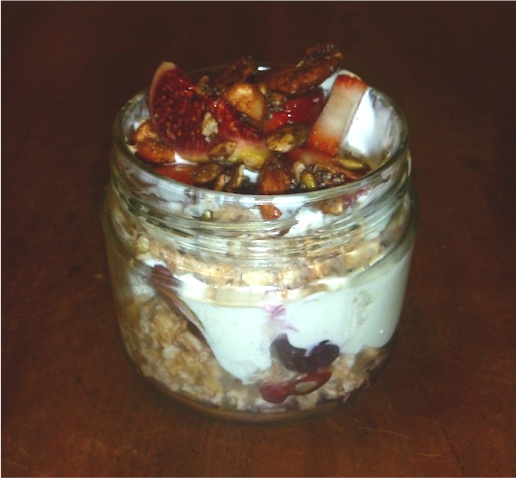
It requires 5 minutes of preparation the night before. Here’s what you do:
Mix the oats (1 cup), seeds (1 tablespoon of chia seeds, 1 tablespoon of pepitas and 1 tablespoon of sunflower seeds), spices (1.5 teaspoon of cinnamon and half a teaspoon of nutmeg), maple syrup (1 tablespoon), vanilla extract (half a teaspoon) and milk (1 cup). Cover and let it sit in the fridge while you sleep.
In the morning, grab a jar and create layers of goodness: a layer of oat mix, followed by some natural yoghurt, a layer of chopped up fruit (whatever is in season), a layer of oats, some more yoghurt and some more fruit.
Note: This makes 2 serves.
So why should you bother making your own breakfasts?
Because it’s an investment in your mind and body. With a clear mind, you’ll be able to operate at your full potential. You’ll be more present. You’ll feel calmer. You’ll look better and feel healthier and happier.
Often it’s the little changes we make to our lives that have the biggest impact.
When I cut out nutri-grain and started eating my homemade muesli, I experienced an immediate difference in the way I felt.
So why not experiment and see what kind of difference having a wholesome breakfast has on your life?

For context, she was a sales manager who used a BlackBerry phone for work (a fancy, expensive device at the time).
Every minute of the interview, her phone pinged with a notification or she received an email alert on her laptop. She’d glance at one of her devices and, with a panicked look, say, “I need to answer this!”
It was an awkward and disjointed conversation, full of stops and starts. I have to admit, her behaviour annoyed me. I soon realised I wasn’t the only person feeling this way.
The sales manager mentioned that she had a 4-year-old daughter who would get upset with her.
She told me that her little girl would beg her to put her phone and computer away. She’d tug at her clothes and cry, “Mummy! Mummy! Put your phone away!”

I appreciated this woman’s honesty, especially when she said to me:
“On the weekend, I’m with my kids but not truly with them… if you know what I mean”.
I knew exactly what she meant.
That was over 10 years ago. Fast forward to today, and we’re all a bit like that sales manager. But things are a lot worse now.
Instead of being overwhelmed and distracted by phone calls and work emails, we’re dealing with powerful Big Tech companies that hijack our time, energy, and attention.
They’ve made us weak-willed and impulsive.
We’re now in a position where distraction is something we crave rather than put up with.
When we have a gap in our schedule or we have to wait in line, what do most of us do? We reach for our phones without even thinking.
Rather than be alone with our thoughts, we desperately try to fill the space with ‘phone snacks’.
When we feel confused, frustrated, or bored, we run to our devices to escape the discomfort and our brains reward us for doing so.
Every time we switch tasks, our brain releases a little shot of dopamine.
It’s these quick hits of dopamine that train us to crave checking our phones and, ultimately, multitasking.
In an environment of unrestricted tech use, my brain is like a wild monkey. It wants to run around, make a mess, and explore many different things all at once.

I can relate to Dr Nancy Colier when she writes in The Power of Off, the mind on technology is like a “wild, locked-up monkey that’s drunk two bottles of wine chased by a shot of Scotch and been stung by a whole swarm of bees”.
When I start multitasking (and it doesn’t take much to get me going), I feel amped up, frenzied, and agitated. My energy feels a little crazy.
Research shows that as we quickly switch from one task to another, we rapidly deplete our finite mental resources and put our brains under a lot of stress.
But it gets worse . . .
When we multitask, we also experience what researcher Sophie Leroy calls Attention Residue.
In a research paper called Why is it so hard to do my work? Leroy explains Attention Residue as the extent to which your attention is only partially focused on the current activity because a prior activity (the task you rapidly switched from) is still holding part of your attention.

Why does this matter?
Leroy’s research found that when you experience Attention Residue, your performance suffers.
It’s as if you’ve taken a big dollop of the previous task and put a thick slather of it all over the current task, thereby making a mess of the present moment.
The good news is we can stop messing with our precious moments by focusing on one task at a time.
In his excellent book Time Surfing, Zen Monk Paul Loomans encourages us to focus on one task at a time, with minimal interruptions, and do it until completion. He says if we do this, we will experience a sense of calm and pleasure in everything we do.

Even tasks we consider boring or mundane (e.g., peeling potatoes or cleaning your room) can be transformed into artistry when you are truly present.
Part of the problem is that we’re often in a rush to get to the next thing on our to-do lists. But as Loomans warns, “Rushing is like gulping down time. You’re not living for now but for later”.
To counter this frenetic urge to race ahead, Loomans suggests that we accept whatever we are doing as “the activity of the moment”. In other words, we view the task before us as the most important thing we can be doing in this moment and we forget the rest.
It’s a simple but powerful mental shift.
I’ve noticed that when I accept whatever I am doing as the thing I should be doing right now, I no longer feel the urge to work with such intense energy. I feel calmer. An added bonus is that when I slow down, I make fewer mistakes and tend to do a better job.
At the heart of it, doing one thing at a time means showing up to life and being present, to the good stuff but also the painful, boring bits.
If you find yourself reaching for your phone more than you’d like, ask yourself this question:
“Am I reaching for my phone to escape the present moment?”
For me, the answer is usually yes. I’m trying to avoid the discomfort of life. But life tends to be more meaningful and enjoyable when I stay fully present to what’s happening around me, with my phone out of sight.
Technology will dominate your life, and multitasking will be an issue unless you have strategies to protect your time, energy, and attention.
What motivates me to set limits on my tech use (specifically my phone) is a desire to feel calm, grounded, and focused. I also want to live a life of substance, not one in which I am constantly chasing instant gratification.
Here are the strategies that I am currently practising to help me decrease multitasking and cultivate calm:

When I’m with someone or working on an important task, I put my phone away and keep it out of sight. I want to be fully present with the person I’m with or the task at hand. Why?
Because attention is how we show others they matter.
When someone is checking their phone in a social situation, it communicates “I’m more interested in what’s happening on this screen than I am in you”.
When I think back to the interview with the sales manager, it would have been a better experience for everyone if she had put her phone on silent, left it in her bag, and closed her laptop.
There would have been fewer times saying “What was the question again?” and “Sorry, I can’t remember what we were talking about”.
We probably would have felt more connected, too.
Note: Even when my phone isn’t within arm’s reach, I can still catch myself rapidly switching between web browsers and tasks. However, I’ve noticed that my multitasking significantly increases when my phone is within arm’s reach.
You’ve probably heard of intermittent fasting, where you have a window for eating (e.g., 10am to 6pm). But have you heard of phone fasting?
Phone fasting is a period during the day when your phone is not within reach.
As TJ Power states in The Dose Effect:
“A phone fast enables your dopamine to replenish and creates the opportunity for connection and restoration.”
So, as an experiment, for 30 days, I phone fasted from 8pm until 12noon the next day (allowing myself to make urgent calls if needed). I discovered that this made a big difference to my ability to focus. I also experienced a sense of calm like never before.
At the start of the day, I create a ‘Wish List’ (another wonderful concept from Paul Looman’s Time Surfing book).
I write down all the things I’d like to do in the day, but there’s no pressure to do all of them. I then put the list away, and depending on how I feel, I listen to my intuition and trust myself to choose the right activity to begin with.
Before I start a work session, I also declare what I intend to do (e.g., “Chop vegetables for curry” or “Write for 45 minutes”). If possible, I also like to share what I plan to do with another human (I use an online coworking community called Cave Day to do this).

After every 25-30 minutes of work, I aim to take a short movement break (usually 2-5 minutes in duration). This helps me to stay energised and alert. But most importantly, it gives me a brain boost.
What I wish I had understood when I was younger is that you can’t focus for hours on end. It’s not humanly possible because your brain has a finite amount of attentional resources. This means as you focus on doing a task, your attentional resources get depleted (and if you multitask, you accelerate the depletion even more!).
However, research shows you can boost your attentional resources by taking short breaks or, as Paul Loomans likes to call them, ‘breathers’.
A ‘breather’ is any activity that allows you to get out of your head and grounded in your body.
Some of my favourite breather activities include going for a short walk, chopping vegetables, or riding my bike to pick up a package from the post office. These activities allow my brain and thoughts to roam free.
Although many of us default to checking our phones during breaks, resist the urge. The problem with using your phone on a break is that you’re still in your head. This means you’re churning through your attentional resources instead of replenishing them.
The sense of calm and pleasure I experience when I stop multitasking and focus on doing one thing at a time is second to none.
But in the age of the Attention Economy, with so many companies trying to hijack our attention, it takes discipline and practice to stay focused.
Without strategies in place to protect your focus, the default will be multitasking and its friends – chaos, stress, and fatigue.
We may not have a 4-year-old child tugging on our clothes when we’re using our phones. But perhaps we should all listen to the wisdom of that little girl and put our phones away.

But just to be clear – this car wasn’t in bad shape when I first got it. I turned this car into a jalopy through neglect and ignoring basic warning signs.
Whenever I gave my friends a lift in this car, I remember that they always looked visibly uncomfortable. They’d say with a nervous laugh:
“Jane, what’s that strange rattling sound?”
“Why is there a red warning light on your dashboard?”
I wasn’t fussed about the red light or the strange rattling sound.
Somehow, I’d missed the adulting lesson on basic car maintenance.
For many years, I never bothered to get my car serviced. I drove it to the point where it rattled and shook violently, the engine would cut out while driving, and the brakes squealed at a painfully high pitch.
It got to the point where I could no longer ignore these problems, but by then, it was too late. My car was beyond repair and could only be salvaged for scrap metal.

I’m embarrassed to share this, as that’s no way to treat a car that gets you from A to B and uses the Earth’s finite resources. But stay with me because there’s an important point I want to make, and it’s this. . .
When I was younger, I engaged in several unhealthy lifestyle practices. Whilst I never smoked, took drugs, or consumed alcohol, I ate huge amounts of processed junk food (I didn’t know how to cook).
I also frequently sacrificed sleep to pull all-nighters to complete my assignments (I struggled with procrastination).
My body seemed resilient. It appeared capable of handling the shocks. But over time, I started feeling tired and rundown. Still, I kept pushing myself like my old car. The only time I could rest was when I got sick.
These days, everything’s quite different.
I am physically unable to thrash my body around like an old jalopy.
Something as simple as consuming too much salt or sugar can send my brain spiralling out of control.
I was reminded of this a couple of weeks ago when I visited a friend in hospital. Because I was spending a lot of time at the hospital, my usual routines of grocery shopping and cooking from scratch were disrupted.
But then to make matters worse, I was given $80 worth of vouchers to spend at the hospital cafeteria. I thought, “How bad can hospital cafeteria food be?”.
It turns out really bad.
Cheese kranskys (sausages), heaps of salty hot chips, deep-fried chicken, and soft drinks were the main options at this hospital cafeteria.
Unhealthy food seemed completely normalised in this hospital environment. My jaw dropped when I saw a patient order not just one but five cheese kransky sausages!
In this hospital setting, I also started to eat poorly. It was on my third day of eating hot chips from the hospital cafeteria when I noticed that these chips weren’t doing me any favours. I was feeling off my game.

So I decided enough was enough. I gave the remaining hospital food vouchers to a homeless man who was hanging around the cafeteria, desperate for a feed. It was back to home cooked meals for me!
This greasy processed hospital food had a ripple effect on the rest of my life. I slept badly, which impacted my ability to run the next morning (my joints hurt). I felt resistance to using my treadmill desk because everything felt much harder than usual. Since I was moving less, I was more distracted.
I know all this might sound a bit dramatic, especially to those of us who enjoy a few hot chips (e.g., my husband). Given my friend was in a hospital bed and couldn’t walk, I am fully aware of how lucky I am to be able to run in the first place (even with sore joints).
The point I’m trying to make is this . . .
I also know that small decisions, like eating too many hot chips or staying up late, can add up and take their toll on your mind and body. These tiny decisions can have a big impact on the way you feel.
When I was younger, I could eat whatever I wanted and still feel pretty good. Sometimes I’d feel a bit off, but not in a noticeable way.
As Dr Randy J Paterson states in his book How to Be Miserable in Your Twenties:
“In your twenties, some people can do practically anything to their bodies, experience no immediate physical consequences, and feel emotionally more or less well. Random sleep cycle, sedentary lifestyle, lousy diet, 90 percent of the day staring at screen, binge-drinking, isolation, the works. The body doesn’t completely fall apart, and the mind, while not thrilled, hangs on.
Later on, the effect is more immediate. Live exactly the same way at thirty-five, at forty-five, and things don’t go so well. Take a middle-aged car and drive it aggressively down jolting roads, loaded to the max, old oil clogging the engine, and it’s not going to last long. The baseline mood at forty-with no maintenance, no exercise, no dietary adjustment, no stability, and no social life- is misery. ”

Like a car, the human body requires regular basic maintenance. I see this basic maintenance as a collection of small behaviours that leave me feeling calm, grounded, and focused.
Here are a few things I need to do to keep myself running smoothly:
Every now and then, I’ll abandon these behaviours. I’ll have a day where I eat and do whatever I like. I’ll order takeaway, sit on the couch and binge-watch a series until late at night. I usually pay for it the next day, but it also gives me a better appreciation of these healthy practices and what they do for my body and mind.
It’s all about tuning in and noticing how certain things make you feel. For example, when I was in my mid-20s, I noticed every time I ate deep-fried chicken, I experienced sharp stomach pains.
That was like the red warning light on my car dashboard going off in my body. But instead of ignoring it, I paid close attention. Eventually, I decided it wasn’t worth the pain. So I stopped buying greasy deep-fried chicken and eventually went plant-based, which immediately improved my mental and physical health.

There’s no doubt that modern life can be hectic and stressful. When you’re rushing from one thing to another, it’s easy to overlook the basics and ignore the warning signs.
I’m not proud of how I treated my first car, but I learnt from the experience. Now I make sure I get my car serviced regularly. This saves me time, money, and stress in the long run.
Similarly, we need to pay attention to the way in which we look after ourselves. By dedicating time, energy, and attention to the small things that make us feel better, our experience of the present moment becomes richer. As longevity researcher Dan Buettner says, “You can add years to your life and life to your years”.
“Suzuki Swift 1.3 GTi 1990” by RL GNZLZ is licensed under CC BY-SA 2.0. (used in image 1)
“Scrap yard 22l3” by Snowmanradio at English Wikipedia (Original text: snowmanradio) is licensed under CC BY-SA 3.0. (used in image 2)
“KFC Wicked Wings” by avlxyz is licensed under CC BY-SA 2.0. (used in image 5)

In our modern world, overwhelm and distraction threaten to constantly derail us.
As artist Austin Kleon states in his book Keep Going:
“Your attention is one of the most valuable things you possess, which is why everyone wants to steal it from you. First you must protect it, and then you must point it in the right direction.”
In this article, I share a powerful practice that can help you protect your attention and point it in the right direction: working like a sprinter.
As a teenager, I remember watching Australian Aboriginal athlete Cathy Freeman run in the 400-metre race at the Sydney 2000 Olympics.
In that incredible race, Cathy did one thing and one thing only: she ran as fast as she could in a focused, intense burst.
She was 27 years old and had been training for this event for 17 years. Having won silver at the previous Olympics, the pressure was on. The entire nation was watching Cathy.

To this day, I still get goosebumps when I watch the footage of this race (you can watch it here).
Cathy was in the zone. She was completely focused on the task at hand. She knew what she needed to do: run.
Shortly after crossing the finish line, Cathy sat down to catch her breath and process what she had just accomplished (she had won gold). The crowd went wild and was completely absorbed in the moment, too.
Back in the year 2000, during the Sydney Olympics, smartphones and social media didn’t exist. Not everyone had access to the internet (my family did, but it was slow, expensive, and could only be used at home on a computer). In this environment, it was much easier to focus.
It’s fair to say that the early 2000s were simpler times.
Some scholars (e.g., Dr Jonathan Haidt, and Dr Anna Lembke) argue that smartphones and social media have caused several harms to society, including a reduced capacity to pay attention and an inability to tolerate discomfort.
Despite the noise and chaos of the modern world, it’s possible to train yourself to focus better.
How do we cultivate better focus?
One way is to tackle our work like sprinters.
The practice of working like a sprinter is refreshingly simple: You work in a short, focused burst (25-45 minutes), then take a break to rest and recover (5-15 minutes). After that, you repeat the process a few times before taking a much longer break (30 minutes).

I usually work this way for about 3 – 4 hours a day.
But I’m not fixed and rigid about this practice. This technique is adaptable. The key is to listen to your body and tune into what it needs. Make this practice work for you.
If you develop the habit of working in this focused way, you’ll be amazed by how much you can get done. More importantly, instead of feeling mentally fried at the end of the day, you’ll feel energised. You’ll also experience a delightful sense of calm and peace.
In short, this is a practice well worth cultivating.
In a nutshell, working like a sprinter involves three distinct phases:
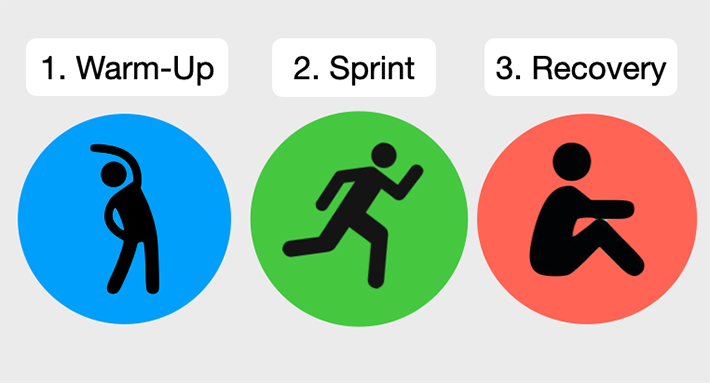
It’s simple, but it’s a practice that takes practise.
Below, I delve into each phase in more detail and share some things that help me work in focused sprints.

I do my best work sprints in the morning between 9am and 12noon. But these focused sprints don’t just magically happen. It’s not like I roll out of bed and dive straight into a work sprint. First, I need to warm up.
The warm-up phase allows me to get in the right headspace and set up my environment to be focus-friendly. It has a dramatic impact on my brain’s performance, affecting my ability to focus, creativity, productivity, and mood.
Just to be clear, the stars don’t have to align, and the conditions don’t need to be perfect to kick off a work sprint. I’ve simply noticed that I can work better after engaging in a few behaviours and morning practices.
Here’s what I’ve found makes a difference . . .
What distracts you when you’re trying to work? What things frequently derail you?
Take note of the things that hijack your attention and throw you off track.
In one of my favourite books on getting organised, Organizing Solutions for People with ADHD, Susan Pinsky writes:
“The more you explore the distractions that keep you from working, as well as the tools that help you to focus, the more organized and productive you will become.”
Once you know what distracts you, you can figure out ways to deal with those distractions, which brings me to the next point . . .
For each distraction, think of ways to make it harder to engage with it. What barriers or strategies could you put in place? Are there any tools that could help you focus better?
For example:
Dealing with distractions from the outset (before you sit down to do your work sprints) makes it easier to stay focused and on track.
Many of us have become used to constant stimulation; without it, we feel anxious. This is why we reach for our phones and scroll through our feeds as soon as we experience a slight pang of boredom.
If you can relate to this, you will benefit from engaging in a daily meditation practice.
If you’re new to meditation, I recommend starting with the following tiny habit of doing a micro-meditation:
After I put on my shoes, I will pause and breathe in and out three times.
Not sure how to meditate? Close your eyes and focus on your breath, going in and out. If a random thought enters your mind (and it will), notice it and let it go. Then, return your focus to your breath.
Alternatively, you could listen to a guided meditation using an app such Insight Timer.
Clinical psychiatrist Dr John Ratey describes exercise as “like a little bit of Ritalin and a little bit of Prozac”. It’s powerful stuff.
Research shows that physical movement can help us focus better and learn faster. In terms of counteracting stress and boosting our mood, movement is like getting a biochemical massage.
This is one reason getting on my treadmill and doing interval training has become a non-negotiable part of my day. In the words of Tara Schuster:
“[Working out] is my preventative measure against the anxiety that lurks in my mind. I must throw myself out of bed in the morning and make it to the gym because I will always, always feel better for it.”
By warming up my body through physical movement, I’m able to warm up my brain by bathing it in feel good chemicals.
Deliberately exposing myself to the discomfort of running also helps me sit with the unpleasant feelings that arise when faced with difficult work. As Alex Soojung-Kim Pang states in his book Rest: Why You Get More Done When You Work Less:
“Exposing yourself to predictable, incremental physical stressors in the gym or the playing field increases your capacity to be calm and clear headed in stressful real world situations.”
On the days when I skip my morning run or a weightlifting session, my wellbeing and productivity take a hit. I don’t feel as mentally sharp or confident about tackling my work. I’ve also noticed that I’m more likely to get distracted and give in to instant gratification during a work sprint.
Can you do anything in the evening to prepare for your morning work sprints? Completing a few quick tasks before bed can help you conserve energy the next day.
Here are a few simple things I like to do in the evening to get ready for the day ahead:
Doing these simple things allows me to carry out my morning routine with ease. Then, I can hit the ground running with a clear, focused mind for my first work sprint.
If I check my phone for messages and engage in frivolous texting first thing, I crave distraction and the dopamine hits that come with it for the rest of the day.
For these reasons, I have implemented the following tech rules:
This may sound extreme, but these restrictions are incredibly liberating. As the author of the book Stand Out of Our Light, James Williams states:
“Reason, relationships, racetracks, rules of games, sunglasses, walls of buildings, lines on a page: our lives are full of useful constraints to which we freely submit so that we can achieve otherwise unachievable ends.”
By blocking myself from digital distractions and all the noise that comes with it, I can focus on chipping away at the projects that are most important to me.
Just like a chef prepares all the ingredients before cooking a dish (i.e. they create the mise en place), set yourself up with everything you need to do your work. The last thing you want is to get a few minutes into a work sprint and realise you need to go find a pen that works.
If you have everything you need within arm’s reach, it’s easier to stay focused on the task and get into a flow state.
Once the warm-up phase is complete, we move into the sprint phase. Now, it’s time to do the work.
If you’ve done the work in the warm-up phase, the sprint phase is a lot easier. All you need to do is:
There’s no need to feel rushed as you work. You’re not competing with anyone else. This is not a race. It’s totally fine to take things slow.
Don’t expect the sprint phase to be pleasant. Even after a fabulous warm-up, you will most likely feel some discomfort and resistance about doing the work. This is normal.
You’ll feel the urge to run from this discomfort. But instead of running from it, befriend it. Remind yourself that the point of these work sprints is to move the needle on the things that really matter to you.

When the timer goes off, take a moment to acknowledge yourself for showing up to do the work. Remember, this practice takes practise, and you just got some reps in.
Now it’s time to rest. You’ll probably have some momentum by now, so you’ll feel like pushing on but stop what you’re doing and step away from your work. As Ali Abdaal mentions in his book Feel-Good Productivity:
“Rest breaks are not special treats. They are necessities.”
I’m not going to lie: this phase has been the hardest for me to master. As someone with workaholic tendencies, I’ve had to work hard at getting rest.
Why is the rest phase so important?
Because the longer you focus, the harder it is to maintain your focus. The act of focusing depletes your brainpower.
The best way to recharge a depleted brain is to rest.

Like focus, rest is a skill. It takes practise. You have to be able to resist the lure of busyness and our fast-paced, always-on culture.
Here are some of my favourite ways to rest and recharge at the moment:
Whenever I find myself wondering whether to keep working or take a break, I ask myself:
“What kind of boss do I want to be for myself? A mean-spirited, hard taskmaster? Or a generous, caring boss who looks out for their employees’ wellbeing?”
The answer is simple: I choose to be a generous boss to myself. Therefore, I give myself permission to rest.
I’ve come to see each of the phases of working like a sprinter (Warm-up, Sprint, and Rest and Recovery) as critical to staying healthy and balanced. Through trial and error, I’ve learned that skipping the warm-up or rest phase or going too hard in the sprint phase can lead to chaos and exhaustion.
As you cultivate the practice of working like a sprinter, significant things will happen to you. Not only will you notice that your productivity goes through the roof, but you’ll experience mental calm and clarity like never before.
As digital distractions no longer dominate your day, the noise of the world gets dialled down. You’ll find it easier to tune into what you need and what matters most to you.
I cannot stress enough that this is a practice that takes practise! One or two sprints won’t cut it. You need to persevere for long enough to experience the incredible benefits of this powerful practice.