
The other night I was reminded of just how crippling perfectionism can be.
My husband and I were at a party and we started chatting to a man about gardening. This man proudly told us he had spent thousands of dollars on gardening books over the last few years. He then proceeded to tell us everything he knew about gardening.
At one point in the conversation, I asked him the question:
“What are you growing in your garden at the moment?”
His response?
It didn’t make any sense to me. How could this man who knew so much about gardening not be growing a single thing?
Man: “Unless I have lots of land, I can’t grow anything”
Me: “But you can grow a lot in a small space. What about the some herbs in pots?”
Man: “No. I need lots of land …”
This man had every excuse under the sun for why he couldn’t start growing some herbs and tomatoes.
Now here’s where things got really interesting …
Me: “Why don’t you come visit our garden for some inspiration?”
Man: “No thanks. If I come, I’ll be highly critical of your garden.”
Me: (Confused look on face) “But we’re actually growing vegetables. You’re not growing anything …”
Man: “I know, it’s crazy but this is what I’m like. I’m a perfectionist.”
There was the answer to why this man wasn’t growing any vegetables or herbs. He said it himself. He had a debilitating case of perfectionism.
Writer Ann Lamott famously said:
“Perfectionism is the voice of the oppressor, the enemy of the people. It will keep you cramped and insane your whole life, and it is the main obstacle between you and a sh**ty first draft.”
This poor man was too afraid to take the first step. The thought of making a mistake was just too scary.
This got me thinking. You can have every book on a topic and know everything about a particular subject area, but none of that matters if you don’t apply that knowledge.
The former CEO of Yahoo! Carol Bartz knows all about this. She states:
“I happen to be a big gardener and if you don’t kill a lot of plants along the way, you don’t know how to garden.”
Similarly, you can know 100 different study strategies but if you never use them and just highlight and re-read your notes, where’s the benefit in that?
Knowledge is power … but only if you take action and integrate it into your life.

When you try something new there’s always a risk that things may not work out. Yes, you may kill your plants. Your vegetables may get attacked by bugs. But at least you’ll learn something in the process.
Remember, all experts once started out as complete amateurs. Everything takes practice.
Author Catherine Deveny has the right idea when she says:
“Great people do things. Mediocre people talk about doing things. Small people bag other people who are doing things.”
So go do things. Don’t get stuck in a perfectionist trap. Pick something and run with it!
What’s the worst that can possibly happen?

We are sold this idea that, if you want to go places in life, goal-setting is absolutely essential.
For many years, I enthusiastically attended workshops with other goal-setting enthusiasts, where I wrote long (and overwhelming) lists of goals.
But towards the end of last year, instead of feeling delight at the idea of setting goals, I felt dread.
When I thought about setting goals, there was a little voice in my head that screamed, “Please don’t make me do this!”
So I stopped, and I listened to that little voice.
I’ve learnt that just as you shouldn’t force yourself to wear tight shoes, it’s not always helpful to force yourself to do certain things.
Sometimes you need to try a different approach, which is exactly what I’m doing this year.
I’ve decided to shift my focus from setting goals to running tiny experiments.
It’s a subtle mental shift that takes me from feeling fixed and rigid to curious and playful.
If you’ve ever created a list of goals or New Year’s resolutions, only to abandon them shortly after (and felt demoralised), tiny experiments may be for you.
In this blog, I’ll share what tiny experiments are and how you can use them to have more fun and experience more growth and learning.
In her excellent book Tiny Experiments: How to Live Freely in a Goal-Obsessed World, neuroscientist Dr Anne-Laure Le Cunff argues that traditional goal-setting approaches no longer work in these uncertain times. She states:
“The linear way is wildly out of sync with the lives we live today. The challenges we’re facing and the dreams we’re pursuing are increasingly hard to define, measure, and pin to a set schedule. In fact, a common challenge for many people these days is feeling stuck when it comes to their next steps: instead of providing a motivating force, the idea of setting a well-defined goal is paralysing. When the future is uncertain, the neat parameters of rigid goal-setting frameworks are of little help; it feels like throwing darts without a target to aim at.”
Dr Le Cunff argues that the way we set goals is broken. Not only does traditional goal-setting encourage toxic productivity, but it can also leave us feeling dissatisfied, as if we are constantly failing. She states:
“…they [traditional goal-setting methods] create a discouraging perspective where we are far from success. Our satisfaction – the best version of ourselves – lies somewhere in the future.”
She argues a new approach is required that takes us away from “rigid linearity to fluid experimentation”.

A tiny experiment is a fun, low-stakes way to test out a new behaviour and see if it’s for you.
This may not sound revolutionary, but the power of tiny experiments lies in the mental shift they bring.
Instead of pursuing fixed and rigid goals, when you run a tiny experiment, you open yourself up to exploring new possibilities and stepping into the unknown.
In the book Tiny Experiments, Dr Le Cunff lays out a simple process for designing your own tiny experiments.
The process begins by playing a game of ‘self-anthropology’. In other words, you observe your own life and capture those observations by making field notes.
Here are some things to capture in your field notes:
For instance, yesterday I went to stock up on supplies from a small bulk foods store. I got talking to the sales assistant, who mentioned that she worked at two bulk food stores in different areas. I asked her if she noticed any major differences in the customers between the two stores. Her answer surprised me. She said:
“The customers up in the hills are less rushed. They are more willing to chat. People here seem in a hurry… a bit more fast paced.”
This five-minute conversation made me realise I don’t want to feel rushed or give the impression I’m in a hurry and have no time for a chat. I want to experience more calm in my life.
That’s the first step when it comes to designing a tiny experiment: gathering a rich source of observations.
The next step is to come up with a research question and a hypothesis (i.e. an idea you want to put to the test).
I know this part may sound serious and scary, but trust me, you don’t need to be a scientist to come up with a research question and a hypothesis to test.
There’s a magical word that can help to kick-start the process: Maybe.

Maybe if I checked my phone only at certain times in the day, I’d feel calmer?
Maybe if I put my phone away 30 minutes before going to bed, I’d sleep better?
Maybe if I exercised for 30 minutes each morning, I’d feel calmer and less stressed?
Maybe if I got up and walked on my treadmill every 30 minutes for 5 minutes, I’d have more energy?
Maybe if I rode my bike and walked more (instead of driving), I’d feel more relaxed and less busy?
These are examples of potential research questions I’ve brainstormed.
The word Maybe is incredibly powerful. When you use the word Maybe in this way, it sparks your curiosity and opens you up to exploring new possibilities.
Once you’ve come up with a question, you then turn it into a hypothesis.
Below is a figure from the book Tiny Experiments that illustrates how to turn an observation into a research question and a hypothesis.

Last year, I ran various tiny experiments, several of which focused on cultivating calm.
I had noticed that my days often felt hamster wheely, rushing from one activity to the next. I wanted to feel calmer and more grounded.
With this in mind, I designed the following tiny experiment:
After I finish delivering a presentation, I will lay flat on the couch for 15 minutes and do nothing. I’ll do this for the next 5 days.

So, for the next five days, I conducted my lying flat tiny experiment.
After lying flat for 15 minutes, I’d check in with myself: How do I feel? Do I feel less stressed? More grounded? I also reflected on how I felt at the end of the day.
By doing these quick check-ins, I was collecting data on my tiny experiment.
After I’d completed this tiny experiment, I took a step back and asked myself, “How did that tiny experiment go? Was it a success? Do I want to continue doing this?”
I concluded that the experiment had been a success. I discovered that forcing myself to do nothing was a good way to regulate my nervous system and feel calmer.
But not all of my tiny experiments have been quite so successful.
Last year, I ran a tiny experiment that completely backfired.
If I had taken a traditional goal-setting approach, I would have said I had failed dismally and hung my head in shame.
But there is no failure when it comes to running tiny experiments, only growth and learning.
This tiny experiment involved selling clothing on Depop (an online fashion marketplace for buying and selling secondhand clothes).
Tiny Experiment:
I will put up one item of clothing on Depop every day for the next 30 days.
My hope was to earn some extra cash, declutter my wardrobe and extend the life of some of the clothes I no longer wear.
But as I ran this tiny experiment, it became clear it wasn’t working: I was buying more clothes than I was selling!

I’m embarrassed to admit this, but it was Winter time, and I became obsessed with cashmere jumpers (I loved the warmth and soft feel against my skin).
After listing an item for sale, I found myself scrolling through Depop, searching for more cashmere jumpers to buy. I would enter a trance-like state, as if I was using a poker machine.
If I had been selling more items, maybe I could have justified this behaviour, but I was selling very few items. Once postage and fees were factored in, I was earning only $1–$2 per item!
It wasn’t until I bought and put on a jumper that had clearly shrunk in the wash, revealing my belly button in all its glory, that I quickly came to my senses and said, “Enough!”
It was time to get off the consumer treadmill!

I quickly aborted this tiny experiment and deleted my Depop account.
You could say this tiny experiment was a flop. But I didn’t beat myself up about it. As I mentioned earlier, there is no failure when it comes to tiny experiments (only growth and learning), and I had learnt something valuable from this experience.
What did I learn?
I learnt that selling clothes online was a trap for me. It exposed me to all these other beautiful items that were really hard to resist.
I also discovered that taking photos of my clothing items made me appreciate each piece a little more. In the end, I decided to hold on to and wear several items I had taken for granted.
I also learnt that it was okay for me to quit the experiment and try something else. There was no shame in quitting. In fact, quitting was the right thing for me to do.
You always have options when it comes to your tiny experiments. You get to be flexible because nothing is set in stone.
When you are new to tiny experiments, it can feel daunting to design your own experiments from scratch.
I find it helpful to see examples of other people’s tiny experiments. This is why I belong to Dr Le Cunff’s Ness Labs community: a community of people excited about growth, learning, and running tiny experiments.
In this online community, people share their tiny experiments with each other.
Here is a small selection of tiny experiments people have shared with me:
As you can see, these are all small behaviours performed over short time periods. Most of them can be slotted into even the busiest of schedules. This is the power of tiny experiments.
After you’ve conducted your tiny experiment for the specified duration, you have three choices:

For example, in my experiment of doing nothing, I scaled the 15 minutes on the couch back to just 10 to see if I could still get the same benefits. To my delight, 10 minutes seemed to work just as well as 15 minutes.
When you run a tiny experiment, you’re constantly tweaking and refining what you do, which means you’re continuously learning and growing as a person. This helps build momentum and a feeling of success.
At the end of the day, tiny experiments are a fun, low-stakes way to improve your life. With your sights no longer fixated on some far-off destination, you have the freedom to experiment and see what works best for you.

I find this so strange because I really enjoy public speaking. And I also have grown to appreciate spiders (my husband did his PhD on trapdoor spiders).
Whether you love it or hate it, public speaking is a valuable life skill. It’s one worth cultivating.
Having delivered hundreds of presentations, I’ve learnt a lot about what you should and shouldn’t do when giving one.
I’ve also learnt that it’s wise to ignore popular public speaking advice that gets thrown around. Cliches like “Imagine everyone in the room is naked”. That’s not going to help!
Over the past 20 years, I’ve had to learn to go with the flow and be prepared for anything when delivering presentations.
Here are a few things I’ve experienced as a public speaker:
And that’s not even the worst of it.
I’m not bitter and twisted about these experiences. As the ancient Roman philosopher Seneca said:
“Things that were hard to bear are sweet to remember.”

Looking back, I can have a good laugh about them.
Although these experiences were quite gruelling at the time, I am grateful for every one of them. Why? Because they taught me something valuable.
In some strange way, they also boosted my confidence. I came to see myself as someone who could handle (and survive) difficult situations.
Here’s the thing: nobody is born with a knack for public speaking. It’s a skill you need to work on.
You have to get your reps in (reps = talks). Then after each talk, it’s important to stop and reflect on what went well and what you could do differently next time. I’ve found this to be the best way to refine my public speaking skills.
You can also improve by watching other speakers and noting what you like and what irritates you. This is what I’ve done.
As I watch people deliver presentations, I can’t help but notice small adjustments they could make that would dramatically improve their public speaking.
So, what are the common mistakes I see people make when delivering presentations?
Here are eight things I wish people would stop doing when delivering presentations, along with simple fixes for each one.

I’ve lost count of the number of times I’ve heard people start a presentation by saying things like, “Sorry, I finished putting this talk together an hour ago” or “Sorry, I’ve only had 3 hours sleep, so apologies if I don’t make much sense”.
I’m not kidding. These are all comments I’ve heard from academics presenting at conferences.
When you start with an apology, it creates negative momentum. Your audience collectively thinks, “Ugh, here we go…”.
Starting with an apology is also a sure-fire way to destroy your credibility. For the rest of your talk, you’ll be fighting for the listener’s interest and attention!
So, drop the apology. Even if you’ve only had 3 hours of sleep, the audience doesn’t need to know this (plus, they don’t care).
Begin on a positive note and harness all the energy you have for the presentation. Once you’ve wrapped things up, you can treat yourself to a nice, long nap!
Professional public speaker Scott Berkun says:
“ … most lectures are slow one-way trips into sedation.”
He’s not talking about the speed at which you talk. You can speak at a normal pace, but you need to keep things moving.
Don’t start with a long, boring introduction. Keep your introduction short and sweet, especially the introduction about yourself.
Whenever I deliver a talk, I start by saying something like this:
“Hi, I’m Jane. For the last 15 years, I’ve been experimenting with different study strategies: strategies that make learning less painful, less boring, more fun and more effective. Today I’m excited to share some of my favourite strategies with you. ”
Then, I launch straight into providing value (e.g., sharing a strategy or a new idea).
I don’t go into my qualifications, tell a long story about myself, outline all the points I’ll be talking about, or thank the client for having me there. That’s boring. It feels slow and painful.
As Professor BJ Fogg recommends:
“You should move your audience efficiently through (1) new ideas and (2) a range of emotions”.
If you waffle on too much at the beginning (or at any point), you risk losing your audience’s attention.

You’ve probably experienced sitting through presentations where the presenter read word-for-word what was on their slides.
No one walks away from these presentations feeling energised and inspired. Personally, I feel resentful and drained of my life force.
Boredom factor aside, another major problem with having too much text on your slides is that it creates interference. The audience ends up multi-tasking: switching between listening to you speak and reading the text on your slides.
Research shows that multitasking in this way leads to less retention of information. It can also be stressful for the audience.
This is why my presentation slides consist mainly of images. I use very few words (if any) on my slides. This is a deliberate design decision. I want the audience to be focused on what I’m saying rather than reading what’s on the slide next to me.
Whenever I see someone reading speaking points from their phone, I want to swipe it out of their hand.
Your phone needs to be out of sight when you deliver a presentation. Put it on silent and keep it in your bag (or even better, leave it in another room). Please do not touch it or look at it until you’ve finished presenting.
Why do I feel so strongly about phones and public speaking?
Because phones are a barrier to connection with your audience.
In the book The Workshop Survival Guide, Rob Fitzpatrick and Devin Hunt write:
“Consider the negative impact of having dinner with someone who keeps glancing at their phone…holding and checking your phone projects massive disinterest in your audience, even if it was for a workshop relevant reason.”
Instead of reading speaking points off your phone, use palm cards. But keep them small.
When I was 12 years old, I had a public speaking coach who drilled into me that big palm cards weren’t a good look. She would make me trim existing palm cards so they fit perfectly in the palm of my hand and wouldn’t be visible to the audience. I recommend you do the same.
Now, if you’re thinking, “But Jane, I need my phone to keep track of time”, I have an excellent alternative for you: two kitchen timers.
Before I deliver a talk, I set a countdown timer for the presentation duration (this way I can keep an eye on the time and make sure I don’t go over my allocated time slot). I also have another timer within arm’s reach to time exercises, such as pair shares or break activities.

I used to wear a watch to keep track of time, but this required too much mental energy to figure out how much time I had left.
Here’s the thing: presenting to a room full of people takes a lot of mental energy. This means you need to find ways to save your brainpower wherever possible. Using digital timers to keep track of time is an effective method to conserve mental energy.
Being an effective public speaker is all about removing barriers between you and the audience. If there’s a podium that everyone has been presenting behind, don’t be afraid to go against the norm and step out in front of that podium to present.
By performing this simple move, your audience will instantly feel more connected to you.
Some speakers feel constrained by the podium as their laptop or microphone is placed there. But there are simple and effective technologies you can use to free yourself from feeling tied to this spot.
Most venues have handheld microphones you can use. If not, you can project your voice.
How do you deal with being far from your laptop and clicking ahead to the next slide?
Consider investing in a remote clicker (I use this one). Trust me, this will be money well spent.
One thing that can disrupt the flow of a good talk is when a presenter says, “Next slide, please” or “Can you go back a few slides, please?” and then waits for someone near the laptop to click through the slides.
A clicker allows you to experience total freedom as you deliver a presentation. You can move around the space and maintain control of your slides.
Perfect is boring. Perfect stops you from growing and trying new things.
Think of a lot of TED talk speakers. They are often coached to have a certain polished style.

But the best TED talks are when people bring their own style to the table. They don’t try to be like the other TED speakers. They are fully themselves.
At the end of the day, people want to connect with a human they can relate to. Perfect is unrelatable.
So, don’t fall into the perfection trap. Instead, follow Scott Berkun’s advice and “avoid the mistake of trying to make no mistakes”.
Accept that you will make mistakes. And when you make a mistake, don’t take yourself too seriously. Laugh it off and keep things moving (see point 2).
You must practice your talk before giving it. Please don’t do a dry run on your audience.
In the book Confessions of a Public Speaker, Scott Berkun says:
“Practice until it feels good. Anything you plan to do in your talk must be practised. If you get a new laptop, remote or presentation software, give those things runs well in advance.”
Let me be clear: you are not practising to be perfect. You are practising so you know how to transition from one point to the next.
You are practising so you are confident with your content. The more confident you are, the easier it is to connect with your audience (and deal with hecklers).
Practise sessions also allow you to safely make mistakes and correct them.
So, when it comes to practising your talk, when and where should you do this?
If you can, practice in the conditions of the actual talk. Here’s an example from my own life . . .
A few months ago, I had to deliver an online session for a fashion company based in New York City. This meant I would be presenting at 11pm (not my usual presenting time).
I’m not exactly a night owl, so I was nervous about how I’d go about presenting at this late hour.
A week before the talk, I decided to do a practice session at 11pm. I got up from bed and noticed I could barely string a sentence together. Uh-oh. What was I going to do?
I decided to try having a long power nap at 8pm, wake up, and then do 20 minutes of exercise before practising the presentation.
Through trial and error, I discovered a sequence of behaviours that worked, allowing me to present late at night. When it came to doing the actual presentation, I felt alert and energised. I was able to present from 11pm to 12:20am with relative ease and good energy.
But had I not practised under those conditions, the talk could have very easily been a flop.
It’s normal to feel nervous before a talk. However, you need to find ways to release that nervous energy before presenting, so you appear natural and at ease with the audience.
If you’re visibly nervous, this can make your audience feel on edge and concerned for your wellbeing. This isn’t a great experience for them, and there’s a good chance it will interfere with their ability to absorb what you have to say.
I’ve found that the best way to release nervous energy is to move my body on the morning of a presentation.
A 20-minute run or ride usually does the job at releasing 90% of my nervous energy. Another 5% is usually cleared with a 3-minute deep breathing exercise.

As for the final 5%? I accept that some nerves before a talk are a good thing. I choose to view those nerves as excitement rather than fear.
The final 5% of nervous energy keeps me alert and on my toes, ready for anything that may come my way during the presentation.
The key is to stay in the moment when you’re presenting. Focus on what’s happening in the here and now. Don’t worry about the next part of your talk or the bit you stuffed up earlier. If you can just be in the present and concentrate on what you need to say at this moment, it will help keep your anxiety levels down.
I recommend experimenting with different practices to see what works best for you in terms of releasing nervous energy.
Public speaking skills are like a muscle: the more you work them, the better and more dynamic you’ll be when delivering presentations. There are simple things you can do (and stop doing) to hone and refine your public speaking skills.
The most important thing is that you don’t focus on delivering a perfect presentation. Making mistakes is inevitable. What matters most is that you learn from the experience and continue to grow and improve your speaking skills.
My public speaking journey has been a wild and exciting ride. When you approach speaking with a playful spirit and accept the fact that you can’t control everything, it doesn’t feel so scary. It feels more like a fun adventure.
“Duble herma of Socrates and Seneca Antikensammlung Berlin 03” by Calidius is licensed under CC BY-SA 3.0. (used in Image 2)
“Windows 7 robot” by randychiu is licensed under CC BY 2.0. (used in Image 6)

Procrastination feels heavy.
But what if we could turn combating procrastination into a fun game?
Lately, when I catch myself avoiding a task, I’ll play a little game to see if I can get myself to move in the right direction.
I’ve discovered that it’s best to approach any task with a curious and playful mindset. If you take yourself too seriously, all the joy and fun can get stripped from the process.
Often, when I play this game, I surprise myself because the strategy works! I’ll be off and running with a task I procrastinated on for days.
But sometimes a strategy won’t work. That’s okay. When this happens, I usually take a little break before trying another approach.
I don’t claim to be a grandmaster at playing the game of combating procrastination. But these days, I can catch myself when procrastinating, notice the warning signs, and get moving in the right direction.
In this blog, I share how you can combat procrastination in a fun and playful way to fulfil your intentions and accomplish your goals.
Are you ready to play?
Let’s begin!
If you want to play this game of combating procrastination, you first need to understand what procrastination is and the rules of the game.
I recommend you play this game on your own so you’re not competing against anyone else. There’s no first or second place, no runners-up, and no one wins a trophy.
You can play with others, but it’s a collaborative game where you cheer each other on and gently coach each other into action.
It’s also a game that never ends because the work never ends. You are constantly learning and growing.
In her book ‘Procrastination: What it is, why it’s a problem and what you can do about it’ Dr Fuschia Sirois defines procrastination as:
“ . . . a common self regulation problem involving the unnecessary and voluntary delay in the start or completion of important intended tasks despite the recognition that this delay may have negative consequences.”
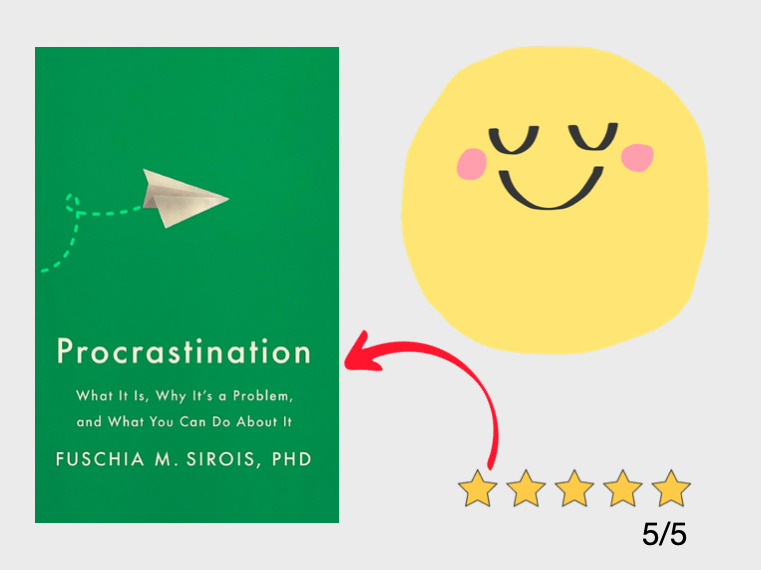
In other words, procrastination is:
Delaying a task + you know you are causing your Future Self pain and suffering.
There are some simple rules you need to understand to combat procrastination. Once you cement these rules in your brain, life becomes easier. Instead of experiencing constant resistance, you discover ease and flow.
Difficult work tends to bring up unpleasant emotions, such as boredom, stress, anxiety, fear, and frustration.
Most of us don’t like experiencing these feelings, so to repair our mood, we procrastinate. We avoid work and engage in easier, more fun tasks (e.g., scrolling through social media).
At the heart of combating procrastination is allowing yourself to sit with unpleasant feelings and push past them. Resist the urge to run to your devices. If you can do this, that’s 80% of the battle.
Pushing through the discomfort and making a start is a significant milestone worth celebrating.
Often, we wait for the perfect time to start a task. But it’s an illusion that there is a perfect time.
The perfect time is right now, amid the messiness and chaos of life.
“But I’m not feeling motivated!” I hear you say.
That’s okay. Make a start regardless of how you feel because here’s the part most people don’t understand:
Motivation follows action
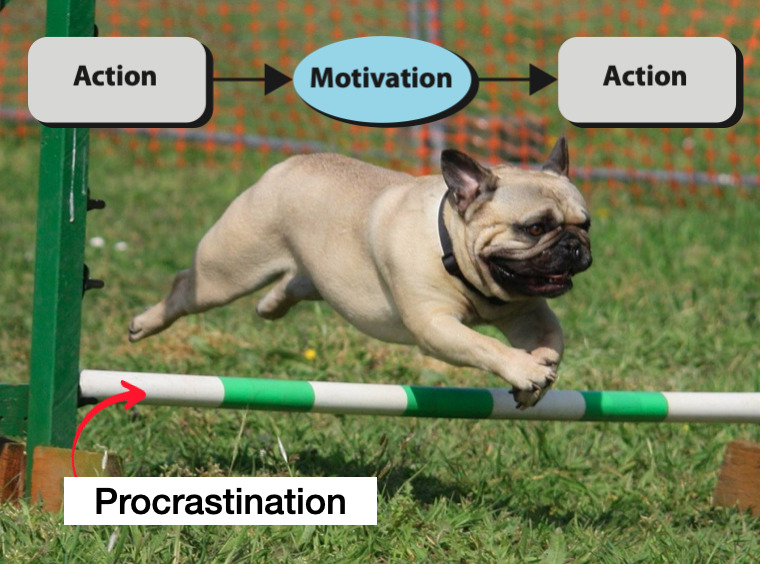
In other words, you have to get moving for motivation to show up.
There are many great strategies and tools that can help you get started with a task, even when your motivation levels are low.
Once you have a selection of strategies and tools and you’ve practised using them a few times, you will feel more confident in your ability to combat procrastination.
Here are a few of my favourite strategies and tools for getting started with my work:
Fear is a significant driver of procrastination: fear that you won’t be able to do it, fear of failure, and fear of the unknown.
When you move your body, you decrease fear and anxiety. Movement can also help to calm and focus your mind and boost positive emotions.
This is why I start my day with a 20-30 minute run on my treadmill. It bathes my brain in feel-good chemicals, makes me feel stronger, and prepares me for the challenging work I’m about to face.
When a task feels big and overwhelming, it’s easy to procrastinate. But can you do 10 minutes on the task?
When I set a timer for 10 minutes, my brain thinks, “I can do 10 minutes. Easy!”
My brain then knows the task (and the unpleasant feelings) won’t last forever. The worst-case scenario is I experience 10 minutes of mild to moderate discomfort. When the timer goes off, I have a way out. I can do something else.
But what usually happens is after 10 minutes, I realise the task isn’t as bad as I thought it would be. The motivation has kicked in, and I’m on a roll.
When struggling to write my PhD, I attended a workshop led by an academic coach. She encouraged me to “Write crap” (her words, not mine).
This helped me to get over the perfection hump and make a start.
Most (if not all) great works started as rough drafts. The problem is we don’t see those rough early versions. We only see the polished final product. This messes with our minds and can lead to perfectionist tendencies kicking in.
Embrace the first messy draft. Celebrate it! You have to do it to get to the good stuff.
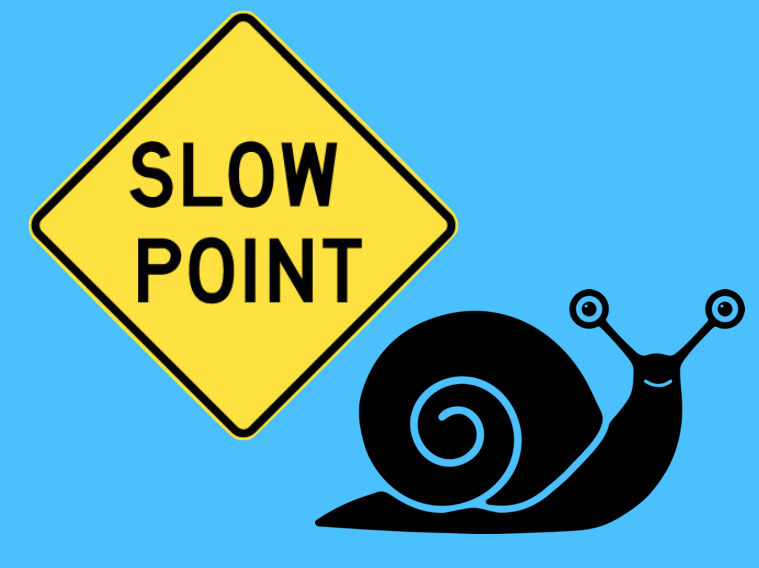
In the book ‘Everything in its Place’, Dan Charnas recommends the ‘Slow-but-don’t-stop’ technique for doing things you don’t want to do.
Here’s how it works:
If you’re feeling resistance towards a task, start doing it, but move very slowly. Breathe into the discomfort. Take your time.
Charnas writes that as you use this technique:
“You’ll still hate it [the task] but your task has become a moving meditation or like a game.”
For example, I used this strategy on the weekend to sort my laundry. The first step was to pick up the basket full of clothes and place it on my bed. Then, I picked up one item at a time and put them into piles (e.g., socks, activewear, and undies). I then selected a pile of items (socks) and dealt with one item at a time.
I’d usually rush to fold my clothes and feel slightly annoyed by the whole process (“Ugh, what a chore!”), but this time, it felt different. It felt like a meditation. I felt calm and grounded as I folded my socks.
The beauty of this technique is that the work will still get done, but as Charnas points out, you don’t give up control. You still have forward momentum.
As the Mexican proverb goes:
“An ant on the move does more than a dozing ox.”
Are there things in your workspace that distract you? Is there anything that reminds you of more fun stuff you could be doing (e.g., a video game console or your phone)?
Please get rid of those things or make them harder to access.
My phone is my biggest distraction. This is why I keep it away from my body in another room whenever I need to do focused work.
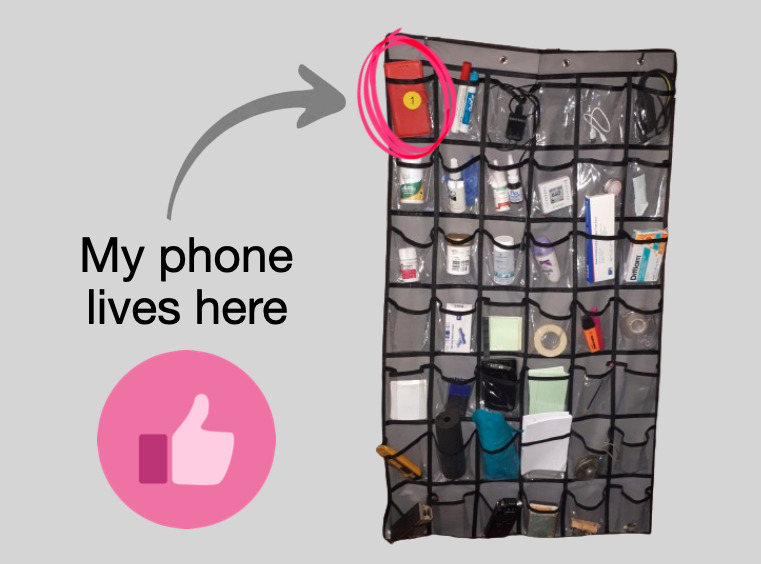
I’m currently experimenting with Mel Robbin’s 5-Second Rule. The 5-Second Rule is simple:
The moment you have the instinct to do a task before your brain can come up with an excuse not to do it, you count backwards ‘5 . . . 4 . . . 3 . . . 2 . . . 1!’ and you do it.
In her book ‘The 5 Second Rule’ Robbins explains the psychology underpinning the strategy. She writes:
“The counting distracts you from your excuses and focuses your mind on moving in a new direction. When you physically move instead of stopping to think, your physiology changes and your mind falls in line . . . the Rule is (in the language of habit research) a “starting ritual” that activates the prefrontal cortex, helping to change your behavior.”
The ultimate way to combat procrastination is to create a habit or a ritual. You need something that signals to your brain it’s time to engage in a particular behaviour.
With habits, you don’t have to stop and think, “What do I need to do now?”. Habits are automatic. Your brain knows exactly what it needs to do, and you do it.
For example, I have a habit of running on my treadmill before I launch into my day. My brain knows that after I put on my gym clothes and shoes, I turn on my treadmill and hit the speed button to start my warm-up.
I carry these behaviours out even when I’m not in the mood to run. That’s the power of habits.
Then, I suggest you cut yourself some slack.
Forgive yourself for procrastinating, pick a strategy, and get moving.
Most of us don’t do this, though.
We bag ourselves out in an attempt to motivate ourselves. The problem is this rarely works.
Dr Sirois says that intense self-criticism leads to negative thoughts, which lead to negative feelings. We end up feeling demotivated, which causes us to procrastinate even more!
You can stop the vicious cycle of procrastination by practising being kind to yourself.
If you follow these simple rules and be playful with experimenting with these strategies, you can get a better handle on procrastination.
Like anything in life, the key is practice. The more you practice allowing yourself to feel the unpleasant emotions instead of running from them, the better you’ll do. The more times you practice a strategy, the more natural it will feel and the sooner it will become a habit.
One foot in front of the other. You can do this.