
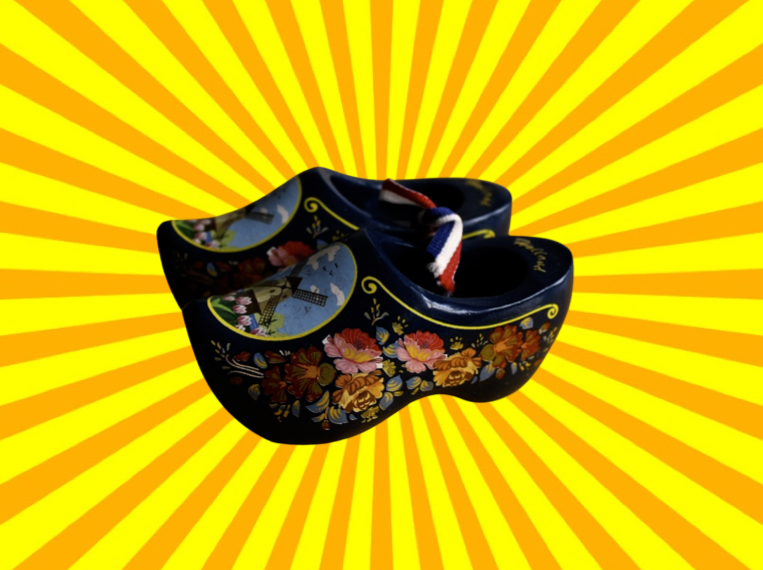
A pair of two miniature Dutch clogs.
It was a gentle reminder that I needed to take baby steps to finish my PhD.
At the time, I was touched by the gift (the clogs looked so sweet). But I also remember feeling kind of frustrated. I found myself thinking, “Ugh. Baby steps!”
I hated the idea of baby steps.
“Baby steps are for babies!”, I thought.
But I was wrong.
The baby step is your secret psychological weapon for getting stuff done.
Once you master the art of the baby step, life becomes a lot less stressful. Feelings of overwhelm disappear. But I have to admit, it took me a few years to realise the power of the baby step.
In his brilliant book How we change (and ten reasons why we don’t) Dr Ross Ellenhorn states:
“. . . small steps remind us of the distance to our goals and the disparity between what we want to be and what we currently are.”
Those little Dutch clogs were a painful reminder of how far I still had to go to complete my doctorate. Naturally, this brought up some feelings of discomfort, frustration and disappointment. I found myself thinking:
“I’ve been doing this for 5 years and I’m still not there yet! It’s taking forever! What’s wrong with me?”
We live in a world of instant gratification. There’s this cultural belief that everything should be fun, fast and easy.
When progress towards our goals doesn’t happen quickly, we can feel frustrated and demoralised.
But we need to remember, worthy endeavours take time and effort. If you want to achieve something meaningful and worthwhile in life, you’ll need to embrace baby steps.
In his book Tiny Habits Professor BJ Fogg provides some great advice on the importance of baby steps. He says:
“It’s time for someone to say it: you’ve got to lower your expectations. When I say this, people sometimes gasp. Or they smirk. Or they think I’m joking. But I’m serious.
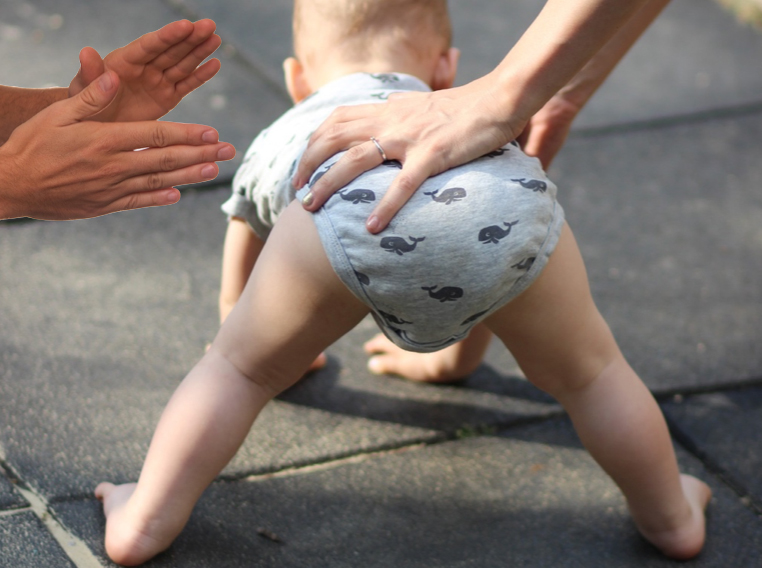
Yes, in our hyperachieving, go-getter world, I’m telling you to lower the bar. Not because I don’t want you to achieve great things, but because I know you need to start small in order to achieve them. But you can’t succeed with starting small if you’re looking down your nose at it. Why do we clap for a baby when she is taking her first step? Not because she is doing it perfectly or because she “earned it” or because she did it bigger and better than the baby next door. We clap because we know it is the first small step that she is taking toward a lifetime of walking and running – and that is hugely important.”
You need to seriously lower the bar (and your expectations).
As writer and comedian Catherine Deveny says, “Plan to do less and you will do more”.
I recently realised my baby steps were way too big. They weren’t baby steps at all! They were more like giant leaps. No wonder I was having trouble getting started.
So I had to scale them right back.
The key to mastering the practice of baby steps is to make them really easy to do. Each step has to be so small and so easy that you can’t fail.
For example, instead of telling myself “Cook one pot burrito dish for dinner”, I now say “Place pot on stove” or “Turn on stove”.
These steps are less scary for my brain, so I’m more likely to get started.
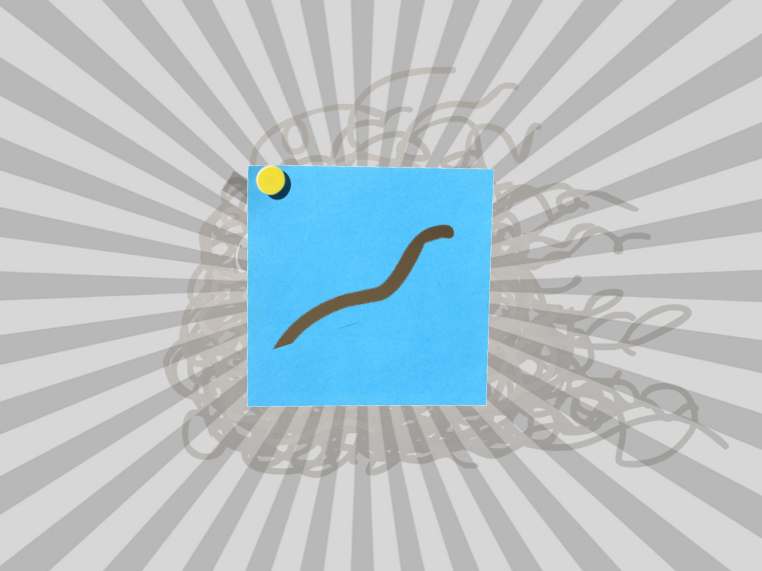
I have a tendency to focus on everything I need to do all at once. I look at a project and it feels like this ugly mess . . .
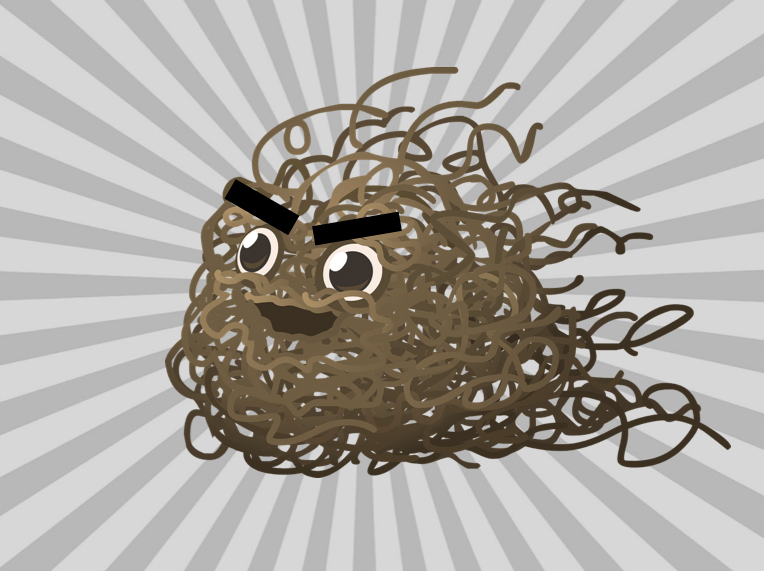
I call this creature the Beast of Overwhelm. It feels like a big fat tangled mess of ideas. When this jumbled beast strikes, my mind screams “I don’t wanna!” and “It feels too hard!”. I want to run and hide. In those moments, the baby step is no where to be seen.
But the baby step is how you conquer this creature. The baby step is the only way to show this beast who is in charge. The baby step says, “Hey! Back off! Because I’m the one in control here!”.
Once you get clear on the little strand you’re going to untangle (i.e. the baby step) and you’re in action, that beast loses its power. The anxiety and overwhelm subside pretty quickly.
As Jen Sincero (author of You are a badass) explains:
“Overwhelm cannot touch you when you’re all wrapped up in the here and now. Overwhelm is a mindset. It’s the choice to focus on everything all at once and stress yourself out. Instead, choose to take your life moment by moment and savour it, like pulling bon-bons [chocolates] out of heart-shaped box and popping them into your mouth, one by one.”
If you’ve been feeling overwhelmed by a project, don’t despair. You just have to show the Beast of Overwhelm who’s the boss.
Ask yourself, “What’s my next baby step?” Make it so easy and small you can’t fail. Write it down and go do it. Don’t delay. Start untangling the beast today. You’ll feel better if you do.

Every holiday, I tend to pack either too much or too little.
At the start of the Easter long weekend, I was overwhelmed by the task of packing for a four-day trip.
To be fair, other things were on my mind, such as the chaotic state of the world and the chaos within my home (i.e., the mess I would be returning to).
I know what you might be thinking…
“Stop your whinging, Jane. What a privilege to be able to pack your bag to go away!”
Indeed, it is! An absolute privilege.
Yet, rather than experiencing gratitude, anxious thoughts swirled through my mind.
“Have I packed enough socks and undies?”
“Do I have enough food to avoid going into the crowded shops?”
“Will the traffic be bad?”
“Will my husband insist on getting hot chips at the Service Station?”
“What books should I take?”

Among these packing questions, one stood out: what books should I take? This question weighed heavily on my mind and here’s why.
When it comes to packing books, I tend to go overboard.
I overestimate how much I can read in a single weekend. I’ll weigh down my backpack with several heavy books, only to find that I don’t end up reading any of them. Ugh.
You’d think more books equal more reading. Wrong.
More books mean more choice. And more choice usually results in decision fatigue and overwhelm.
Determined to change my usual approach this holiday, I told myself it was time to be in reality. I gave myself strict orders: I could only pack what I could realistically read in the time I would be away. That was one book.
Fifteen minutes before I was due to set off, I selected this book: Reasons not to worry – How to be stoic in chaotic times by Brigid Delaney.

I’d purchased this book several years ago, and for whatever reason, I stopped reading it after just 20 pages. I wasn’t ready for it. And when it comes to reading certain books, it’s all about timing. Every book has its time.
Now, I was finally ready to listen to what these Stoic philosophers had to say about living well in times of chaos.
We are living in unstable times. I don’t need to lay out what’s going on. You’ve seen the headlines.
It’s easy to feel powerless and unsure about what to do.
Where should you focus your limited time and energy during chaotic times? How can you focus and study for an exam when the future feels uncertain?
This is why I felt open to wisdom of the ancient Stoics. The Stoics, such as Seneca, Epictetus, and Marcus Aurelius, had many great ideas for dealing with the challenges of everyday life and for facing life’s disappointments with grace. This is what I desperately needed!
On my trip, I read most of Reasons not to worry—a breakthrough in itself! Even more powerful, however, were the book’s ideas, which left me feeling calmer.
In this blog, I want to share the most powerful idea I learnt from the Stoics: the control test—a tool that helps you focus on what you can control and let go of what you can’t.
The Stoics believed the secret to happiness and tranquillity was to focus on the things you can control and not worry about the rest. As Bridget Delaney writes in Reasons not to worry:
“The step the Stoics took first, before taking action, was to run everything through a basic test. Called the ‘control test’ or the Dichotomy of Control, the Stoics assessed what they could and could not control about a situation, and focused their attention on areas they could control.”
Delaney provides the following useful image to illustrate the control test.

This image shows that you have full control over three things: 1) your character; 2) your reactions; and 3) how you treat others.
If something relates to one of these three things, it’s within your control and you can take action.
Stoic philosopher Epictetus was a strong proponent of the control test. He believed knowing what you can control and what you can’t was the key to living a tranquil life. In his manual The Art of Living, he lays out what’s within our personal control:
“Within our control are our opinions, aspirations, desires, and the things that repel us. These areas are quite rightly our concern, because they are directly subject to our influence. We always have a choice about the content and character of our inner lives.”
In contrast, what other people think and do is out of our control. Epictetus believed that if we focus on trying to control or change these things, we will torment ourselves and waste our precious time and energy.

Thinking back to the start of the Easter long weekend, I can see that if I had run my anxious thoughts through the control test, I would have felt a lot more relaxed.
Instead of telling myself, “You’re so bad at packing!”, I could have viewed packing as a skill, as something I could work at becoming better at.
For my next trip, I could make a packing list. I could also start packing my bag the night before or even two nights before. Those things are within my control.
It’s also within my control to lower my expectations about packing. Is it really the end of the world if I don’t pack enough socks and undies? Couldn’t I just wash them if I run out?
As for concerns about the traffic being bad, this is out of my control! I can’t control how many cars are on the road or how fast they’re going. However, what I can control is my own driving ability (e.g., sticking strictly to the speed limit and taking regular breaks to recharge).
What about my husband buying overpriced hot chips at the Service Station? It is within my control to encourage him to buy a healthier snack, but ultimately, it’s my husband’s choice. If he wants hot chips, I can’t stop him. But it is within my control not to eat those hot chips.
Since reading Reasons not to worry, I’ve been applying the control test to my life several times a day. When I notice I’m feeling worried, upset, or unhappy about something, I ask myself, “Is this within my control?”
This simple practice has helped me to chill out, conserve my energy, and be less of a control freak. As a result, I feel better, and so does the rest of my family.
As Delaney writes:
“Used well, the control test will change how you use your energy and where you place your care and attention. Your energy should be focused on the first part of the equation: doing the thing well. And you should not direct any energy or worry to things out of your control, such as the outcome or people’s response to what you do, because that is wasted energy. You will only end up with your tranquillity disturbed”.
The control test can help us prepare effectively for tests and exams. You can’t control the way your grades are scaled, the exact questions you’ll be asked on the exam, what your exam timetable will look like, or if you’ll have back-to-back exams. Those things are externals, so the Stoics would say don’t waste your energy worrying about them.
But what you can control is how much you prepare for your exams, how much study you do, how much sleep you get, the strategies you use to learn the information, whether you refer to the syllabus, and how focused you are as you study.
How you prepare is within your control. And the more prepared you are, the better you will do in your exams.
Does the Control Test mean you shouldn’t try to help others in your community or push for environmental, social, or political change?
Not at all.
Delaney writes:
“. . . Stoics were not passive people. Historically they were people of action: political leaders, emperors and soldiers. But they knew that even if they trained hard, acted with integrity, built alliances and put in a lot of effort, they couldn’t control the outcome. They could only control their own character, own actions (and reactions) and how they treated others.”
The control test can help you to stop stressing about things that are out of your control and worrying about what other people think. In the spirit of the Stoics, focus your energy on doing your best work, being the best version of yourself, and treating people with kindness.

I experienced this firsthand when I was an exchange student living abroad. When I was 16, I travelled to the south of Italy to live in a small village called Spinazzola.
This had been my dream, and my parents forked out over $2,000 to make it come true (thanks, Mum and Dad!).,
I wanted to make the most of this once-in-a-lifetime opportunity, so I set off with an ambitious goal to come back fluent in Italian.
Before I left for Italy, several people had told me that I would pick up the language “just like that!”. I was told that I’d be fluent in no time.
I took their words as gospel truth.
So I became concerned when, after just a few days in Italy, I wasn’t speaking like the locals. I thought, “Why am I not fluent in Italian by now? What’s going on? Is something wrong with me?”
Panic and worry set in. I became stuck in an anxiety loop. Thoughts rolled through my head, such as:
“Am I learning the language fast enough?”
“Am I going to come back knowing enough?”
“How will I compare to the other Australian exchange students? What if my Italian sucks?”

This anxiety spilled over into almost every amazing experience I found myself in: a trip to the local pizzeria with my new friends from school, family dinners, and day trips with other exchange students.
To counteract my fears, I doubled down on my study, carrying a mini pocket Italian dictionary with me everywhere I went (this was well before mobile phones and Google Translate existed).
About a month into my student exchange experience, out of the blue, a young man snatched the pocket dictionary out of my hands.
This man was called Gianluca. He was my host sister’s 18-year-old cousin who had travelled with his parents from Milan to spend Christmas with my host family.
Gianluca was a character. He had wild, voluminous curly hair, a cheeky smile, and a sense of style.

Gianluca was also a slightly arrogant man. He would say whatever was on his mind, seemingly without caring if he upset or offended others.
For example, one of my first interactions with Gianluca was when I sat down on a stool, thereby exposing my white socks. He gasped loudly and said in Italian:
“Jane Christine, white socks with black shoes is a fashion crime! No, No, No!”
I took his words very seriously and have never repeated this fashion faux pas.
But it was the moment when Gianluca snatched the dictionary out of my hands that I remember more than anything else. This moment had a profound impact on the rest of my exchange experience, and I am deeply grateful to him for that.
It was late in the evening. A group of us had been talking and playing Italian card games. Remember, these were simpler times (there were very few mobile phones back in those days and no social media).
I was struggling to follow the conversation in Italian, so I picked up my dictionary to look up a word, but Gianluca stopped me. He grabbed hold of the dictionary and said:
“Put the dictionary down. You don’t need this! Just be here in this moment!”
Gianluca was trying to tell me to relax. To stop hiding behind my dictionary. To stop trying so hard to learn Italian.

He was right. Sometimes, when you try too hard and are too fixated on achieving a future goal, it can get in the way of actually doing what you need to do (in my case, learning Italian).
Oliver Burkeman writes about this in his book Meditations for Mortals. He argues that there are benefits in not trying so hard. He writes:
“The less I’m trying to get something out of an experience, the more I find I can get into it, and the more I can be present for other people involved.”
Those first few weeks in Italy, I had been trying too hard to master the language and get the most out of my student exchange experience. I was trying to frantically get to a place where I could tick the ‘Fluent in Italian’ box.

I can now see clearly that by trying so hard to learn Italian, I was sacrificing my enjoyment in the present moment. I was also undermining my ability to learn Italian.
You’ve probably heard the phrase “La Dolce Vita”. This directly translates to “The Sweet Life”.
But what it means is a relaxed, easy-going approach to life. An approach where you enjoy the simple things: a hearty, simple meal shared with your family, a reviving nap in the middle of the day, and an evening stroll (‘passeggiatta’) down the main street with friends.
Whenever I picked up my dictionary, which was frequently during those first few weeks in Italy, I embodied the polar opposite of “La Dolce Vita”. I transformed a potentially fun, rich moment into an anxiety-fuelled study session.
I also took myself out of the present moment. And effective learning (and living) is all about being present.
Gianluca’s words – “Put the dictionary down!” – hit home. That evening, I put my pocket dictionary away and gave up on trying to master Italian in a day. I took the pressure off myself and relaxed into the experience.
Soon after, I asked my host mother Rosa if I could join a local exercise class. I knew that movement always made me feel better. It relaxed me. I was so happy when Mamma Rosa agreed.
At this class, I’d slip on some special socks over my shoes and slide from side to side on a slippery mat (a slide board).

I took this crazy exercise class with a bunch of middle-aged Italian women wearing spandex and leg warmers (it was Winter). Occasionally, someone would lose control on their slide board and fall to the ground.
For 60 minutes, I was able to get out of my head and get grounded in my body. This exercise class, as strange as it was, made all the difference. It relieved my anxiety and fears straightaway. It calmed my mind and made me feel like I was doing okay.
Ironically, once I felt calmer and less pressured to ‘learn Italian’, I started to pick things up. Learning the language became easier and easier. It didn’t happen in an instant. But it was happening. Slowly but surely, my language skills improved.
When I came back to Australia, I hadn’t mastered Italian (can you ever really master anything?), but I could hold a solid conversation with my nonna in Australia.
The whole student exchange experience fundamentally changed me. I learnt so much more than just Italian.

I learnt the power of a good nap after lunch (strictly enforced by my host mother), the importance of connection and community, and that if you’re having pasta, you must mop up the last bit of sauce with some bread (this Italian tradition is called ‘scarpetta’).
But I also learned not to try so hard. Instead of rushing to get to a specific destination, it’s okay to just explore, learn, and grow at your own pace.
“Mappa ferr Spinazzola-Barletta” (Used in Image 1) by Arbalete is licensed under CC BY-SA 3.0

I was the kid who was always late for school. I’d forget things. I’d lose my stuff. I’d regularly have to check the grimy lost property bin.
When I was younger, I admired people who were organised. Seeing someone with colour-coded files, a neatly arranged bag, and a tidy bedroom was inspiring.
I figured I was just wired differently. Being messy was just how I was—a simple fact of life. My boyfriend (now my husband) even affectionately nicknamed me Mess Pot.
It never dawned on me that perhaps these ‘organised’ people I was so in awe of had been exposed to other organised people and practices from a young age.
It wasn’t until I was in my early twenties that the penny finally dropped.
Here’s what I realised . . .
No one pops out of the womb knowing how to be organised.
If you know how to learn, you can learn how to become organised. It’s not rocket science.
So, that’s exactly what I did.
Over the past 15 years, I’ve taught myself to be organised.
I’ve read many books on the topic, from Marie Kondo’s bestseller The Life Changing Magic of Tidying Up to David Allen’s Getting Things Done.

I’ve experimented with numerous organisational methods, systems and strategies that the authors promised would transform my life from chaos to freedom, control, and ease.
In this article, I share what I’ve learnt from all these books, organisational gurus, and personal experiments I’ve conducted to become organised. I hope this inspires you to develop your own systems and strategies that work for you.
You can follow other people’s systems and methods, but I’ve discovered that it’s best to develop your own organisational system. The organisational system you adopt must align with your values and goals. If it doesn’t, abandon it or tweak it until it feels right for you.
For instance, I love books, and I own many. This is why I yelped out in pain when I read Marie Kondo’s advice on how to deal with books.
In her book The Life Changing Magic of Tidying Up, Kondo advises readers to rip out relevant pages from reference books and discard the rest of the book. There was simply no way I would do that to my precious books!
Central to her KonMari method is holding an object in both hands and feeling the emotion that arises.
If the object sparks joy? You keep it.
If there is no joy? You get rid of it.
I can see how this strategy has enormous appeal. It simplifies the decluttering process. You don’t have to think too hard. But there are dangers in the spark joy approach.
You can end up on a consumer treadmill of discarding items that no longer spark joy and constantly acquiring new ones that do. However, you can bet that the joy will soon dissipate from those new items as you habituate to them.
In addition, this ‘Spark Joy’ strategy also overlooks the functional role of many items in our lives.
My toilet plunger doesn’t exactly spark joy, but it’s incredibly useful when I need it!
The point is you need to trust yourself. Don’t give all your power away to a stylish organisational guru with a cult following and a Netflix series!
Trial and error is the key to getting your organisational groove on. And patience.
Your life won’t be transformed in a day or a week. You have to trust that the solutions will come, but it will take time.
This may sound a bit woo-woo and new age. So, let me frame it another way . . .
On your journey to become organised, pretend to be a scientist. Run some personal experiments.
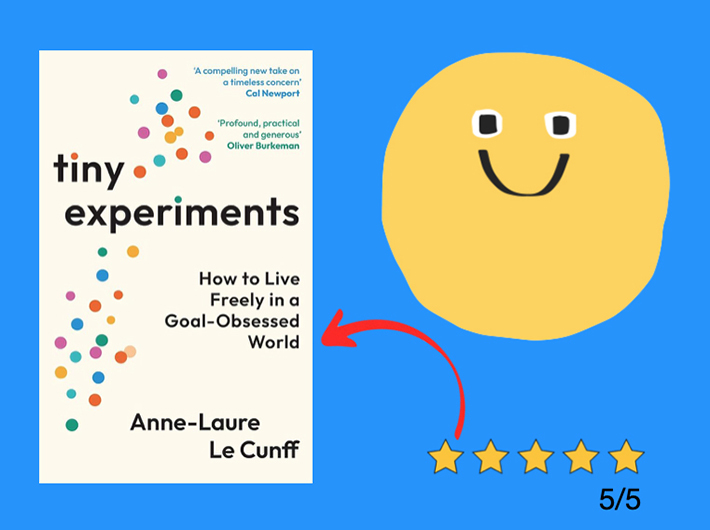
In the book Tiny Experiments, Anne-Laure Le Cunff encourages us to come up with a research question and then turn it into a hypothesis. She states:
“Don’t overthink it. Formulating a hypothesis is an intuitive process based on your past experiences and present inclinations. It should simply be an idea you want to put to the test- an inkling of an answer to your research question.
If you observed that you dread giving presentations, maybe improv classes could help build your confidence. If you feel anxious in the morning, maybe meditation could help regulate your emotions. If you enjoy graphic design, maybe freelancing could help strengthen your portfolio.”
Don’t be put off by this scientific language (e.g., ‘Hypothesis’ and ‘research question’). Running a tiny experiment and formulating a hypothesis is easy.
Here’s an example from my own life . . .
I’ve noticed that when clutter piles up on my desk, I am more easily distracted and feel overwhelmed. So, I came up with the following research question:
“How can I decrease feelings of overwhelm and increase my ability to focus when I’m at my desk?”
My hypothesis to this question was:
“Decluttering my desk by removing all non-essential items will decrease feelings of overwhelm and increase my ability to focus on the task at hand.”
Then, I put this idea to the test and observed what happened.
Some experiments you run will work. Others will flop, but that’s okay. The point is you won’t know unless you run some tiny experiments.
As Anne-Laure Le Cunff states:
“Once you have a hypothesis, you can design an experiment and turn your life into a giant laboratory for self-discovery.”
Through running tiny experiments, I’ve come to realise that being organised isn’t about having a beautifully colour-coordinated filing system or a nicely decorated home.
It’s also not about following 10 simple steps and waking up one day to find that you’ve magically become an organised person.
In our materialistic culture, we are sold a particular idea and image of what it means to be organised. But I’m not buying it. And you shouldn’t either. Why? Because it’s a lie designed to make us feel bad about ourselves, so we buy more stuff!
In stark contrast to the slick images you see online and in glossy magazines, life is messy. It’s a constant struggle.
Purchasing pretty storage containers and having a tidy, organised home won’t make your life less messy and uncertain.
But I can say this: being organised will make it easier to navigate the mess and chaos of life. It will help you focus your time, energy, and attention on what matters most to you.
So, I’m suggesting that you block the influencers and ads from your feed and burn the home lifestyle magazines. You’re going to create your own personal philosophy for organised living.

Being organised is about helping my day go a little more smoothly.
It’s about removing friction and resistance between me and the tasks I need to do. When I’m organised I can easily find what I need, which allows me to dive into my projects: filming that video, cooking that new recipe for dinner, and mind mapping that book I’ve just read.
Being organised is a way to enjoy the present moment more. Instead of feeling overwhelmed by mess and clutter, I feel calm and grounded. It’s easier to focus on the task at hand.
Is it worth taking the time to become more organised and experiment with your own systems and strategies?
Yes. 100%.
Being organised has decreased my stress levels and boosted my confidence. It has also saved me a significant amount of time and energy.
I’ve found that developing a few guiding principles helps ground you in your quest to become organised.
Below, I share my guiding principles and how I’ve integrated each one into my life.
I’m not here to tell you to copy what I do (it’s best to develop your own philosophy, guiding principles, systems, and strategies). However, if you’re unsure where to start, feel free to experiment with the systems and strategies listed below.
Give every item a home. Everything should have a special place in your space.
Professional chefs do this. Before they start cooking a dish, they prepare the ingredients and take out the kitchen utensils they need. There’s a term for this practice. It’s called the mise en place.

Mise en place is a French term that literally translates to ‘putting in place’, but it means a place for everything and everything in its place.
When it comes time for a chef to start cooking a dish, they know where the ingredients and kitchen utensils are. This allows the chef to work efficiently and focus on the task at hand: cooking the dish.
In the book Work Clean, Dan Charnas explains how this concept can be applied outside the kitchen to our everyday lives.
Charnas encourages us to arrange our spaces to remove resistance. He states:
“The less friction we have in our work, the easier it is to do, the more we can do, and the quicker we can do it; and thus the more physical and mental energies we can preserve for other things.”
Mise en place changed my life for the better. I used to spend a lot of physical and mental energy trying to find my keys, wallet, etc., but not anymore.
I now have a designated spot for my keys, hat, wallet, and bag. After using these items, I return them to their special place.
With the mise en place, I no longer waste time searching for items. I can quickly and easily find what I need. You can read more about how I apply mise en place to my life here.
If something is important, I can’t have it stuffed away in a cupboard, drawer, or file. If it’s hidden away, it doesn’t exist.
This is why you’ll see vertical wall hangers in most rooms of my house. These hangers contain key items I frequently use in the space.
By having one item per pouch, I can easily find what I need when I need it.
I get easily overwhelmed by piles of stuff, so I have to be vigilant and stay on top of the mess.
I have a simple trick for keeping my space relatively tidy. I tell myself:
“All I need to do is put away three things. That’s it!”
The sink is overflowing with dishes? I tell myself, “Just do three dishes!”
Laundry is scattered all over the bed? “Just put away three pieces of clothing!”
The kitchen bench is covered in random stuff? “Put away three spices!”
Putting away three items feels easy. And when something feels easy, I’m more likely to get started.
When everything has its special place (see Principle #1: Embrace mise en place), it’s easy to implement this principle.
There’s nothing more frustrating than having a brilliant idea and having no way to capture it. You need to be able to catch thoughts as they occur.
This is why I have whiteboards, markers, pads of paper, and pens placed in key locations.
These random ideas that I capture get thrown into my in-tray to process later on.
Distractions keep you from doing what you need to do. Like a pile of clutter on your desk or boxes obstructing your entryway, distractions are a barrier to your goals and intentions.
If you want to be more organised, you need to deal with anything that could distract you before sitting down to do your work.
Like most people, the biggest distraction I face is my phone.
If I’m constantly checking my phone, I feel scattered, frenzied, and overwhelmed. Everything speeds up. I start to feel like I’m spinning out of control.
I know I have to avoid this mental state at all costs if I want to have any chance of having a productive, enjoyable day.
This is why I have a morning ritual of placing my phone in pocket 1 of my vertical wall hanger in my dining room (well away from my workspace) before I start my workday. Out of sight is out of mind.

I used to feel intimidated by the idea of planning, so I rarely planned my week or day.
But over the past few years, I’ve become a planning machine. Why? Because plans are powerful. Even rubbish plans work wonders!
As Ned Brockman says, plans “help make you less anxious about the howling chaos of modern life.”
Here’s how I create my ‘rubbish’ plans for the week and day:
At the end of every week (on a Sunday), I create a plan for the week ahead.
I do this by reflecting on the week I’ve just had (What did I do this week? Can I claim any wins? Are there any unfinished tasks or people I need to get back to?) and looking at the week ahead (What do I need to do this week?).
I write out all the major to-dos for the next seven days on a list.
This list usually overwhelms me (there’s always a lot to do!). To combat this feeling of overwhelm, I transfer a few tasks from the list to an index card. This is my daily card (the to-do list for the day).
As I complete each task, I mark it off my daily card. As I see more items being marked off, it builds positive momentum and a sense of progress and satisfaction.
I use a paper-based planner and a massive year-in-a-glance calendar to help me keep track of my commitments.

When I can see how many days I have before an important presentation or my next holiday, I feel calmer and more in control.
Using planners also frees up precious mental space for learning as you’re not trying to hold so much information in your working memory.
I’m far from being a minimalist. I love my stuff. But having too much can be overwhelming. More stuff means more things to manage, making it harder to stay organised.
As someone who loves to op-shop, I frequently have to remind myself of the following quote by William Morriss:
“Have nothing in your house which you do not know to be useful or believe to be beautiful.”
Every few months, I’ll collect some items to donate to my local op-shop. Reducing my possessions makes cleaning and organising a lot easier and quicker.
It’s important to remember why you are striving to be organised in the first place. It’s not to impress other people. You are doing this for you.
Being organised helps you pursue your goals and live in accordance with your values. You have to keep your goals front and centre of your mind; otherwise, the goal of being organised can dominate your life. Organising can become a form of procrastination.
This is why I keep coming back to my values and goals (which I have captured on a mind map). This reminds me that being organised helps me to live a good life. But it’s not the point of my life. There are more important things I want to do with my time, energy and attention.
That said, it’s hard to focus on and work towards my goals if I’m completely disorganised. I lose sight of them! You need to find a healthy balance.
If you want to be more organised, I encourage you to experiment with developing systems and strategies that work for you. Come up with an organisational philosophy and set of guiding principles that align with your values.
Why not treat your life as a laboratory and run some tiny experiments to become organised?
Through trial and error, you’ll discover what works and what doesn’t.
Remember, this isn’t about having a perfectly decorated home or trying to impress others. The point of being organised is to allow you to do the things you want to do without as much friction. It’s about living a good life.