

Unless you’re a superhero in a Marvel film, no one benefits from exposure to asbestos, lead paint, tobacco, and radioactive substances.
Toxic products are just like toxic people. It’s best to steer clear of them if you can.
If you can’t avoid them, then it’s wise to take precautions and minimise your exposure as much as possible.
Only a small child or a foolish adult would handle asbestos or a radioactive substance with their bare hands.
But I want you to consider that millions of people all around the world are constantly exposing themselves to another class of toxic products and they are unaware of it. What’s unique about these products is that the harms are invisible.
Exposure to these toxic products can result in:
I’m talking about social media platforms, such as TikTok, Facebook, and Instagram.
Over the years, I’ve read extensively on the invisible harms linked with social media. As someone who was an early adopter of Facebook, I’ve seen these harms firsthand.
I was addicted to social media until I read the book Ten Arguments for Deleting Your Social Media Accounts Right Now. I read this book in a day. The book had such a profound impact on me that I deleted all my social media accounts that evening back in November 2020.
I firmly believe now that social media is the mother of all toxic products and it’s time we started relating to it in this way.
As it turns out, I’m not alone in my thinking.

In a 2024 New York Times article, the US Surgeon General Dr Vivek Murthy stated that warning labels should be placed on social media platforms, similar to the warnings that appear on cigarette packs. He wrote:
“It is time to require a surgeon general’s warning label on social media platforms, stating that social media is associated with significant mental health harms for adolescents. A surgeon general’s warning label, which requires congressional action, would regularly remind parents and adolescents that social media has not been proved safe.”
He also wrote:
“Adolescents who spend more than three hours a day on social media face double the risk of anxiety and depression symptoms, and the average daily use in this age group, as of the summer of 2023, was 4.8 hours. Additionally, nearly half of adolescents say social media makes them feel worse about their bodies.”
Mental health issues are just one of many toxic by-products created by social media platforms.
The Center for Humane Technology has created a Ledger of Harms that details the hidden costs linked to social media, including a polluted information ecosystem that makes it hard for people to make sense of complex issues.
Under the heading ‘Making sense of the world: Misinformation, conspiracy theories, and fake news’, it states:
“A broken information ecology undermines our ability to understand and act on complex global challenges from climate change to COVID-19.”
This is why I believe social media is the mother of all toxic products. By fragmenting our attention and impairing our ability to understand complex issues, it becomes increasingly difficult to solve the massive challenges of our time.
We’ve placed too much trust in social media platforms without fully understanding how they work and what these apps are doing to our brains, relationships, and society.
Even if you understand the hidden harms, you may think that they don’t apply to you. That somehow you are immune to the risks.
I’ve lost count of how many times I’ve heard my friends make comments like:
There’s a reason why many parents working at big tech firms like Facebook and Instagram don’t let their children use the apps they work on.
It’s because they know these platforms cause harm.
For too long, we have naively trusted social media to be on our side. We believe what we see in our feed is a reflection of society. But it’s not.
Your feed is curated by the algorithm to keep you clicking, scrolling, and posting for as long as possible. This is why it feeds you outrageous content. Outrageous content hijacks your amygdala (the fear centre of your brain) and captures your attention.

The more data these companies can extract from you, the more profit they make. That’s the business model of Big Tech.
Put simply, Big Tech does not care about your wellbeing. It doesn’t care about supporting you with your goals or presenting you with accurate information that will help you make sense of the world.
As Philosopher James Williams writes in his book Stand Out of Our Light:
“There’s a deep misalignment between the goals we have for ourselves and the goals our technologies have for us.”

It’s time we said enough is enough to these Silicon Valley tech bros and their relentless pursuit of amassing more and more wealth through their addictive platforms at the expense of our collective wellbeing.
It’s painfully clear that a small handful of tech companies are hurting millions of people and bringing down society. As Jaron Lanier states:
“Bringing down a society to get rich is a fool’s game and Silicon Valley is acting foolish.”
These tech bros got rich because they captured our attention and we gave them our data. But we don’t have to put up with this. There is another way.
The Australian government is leading the way with a social media ban for under-16s. It’s a bold move that Big Tech companies are not happy about.
From December 10, all Australians under the age of 16 will be banned from using social media, such as TikTok, Instagram, Facebook, X, and Snapchat.
But why should this ban only apply to teens under 16?
Everyone would be better off by taking a break from these platforms.
As young people move away from social media, I encourage everyone, especially parents, teachers, and older siblings, to try taking a break from these apps too.
Your self-imposed social media ban doesn’t have to be forever. It could be for just 30 days.
If you’re thinking, “30 days! Why so long?”, here’s why . . .
You need to be off social media for a while to clear your head and see how crazy it all is.
What I discovered by deleting the apps is that when I used them they scrambled my brain. When I was on the platforms, they made me performative, jealous, and desperate for attention.

But it’s difficult to see it when you’re under the spell of these mind controlling platforms. Like a person exiting a cult or sobering up from alcoholism, you need to step back and gain some distance to recognise the toxic impact it’s having on you.
If, after 30 days, you feel stronger without social media in your life, you have the option of extending your ban. Or you can delete your accounts. The choice is yours.
There are several other reasons why taking an extended break from social media is well worth doing.
Firstly, this is a powerful way to show solidarity with young Australians as they go cold turkey on addictive tech.
This transition won’t be easy, especially for heavy users of the apps. By joining the under-16s in taking a break from the apps, we can better understand what they’re experiencing and offer support and compassion.
It’s also an opportunity to get to know ourselves better and live more authentic and free lives.
In Ten Arguments for Deleting Your Social Media Accounts Right Now, Jaron Lanier says:
“To free yourself, to be more authentic, to be less addicted, to be less manipulated, to be less paranoid…for all these marvelous reasons, delete your accounts.”

Big tech companies want you to think that without social media, there will be no internet or support groups to help you through tough times. That you will be isolated and lonely without their apps.
But don’t believe the lies.
The Internet will still be there to use and explore. You’ll have chat groups, friends you can email, text, and call, and meet-ups you can attend.
Trust me when I say this: you will adjust and get to know yourself better by taking a break from social media.
Whether you are forced to get off social media by the government or you voluntarily decide to take an extended break, here are my suggestions for a smooth transition off these addictive platforms:
Initially, leaving social media will feel hard. You will find yourself picking up your phone to open the app to start scrolling, but it won’t be there.
You will most likely feel a sense of loss (I did). Expect to feel restless and irritable to begin with.
But these feelings will pass.
What is happening is your brain is adjusting to a new, lower level of mental stimulation. It’s adjusting to a world where it doesn’t constantly receive quick hits of dopamine.
At some point, the discomfort will disappear and be replaced with a feeling of calm.
During this time of adjustment, treat yourself with extra care. Spend time outdoors, go for walks, get good sleep, fuel up on nutritious meals, and do things with your hands (write, draw, colour in, etc).
Engage in activities that connect you to yourself, others and the world around you.
When you engage in healthy lifestyle practices, your brain releases a balanced cocktail of chemicals (including dopamine), which leaves you feeling good rather than anxious.
When you wake up, resist the urge to check your phone right away. Even if you don’t have social media on your device, there are plenty of other ways to get quick dopamine hits, like messaging friends, checking your email, or reading the news.
When you check your phone or email first thing, it puts you in reactive mode. You also risk crashing your dopamine system, leaving you feeling sluggish and flat.
I like to start the day with some form of physical activity, such as going for a run on my treadmill or riding my bike, or tidying up my space. These activities provide a slow release of dopamine, helping set me up for the day ahead.
Some academics say generative AI is like crack cocaine for social media addicts. For this reason, it doesn’t make sense to replace social media with an anthropomorphic chatbot (e.g., ChatGPT) that sycophantically tells you what you want to hear and provides a friction-free ‘relationship’.
Life and human relationships are messy. But unlike AI chatbots, these things are real.
Time gained by stepping away from social media is best spent in the real world with real humans.
Be proactive about your social life. Text or email your friends to organise catch-ups. Take delight in hearing about what they’ve been up to.
Instead of getting a picture-perfect, curated version you’d see online, you’re more likely to receive a raw and refreshingly honest account of what’s been happening in your friend’s life.
Without social media, you’ll find yourself with a lot more free time. Use that free time to teach yourself a new skill or explore a new topic.
When I left social media, I joined a local Yoga studio, upped my kitchen game (learning how to cook delicious plant-based meals) and enrolled in free online courses that would increase my knowledge and skills.
How will you get your news? By heading straight to online news sites.
I have several online news sites loaded into my streamdeck to stay up-to-date with what’s going on in the world (e.g., Democracy Now, Al Jazeera, Guardian, All Sides, and ABC). All I need to do is hit a button, and I’m reading the news with the peace of mind that I’m no longer in a filter bubble.
There will be times when you feel lonely, bored, and sad. Instead of trying to suppress or numb these emotions, journal or draw what you’re feeling and thinking.
You could also write a letter to yourself. If you don’t know what to write, here are some prompts to get you started:
Whatever you would normally post and share, you’re now sharing with an audience of one: yourself. The good thing is there’s no need to worry about offending anyone or being cancelled. You can fully express yourself without the fear of being judged by others.
There are many toxic products in the world that we need to be aware of, and social media is another one of them. We need to treat it with extreme caution, as no one is immune to the harms caused by these platforms.
In the book The Anxious Generation, Dr Jonathan Haidt asks the question:
“What would the sages advise us today about managing our phone-based lives? They’d tell us to get off our devices and regain control of our minds.”
Australian teenagers under 16 will soon be banned from social media, but the rest of us can choose to leave the platforms freely.
In the spirit of reclaiming your mental freedom, I challenge you to run a tiny experiment where you refrain from using social media for at least 30 days.
As your brain adapts to a lower level of stimulation, you’ll experience a sense of freedom, satisfaction, and calmness. You’ll notice your life force, energy, and focus returning to you once again.

When you feel slightly bored, do you feel a reflexive, gravitational pull to check your phone?
If you spend hours each day clicking, scrolling, and posting, I want you to know that it’s not your fault.
It’s not that your weak willed, lacking discipline, or a lazy person.
It’s none of these things.
It’s no mystery or secret why so many people waste so much time on social media. Like a poker machine, these platforms are designed to be highly addictive.
Apps like TikTok, Instagram, Facebook, SnapChat, X (formerly Twitter) and YouTube contain persuasive design features that hijack your most valuable and precious resources: your time, energy, and attention.
Because the more time we spend on their apps, the more data they can extract and sell for social influence.
The business model of Big Tech companies is simple: Keep people glued to their platforms for as many hours a day as possible.
In other words, your time and attention equal massive profits for these companies.
In his excellent book The Anxious Generation, social psychologist Dr Jonathan Haidt presents data showing teens aged 13-18 spend an average of six to eight hours every day on social media apps. That’s close to 50 hours a week.

Dr Haidt notes that this is just the time spent on the app. It doesn’t factor in the time spent thinking about social media while they multitask in the real world.
So, that’s 50+ hours that could have been spent outside in nature, learning a language, working a part-time (or full-time) job, making art, cooking, exercising, getting more sleep, and hanging out with friends.
Let’s also not forget that these apps intervere with and harm our wellbeing and ability to think and learn.
The multi-tasking that takes place as we engage with these apps throughout the day drains our brainpower, weakens our memory, and makes us tense and anxious.
The social comparisons we engage in on these platforms also warps our perception of reality and leaves us feeling like we’re not enough.
So, here’s something to consider . . .
It’s possible, and I’m going to show you how.
I recently discovered a simple tool that helps people stop mindlessly consuming social media and other addictive apps.
It’s an app called one sec.
one sec is a self-nudging tool that helps you to create barriers to Big Tech that align with your goals and values.

As you open up an addictive app, one sec intervenes by creating a 10-second delay in opening the app.
one sec creates the little bit of friction needed to make you pause and reconsider your behaviour.
After the delay, one sec presents you with a choice: Do you want to proceed with opening up the target app (e.g., TikTok)? Or close the app and do something else?
The creators of one sec explain it works by utilising three intervention strategies:
It’s important to highlight that you’re in control of the whole experience. You specify what apps you want one sec to target. You can also modify the time delay (making it shorter or longer) and change the deliberate messaging.
Or is it just another gimmicky product that fails to change your behaviour in a significant way?
I’ve been experimenting with this app for the last month, and I’m pleased to say it’s working for me!
Even though I don’t have social media and the wicked algorithms that come with them, I recently noticed that I was spending far too much time in group chats.
one sec has helped me be more intentional and deliberate with how I engage with these chat groups.
Instead of mindlessly checking these apps whenever I have time to kill, I now have dedicated periods when I engage with them. I’m following Dr Faye Begeti’s advice when she recommends in her book The Phone Fix to “Set a finite number of times for checking social media, condensing a large number of short checks into defined, longer ones.”
This is what one sec has helped me to do, and as a result, my focus and well-being have improved. I feel calmer. My days feel longer and less frenetic.
But I realise I’m a sample size of one. Plus, I’m highly motivated to reduce my time on addictive apps.
The short answer is yes.
This research study found the app one sec helped people to significantly decrease their social media consumption.

In this study, 280 participants used the one sec app for a six-week period. Here’s what the researchers found:
36% of the time participants attempted to open a target app, they chose to close the app using one sec (i.e., they did not proceed with using the target app).

Over time, participants also opened the target apps less.

Opening problematic apps less or choosing to close problematic apps before engaging with them is actually a really big deal. Here’s why . . .
Less engagement with these addictive apps means less hits of dopamine.
Every quick and easy hit of dopamine you get from social media leads you to crave more stimulation from these apps. Before you know it, you’re in a full blown dopamine driven feedback loop.
Whenever I’m stuck in a dopamine loop, I’m not #livingmybestlife. Far from it! I feel overstimulated, chaotic, and jittery. Here’s why . . .
In his book How to Calm Your Mind, Chris Bailey explains that the brain networks for dopamine and calm are anti-correlated.
What does this mean?
It means when the dopamine network is activated, the calm network isn’t.
Imagine every time you mindlessly reach for your phone to check social media, you’re moving further and further away from a state of calm.
This may explain why participants in the one sec study reported experiencing increased satisfaction and happiness after decreasing their consumption of problematic apps.
The main intervention features (i.e., the time delay and option to not proceed with the target app) will help you decrease your consumption of addictive apps.
But there are many other features available with this app.
As you explore the additional features, it’s easy to feel overwhelmed. There’s a lot of extra bells and whistles. For example, there is the “Don’t get lost” notifications (i.e., scheduled reminders to close the target app when you are using it) and website blocking.
But like a lot of things in life, more features don’t necessarily result in a better user experience.
Ultimately, I decided to follow BJ Fogg’s behaviour design principle of ‘Simplicity changes behaviour’. I stuck with using just the basic features of this app.
I knew if I overcomplicated the app, I probably wouldn’t use it.
All that being said, there were two additional features I incorporated:
I use the strict block feature every day. To be clear, the strict block feature is not to be confused with the basic block feature. What’s the difference?
If you select a basic block, you’re not really blocking yourself from the app. But there’s a barrier in place. If you try to open the target app, it brings up the following message:
“Be honest with yourself. Do you really want to stop this block?”
Whereas a strict block is a genuine bona fide block. You cannot use your target apps until the block is over.
If you have developed a mindless habit of reaching for your phone and checking certain apps, you need a strict block in place until your brain has had a chance to recalibrate itself.
Here is the tiny habit I created to give my brain a chance to rewire to lower hit of dopamine from my smartphone:
After I pick up my phone in the morning, I will open one sec and press strict block for six hours.
Activating a strict block means I’m in charge for the first six hours of my day (and the addictive apps are not running the show). This sets the tone for the day and puts me in proactive mode rather than chasing quick hits of dopamine. It also helps me stay calm and grounded.
A word of warning:
Even when you feel like you have regained control over your target apps, you must remain vigilant. It’s super easy to get drawn back into a dopamine-driven feedback loop.
The journal prompt is simple and effective. Before accessing the target apps, I am prompted to write about what I have done and what I feel grateful for.
I write 25 words before proceeding to the target app. This gives me a moment to reflect, which is always a worthwhile practice.

There is a free version of one sec you can use, but it limits you to applying one sec to only one target app.
If you have multiple addictive apps on your phone (as most of us do), I recommend the paid version to unlock all the features.
It costs $25AUD for the year, which is value for money if you ask me. The app has already paid for itself in terms of the time, energy, and attention I’ve reclaimed.
I should mention that I had trouble initially installing one sec and getting it to work on the target apps. The process was a little finicky, and I nearly gave up after 20 minutes of trying to figure out how to get the app to work.
You can find similar intervention apps that are free and easier to install, such as ScreenZen. ScreenZen appears to be based on similar mechanisms (i.e., introducing a time delay and friction to the target app).
My brother recently started using ScreenZen to help combat his mindless habit of scrolling through social media. When I asked for his thoughts on this self-nudging app, he said, “It’s annoying.” But then he quickly added, “But that’s the point. It’s annoying, and that’s why you use the apps less.”
Another great feature of ScreenZen is that after spending seven minutes on the target app, it puts a stopping mechanism in place by prompting you to think about if you want to keep using the app.
I don’t think anyone consciously sets a goal to spend 20, 30, or 50+ hours a week on social media. But if you don’t have strategies to combat the addictive apps on your phone, one thing is certain: Big Tech companies will hijack your time, energy, and attention.
As Michael Harris states in his book The End of Absence:
“Never forget that you live in an ecosystem designed to disrupt you, and it will take you for a ride if you let it.”
So, don’t be taken for a ride. You can easily access self-nudging tools, such as one sec and ScreenZen, to help you defend your time, energy, and attention.
Think of the things you’ve always wanted to do but tell yourself, “I don’t have the time. I’m too busy”. What if you could reclaim a significant chunk of time to do those things today? Would it be worth taking a chance on a self-nudging app?
You’ve got nothing to lose except potentially $25.
I encourage you to test out one of these apps to protect your most precious resources (i.e., your time, energy, and attention).
Note: In case you’re wondering, I have not been paid or sponsored by one sec to write this article.
I understand this cringe factor.
In high school, goal setting felt forced. I’d think, “Why are they making me do this?” and “What’s the point?”.
However, once I got to university, I realised that goals are a helpful life strategy.
In this article, I want to share my perspective on goal setting and how this strategy has helped me to get things done.
I’m going to tell you:
• What goals are
• Why you’d want to have them
• How to stick at them
• Why you need to protect your goals from destructive outside forces
Let’s go!
Goals are things you want to do. Perhaps you want to write a book, jog around the block every morning, start a podcast, get a part-time job to save money or learn to play an instrument. These are goals.
• Goals give your life a sense of purpose
• Goals give your life meaning and a reason to get out of bed
• Goals help to focus your mind on what you want/need to do
• Goals help you to create a better, less boring life
As Giovanni Dienstmann explains in his book Mindful Self Discipline:
“We all need to aspire to something and feel that we are going somewhere. Otherwise, there is a sense of boredom in life. Our daily routine feels stale and unengaging. As a result, we seek relief through bad habits, and seek engagement through mindless entertainment, news, social media, games, etc.”
Have you ever set a goal, you felt excited, but then that excitement quickly dissipated, and you gave up on the goal?
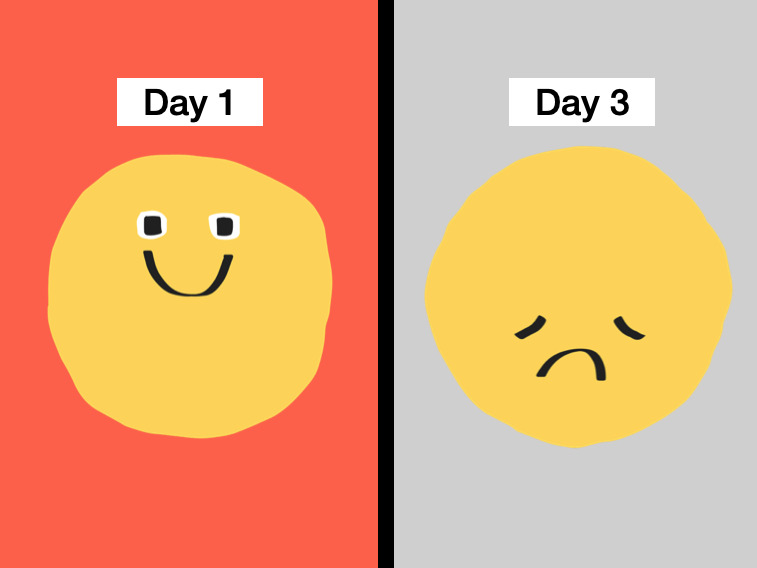
Whenever this happens, it’s easy to think, “Goal setting doesn’t work!”.
However, the problem isn’t with goal setting as a strategy.
The problem is that motivation is completely unreliable (it comes and goes). Plus, you were probably never taught how to achieve your goals in the first place.
In other words, you were set up to fail.
There’s a lot of pretty average advice out there about goal setting. I’ve heard dozens of goal setting pep talks, and many can be summed up like this:
“Set a goal, make it SMART (specific, measurable, achievable, relevant, and time-bound), break it down, blah, blah, blah.”
Most students tune out when they hear these pep talks. You can feel the energy being sucked out of the room.
This advice doesn’t work for most people. And it’s incomplete.
I’ve found that the following simple ideas can make a big difference in helping you move from inaction to action when it comes to pursuing your goals:

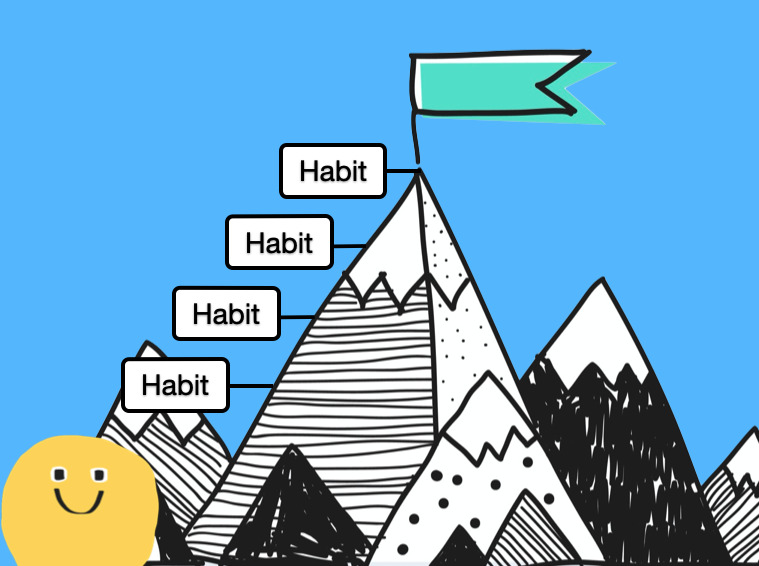
Achieving big long-term goals requires consistently engaging in small behaviours over time. You need to chip away and develop habits to get there.
For instance, after taking a hiatus from writing books (because I felt stuck and overwhelmed by the idea), I finally started writing down my ideas.
By starting small.
I told myself all I had to do was open the Word document and write one sentence. And the sentence didn’t even have to be good! But I had to do this every single day.
If I wanted to write more than one sentence, I could. But one sentence was my absolute minimum. Most days, I wrote at least a paragraph. But when I didn’t feel great, I would show up and write one sentence.
Nine months later, I had a draft manuscript ready to send to my editor.
Many different behaviours can help you achieve your goal. The first step is to brainstorm all the possible behaviours that can help you move closer to it.
One way to do this is with BJ Fogg’s tool, Swarm of Behaviors (also known as Swarm of Bs).
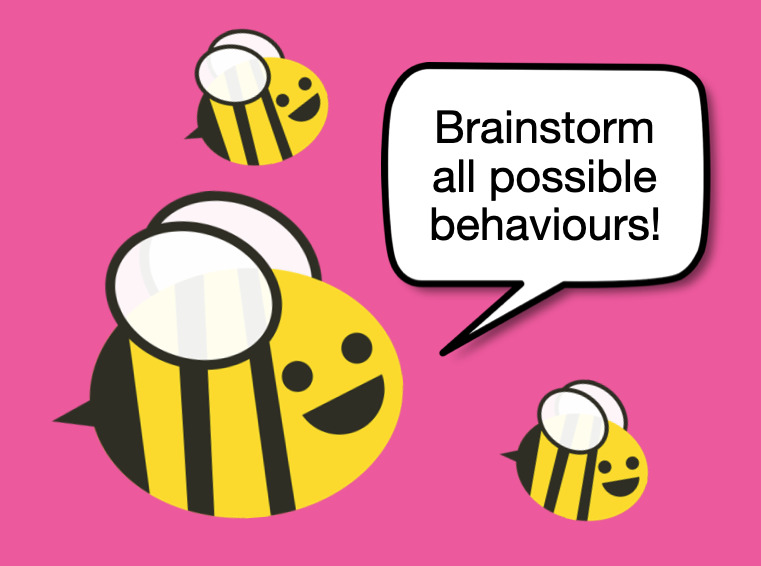
Here’s what you do:
You write your goal/aspiration/outcome (whatever you want to achieve) in the middle of a sheet of paper. Then, you spend a few minutes listing all the behaviours that will help you achieve it.
Dr Fogg stresses:
“You are not making any decisions or commitments in this step. You are exploring your options. The more behaviors you list, the better.”
When I was brainstorming behaviours that could help me to write my next book, I came up with the following list:
1. Use an Internet blocker app and block myself from distracting websites
2. Carry a notepad and pen with me everywhere I go (to capture ideas)
3. Write one sentence every morning
4. Speak my ideas into a voice recorder when I go for a walk
5. Use the Write or Die app
6. Manage my inner critic (when it strikes, say to myself, “It can’t be all bad!”)
7. Give myself a pep talk each day (e.g., “Done is better than perfect!”)
8. Do Julia Cameron’s morning page activity (i.e., free writing)
9. Attend a writing retreat
10. Sign up for the ‘Turbocharge your writing’ course
11. Pick up a mind map, select an idea and use it as a writing prompt
Once you’ve finished brainstorming potential behaviours, go through your list and select just a few behaviours to get the ball rolling (I selected #1, #3, and #6).
It’s well worth spending a couple of minutes making each of these behaviours ‘crispy’ (i.e., specific). For instance, for Behaviour #1, I decided which websites I would block myself from using and at what times.

When we work towards big life goals, the process is never neat or linear. Showing up and doing whatever you need to do (even just writing one sentence) can feel like a daily grind. Mild discomfort usually infuses the whole process.
Accept that’s how it is. It will sometimes feel like a hard slog, but the rewards are worth it.
The long-term rewards of working on your goals far outweigh the superficial rewards of scrolling through social media, watching Netflix, etc.
Even if you don’t achieve what you initially set out to do, chances are you’ll still be better off than you were before. Why? Because you’ll have learnt a bunch of new skills and life lessons.
Be careful who you share your goals with. Some people delight in stamping all over your goals and crushing your hopes and dreams.
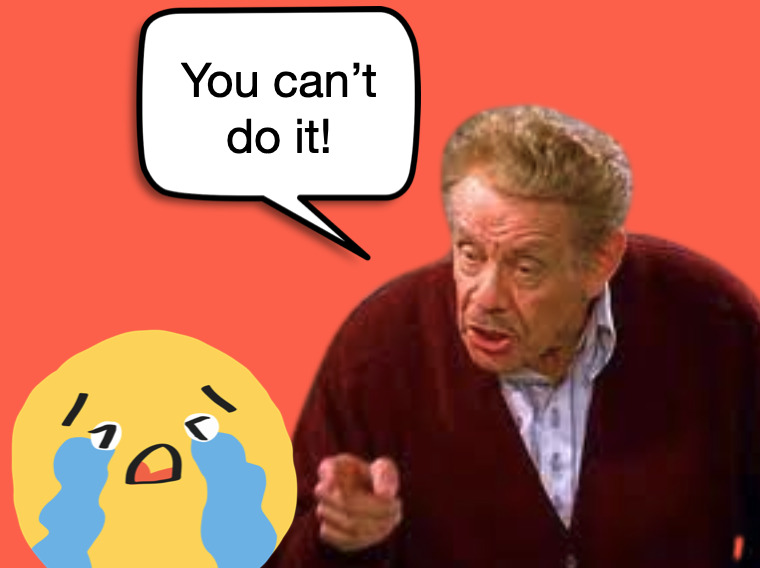
For example, when I was 10 years old, I started attending drama classes outside of school. These classes were a lot of fun and quickly became the highlight of my week.
I remember thinking, “When I grow up, I want to run a drama academy to help boost kids’ confidence”.
I felt inspired by this idea. Drama had helped me come out of my shell and I wanted this for other kids who were lacking confidence. So, I decided to be brave and share my plans with my primary school teacher at the time.
I was expecting Mr D to say, “Good for you, Jane!”. But instead, he said with a smirk, “How do you think you’re going to do that?”
And then he started grilling me with questions . . .
“Where will you get the money from to set this up?”
“Who is going to come to your classes?”
“Where do you plan on running these classes?”
On and on Mr D went.
Ugh. “Just stop Mr D!” I wanted to scream.
I was left feeling crushed.
So, take it from me: Be careful who you share your goals with. Because some people get a kick out of squashing stuff (e.g., your dreams).
But nowadays, there’s a more powerful (and often overlooked) force that can mess with your goals: social media
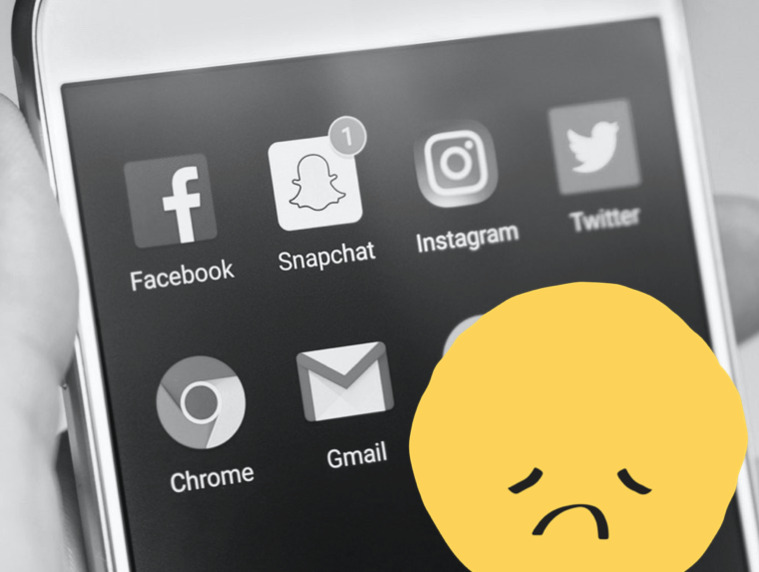
If you’re constantly checking social media and looking at what other people are doing, that’s time and energy you could have spent working towards your goals. But that’s only part of the story . . .
Social media exposes you to a hodgepodge of content: the best bits of people’s lives, advertising, conspiracy theories, and outrage-inducing influencers. All this noise messes with your goals by subtly shifting and changing your worldview, beliefs, attitudes, and what you view as important in life.
In his brilliant book Stand Out of Our Light: Freedom and Resistance in the Attention Economy, ex-Google strategist and now Oxford-trained philosopher James Williams shares his struggles with this. He states:
“. . . I felt that the attention-grabby techniques of technology design were playing a nontrivial role. I began to realise that my technologies were enabling habits in my life that led my actions over time to diverge from the identity and values by which I wanted to live. It wasn’t just that my life’s GPS was guiding me into the occasional wrong turn, but rather that it had programmed me a new destination in a far-off place that it did not behoove me to visit. It was a place that valued short-term over long-term rewards, simple over complex pleasures.”
He adds:
“…I found myself spending more and more time trying to come up with clever things to say in my social posts, not because I felt they were things worth saying but because I had come to value these attentional signals for their own sake. Social interaction had become a numbers game for me, and I was focused on “winning” – even though I had no idea what winning looked like. I just knew that the more of these rewarding little social validations I got, the more of them I wanted. I was hooked.
. . . I had lost the higher view of who I really was, or why I wanted to communicate with all these people in the first place.”
When you go on social media, you need to realise that there are thousands of highly intelligent people on the other side of the screen and it’s their job to figure out how to capture and exploit your attention.
In short, the values and goals of these big tech companies are not aligned with your values and goals. Facebook’s first research scientist Jeff Hammerbacher summed it up nicely when he said:
“The best minds of my generation are thinking about how to make people click ads . . . and it sucks.”
Take a moment to think of the people who you admire. How would you feel if you saw them spending vast amounts of time distracted and obsessed with social media?
I’ll leave you with this powerful quote from author Adam Gnade:
“Would you respect them [your biggest hero] as much if you saw them hunched over their phone all day like a boring zombie? No, you want them out there in the world doing heroic things, writing that great novel/song/whatever, saving the planet, standing up for the disenfranchised, or whatever else it was that made you love them in the first place. Let’s try to be as good as our heroes.”
Whatever you want in life, work out what you need to do to get there (i.e., the concrete behaviours), and then roll up your sleeves and get started.

If I’m honest with myself, there was a time when technology was doing me more harm than good.
On Facebook, I frequently fell into the comparison trap (comparing myself to people who had posted delicious dinners, amazing holiday photos, etc).
On Twitter, I’d get baited by trolls (and I’d foolishly take the bait).
Throughout the day, I’d constantly check my phone and email, which left me feeling jittery and chaotic.
Big Tech was constantly hijacking my time, energy, and attention. Every time I retreated to my devices for a quick shot of dopamine, I moved further away from my goals. I didn’t like this, and I knew something needed to change.
Over the past three years, I’ve implemented many practices to regain control of my time, energy, and attention (including deleting all social media).
These practices have made a big difference in my life. But I’m well aware that not everyone feels the same way I do about Big Tech, nor are they in a position to be able to delete all their accounts.
Following a school presentation, I spoke with a small group of year 8 students. I shared with them that I didn’t use any social media, to which a year 8 girl quickly chimed in:
“My grandma has Facebook. What’s your excuse?”
Her words struck me like a bolt of lightning. I didn’t know what to say.
It highlighted how adopting these apps is the norm for a young person.
When everyone else has a smartphone and is using social media (including your parents and grandparents), why would you question using them?
I couldn’t forget the year 8 girl’s words. While I appreciated her candidness, it left me slightly disturbed.
At the same time, it increased my motivation to resist Big Tech. I started searching for role models: people actively resisting Big tech and this hyperconnected, fast-paced way of life.
One community kept popping up in my research: the Amish.
The Amish are often portrayed as being technologically impaired. A classic example is Weird Al Yankovic’s music video Amish Paradise (a parody of Coolio’s mega-hit Gangsta’s Paradise).

In this video, Weird Al sings:
I never wear buttons but I got a cool hat
And my homies agree I really look good in black, fool
If you come to visit, you’ll be bored to tears
We haven’t even paid the phone bill in 300 years
But we ain’t really quaint, so please don’t point and stare
We’re just technologically impairedThere’s no phone, no lights, no motorcar
Not a single luxury
Like Robinson Crusoe
It’s as primitive as can be
While the Amish still mainly travel by horse and buggy and shun many modern technologies, such as televisions, radios, and cars, they are not ‘technologically impaired’ as Weird Al makes out.
When it comes to cultivating healthy digital habits, there is a lot we can learn from the Amish.
The Amish have a set of strategies that guide the adoption and use of different technologies. These strategies have allowed them to avoid being pawns for the goals of Big Tech companies, which make massive profits by seizing people’s attention.
I recently read a fascinating book called Virtually Amish, written by Dr Lindsay Ems. For her PhD research, Dr Ems spoke to Amish people about their relationship to modern technology (e.g., smartphones).

She argues that the Amish take control of their tech tools and thrive. Through adopting similar practices, we can thrive, too.
Below, I share how you can thrive by emulating Amish practices and beliefs around technology:
The Amish are not technophobes. They are ‘technoloselectives’.
They carefully consider the tech tools they’ll adopt and their functionality, tweaking them to help them achieve their goals.
The Amish don’t mindlessly purchase the latest gadgets and gizmos. Instead, they think about their values and goals and how the technology could cause unintended harm to themselves and the wider Amish community.
What are your goals?
Do your tech tools help you achieve them, or do they distract you from them?
The Amish are guided by their values (i.e., the things that are most important to them). Their values underpin everything they do.
So, what exactly do Amish people value?
• Community
• Connections with others
• Living a simple and slow-paced life
• Living a spiritually rich life
• Being self-sufficient
The Amish use these values to guide their adoption of technology.
An example of this can be seen with the arrival of the home telephone (not smartphone). Dr Ems shares how the Amish decided to ban the telephone from being inside the family home.
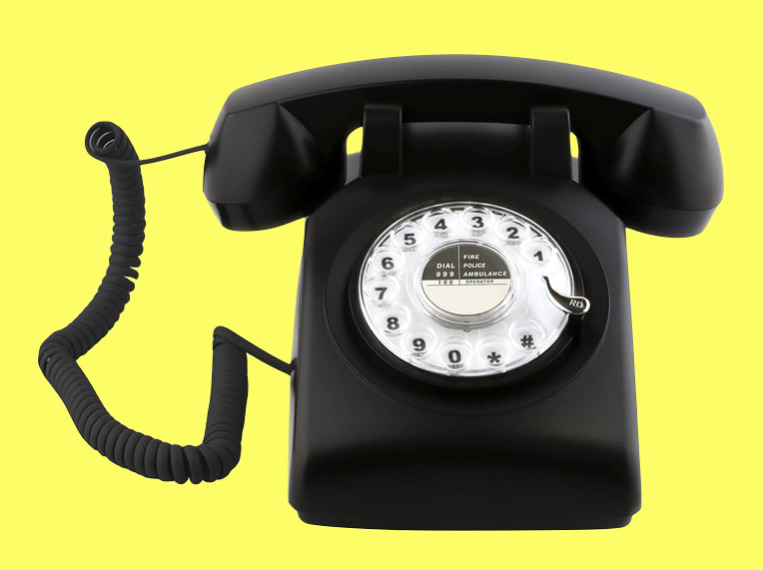
This ban came about after careful consideration and reflection on their values. The Amish value connections with family, friends, and the community. They don’t want to be the kind of person who interrupts a conversation by answering a telephone call. For this reason, telephones are located outside Amish family homes or nearby.
What are the things that are most important to you?
How does technology impact on those things?
Does it enrich those things or diminish them?
The Amish understand that technology can cause harm. Subsequently, they intentionally delay adopting new technology until they see its impact on others.
Does it destroy family life? Does it wreak havoc on their ability to pay attention and distract them from their spiritual life?
If so, the technology threatens their culture and religion, and for these reasons, it should be avoided.
Before adopting a piece of technology, the Amish need to be clear about two things:
1) The functionality of the technology (what it can do)
2) The potential social impacts of the technology
Once they deeply understand these things, it is then decided whether the technology is adopted or not.
It may come as no surprise that Amish people view the smartphone as an incredibly dangerous innovation. Many Amish communities have bans on this device.
How do you feel after spending time on social media?
Have you seen things posted on social media that weren’t true or were exaggerated?

When an Amish person wants to use a new technology, that technology will go through a formal decision-making process.
The community (in particular, the leaders) will consider the future with this technology. They’ll try to imagine how the technology could change their way of life.
Questions the Amish reflect on include:
• What are the advantages and disadvantages of the technology?
• What might come with it that we might not anticipate?
• Could someone get addicted to it?
• Is it a need or a want?
• Can the technology be restrained?
In her book Virtually Amish, Dr Ems provides the example of an Amish business owner asking the community leaders if he could have permission to use a label maker for his business.
After careful consideration, the leaders ruled label makers could be allowed for the following reasons:
• They are not addictive
• They can’t be used for recreational purposes (e.g., playing games or entertainment)
Think of a new technology (device or app) you want to adopt. Could it become addictive?
Many Amish people believe the issue is not whether you use a smartphone or social media but how you use it. It’s important that the Amish remain in control of their use of tech and place limits on it.
It’s also important that the technology is not visible (i.e., you don’t pull your smartphone out in Church or during a conversation). Being discrete in the way one uses technology shows respect for Amish values.
How do you use the tech in your life?
Are you in control of your use?
Amish people think about not just how they use the technology but what kind of person they become when they use it.
This point resonated with me deeply. I can’t say I’ve always liked who I become when I use certain technology.
A few years ago, I babysat my friends’ children when my friends went out for a kid-free meal. I look back and cringe when I think about how the experience unfolded.
Before going to my friend’s place to start babysitting, I got into a heated text discussion with some people in a group chat. Things were said that upset me.
For most of the night, I was on my phone, texting back and forth, not present with these young children. At one point, the little boy tugged on my arm to get my attention. “Aunty Jane, come play!” he said.
What can I say? I felt terrible. This certainly was not my finest moment. I had become the kind of caregiver I am usually quick to judge: distracted and disengaged.
I vowed to avoid trying to resolve issues by text and leave my phone at home next time to be fully present with the kids.
When you use social media, what sort of person do you become?
The Amish take modern tech tools and modify them to help them achieve their goals.
The plain mobile phone is an example of this. Amish people have created a mobile phone that can only make calls. It doesn’t have a camera, games, access to the Internet, or the ability to send text messages.
Similarly, the plain computer allows Amish to make spreadsheets, do word processing, and construct simple drawings. This allows them to complete tasks without being distracted by other things.
In other words, the Amish create what David Kadavy (author of Mind Management, Not Time Management) would refer to as sticky tools. A sticky tool allows you to stay focused on a task without getting distracted.
What sticky tools could you consider adopting (e.g., a basic flip phone and Internet blocker app)?
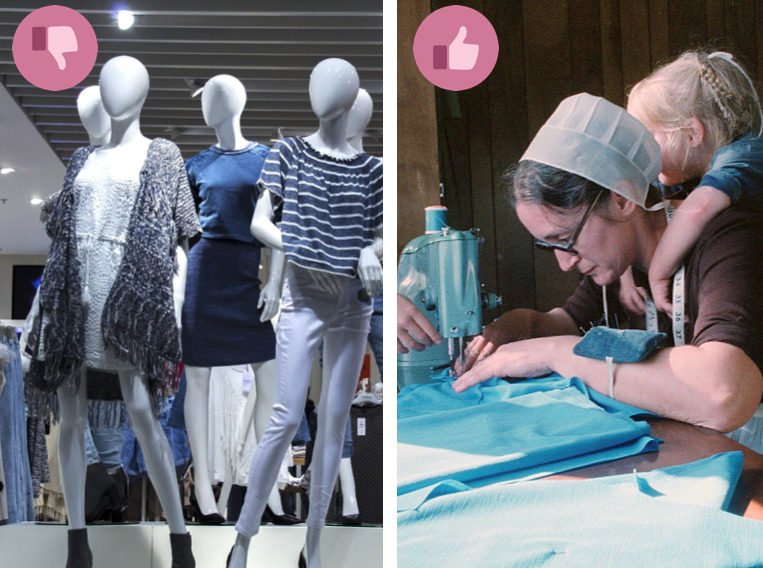
The Amish take pride in growing their own food, raising barns, baking their own bread, tinkering with robotics, inventing, and making their own clothes. They are not big consumers, but they embrace a simple lifestyle and encourage human creativity.
In the modern non-Amish world, many of us are doing the polar opposite of this. We have fallen into the trap of consuming content mindlessly online (e.g., watching people bake bread instead of baking our own bread).
Don’t get me wrong—the Internet is an excellent learning tool to help us build our skills. I have turned to YouTube for many instructional videos on how to make and fix things. But doing this requires discipline because it is all too easy to get derailed by other distracting videos.
The bottom line is this: the more time we spend online, the more ads we are likely exposed to and the more our consumptive desires are stirred up. Is it any wonder so many people feel so dissatisfied with their lives?
Instead of mindlessly consuming, what can you create today?
The Amish embrace tech with inbuilt friction. In fact, inconvenience is considered a virtue.
Dr Ems shares that many Amish technologies intentionally contain ‘speed bumps’ and ‘friction’. The reason for this friction is to prevent Amish people from wasting time on the device.

I’ve found this is one of the positives associated with using a ‘basic phone’.
Last year, I experimented with using a basic flip phone with limited functionality (I could only make calls and send texts). Texting on this phone was so painfully slow that it made me want to avoid getting into long text discussions with people. It was easier to pick up the phone and call people.
Using a smartphone to text your friends may be easier than making a phone call, but as the Amish strongly believe, easier is not always better.
How can you build friction into your tech use?
Can you embrace analog alternatives to decrease your screen time?
How much control do you have over your time, energy, and attention? As Chris Bailey writes in his book How to Calm Your Mind, “On the Internet, our intentions very quickly slip from our grasp.”
If you want to thrive online and offline, consider adopting some of the tech habits of the Amish. By limiting their tech use, the Amish have been able to remain mentally free and protect their way of life.
If more of us adopted Amish tech practices (e.g., being intentional with our tech use and placing limits on it), we’d most likely feel calmer and less anxious. We’d also spend more time engaged in activities that bring us joy and are aligned with what we value.