
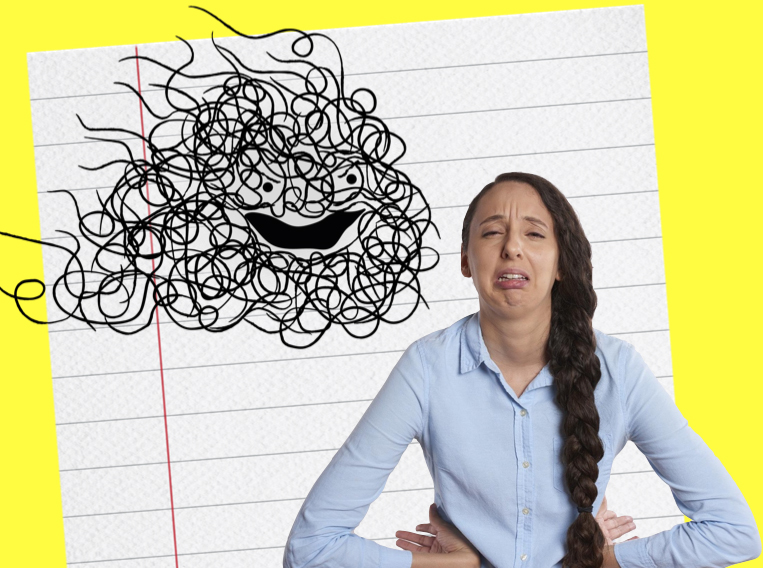
Cramming can very easily become a bad habit. Let me explain.
When you procrastinate and leave your work until the night before it’s due, adrenaline and motivation kicks in. This allows you to work with crazy energy and intense focus.
At times, you might find yourself nervously thinking, “Can I get this thing done? Will I be able to pull this off?”. But you can’t afford to dwell on thoughts like these. There’s no time to waste! You have to stay focused, push forward, and keep pumping out your work.
And pump it out, you do!
Amazingly, in the early hours of the morning, you manage to pull it off. You reach the word count of your essay (“Woohoo! I did it! YES!”). And in that moment, you feel this incredible sense of relief wash away the intense pain, anxiety, and fear you felt for the last five or more hours. Your brain’s reward pathway lights up. Your brain gets flooded with feel good chemicals.

It’s this intense positive feeling that you experience straight after finishing an assignment that wires in the bad habit of last minute cramming. As Dr Barbara Oakley states in her book A Mind for Numbers:
“You can feel a sort of high when you’ve finished. Much as with gambling, this minor win can serve as a reward that prompts you to take a chance and procrastinate again. You may even start telling yourself that procrastination is an innate characteristic – a trait that is as much a part of you as your height or the color of your hair.”
When students manage to pull off a few all-nighters, they can start to delude themselves with thoughts such as, “This is just how I work. I work best under pressure” and “I do my best work (and only work) at the last minute”.
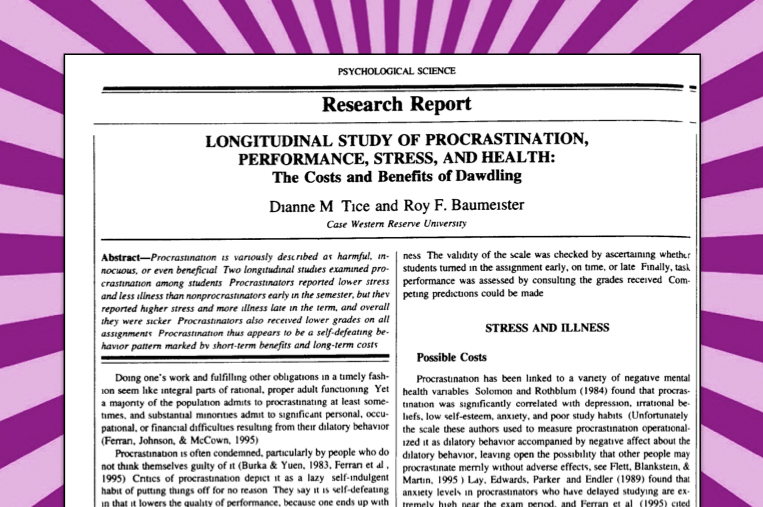
Studies show students who leave their work until the last minute don’t do as well as other students. They also tend to make more mistakes.
This study found procrastinators report higher stress levels, worse health, and lower grades.
When I first started university, I spent many late nights in the After Hours Computer Lab with my friends, crazily churning out essays the night before they were due. My friends and I were powered by bright fluorescent lights, sugary drinks, and snacks from the university vending machines.
At the time, it felt like fun. There was a sense of camaraderie in that computer lab. It was comforting to take a break when I hit a milestone (“Word Count: 1,000 words. Woohoo!”) and sink my teeth into a supersized chocolate chip cookie.
But looking back, that computer lab was a pretty depressing place to hang out. I can’t help but feel sorry for my younger self (Poor kid. What was I thinking?).
I can now see how the bad habit of cramming fuelled all these other bad habits at the time (e.g., bingeing on processed junk food and an erratic sleep routine). We were all suffering in that computer lab. We all needed help.
But when you’re stuck in that last minute, crazed, cramming habit loop you can’t see that you’ve got problems. You can’t see you’re heading for trouble. It’s the only way you know how to function and get stuff done.
It can feel hard for two reasons:
1) Procrastination delivers instant rewards (i.e., relief from the pain and discomfort of studying or writing a difficult essay). In contrast, the rewards that come from studying for an exam or working on an essay aren’t instant or guaranteed; and
2) The negative impacts of cramming don’t hit you straight away.
If after you reached the word count, you instantly felt really awful (e.g., mentally foggy, completely exhausted, and highly irritable) and all the mistakes and errors you had made flashed before your eyes, you would probably reconsider pulling all-nighters. You’d think to yourself, “This isn’t worth it. I feel terrible.” But it doesn’t work like that.
Like a bad hangover, that awful groggy feeling doesn’t hit you until several hours later. In relation to your grade and feedback, you don’t usually receive these until several weeks later. By then, you’ve forgotten how awful the cramming experience was.
Despite the negative impacts of cramming, some students tell me that they genuinely enjoy the challenge of cramming.
If this is you, I want you to think of cramming as being like an extreme sport, like Waterfall Kayaking, Skydiving and Barefoot Waterskiing. The sport of cramming requires a particular set of skills to pull off without seriously harming yourself. You’ll need to get better at:
• Managing your limited time and energy
• Managing your stress levels
• Memorising large amounts of material in a short period of time
• Keeping yourself awake for long periods of time (seriously not a good idea!)
I need to stress the following . . . going without sleep for long periods of time is incredibly dangerous.
In fact, this is why the Guinness World Records no longer accepts records for people going without sleep. This organisation will acknowledge records for people swallowing swords under water and pulling trains with their teeth, but not sleep deprivation records. That says a lot!
What about students who try to override their biological limits by taking medications like Ritalin (prescribed for attention deficit disorder) to get through cramming sessions?
Think twice about doing this.
As Dr Anna Lembke states in her book Dopamine Nation: Finding Balance in the Age of Indulgence:
“[These medications] promote short-term memory and attention, but there is little to no evidence for enhanced long-term complex cognition, improved scholarship, or higher grades.”
The good news is procrastination and cramming are habits. And habits can be changed.
This is the topic of my latest book Ace Tests, Exams, and Big Life Projects: How to End Last Minute Cramming, Reclaim Your Sleep, and Restore Your Sanity.
In my book, I explore why we often avoid preparing for exams. One reason we avoid exam preparation is because we’re scared. We fear the discomfort and pain it will bring up.
You see, we perceive exams as being like this creature . . .
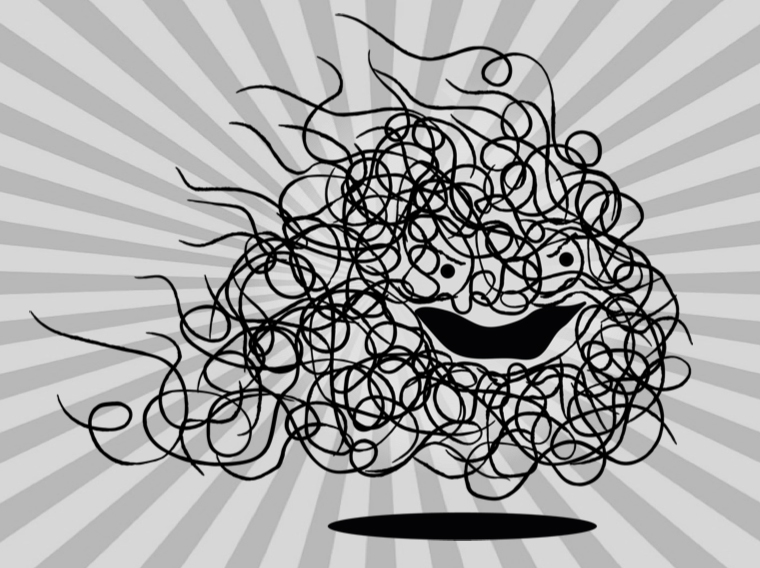
A big jumbled, tangled mess of ideas (I call this creature the Beast of Overwhelm). We look at the creature (i.e., all the work we need to do) and it brings up a cringey discomfort. Since we don’t like feeling uncomfortable, we run from this creature. We run to anything that brings us instant gratification, comfort, and relief.
The problem is every time we do this we are moving further away from our long-term goals. Ultimately, when we procrastinate we are making life harder for our future selves.
You can start by making some tweaks to your environment. Redesign your study space to make it harder to escape from the beast. Create a focus friendly environment that allows you to hang out with the beast for a little longer.
For instance, set up barriers between you and the things that try to hijack your attention. Internet blocker apps, a Kitchen safe (Ksafe) for your phone, noise blocking earmuffs, and AdBlocker plugins can help you stay on track and move closer towards your goals.

Another strategy worth adopting is setting the bar really low. Try creating some tiny habit recipes.
The Tiny Habits method (created by Professor BJ Fogg) is the complete opposite of cramming. Tiny habits are behaviours that take less than 30 seconds to do. Unlike cramming (which can feel painful), tiny habits are fun, fast, and easy.
As Giovanni Dienstmann states in his book Mindful Self-Discipline:
“Don’t aim for perfect – aim for better than yesterday. Aim for 1% improvements every day. This compounds into huge results over time.”
This is certainly what I’ve found with using tiny habits. Tiny improvements add up over time to something really solid.
You can break the cramming habit once and for all. All it takes are a few strategies, a bit of understanding of basic psychology, and some practice. By creating better study habits, you’ll be amazed at what you can accomplish over time. You’ll also feel a whole lot better, too.

Some of us have a tendency to ignore our Future Self, preferring to live for the moment.
But when it’s the night before an exam and you’re scrambling to revise, I’m guessing you probably wish you’d given more thought to your Future Self.
In short, if you want to live a calm life, you can’t go ignoring Future You.
In this article, I share how you can get more connected to your Future Self to combat procrastination.
In every moment, we face choices such as these:
Do I watch YouTube or start studying for that upcoming test?
Do I eat a piece of cake or a piece of fruit?
Do I buy the new shirt or wear one I already own to save money?
Do I use ChatGPT or my brain?
In other words, do we choose the thing that gives us instant gratification, or do we choose the thing that will help us move towards our future goals?
When you choose instant gratification, you’re voting for Present You.
When you choose to delay gratification, you’re voting for Future You.
Just to be clear, it’s not always one or the other. Often you do things that benefit both Future You and Present You.
For instance, some people prepare healthy homecooked meals. This doesn’t feel like a sacrifice. The process can be enjoyable.
Some people also love the work they do, stating that the work feels more like play than a hard slog.
When we take both of these versions of ourselves into account (Present You and Future You), we are in a much better place, mentally and physically. It’s a win-win situation.
But often, these two versions of ourselves are not in perfect alignment. We wake up and find that we really don’t want to study for that upcoming exam. Or we feel a strong urge to buy that new shirt even though we have 20 perfectly good shirts in our closet.
Enter letter writing.
Research shows the simple act of writing a letter to your Future Self can help you feel more connected to Future You. This in turn can help you make better decisions in the present.
When you get connected to your Future Self, studies have found you’re more likely to save money, do better academically, exercise, and consider future consequences. You’re also less likely to procrastinate with your study.
Rather than letting things pile up for your Future Self to deal with (cue panic and overwhelm), your Present Self gets on with them in a calm and grounded way.
There’s a popular website called Futureme.org that allows you to write letters to your Future Self.
Here’s how it works . . .
You write a letter on the website and then set the date you want to receive your letter. For a small fee, the letter is emailed to you on that date.
On this website, people can select to make their letters available to the public to read. It’s fascinating to get a glimpse into other people’s lives and what they desire for their Future Selves.
It also gives you a sense of where people go wrong when writing to their Future Self.
One thing I’ve noticed is people can fall into the trap of ‘magical thinking’. They imagine their Future Self being wildly successful while failing to consider what it will take to actually achieve that future.
In one letter, a person writes, “YOU BETTER BE A SUCCESS!!!!” (no pressure). This anonymous person talks about getting a job (and if not, getting a Sugar Daddy), traveling the world, and not doing drugs. It’s a good start, but it doesn’t go far enough.

It’s like a person creating a vision board with cut-out images of things they desire, and thinking that by sticking these images onto a piece of card, they are manifesting these things into existence.
This is magical thinking, and in times of uncertainty, magical thinking tends to go into overdrive.
It may seem like a bit of harmless daydreaming, but research shows this kind of thinking can be harmful to our growth and development.
In her book Rethinking Positive Thinking, Dr Gabriele Oettingen writes:
“…dreamers are not often doers. My research has confirmed that merely dreaming about the future makes people less likely to realize their dreams and wishes (as does dwelling on the obstacles in their path). There are multiple reasons why dreaming detached from an awareness of reality doesn’t cut it. The pleasurable act of dreaming seems to let us fulfil our wishes in our minds, sapping our energy to perform the hard work of meeting the challenges in real life.”

What’s missing from this picture is being grounded in reality.
Science reveals a simple way to counteract this tendency to engage in magical thinking when writing a letter to Future You, and it’s simple:
Once you’ve written a letter to your Future Self, you must step into the shoes of Future you and draft a reply.
In other words, don’t let your Future Self ghost your Present Self.
This study found that the most effective way to get connected to your Future Self is a two-way letter exchange between Present You and Future You.

These researchers took a group of Japanese high school students and split them into two groups:
Group 1: Send only group – participants sent a letter to their Future Self
Group 2: Send and reply group – participants sent a letter to their Future Self and then stepped into the shoes of their Future Self and wrote a reply to their Present Self.
At one-month follow up, the students in group 2 who engaged in a back and forth exchange felt more connected to their Future Self than the students in group 1.
Group 2 also engaged in more intense career planning, and were better able to delay instant gratification when it came to their studies.
The researchers believed having to write a reply forced the students to engage in a practice called ‘mental contrasting’.
The students were able to dream big in their letters to their Future Selves, but the response letter grounded them in reality, shedding light on the obstacles and barriers that could prevent them from achieving their dreams.
When you step into the shoes of your Future Self and write a reply to your Present Self, it forces you to come up with a strategy on how to accomplish certain tasks and goals.
Writing a letter to and from your Future self is easier than it sounds.
Here’s what I find helps:
It can be a little daunting to write to your Future Self and step into the shoes of Future You, especially when things are so uncertain and the world is changing so rapidly (e.g., generative AI).
As humans, we like certainty. But the reality is we really don’t know what’s coming next.
This is why I find it helps to focus on 3-6 month timeframes.
Why 3-6 months?
It’s far easier to imagine what you’ll be like in 3 months than 20 years. It’s less abstract.
Whereas when you think of your Future Self in 20 years or even 2 years, we tend to be overly optimistic (even slightly delusional) about what we’ll be like.
As humans, we like to think that in 3 years, we’ll be more confident, less stressed, more capable, and more on top of things.
What happens when we think of our Future Selves in this way is that we tend to offload things to them (“Oh, I’ll leave that problem for my Future Self to deal with!”). In other words, we procrastinate.
In contrast, I’m far less likely to mess around if I’m inflicting pain on my Future self in 3 months. I can see that if I don’t get started on projects, tomorrow I’m going to wake up and feel annoyed with myself. Why? Because I have less time to do what I need to do. I’m going to feel stressed.
Where do you start when it comes to this unique letter writing exchange?
If you feel stuck, here are some prompts to get you started with your letter to Future You:
Right now, here’s what’s been happening in my life . . .
A task I’ve been procrastinating on is . . .
An area I currently feel stuck is . . .
Here’s what I’m struggling with . . .
A goal I’m working on is . . .
My daily routine goes something like this . . .
Here’s a special message for you . . .
You can also ask your Future Self questions such as: What goals are you working on? and What does a typical day in your life look like?
When you’ve finished writing your letter to your Future Self, give yourself a little break before you step into the shoes of your imagined Future Self to write a reply.
Go for a little walk, make yourself a nice drink, or do a short meditation. Do something to reset and re-energise your mind.
Once you’ve had a break, close your eyes and imagine stepping into the shoes of your future self. Imagine everything has gone according to plan. Imagine what your surroundings are like. Notice the way Future You feels.
Then reread your letter to your future self. After you’ve finished reading it, draft your reply.
Make sure you outline how you were able to achieve your goals (what steps did you take?). Remember, we want to get out of ‘magical thinking’ mode and get grounded in the reality of what the grimy work looks like.
If you’re tempted to simulate a conversation with your Future Self using AI, think twice.
One study used AI to assist people with talking to their 60 year old Future Self.
When I viewed an example of a simulated conversation from this study, it felt a bit clichéd and soulless (see image below). I wasn’t surprised to read that the participants reported the chat interactions felt ‘artificial’.

But it was something in the Limitations & Ethics section of the paper that caught my eye. The researchers wrote:
“There are many potential misuses of AI-generated future selves to be mindful of, including but not limited to: inaccurate depiction of the future in a way that harmfully influences present behavior, endorsement of negative behaviors, and the potential of over-reliance on such systems to assist decision-making.”
Since this paper was published back in 2024, we’ve seen concerns about these misuses and more come true: ChatGPT convincing teens to harm themselves, AI psychosis, and people becoming overly reliant on AI to the point where they no longer trust their own judgement.
This is why I recommend steering clear of AI to get connected to your Future Self. Trust yourself to be able to do this. You know yourself better than an AI chatbot.
Our current world is geared towards instant results and instant gratification. This can make it hard to make decisions in the present that benefit our future selves.
Research shows that a letter writing exchange between Present You and Future You is more effective than writing just a letter to Future You (with no reply).
I invite you to set aside 30 minutes to write these letters. Ideally, get away from screens and chatbots, and use your brain and hands to do this (trust me, it will feel nicer and more wholesome).
If you can stay grounded in reality, writing to and from your Future Self can be a simple practice to help you combat procrastination and do the things that are most important to you.

The other day, I was getting my haircut when my hairdresser told me something her 15-year-old son had said. His words took her completely by surprise. He said:
“Mum, I need to try harder this year.”
I hear those words a lot. Try harder.
I hear them from students who want to do better at school and from teachers who are trying to motivate students (“You need to try harder”).
But what does it actually mean to “try harder”?
The problem is that this advice is too vague and abstract.
If you don’t have a clear picture of what ‘trying harder’ looks like, you’re in dangerous territory because you’re attempting to motivate yourself towards an abstraction.

In the book Tiny Habits, Professor BJ Fogg explains the problems associated with motivating yourself to achieve a vague goal. He writes:
“You’ve probably seen a well-meaning public-health poster in the doctor’s office that shows lots of colourful vegetables with the headline: EAT THE RAINBOW!
At first glance, you think: Yes, I need to eat better food. But then you’re not sure what practical steps to take. How much green and how much red? That means salad and apples, right? It can’t mean mint ice-cream and red licorice, can it? You are motivated to “eat the rainbow,” but maybe you don’t know how. You feel frustrated and end up being a little hard on yourself.”
I didn’t want my hairdresser’s son to feel frustrated and annoyed with himself. He clearly had good intentions.
I asked my hairdresser, “What does trying harder look like for your son? If he’s trying harder, what is he doing?”
She said she wasn’t sure. So, I kept asking questions.
“Does it look like him sitting down and testing himself with flashcards before a test? Taking notes in class? Listening to the teacher instead of chatting with his mates?”
The answer was clear. She said, “Listening to the teacher! He needs to start listening to his teachers.”
I also mentioned that it would help if he learnt his teachers’ names (you’d be surprised how many teachers tell me their students don’t know their names).
Remembering a teacher’s name, staying focused on what they have to say, resisting distractions, taking notes and reading your textbook may sound easy, but these are skills that require continuous practice.
If you’re not used to doing them, they can feel hard.
Even with years of practice under my belt, understanding new ideas still feels hard. These days, reading feels like weightlifting for my mind!
After getting my haircut, for the next 24 hours, I kept thinking about those words “try harder”.
Something was bugging me about it because I felt it wasn’t helpful to tell yourself to “try harder”. . . and then, like a bolt of lightning, the answer hit me: my hairdresser’s son doesn’t need to try harder. He needs to focus on doing a few specific hard things.

By ‘specific hard things’, I mean concrete behaviours he can do right now (or at a specific point in time) to improve his understanding of his school subjects.
For example, if he wanted to start a home study routine, here are some concrete behaviours I’d recommend he try:
These are just a few behaviours that come to mind when I think about “trying harder” with your studies.
Doing these concrete behaviours just once won’t make you go from good to great. But you’ll be surprised by how much meaningful progress you can make in a single, effective study session.
We live in a world where comfort and convenience are increasingly normalised. We expect things, including learning, to be easy.

You don’t have to cook (thank you Uber Eats).
You don’t have to move (thank you car).
You don’t have to experience boredom (thank you social media and Netflix).
You don’t even have to use your brain anymore (thank you ChatGPT and Claude).
By outsourcing tasks that require physical and cognitive effort, we may save time, but there are hidden costs.
People are losing their skills, destroying their health, and atrophying their brains, all while being flooded with unhealthy levels of dopamine. I’d even go as far as saying that people are losing their lives and what it means to be human.
In every moment, we have a choice: we can do the easy thing that gives us a quick dopamine hit, or we can do the hard thing that gives us a slow and healthy release of dopamine.

When you wake up, you can scroll on your phone or do some physical activity.
At the end of the day, you can order takeaway that is engineered to light up the reward pathways in your brain, or you can prepare a healthy homemade meal.
When you’ve got a spare 30 minutes, you can watch some YouTube or go for a walk outside.
You can use ChatGPT to write your essay, or you can use your brain and build your skills.
You can talk to an AI chatbot and have a friction-free relationship, or you can organise to meet up with a friend.
Every time you choose the hard thing over the easy thing, you build your confidence. You can trust yourself to do hard things and survive them. Over time, as you build your skills, those hard things don’t feel as hard as they once did.
For instance, if the Internet goes down and you’re not dependent on ChatGPT, you know you’ll be okay. You can rely on yourself to think and entertain yourself (thank you brain).
This is why I’m committing to doing hard things this year. I’m challenging myself, and I know I’ll be better for it.
Just to be clear, I’m not talking about self-harm or inflicting extreme pain on myself.
I’m referring to activities that bring up a cringey discomfort and make me think, “Ahhh, I don’t want to do this!”.
These include activities that require sustained focus and/or mental and physical effort, such as writing an article, going for a run, riding my bike to the shops, and meditating.

The simplest way is to ease into doing those hard things. Turn those hard things into tiny habits.
Here is a list of tiny habits for hard things I’m focusing on doing:
Some of these things may not seem like much, but all of these behaviours require mental and physical effort. Remember, there’s a much easier alternative: sitting, tapping, swiping, and scrolling on your phone.
For instance, I don’t need to chop vegetables and cook my meals. I could eat out or order food to my door. This would save me time and effort (cooking my meals can feel like a part-time job).
But I know I would suffer at some point (physically, mentally, and financially).
Chopping vegetables and cooking take effort, but it helps me cultivate calm. When done with a focused mind (not listening to podcasts or talking on the phone), I really enjoy these activities.
If I were to outsource these activities, I’d be going backwards, because I’d most likely lose my valuable cooking skills over time.
Similarly, writing articles like this one feels hard. But hard doesn’t mean bad. It’s satisfying to focus my mind, wrestle with ideas, and write.
Many of us mistakenly believe that an easy life is a better life. But it’s not. A life where you are constantly pursuing pleasure and taking the easy path can lead to anhedonia.
Anhedonia is the inability to experience pleasure in things that were once pleasurable (e.g., a homecooked meal or a sunset). Some people describe it as life in greyscale.

It turns out the more pleasure we pursue, the more pleasure we need and the more pain we experience.
It may sound counterintuitive, but pursuing hard things makes you feel more motivated and more positive about life.
As humans, we want to challenge ourselves. We’re wired for it.
Psychiatrist Dr Anna Lembke encourages us to take on difficult, even painful, activities as a way of “aligning our primitive wiring with our modern ecosystem”. She writes:
“We are survivors. We’re wired for struggle, especially of physical nature. Yet we live in a world in which we’re largely insulated from pain. And not just pain, but also discomfort of any kind. Everything is supplied to us at the touch of a finger. Now we struggle just to get up off the couch. Our modern ecosystem incentivizes inactivity. Inactivity breeds lethargy. Lethargy breeds anxiety and depression. We must fight against this.”
So, forget trying harder. Work out a few hard things you want to do and focus on doing them instead.

It has made me a calmer, better focused, happier, more mentally flexible, and creative person.
It takes anywhere from 20 to 45 minutes to do this practice, but trust me, this morning practice is time well spent.
It usually feels hard at first, but by the end, I feel strong, confident, and clearer in my thinking. As clichéd as it sounds, this practice helps me be the best version of myself.
What simple morning practice am I talking about?
I’m talking about my movement practice.
Before I do any work (e.g., check my email or messages, read the news, or deliver a presentation), I make myself do some physical activity.
I usually run on a treadmill, ride a stationary bike, or lift heavy weights.

I can’t say I’m leaping out of bed with joy at the thought of exercising. There’s always a little voice in my head that grumbles, “Ugh, do we have to do this?”
But I push forward and lace up my running shoes because I know that by the end, I’ll feel amazing.
Twenty minutes into my movement practice, my husband says he can hear me ‘whooping’ with joy from the other end of the house.
The natural ‘runner’s high’ people talk about is real.
I can relate to Cultural Historian Vybarr Cregan-Reid when he describes his running highs in the following way:
“They are as strong as bootleg whisky. They make you want to stop everyone that you pass and tell them how beautiful they are, what a wonderful world this is, isn’t it great to be alive?”
The amazing thing is that a year ago, I couldn’t run for more than a minute without being completely out of breath. Now I can run for 45 minutes nonstop. And I’m hooked.
How did I get here? And more importantly, how can you cultivate a movement practice that leaves you feeling energised, less stressed, and in a great mood?
Do you remember, as a child, running around the playground, swinging on the monkey bars, and playing games like Chasey?
You did these things naturally and effortlessly, and you enjoyed doing them. No one had to force you to move.
You ran for the sake of running. You ran because it made you feel good and fully alive.

This is what movement does for me. It makes me feel excited about life.
I’ve discovered this is the key to building a long-lasting movement practice: you have to find delight in moving your body. And you have to hang in there for long enough for the delight to show up.
You see, the delight probably won’t be there straightaway. Instead, what you’ll usually find is that there’s some discomfort and resistance for the first 10 – 15 minutes of your movement practice.
But if you persist, trust me, the delight will come knocking at your door and sweep through your house like a group of wild party animals.
Just to be clear, you don’t have to run to experience this delightful feeling. Any moderate-intensity physical activity, such as riding a bike, dancing, and swimming, will do the job.
In the book The Joy of Movement, psychologist Dr Kelly McGonigal makes it clear that you can achieve a natural high from any sustained physical activity.
She says the key to experiencing this ‘exercise induced euphoria’ is to put in the time and effort. She writes:
“You just have to do something that is moderately difficult for you and stick with it for at least twenty minutes. That’s because the runner’s high isn’t a running high. It’s a persistence high.”

The thing about movement is that it takes effort. But that effort is what delivers the delight!
When you do hard things for a sustained period of time, your brain rewards you by serving up a cocktail of feel good chemicals, such as dopamine, endorphins, serotonin, noradrenaline, and endocannabinoids.
From an evolutionary perspective, this makes sense.
Life for our ancient ancestors was hard work and often dangerous. To survive, they had to forage and hunt for food, find water, build shelters, and run from wild predators.
These neurochemical rewards (e.g, dopamine and serotonin) would keep them going. And keep going they did!
Hunter-gatherers clocked up thousands of steps each day. They were constantly on the move because their survival depended on it.
But here’s what I find really interesting . . .
Despite being incredibly active, hunter-gatherers’ brains were wired for comfort and laziness. This wiring served them well, especially when food was hard to obtain. Conserving energy through sedentary behaviour was a survival trait.
This explains why most of us feel resistance to the idea of physical exercise.
Fast-forward 30,000 years to today: our modern environment is completely different from that of our ancient ancestors, but our brains are still the same (i.e. wired for comfort).

Want food? You can order it with the tap of a button. In our modern world, you don’t have to move much, if at all.
Because of our ancient wiring, some resistance to physical activity will always be there. We just have to push ourselves to do the hard things first (e.g., exercise), knowing that the rewards will come if we persist for long enough.
As you start moving your body, during those first few minutes, you may find yourself thinking, “Why am I doing this? This doesn’t feel good!”
To which, I say: Can you feel your heart pounding in your chest? Can you hear yourself huffing and puffing? Is that sweat dropping off your face and onto the ground?
Fabulous! You’re on the right track. Hang in there. It won’t be long before your mood starts to shift in a dramatic way.
I have come to love the feeling of my clothes soaked in sweat after I exercise. There was a time when I thought that was gross. But not anymore.
Those sweaty, stinky clothes are evidence that I’ve worked hard. It’s proof that I pushed myself and the feel good chemicals are flowing through my brain and will continue to do so for the next few hours.
In The Official Dopamine Nation Workbook, psychiatrist Dr Anna Lembke explains what happens at a neurochemical level when you do hard things. She writes:
“While engaging in these kinds of painful activities [exercise, meditation, ice-cold water plunges, etc], our dopamine levels rise slowly over the latter half of the activity and remain elevated for hours afterward before going back down to baseline, without ever going below baseline.”

This is why Dr Lembke starts her day by avoiding her phone and doing the hard things first. She said on a recent podcast interview:
“I won’t even go on my laptop until I’ve exercised, eaten breakfast, I’ve read a paper that gets delivered to my house, I’ve made my bed . . . I’ve done all the things I need to do to centre myself for the day.”
Similarly, I equate my movement practice with getting my brain ready for the day and accessing parts of myself that would otherwise lie dormant.
Sometimes movement helps me to experience a wonderful flow state. I feel in tune with my mind and body. Things just feel easier.
But even if I don’t reach a state of flow, moving helps me be more present and show up as the best version of myself in the other areas of my life, such as my work and when I’m with my family.
My movement practice is something I’ve come to genuinely enjoy. It’s not something I need to rush through to tick off a list.
If you’re reading this and thinking “But I don’t like movement” and “I’m not an athletic person”, I get it because I wasn’t always a super active person.
There was a time when movement felt like a grind. I felt clumsy and awkward. It was something I just had to get done.
So, what led to this dramatic shift in how I related to movement?
I shifted from training for my appearance (to stay lean) to training to feel good.
Psychologists would say I became intrinsically motivated to move rather than extrinsically motivated.
When you’re extrinsically motivated, you’re moving to lose weight, achieve a particular look (e.g., the fitness influencer look), or have a sexy body. You’re trying to reach some place in the future, and it often takes you to a place of misery.
In my early twenties, I became friends with a businesswoman who was also a female bodybuilder. I was inspired by her discipline and focus, so when she invited me to attend a Bodybuilding competition, I jumped at the chance. I thought, “Why not?”
I should point out that this was in the pre-social-media era, when you couldn’t easily watch videos of people flexing their muscles online. You had to go to competitions like these, or watch a documentary (rented from a video store), to get a glimpse into the world of bodybuilding.
As we sat in the audience at the Bodybuilding Championships, one perfectly chiselled body after another walked onto the stage and flexed their muscles. I felt inspired.

Without knowing what went into getting visible abs and perfectly toned bodies like these, I remember thinking, “I want a body like that!”
A couple of hours later, the judges announced the bodybuilding champions, and shortly after, the party kicked off as everyone hit the dance floor, including the bodybuilders I had watched strut their stuff across the stage.
At one point, I found myself dancing next to the Female Bodybuilding Champion. She was holding her massive trophy, and I couldn’t help but notice that her face had a pained expression and she was struggling to move and stay upright.
She’d just been crowned Bodybuilding Champion of the Year, so I thought, “Why is she looking so sad and weak?”
I spun around, told her she looked amazing, and congratulated her. I then asked her (shouting over the loud music) how she was feeling. Her answer took me by surprise. She said:
“I’m so tired and hungry. I just want to go home and eat a pizza!”
That’s when I realised she had been starving herself for the competition, and just like that, the idea of achieving a body like hers quickly vanished from my mind.
To achieve the ‘perfect’ look, bodybuilders and fitness influencers often severely restrict their diets, which can be harmful.
In the book How Not to Die (Too Soon), Professor and Personal Trainer Devi Sridhar states:
“For most women, achieving visible abs requires an extremely low body fat percentage (less than 17 per cent, below the 20-23 per cent healthy range), which is often linked to irregular menstruation, brittle nails, feeling faint and disrupted hormone production.”

So, unless you want to feel faint and constantly crave pizza, think twice before setting a goal to look like a bodybuilding champion or a fitness influencer!
When the focus is on aesthetics, you undermine the joy of movement.
In the DW documentary Muscles – More than Power and Pumping Iron, social media influencer and former Bikini model champion Sophia Thiel shared her experience of training to achieve the ‘perfect’ body. She states:
“When you train for the sake of your appearance, it can quickly tear you apart and take away all the joy that the sport normally brings with it.”
Post competition, Sophia found it difficult to maintain her competitive form and stick to her competition diet. Her weight began to fluctuate, and the nasty online comments about her appearance started to take their toll on her mental health.
At some point, Sophia shifted her focus from her appearance to how lifting weights made her feel. She said:
“Today my motivation for working out is very different. It brings a lot more balance to my life. I can deal with stress better. The way I carry myself is completely different, which gives me self-confidence. My sleep and concentration are better too. In other words, training improves my quality of life.”

Making the mental shift, like Sophia did, from wanting to look good to feeling good, is a total game-changer.
But in our image-obsessed world, it’s easy to lose sight of the mind and mood-altering effects of physical movement (spending less time on social media and unfollowing fitness influencers can help with this mental shift).
Harvard Professor John Ratey sums it up nicely when he says physical exercise is like “a little bit of Prozac and a little bit of Ritalin”. It does wonders for your brain (especially your attention and mood) with no nasty side effects.
To sum up
Instead of reaching for your phone first thing in the morning, try reaching for your running shoes, a set of dumbbells, or a yoga mat.
Developing a morning movement practice is one of the simplest and most powerful things you can do to benefit your brain and improve the quality of your life.
But the key is to find delight in moving for the sake of moving. You need to persist with the movement for long enough – at least 20 minutes – for your brain to reward you with a dose of feel good chemicals.
When movement becomes inherently enjoyable, you’ll find yourself doing it more often. Before you know it, it will be a non-negotiable part of your day. In the words of Dr Kelly McGonigal, “regular exposure to exercise will over time teach your brain to like, want, and need it”.
Image 6: “2013 Fall Classic Natural Bodybuilding Competition – U.S. Army Garrison Humphreys, South Korea – 28 Sep 2013” by USAG-Humphreys is licensed under CC BY 2.0.