
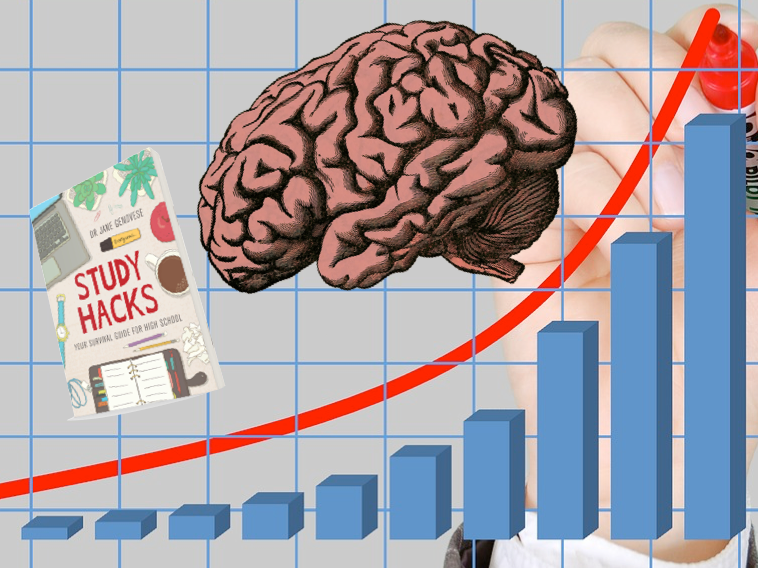
Forget investing in gold bars, bitcoin or the stock market.
Consider investing in the biggest and best asset that you already own: your brain. Upgrade that glorious system of neural networks by learning how to learn.
When you learn how to learn, new worlds and opportunities open up to you. Things that you thought you couldn’t or would never be able to do, suddenly become possible.
Here are 7 reasons why you want to consider learning how to learn.
1. It makes life easier
Trying to shift information into your long-term memory without an understanding of how you learn best is like trying to dig a hole with a toothpick. It’s excruciating work!
But once you start utilising a collection of simple study strategies and tools, you’ll save yourself a lot of time and unnecessary frustration when it comes to learning.
2. You can have more free time
Say goodbye to reading your books over and over again for hours on end. When you know how to learn effectively, you can learn information quickly and efficiently. This frees you up to have more time for the things you really want to do.
3. You can have more fun
Let’s face it, reading your books passively and highlighting information is boring and ineffective. There is a whole world of creative study strategies you can use to become more engaged and immersed in the learning process.
4. Your grades improve
When you actually understand the information (rather than just rote memorisation), you will see your grades dramatically improve. But good grades are really just a byproduct and extra bonus. When you’re intrinsically motivated to learn, you feel more satisfied, more in control and you have more fun (see point 3).
5. You can master new skills quickly and efficiently
Want to learn how to make the perfect lasagna? Want to master conversational German in less than 6 months? Or perhaps learn to code?
When you know how to learn, you can pick up new skills quickly and efficiently on your own. You don’t need your hand held every step of the way. There’s nothing you can’t or won’t be able to do. Knowing this gives you a tremendous sense of power, confidence and agency.
6. It gives you more options
They say most young people will change careers five times in their lifetime. Long gone are the days where you trained up in one area, got a job and stayed in that job for the rest of your life.
Many of the jobs that exist today didn’t exist 10-20 years ago (think app developer, solar energy engineer and social media analyst). And many jobs that existed in the past are no longer around today (Think video and CD store clerk). With job obsolescence, it pays to be able to learn new skills. It pays to have a second-skill. This makes you mentally flexible so you can move with the times and not stay rigidly stuck in the past.
When you learn how to learn, you future-ready yourself.
7. You can remember information for months and years (rather than just days or weeks)
When you rote-learn, information doesn’t tend to stick. Sure, you know it for the test, but after that? It’s gone.
But when you have ways to deeply understand the content, this is a game changer. When you can connect information to something you already know and see how it fits in the real world around you, you can easily retrieve that information for many months and years to come.
To sum up
Learning how to learn opens up new worlds for people. It certainly did for me (you can read my story here). Like any skill, learning to learn requires an investment of time and energy. But don’t let that put you off. You’ll get that time back (plus more) through being an efficient, savvy learner.
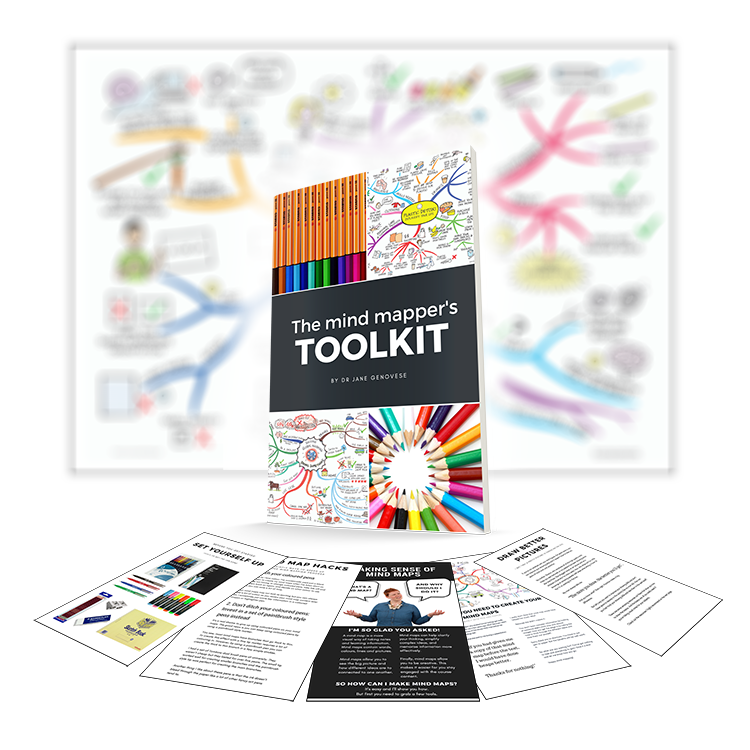
Want to take the next step to learn how to learn? Check out my free resource The Mindmappers’ Toolkit and my latest book Study Hacks.

Some of us have a tendency to ignore our Future Self, preferring to live for the moment.
But when it’s the night before an exam and you’re scrambling to revise, I’m guessing you probably wish you’d given more thought to your Future Self.
In short, if you want to live a calm life, you can’t go ignoring Future You.
In this article, I share how you can get more connected to your Future Self to combat procrastination.
In every moment, we face choices such as these:
Do I watch YouTube or start studying for that upcoming test?
Do I eat a piece of cake or a piece of fruit?
Do I buy the new shirt or wear one I already own to save money?
Do I use ChatGPT or my brain?
In other words, do we choose the thing that gives us instant gratification, or do we choose the thing that will help us move towards our future goals?
When you choose instant gratification, you’re voting for Present You.
When you choose to delay gratification, you’re voting for Future You.
Just to be clear, it’s not always one or the other. Often you do things that benefit both Future You and Present You.
For instance, some people prepare healthy homecooked meals. This doesn’t feel like a sacrifice. The process can be enjoyable.
Some people also love the work they do, stating that the work feels more like play than a hard slog.
When we take both of these versions of ourselves into account (Present You and Future You), we are in a much better place, mentally and physically. It’s a win-win situation.
But often, these two versions of ourselves are not in perfect alignment. We wake up and find that we really don’t want to study for that upcoming exam. Or we feel a strong urge to buy that new shirt even though we have 20 perfectly good shirts in our closet.
Enter letter writing.
Research shows the simple act of writing a letter to your Future Self can help you feel more connected to Future You. This in turn can help you make better decisions in the present.
When you get connected to your Future Self, studies have found you’re more likely to save money, do better academically, exercise, and consider future consequences. You’re also less likely to procrastinate with your study.
Rather than letting things pile up for your Future Self to deal with (cue panic and overwhelm), your Present Self gets on with them in a calm and grounded way.
There’s a popular website called Futureme.org that allows you to write letters to your Future Self.
Here’s how it works . . .
You write a letter on the website and then set the date you want to receive your letter. For a small fee, the letter is emailed to you on that date.
On this website, people can select to make their letters available to the public to read. It’s fascinating to get a glimpse into other people’s lives and what they desire for their Future Selves.
It also gives you a sense of where people go wrong when writing to their Future Self.
One thing I’ve noticed is people can fall into the trap of ‘magical thinking’. They imagine their Future Self being wildly successful while failing to consider what it will take to actually achieve that future.
In one letter, a person writes, “YOU BETTER BE A SUCCESS!!!!” (no pressure). This anonymous person talks about getting a job (and if not, getting a Sugar Daddy), traveling the world, and not doing drugs. It’s a good start, but it doesn’t go far enough.

It’s like a person creating a vision board with cut-out images of things they desire, and thinking that by sticking these images onto a piece of card, they are manifesting these things into existence.
This is magical thinking, and in times of uncertainty, magical thinking tends to go into overdrive.
It may seem like a bit of harmless daydreaming, but research shows this kind of thinking can be harmful to our growth and development.
In her book Rethinking Positive Thinking, Dr Gabriele Oettingen writes:
“…dreamers are not often doers. My research has confirmed that merely dreaming about the future makes people less likely to realize their dreams and wishes (as does dwelling on the obstacles in their path). There are multiple reasons why dreaming detached from an awareness of reality doesn’t cut it. The pleasurable act of dreaming seems to let us fulfil our wishes in our minds, sapping our energy to perform the hard work of meeting the challenges in real life.”

What’s missing from this picture is being grounded in reality.
Science reveals a simple way to counteract this tendency to engage in magical thinking when writing a letter to Future You, and it’s simple:
Once you’ve written a letter to your Future Self, you must step into the shoes of Future you and draft a reply.
In other words, don’t let your Future Self ghost your Present Self.
This study found that the most effective way to get connected to your Future Self is a two-way letter exchange between Present You and Future You.

These researchers took a group of Japanese high school students and split them into two groups:
Group 1: Send only group – participants sent a letter to their Future Self
Group 2: Send and reply group – participants sent a letter to their Future Self and then stepped into the shoes of their Future Self and wrote a reply to their Present Self.
At one-month follow up, the students in group 2 who engaged in a back and forth exchange felt more connected to their Future Self than the students in group 1.
Group 2 also engaged in more intense career planning, and were better able to delay instant gratification when it came to their studies.
The researchers believed having to write a reply forced the students to engage in a practice called ‘mental contrasting’.
The students were able to dream big in their letters to their Future Selves, but the response letter grounded them in reality, shedding light on the obstacles and barriers that could prevent them from achieving their dreams.
When you step into the shoes of your Future Self and write a reply to your Present Self, it forces you to come up with a strategy on how to accomplish certain tasks and goals.
Writing a letter to and from your Future self is easier than it sounds.
Here’s what I find helps:
It can be a little daunting to write to your Future Self and step into the shoes of Future You, especially when things are so uncertain and the world is changing so rapidly (e.g., generative AI).
As humans, we like certainty. But the reality is we really don’t know what’s coming next.
This is why I find it helps to focus on 3-6 month timeframes.
Why 3-6 months?
It’s far easier to imagine what you’ll be like in 3 months than 20 years. It’s less abstract.
Whereas when you think of your Future Self in 20 years or even 2 years, we tend to be overly optimistic (even slightly delusional) about what we’ll be like.
As humans, we like to think that in 3 years, we’ll be more confident, less stressed, more capable, and more on top of things.
What happens when we think of our Future Selves in this way is that we tend to offload things to them (“Oh, I’ll leave that problem for my Future Self to deal with!”). In other words, we procrastinate.
In contrast, I’m far less likely to mess around if I’m inflicting pain on my Future self in 3 months. I can see that if I don’t get started on projects, tomorrow I’m going to wake up and feel annoyed with myself. Why? Because I have less time to do what I need to do. I’m going to feel stressed.
Where do you start when it comes to this unique letter writing exchange?
If you feel stuck, here are some prompts to get you started with your letter to Future You:
Right now, here’s what’s been happening in my life . . .
A task I’ve been procrastinating on is . . .
An area I currently feel stuck is . . .
Here’s what I’m struggling with . . .
A goal I’m working on is . . .
My daily routine goes something like this . . .
Here’s a special message for you . . .
You can also ask your Future Self questions such as: What goals are you working on? and What does a typical day in your life look like?
When you’ve finished writing your letter to your Future Self, give yourself a little break before you step into the shoes of your imagined Future Self to write a reply.
Go for a little walk, make yourself a nice drink, or do a short meditation. Do something to reset and re-energise your mind.
Once you’ve had a break, close your eyes and imagine stepping into the shoes of your future self. Imagine everything has gone according to plan. Imagine what your surroundings are like. Notice the way Future You feels.
Then reread your letter to your future self. After you’ve finished reading it, draft your reply.
Make sure you outline how you were able to achieve your goals (what steps did you take?). Remember, we want to get out of ‘magical thinking’ mode and get grounded in the reality of what the grimy work looks like.
If you’re tempted to simulate a conversation with your Future Self using AI, think twice.
One study used AI to assist people with talking to their 60 year old Future Self.
When I viewed an example of a simulated conversation from this study, it felt a bit clichéd and soulless (see image below). I wasn’t surprised to read that the participants reported the chat interactions felt ‘artificial’.

But it was something in the Limitations & Ethics section of the paper that caught my eye. The researchers wrote:
“There are many potential misuses of AI-generated future selves to be mindful of, including but not limited to: inaccurate depiction of the future in a way that harmfully influences present behavior, endorsement of negative behaviors, and the potential of over-reliance on such systems to assist decision-making.”
Since this paper was published back in 2024, we’ve seen concerns about these misuses and more come true: ChatGPT convincing teens to harm themselves, AI psychosis, and people becoming overly reliant on AI to the point where they no longer trust their own judgement.
This is why I recommend steering clear of AI to get connected to your Future Self. Trust yourself to be able to do this. You know yourself better than an AI chatbot.
Our current world is geared towards instant results and instant gratification. This can make it hard to make decisions in the present that benefit our future selves.
Research shows that a letter writing exchange between Present You and Future You is more effective than writing just a letter to Future You (with no reply).
I invite you to set aside 30 minutes to write these letters. Ideally, get away from screens and chatbots, and use your brain and hands to do this (trust me, it will feel nicer and more wholesome).
If you can stay grounded in reality, writing to and from your Future Self can be a simple practice to help you combat procrastination and do the things that are most important to you.

Not smart enough.
Not pretty enough.
Not successful enough.
This feeling of inadequacy drove me to work in unsustainable and unhealthy ways. I felt desperate to make something of myself in this world.
It took doing a PhD to make me realise why I felt this way and learn how to escape the trap of workaholism and materialism.
Now I can say that I feel satisfied with myself and my lot in life. I am enough. I have enough. I feel successful according to my own definition and metrics of success.
In this article, I share a cautionary tale and a radical approach that can help you feel successful just as you are.
When I was a university student, my good friend became a rep for a multi-level marketing company.
This gave me a glimpse into a world of people at a whole other level of desperation to become “successful” according to Capitalism’s definition of success (i.e., having lots of money and material goods).
As a poor law student, I was invited to several multi-level marketing ‘parties’. The aim of these parties was to get you to buy the products (e.g., makeup, skin creams, and vitamin supplements).
There were also more hardcore gatherings that focused on signing you up to become a rep for the multi-level marketing company, so you’d recruit more people to the scheme and sell more products.
A rep high up in the multi-level marketing company would facilitate these recruitment drives in the comfort of my friend’s family home.
The reps were always impeccably dressed as they sold a grandiose vision of being a sales rep (e.g., international travel, limousine rides, and a life of leisure).

The underlying message being peddled was:
“If you join us, you’ll be making money in your sleep!”
It sounded too good to be true. And that’s because it was.
This particular multi-level marketing company encouraged the reps to engage in personal development through reading.
My friend’s reading list included titles such as Reject Me – I Love It!, How to Win Friends and Influence People, and The 7 Habits of Highly Effective People.

Taped to the walls of her family’s home were cut-out pictures from magazines of luxury cars, cruise ships, and attractive women dressed in stylish clothes. Smack bang in the centre of the wall was a massive hand-drawn picture of a diamond.
When I asked why these images were on the walls, I was told they were reminders of why they were working so hard. The walls were like a massive vision board for the family. These images represented what a “successful” life looked like.
These images made me feel sad and uneasy, because in my eyes, my friend had already achieved so much in her life. She was already successful.
It was even more unsettling when the selling of products moved beyond the multi-level marketing parties and into informal social gatherings.
One social gathering I will never forget. It haunts me to this day.
For some context, I was in my early twenties, and I felt quite insecure about my appearance. Like most young people, I was still figuring out who I was, and what I wanted to do with my life.
So when my friend casually pointed out after a meal that I had bad acne, but she had a skin cream she could sell me, this left me feeling hurt and confused.

I was in a difficult position: did I purchase the expensive skin cream to maintain our relationship? Or did I say no to buying the skin cream, embrace my acne, and potentially hurt my friend’s feelings in the process?
It was a difficult and messy situation I wouldn’t wish on any young person.
My younger self didn’t have the skills or tact to handle this situation with the care it needed, and sadly, our friendship didn’t survive.
I understand why my younger self felt so confused during this period. I can clearly see the lies the multi-level marketing company pushed.
Before I go any further, I want to be clear that my friend and her family, who were reps for this multi-level marketing company, had no malicious intent.
They were good people who were desperate to make a better life for themselves. They were victims of a predatory corporate structure that peddled a bunch of lies to hook people in.
One of the big lies that this multi-level marketing company pushed was the idea that ‘You’re not enough’.
Another big lie was that to be happy and successful, you need a flash car, a fancy house, and lots of money. Oh, and don’t forget the expensive skin creams.
If you don’t have those things, you’re a loser. So, you better hop to it and start selling products and recruiting reps!
Of course, this isn’t just the world of multi-level marketing companies. This is the dominant message of mainstream consumer culture and advertising.
In our lives, we may not be selling skin creams and vitamins for a multi-level marketing company, but we are trading our time and life energy for money. Money that can buy us stuff that advertisers convince us we need.
Ads don’t just sell us products. They sell us particular ideas of success. They tell us what we should value and what is normal. They tell us how we should live our lives.
In the world of advertising:
But we should pause and question these ideas. Why? Because the research paints a very different picture of what brings us happiness and fulfilment (Spoiler alert: it’s not more stuff).
The pictures of luxury goods that were taped to the walls of my friend’s home illustrated what all of us are told to value.
We live in a consumeristic and capitalist culture that celebrates materialistic values. This set of values focuses on extrinsic pursuits such as striving to obtain money, possessions, and an attractive appearance.
Living in this culture, it’s extremely difficult to not internalise these values.
However, research shows that being highly oriented towards materialistic values is harmful to psychological health and personal wellbeing.
Why would it be that pursuing diamonds, nice clothes, and social status fails to make us happy?
In his book The High Price of Materialism, Social Psychologist Dr Tim Kasser argues that our wellbeing comes from satisfying our core psychological needs (i.e., needs for security, competence, and connections to others) and orienting one’s life around materialistic pursuits is a poor way to get these needs met.
Other research has found that once our basic to moderate needs are met, more stuff doesn’t bring us additional happiness.
Evidence for this is all around us. Just look at Billionaires like Elon Musk, Donald Trump, and Sam Altman. Do these people look happy to you?

The people above look restless and miserable, except for Australian gardening show host, Costa Georgiadis (Note: he is not a billionaire and I can’t imagine he’s aspiring to become one).
Others have argued that the reason wealthy people can have so much but still not be happy is because their expectations keep rising. In other words, the more you have, the more you want more.
This is why the author of the book The Psychology of Money, Morgan Housel, argues that the most valuable financial skill you can have is not budgeting but not having to impress other people.
That’s right. Not having to impress other people is the most valuable financial skill you can cultivate.
If you can determine what success means to you, then you free yourself of the trap of trying to get other people’s attention by acquiring more and more fancy stuff.
Not feeling the need to impress other people is a goal well worth pursuing, especially when you realise that no one cares about your house, car and stuff as much as you do.
I want to invite you to join me in a world where I’m enough, and you’re enough.
In this world, if you do the work, you can feel successful, just as you are, today.
You don’t have to wait until you reach the top spot in your class, school, sport, or company. You don’t even need a lot of money or stylish clothes.
How can we feel successful just as we are, with all our imperfections?
In his excellent book Where the Light Gets In, mindset coach Ben Crowe says the secret is to live in alignment with your values and create your own metrics for success.

He believes that if you live in alignment with your values, you are successful. Simple as that.
Instead of plastering your walls with images of all the material items you dream of having, Crowe encourages us to develop a ‘Success list’. The question to ask yourself is,
Before you can answer this, you need to get clear on what you value (i.e., what’s most important to you).
For me, I value my freedom, health, growth and learning, relationships, and community.

With these values in mind, I know I’m being successful when:
Crowe describes what he believes to be a ‘successful life’. He writes:
“It’s a world full of relationships, experiences and memories. A world of confidence and happiness. Most importantly, it’s a world where we determine what success means for ourselves, not by anyone else’s measure. And finally, it’s where success can be in the present moment, not in some future state we may never arrive at.”
Instead of focusing on what you want to have, your focus is on how you want to be and the behaviours you need to engage in to be that person.
I’m not sure if my friend ever made it to the top tiers of the multi-level marketing company, but if she did, I know the feeling of satisfaction or happiness wouldn’t have lasted long.
I once heard Hollywood Psychotherapist Phil Stutz say in an interview, “You’ll never be satisfied in our [Capitalist] culture”.
Just as a multi-level marketing company is set up to make those at the bottom feel desperate to achieve more, consumer culture is designed so most of us never feel satisfied with what we have.
The only path to happiness and fulfilment is to create our own metrics for success; otherwise we will constantly want more because of the powerful influence of advertising.
In the fictional book Alan Opts Out, advertising executive Alan thinks to himself:
“What was an ad man, really, but a homegrown terrorist, convincing people that their lives were not worth living unless they bought new stuff?”
This same advertising executive comes to the conclusion that “you can get by with less than what you have” and that most of us would be happier if we did.
When you feel like you’re enough, you feel happy with yourself and your lot in life. You’re more at ease with yourself. You still want to get out of bed and do stuff, but that desperate energy to get more and be more doesn’t surge through your body.
There’s no need to wait until you get a great job, reach a certain number of subscribers, or earn a PhD to feel successful. Create your ‘Success list’ and start feeling successful today.

Then another person told me he uses AI to read his email and tell him what he needs to do for the day.
I thought, “Why would you do that?”
Why have we stopped using our brains and completely outsourced our thinking to AI?
In a recent Guardian piece, author Dave Eggers shared what he advises young people when it comes to using AI:
“You’re one of one. You’re unprecedented in the entire line of human history. Only you have your brain. Only you can think of what you can think of. Only you can tell a story in a particular way. Why would you cede that to a machine?”
He went on to say:
“Once you have a machine think for you and write for you, you’re cooked as a species. That’s it. That’s the worse dystopian outcome there could ever be.”
As generative AI and tech force their way into almost every area of our lives, I’m finding that I want to use my hands more, and not in a typing-on-a-keyboard-into-ChatGPT kind of way.
I want to chop vegetables, roll out pizza dough, journal with pen and paper, cut things out with scissors and stick them down on paper, write letters to people, make mind maps, and read physical books.

These are small acts of resistance, but I believe they are vitally important to retaining our humanity and confidence. These acts signal to our brains, “You’re still in control”.
Generative AI may seem powerful, but let’s not forget the tremendous power that lies within our brains and bodies.
There is a freedom and confidence that comes from doing things yourself, whether that be with your hands, your brain, or a combination of the two.
That freedom and confidence are built through sustained practice and being able to push through discomfort. But research shows these things can be eroded very quickly by routine use and overuse of AI.
It’s easy to label those of us who are actively resisting using AI as old-fashioned, luddites or not keeping up with the times. But doing so overlooks some serious issues associated with AI.
When I first discovered ChatGPT, like most people, I was amazed. It had this mystical quality that pulled me in. But as I started to learn more about generative AI (specifically ChatGPT), the magic started to crumble away. I discovered generative AI had a dark side similar to social media. As investigative journalist Karen Hao writes in her brilliant book Empire of AI:
“…in the same way we once thought Facebook was merely a place for posting vacation pictures and connecting with long lost elementary school friends, or for sparking positive and transformative social movements, there is more to the sleek, entrancing exterior than meets the eye. Under the hood, generative AI models are monstrosities, built from consuming previously unfathomable amounts of data, labor, computing power, and natural resources.”

As I started to see red flags around the environmental and exploitative human impacts of AI (e.g., the data annotators in Kenya who train AI are paid less than $2 a day), I also became alarmed by the ways ChatGPT affected my confidence. These red flags were impossible to ignore.
I distinctly remember this one experience where I used ChatGPT to draft a question to ask at a public meeting. Almost immediately after asking the question, I regretted it. I felt like a kid who had cheated on a test. I felt bad that I had outsourced my thinking to a machine.
Since then, I’ve heard several people say, “Using AI isn’t cheating! Don’t feel bad!” but I think we need to be honest with ourselves. We need to look beyond the AI marketing spin and take a good look at what the research literature says.
A recent study involving 1,923 adult participants found that people who were overly reliant on AI experienced decreased confidence in their cognitive abilities and reported feeling less ownership of the ideas. However, people more likely to challenge or reject AI’s suggestions reported greater confidence in their thinking and a greater sense of ownership of their ideas.

Keep in mind that this study was conducted with adults, not students. Students are still developing their cognitive skills and therefore are not in a position to easily challenge or reject AI’s suggestions.
Whilst I believe we are all vulnerable to becoming dependent on AI and using it to avoid thinking, young people are especially vulnerable. AI conditions us to expect immediate answers, which is problematic in a learning environment where we often have to sit with discomfort and work through challenges.
In fact, another recent study found that people who relied on AI were less likely to persist with a task than those who did not rely on AI. What was most alarming was that it only took 10 minutes of using AI to induce these negative effects.

This should set off alarm bells for all of us. Why? Because persistence is a key part of learning and skill acquisition. It’s also one of the strongest predictors of long-term learning.
Until we have guardrails in place, it’s best to challenge ourselves to use our brains without AI assistance as much as possible.
Yes, using your brain can feel scary and uncomfortable. But in my experience, it’s also incredibly satisfying (like lifting heavy weights or running up a steep hill).
I was reminded of this recently when I had to get up and speak at a public meeting. Due to having very little notice about this meeting (only 5 minutes), I had no time to scribble out ideas on what I was going to say. There was no time to practice and deliver a polished presentation. All I could do was get up and speak off the cuff about this issue I care deeply about.
And you know what? I surprised myself. I delivered a solid presentation.
I felt proud that I could rely on my brain to pull together a coherent speech on the spot. No notes. No ChatGPT. It was just me and my brain.

This experience gave me a natural high that lasted for several days!
For me, the AI-reliant experience leaves me feeling degraded as a human and doubting myself. The other experience (relying on my unique brain) leaves me feeling fully alive and powerful.
When you use AI, even for just 10 minutes at a time, you need to be aware that it can change you (and not necessarily for the better). Every task that is outsourced to AI makes you less likely to persist with solving a problem. And unless you’re actively challenging the glitchy AI slop, you’re also crippling your confidence and cognition.
Our tech overlords want to create a friction-free experience where we don’t have to think at all, but they’ve overlooked one key thing about life and learning: it’s a struggle. But that’s how we grow and become stronger.
Be brave. Refuse to take the path of least resistance. Embrace the struggle. Use your brain as much as you can. Remember Dave Eggers’ words of wisdom, “You’re one of one. You’re unprecedented in the entire line of human history. Only you have your brain”. So, use it.