




I used to spend a lot of time on the road driving from school to school.
While I always kept an eye on the amount of petrol in the tank, I also needed to pay close attention to my own personal energy levels.
It was important to avoid pushing myself past empty and depleting my energy reserves because if I did, I would end up feeling emotionally wrecked.
I clearly remember one day when I pushed myself too hard. Looking back, it seems comical now. But I wasn’t laughing at the time.
It was my 24th birthday. I had woken up that morning with great intentions, thinking “It’s my birthday! Let’s make it a great day!”
I was trying too hard to make it a “great day”. I was forcing it, and perhaps that’s partly why everything went pear-shaped. Here’s what happened . . .
I had a school presentation later that day, so I spent the morning preparing for it before driving over an hour to deliver the presentation.
The time slot for the talk wasn’t ideal—my talk was scheduled for the last period on a Friday afternoon—but I was thinking, “Hey! It’s my birthday. Let’s make it a great day!”
What can I say?
The session didn’t go well.
There were IT issues and the students’ minds were elsewhere. But you couldn’t blame the students. They were tired and I was the only thing standing between them and the weekend.
When I wrapped up the session, I felt tired and hungry.
But I foolishly ignored my body’s needs. On an empty stomach, I began the long drive home. I was desperate to get back and be in my own space.
Within 10 minutes, I found myself stuck in peak-hour traffic. But I wasn’t just stuck in traffic; I was also stuck in an anxiety loop.
Psychologist Risa Williams explains an anxiety loop as “a negative thought cycle that makes you feel stuck in a rut”. You can’t rationalise your way out of an anxiety loop. Logic doesn’t cut it.
I kept thinking about how the talk could have gone better, why my birthday had been such a flop . . . these annoying tunes kept playing over and over in my mind and they kept getting louder and louder.
I was about halfway home when something unexpected happened: I began sobbing uncontrollably behind the wheel of my car. I just felt incredibly sad.

I realised it was dangerous to drive while crying, so I pulled over and called my mum.
My mum and I would chat on the phone most days, but I remember this conversation especially well because my mum didn’t pull any punches.
Here’s how the conversation went:
Mum: What’s wrong Jane? Why are you upset?
Me: It’s my birthday and I wanted to have a great day but I just feel so awful. Everything has gone wrong today. The day has been a total flop.
Mum: Jane, have you had anything to eat?
Me: No.
Mum: You’re hungry! I know what you’re like when you’re hungry. You need to find a place to eat.
Me: But there’s nothing healthy to eat around here . . . there are no healthy options.
Mum: I don’t care. Order something. Anything. You need to eat. Go do that right now!
I found a café that was still open (it was 3:30pm) and ordered a burger from the menu.
When the burger came out 10 minutes later, I felt emotionally wrecked.
But after eating that big, juicy burger, I felt instantly better.

A magical transformation had occurred, all thanks to a $15 burger.
The world now felt like a new and different place. I had strength again. With tear-free eyes, a calm mind, and more energy in my system, I got in my car and drove myself home safely.
That experience taught me an important lesson. I learnt I had to stop pushing myself past the point of empty (something I’d done far too often for too many years).
I had to start listening to my body and the signals it was sending me.
Feeling hungry? Have a healthy snack.
Tired? Take a quick nap.
Thirsty? Have a few sips of water.
Sitting for too long and in pain? Get up and move.
Eyes and brain hurting from staring at a screen for too long? Take a break and look out the window.
It also taught me how engaging in small behaviours (tiny habits) can significantly impact how you think and feel.
Here are some of my favourite tiny habits for healthy, calm, and grounded living :
- After I wake up, I will put on my gym clothes.
- After I put on my gym clothes, I will turn on my treadmill.
- After I step on my treadmill, I will move my body for a minimum of 20 minutes.
- After I shower, I will warm up my breakfast (overnight oats and berries).
- After I finish eating breakfast, I will sit down and do 5 minutes of meditation.
- After I finish meditating, I will write down three things I feel grateful for.
- When I feel mentally fatigued, I will step away from my work and go outside.
- After sitting for 25 minutes, I will walk on my treadmill for 5 minutes.
- When I find myself feeling sleepy, I will set a timer for 15 minutes and take a nap.
- When I find myself feeling flat, I will hit play on an upbeat song.
- After I complete a task, I will have a sip of water.
- When I notice I am feeling hungry, I will grab a piece of fruit.
- When I get my keys to leave the house, I will put on a n95 mask.
- When I see it’s past 8pm, I will plug my phone in to charge in another room and say out loud, “No more screens”.
- When I put my head on my pillow, I will pick up my notebook and write down three wins for the day.
All of these habits are designed to boost and conserve my energy. That’s the great thing about habits: they conserve your energy by automating your behaviour and combating decision fatigue. As Kevin Kelly states in his book Excellent Advice for Living:
“The purpose of a habit is to remove that action from self-negotiation. You no longer expend energy deciding whether to do it. You just do it.”

These 15 tiny habits are so deeply ingrained that I do all of them most days. I don’t waste time and energy thinking, “Should I go on the treadmill or stay in bed and read a book?” or “Do I do my gratitude practice or eat breakfast?” I have established a routine of healthy behaviours that work for me.
These tiny habits don’t take long to do, and best of all, they stop me from running out of energy and crashing. I also haven’t been sick in over three years (mainly due to Habit #13: Wearing a n95 mask).
You might be wondering why I’m still wearing a mask when covid restrictions have eased. There are a few reasons: I know several people with long covid (and they are suffering). Their quality of life is not what it once was.
I’ve also read a lot of the research on covid. Research shows covid can cause significant changes in brain structure and function.
This study found that people who had a mild covid infection showed cognitive decline equivalent to a three-point loss in IQ and reinfection resulted in an additional two-point loss in IQ.

Other studies have found covid can disrupt the blood brain barrier and cause inflammation of the brain. Since I rely on my brain to do everything, wearing a n95 mask (not a cloth or surgical mask) is a simple and effective habit I’m happy to keep up to protect my brain and body.
At the end of the day, cultivating healthy habits is about noticing the little (and big) things that make a difference and then experimenting with those things.
For example, Habit #3 (Moving on a treadmill first thing every morning) came about when I noticed the dramatic difference in how I felt on the days I ran on the treadmill compared to the days I didn’t (I felt mildly depressed on the days when I didn’t go for a run).
Habit #4 emerged after I noticed that eating a particular breakfast (overnight oats with berries) made me feel amazingly good compared to having a smoothie or a bowl of processed cereal for breakfast (which would spike my blood sugar levels).
Here’s how I see things . . .
Your health influences everything in life—and I mean absolutely everything. It influences how you interact with the people in your life, how well you learn and focus, your energy levels, and how you do your work.
As Robin Sharma explains in his book The Wealth Money Can’t Buy, health is a form of wealth.

Sharma writes:
“If you don’t feel good physically, mentally, emotionally, and spiritually, all the money, possessions and fame in the world mean nothing. Lose your wellness (which I pray you never will) and I promise you that you’ll spend the rest of your days trying to get it back.”
One way you can build your wealth is by cultivating tiny healthy habits.
Final Thoughts
As I think back to my younger self, 24 years old and ignoring the warning signs my body was sending me, I can’t help but feel a bit embarrassed. But as Kevin Kelly says, “If you are not embarrassed by your past self, you have probably not grown up”.
I’ve grown up a lot. I’ve come to realise developing awareness and taking time out to step back and reflect are critical to living a healthy, grounded life. When you notice what makes you feel good and not so good, you can make tiny tweaks to improve your life.
If you aim to do more of the things that leave you feeling good and less of the things that leave you feeling depleted and fatigued, you can’t really go wrong.
In the words of Psychologist Dr Faith Harper, “Keeping our brains healthy and holding centre is a radical act of self-care”.
On that note, take a moment to check in with your body. What does it need right now? Could you do something small to treat your body and mind with a little more care? Step away from the screen and do it now.

I used to be a workaholic.
I didn’t know how to relax. I had one speed and one speed only . . . GO!
When I started dating my husband, he made a comment I never forgot. He said, “You’re intense.”
I laughed it off, thinking, “How ridiculous!”. But looking back, he was right.
Over the last few years, I’ve learnt to live life at multiple speeds and different intensities.
I’ve also learnt how to manage my energy better and pace myself. One thing the pandemic taught me was the importance of slowing down and taking regenerative breaks.
For many years, even though I intellectually understood the importance of rest, I struggled to do it.
For some reason, I thought I had to be always working.
My to-do list was something I had to power through. One thing after another. Got that thing done? Quick! Cross it off the list! Onto the next task.
As a student, I developed a bad habit of staying back late at university. As an undergrad, I’d hang out with my psychology friends in the computer labs until nearly midnight (I had to call the university security service to escort me to my car!).
Then, as a PhD student, I’d be in my office working late when everyone else had gone home. I’d buy takeaway that I’d eat alone at my desk. I’d get home late. I’d get to bed late.
How did I feel the next day?
Not great.
The problem with this approach is now glaringly obvious to me: because I was getting less sleep, I started to feel run down, which made it hard for me to focus, do my best thinking, and work efficiently.
Going fast all the time was actually slowing me down.
Then, I met a Brazilian PhD student called Carlos.
Carlos showed me there was a different way to work. A better way. A more sustainable way.
Super Carlos: Master of Regenerative Breaks

When I first met Carlos, I was taken aback by his beaming smile and infectious laugh.
He seemed genuinely happy, which wasn’t the case for many PhD students.
It wasn’t uncommon to see PhD students glued to their seats for hours with a 2-litre bottle of Coke on their desks. But this was not Carlos’s style.
I learnt that Carlos rode his bike to university every day (partly to save money and partly to clear his mind). He’d take breaks to play soccer and go rock climbing.
With all this activity, you might be wondering whether Carlos was managing to get any work done on his PhD.
He certainly was.
Carlos was super productive as a PhD student.
He was publishing papers and on track to finish his PhD on time, all with a big smile.
Here’s the really interesting thing about Carlos . . .
When he started working on his PhD, he was like me: pushing himself to work long, ridiculous hours.
As an International student, Carlos had a strict deadline for submitting his PhD thesis. At the beginning of his PhD, he told me he was driven by fear that he might not finish the work in time, so working nonstop seemed like the only path forward.
But then Carlos had an epiphany.
He realised he was just as productive when he allowed himself to engage in fun activities (e.g., rock climbing and playing soccer) as when he insisted on pushing himself to work crazy hours without taking any breaks.
This made Carlos realise that he needed to get serious about these fun rest breaks and prioritise them.
Whether Carlos realised it or not, he was emulating the behaviour of top research scientists.
In one longitudinal study, 40 scientists in their 40s were followed for 30 years. These scientists had attended top universities and showed promise in their careers.

The researchers wanted to know the difference between the people who had become top scientists and those who became mediocre scientists.
In other words, what were the top scientists doing that the mediocre scientists weren’t doing?
One of the key differences that stood out was movement.
The top scientists moved a lot more than the mediocre scientists. They engaged in activities such as skiing, hiking, swimming, surfing and playing tennis.
In contrast, the mediocre scientists did a lot less physical activity.
They were more likely to say, “I’m too busy to go hiking this weekend. There’s work I need to catch up on.” They saw physical movement as eating into the time they could be working.

The top scientists thought differently about movement. Moving their bodies was critical to doing good scientific work. It was something they needed to prioritise in their lives.

When I first read about this study, I immediately thought about Carlos. Riding his bike, playing soccer, and rock climbing were all activities that helped him work effectively on his PhD. These weren’t time-wasting activities; they were necessities.
Why movement breaks are so powerful
Movement gets you out of your head and grounds you in your body. It also gives you space away from your work, which our minds need when doing complex and challenging tasks.
In addition, as you move your body, your brain is bathed in feel-good chemicals. It’s easier to get things done when you feel good and less stressed. You can have more fun. You come back into balance.
But do all breaks need to involve movement?
Not always. But you should try to find fun activities that you can do away from your desk, phone, or computer.
Do something that lets your mind loose and requires little to no mental effort to execute.
Here are some of my favourite fun break activities:
- Going for a short walk
- Riding my bike
- Dancing to an upbeat song
- Picking herbs from the garden
- Chopping vegetables
- Making a smoothie
- Doing some gentle stretches
- Hitting the local op shops
- Playing the drums
- Lifting heavy weights
- Steaming my clothes with my Jiffy Steamer
- Riding my bike to the local library and borrowing some books
- Drawing silly faces on a sheet of paper
These fun break activities may not seem like much fun to you. I understand if steaming your clothes sounds boring (I’m even surprised by how much fun this is).
Your job is to discover your own fun break activities. But how do you do this? It’s simple – you follow the Rules of Fun.
The Rules of Fun
Psychologist Risa Williams lays out the Rules of Fun in her brilliant book The Ultimate Anxiety Toolkit.

The Rules of Fun are as follows:
Rule 1: The break activity is fun for you right now
What was fun for you yesterday may not be fun today. That’s okay. Focus on what you find fun today. Only you know what that is.
The activity isn’t something you should find fun. It’s actually fun for you (it brings a smile to your face and a sense of calm).
For example, many Australians love watching the footy, but I don’t enjoy it. I’d much rather head outside, run around, kick a footy, or throw a frisbee. This is fun for me!
Risa Williams also points out that your list of fun activities will need to be updated regularly. She explains that we are constantly changing and evolving, so naturally, what we find fun will change and evolve, too.
Stay flexible and trust your intuition when it comes to the activities you find fun.
Rule 2: The break activity feels healthy for your mind and body
Start to listen to your body. Begin to notice what activities leave you feeling good.
The break activity shouldn’t leave you feeling mentally fried or emotionally wrecked. If it does, you’ve violated this rule.

For example, I never feel good when binge-watching a Netflix series or sitting for long periods. In contrast, I nearly always feel good after a walk.
Rule 3: The break activity takes your mind off the thing that is stressing you out
As I mentioned, you need to get out of your head and get grounded in your body.
If you’re stuck in an anxiety loop about a comment or post a friend made on social media, the last thing you want to do is go online. You need to calm down by engaging in a fun activity (away from screens) that brings you back into balance.
Rule 4: The break activity is easy to do and you can do it on your own
You don’t need to fly to Bali or have an expensive massage to take a fun break. You can engage in many free and cheap activities at home and on your own.
Going for a walk around the block is free and easy. Drawing some silly faces on a scrap of paper is free and fun.

In contrast, travelling to the gym to take a cardio class (and getting there on time) feels much harder.
Let’s face it: if the break activity feels difficult or requires a lot of mental or physical effort, time, or money, you’re probably not going to do it.
However, when your fun break activities are easy, you’re more likely to do them again and again.
To sum up
Little kids know how to have fun. They will happily and instinctively pick up some crayons to draw. They’ll nap without guilt. But as we grow older, many of us lose our sense of fun and our ability to rest. We start to take ourselves too seriously.
But no matter your age, it’s time to get serious about taking fun breaks.
I’ve discovered that the key to feeling satisfied and content is to feel calm and grounded. But you can’t feel calm and grounded if you constantly push yourself to do more and more.
To keep your body and mind in balance, you need to insert fun breaks into your day. These fun breaks are not a waste of time. They are essential for feeling good, fully alive, and doing your best work.
So, in the spirit of fun, what will you do to give yourself a fun break? Follow the rules of fun and experiment with different activities. Be playful!
Finally, do you know what happened to Carlos? He’s gone on to become a respected Senior Lecturer at a top university in Australia . . . and he still enjoys going rock climbing.

I’m an organised person. But I wasn’t born this way.
I was the kid who was always late for school. I’d forget things. I’d lose my stuff. I’d regularly have to check the grimy lost property bin.
When I was younger, I admired people who were organised. Seeing someone with colour-coded files, a neatly arranged bag, and a tidy bedroom was inspiring.
I figured I was just wired differently. Being messy was just how I was—a simple fact of life. My boyfriend (now my husband) even affectionately nicknamed me Mess Pot.
It never dawned on me that perhaps these ‘organised’ people I was so in awe of had been exposed to other organised people and practices from a young age.
It wasn’t until I was in my early twenties that the penny finally dropped.
Here’s what I realised . . .
No one pops out of the womb knowing how to be organised.
Being organised is a collection of small, learnable skills.
If you know how to learn, you can learn how to become organised. It’s not rocket science.
So, that’s exactly what I did.
Over the past 15 years, I’ve taught myself to be organised.
I’ve read many books on the topic, from Marie Kondo’s bestseller The Life Changing Magic of Tidying Up to David Allen’s Getting Things Done.

I’ve experimented with numerous organisational methods, systems and strategies that the authors promised would transform my life from chaos to freedom, control, and ease.
In this article, I share what I’ve learnt from all these books, organisational gurus, and personal experiments I’ve conducted to become organised. I hope this inspires you to develop your own systems and strategies that work for you.
What I’ve learnt from my 15-year quest to become organised
You can follow other people’s systems and methods, but I’ve discovered that it’s best to develop your own organisational system. The organisational system you adopt must align with your values and goals. If it doesn’t, abandon it or tweak it until it feels right for you.
For instance, I love books, and I own many. This is why I yelped out in pain when I read Marie Kondo’s advice on how to deal with books.
In her book The Life Changing Magic of Tidying Up, Kondo advises readers to rip out relevant pages from reference books and discard the rest of the book. There was simply no way I would do that to my precious books!
Central to her KonMari method is holding an object in both hands and feeling the emotion that arises.
If the object sparks joy? You keep it.
If there is no joy? You get rid of it.
I can see how this strategy has enormous appeal. It simplifies the decluttering process. You don’t have to think too hard. But there are dangers in the spark joy approach.
You can end up on a consumer treadmill of discarding items that no longer spark joy and constantly acquiring new ones that do. However, you can bet that the joy will soon dissipate from those new items as you habituate to them.
In addition, this ‘Spark Joy’ strategy also overlooks the functional role of many items in our lives.
My toilet plunger doesn’t exactly spark joy, but it’s incredibly useful when I need it!
The point is you need to trust yourself. Don’t give all your power away to a stylish organisational guru with a cult following and a Netflix series!
Trial and error is the key to getting your organisational groove on. And patience.
Your life won’t be transformed in a day or a week. You have to trust that the solutions will come, but it will take time.
This may sound a bit woo-woo and new age. So, let me frame it another way . . .
On your journey to become organised, pretend to be a scientist. Run some personal experiments.
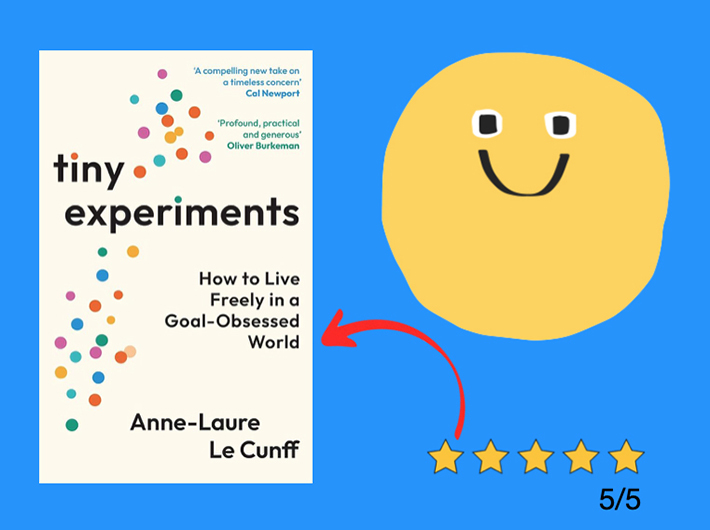
In the book Tiny Experiments, Anne-Laure Le Cunff encourages us to come up with a research question and then turn it into a hypothesis. She states:
“Don’t overthink it. Formulating a hypothesis is an intuitive process based on your past experiences and present inclinations. It should simply be an idea you want to put to the test- an inkling of an answer to your research question.
If you observed that you dread giving presentations, maybe improv classes could help build your confidence. If you feel anxious in the morning, maybe meditation could help regulate your emotions. If you enjoy graphic design, maybe freelancing could help strengthen your portfolio.”
Don’t be put off by this scientific language (e.g., ‘Hypothesis’ and ‘research question’). Running a tiny experiment and formulating a hypothesis is easy.
Here’s an example from my own life . . .
I’ve noticed that when clutter piles up on my desk, I am more easily distracted and feel overwhelmed. So, I came up with the following research question:
“How can I decrease feelings of overwhelm and increase my ability to focus when I’m at my desk?”
My hypothesis to this question was:
“Decluttering my desk by removing all non-essential items will decrease feelings of overwhelm and increase my ability to focus on the task at hand.”
Then, I put this idea to the test and observed what happened.
Some experiments you run will work. Others will flop, but that’s okay. The point is you won’t know unless you run some tiny experiments.
As Anne-Laure Le Cunff states:
“Once you have a hypothesis, you can design an experiment and turn your life into a giant laboratory for self-discovery.”
My personal discoveries
Through running tiny experiments, I’ve come to realise that being organised isn’t about having a beautifully colour-coordinated filing system or a nicely decorated home.
It’s also not about following 10 simple steps and waking up one day to find that you’ve magically become an organised person.
In our materialistic culture, we are sold a particular idea and image of what it means to be organised. But I’m not buying it. And you shouldn’t either. Why? Because it’s a lie designed to make us feel bad about ourselves, so we buy more stuff!
In stark contrast to the slick images you see online and in glossy magazines, life is messy. It’s a constant struggle.
Purchasing pretty storage containers and having a tidy, organised home won’t make your life less messy and uncertain.
But I can say this: being organised will make it easier to navigate the mess and chaos of life. It will help you focus your time, energy, and attention on what matters most to you.
So, I’m suggesting that you block the influencers and ads from your feed and burn the home lifestyle magazines. You’re going to create your own personal philosophy for organised living.

Here’s what being organised means to me . . .
Being organised is about helping my day go a little more smoothly.
It’s about removing friction and resistance between me and the tasks I need to do. When I’m organised I can easily find what I need, which allows me to dive into my projects: filming that video, cooking that new recipe for dinner, and mind mapping that book I’ve just read.
Being organised is a way to enjoy the present moment more. Instead of feeling overwhelmed by mess and clutter, I feel calm and grounded. It’s easier to focus on the task at hand.
Is it worth taking the time to become more organised and experiment with your own systems and strategies?
Yes. 100%.
Being organised has decreased my stress levels and boosted my confidence. It has also saved me a significant amount of time and energy.
Creating guiding principles for organised living
I’ve found that developing a few guiding principles helps ground you in your quest to become organised.
Below, I share my guiding principles and how I’ve integrated each one into my life.
I’m not here to tell you to copy what I do (it’s best to develop your own philosophy, guiding principles, systems, and strategies). However, if you’re unsure where to start, feel free to experiment with the systems and strategies listed below.
Principle #1: Embrace mise en place
Give every item a home. Everything should have a special place in your space.
Professional chefs do this. Before they start cooking a dish, they prepare the ingredients and take out the kitchen utensils they need. There’s a term for this practice. It’s called the mise en place.

Mise en place is a French term that literally translates to ‘putting in place’, but it means a place for everything and everything in its place.
When it comes time for a chef to start cooking a dish, they know where the ingredients and kitchen utensils are. This allows the chef to work efficiently and focus on the task at hand: cooking the dish.
In the book Work Clean, Dan Charnas explains how this concept can be applied outside the kitchen to our everyday lives.
Charnas encourages us to arrange our spaces to remove resistance. He states:
“The less friction we have in our work, the easier it is to do, the more we can do, and the quicker we can do it; and thus the more physical and mental energies we can preserve for other things.”
Mise en place changed my life for the better. I used to spend a lot of physical and mental energy trying to find my keys, wallet, etc., but not anymore.
I now have a designated spot for my keys, hat, wallet, and bag. After using these items, I return them to their special place.
With the mise en place, I no longer waste time searching for items. I can quickly and easily find what I need. You can read more about how I apply mise en place to my life here.
Principle #2: Make your stuff visible
If something is important, I can’t have it stuffed away in a cupboard, drawer, or file. If it’s hidden away, it doesn’t exist.
This is why you’ll see vertical wall hangers in most rooms of my house. These hangers contain key items I frequently use in the space.
By having one item per pouch, I can easily find what I need when I need it.
Principle #3: Fight piles of stuff with the rule of 3
I get easily overwhelmed by piles of stuff, so I have to be vigilant and stay on top of the mess.
I have a simple trick for keeping my space relatively tidy. I tell myself:
“All I need to do is put away three things. That’s it!”
The sink is overflowing with dishes? I tell myself, “Just do three dishes!”
Laundry is scattered all over the bed? “Just put away three pieces of clothing!”
The kitchen bench is covered in random stuff? “Put away three spices!”
Putting away three items feels easy. And when something feels easy, I’m more likely to get started.
When everything has its special place (see Principle #1: Embrace mise en place), it’s easy to implement this principle.
Principle #4: Have capture tools
There’s nothing more frustrating than having a brilliant idea and having no way to capture it. You need to be able to catch thoughts as they occur.
This is why I have whiteboards, markers, pads of paper, and pens placed in key locations.
These random ideas that I capture get thrown into my in-tray to process later on.
Principle #5: Make your space a distraction-free zone
Distractions keep you from doing what you need to do. Like a pile of clutter on your desk or boxes obstructing your entryway, distractions are a barrier to your goals and intentions.
If you want to be more organised, you need to deal with anything that could distract you before sitting down to do your work.
Like most people, the biggest distraction I face is my phone.
If I’m constantly checking my phone, I feel scattered, frenzied, and overwhelmed. Everything speeds up. I start to feel like I’m spinning out of control.
I know I have to avoid this mental state at all costs if I want to have any chance of having a productive, enjoyable day.
This is why I have a morning ritual of placing my phone in pocket 1 of my vertical wall hanger in my dining room (well away from my workspace) before I start my workday. Out of sight is out of mind.

Principle #6: Make rubbish plans
I used to feel intimidated by the idea of planning, so I rarely planned my week or day.
But over the past few years, I’ve become a planning machine. Why? Because plans are powerful. Even rubbish plans work wonders!
As Ned Brockman says, plans “help make you less anxious about the howling chaos of modern life.”
Here’s how I create my ‘rubbish’ plans for the week and day:
At the end of every week (on a Sunday), I create a plan for the week ahead.
I do this by reflecting on the week I’ve just had (What did I do this week? Can I claim any wins? Are there any unfinished tasks or people I need to get back to?) and looking at the week ahead (What do I need to do this week?).
I write out all the major to-dos for the next seven days on a list.
This list usually overwhelms me (there’s always a lot to do!). To combat this feeling of overwhelm, I transfer a few tasks from the list to an index card. This is my daily card (the to-do list for the day).
As I complete each task, I mark it off my daily card. As I see more items being marked off, it builds positive momentum and a sense of progress and satisfaction.
Principle #7: Orient yourself in time with planners
I use a paper-based planner and a massive year-in-a-glance calendar to help me keep track of my commitments.

When I can see how many days I have before an important presentation or my next holiday, I feel calmer and more in control.
Using planners also frees up precious mental space for learning as you’re not trying to hold so much information in your working memory.
Principle #8: If it’s not useful or beautiful, move it on
I’m far from being a minimalist. I love my stuff. But having too much can be overwhelming. More stuff means more things to manage, making it harder to stay organised.
As someone who loves to op-shop, I frequently have to remind myself of the following quote by William Morriss:
“Have nothing in your house which you do not know to be useful or believe to be beautiful.”
Every few months, I’ll collect some items to donate to my local op-shop. Reducing my possessions makes cleaning and organising a lot easier and quicker.
Principle #9: Remind yourself of your goals and what matters most to you
It’s important to remember why you are striving to be organised in the first place. It’s not to impress other people. You are doing this for you.
Being organised helps you pursue your goals and live in accordance with your values. You have to keep your goals front and centre of your mind; otherwise, the goal of being organised can dominate your life. Organising can become a form of procrastination.
This is why I keep coming back to my values and goals (which I have captured on a mind map). This reminds me that being organised helps me to live a good life. But it’s not the point of my life. There are more important things I want to do with my time, energy and attention.
That said, it’s hard to focus on and work towards my goals if I’m completely disorganised. I lose sight of them! You need to find a healthy balance.
To sum up
If you want to be more organised, I encourage you to experiment with developing systems and strategies that work for you. Come up with an organisational philosophy and set of guiding principles that align with your values.
Why not treat your life as a laboratory and run some tiny experiments to become organised?
Through trial and error, you’ll discover what works and what doesn’t.
Remember, this isn’t about having a perfectly decorated home or trying to impress others. The point of being organised is to allow you to do the things you want to do without as much friction. It’s about living a good life.