
 No doubt about it, you have to eat something before an exam. Research tells us that young people who don’t eat breakfast demonstrate a 20% – 40% reduction in thinking skills (e.g. concentration, alertness and memory).
But don’t go thinking that eating something is going to be better than nothing.
Sure, a bacon and egg muffin with a hashbrown and expresso coffee may feel like a great idea the morning of an exam (especially if you’ve had a sleep deprived night of cramming facts) but please resist the urge to eat this greasy sludge and consume ridiculous quantities of caffeine!
Here’s the thing, if you eat a lot of food (particularly heavy, greasy food) before an exam you run the risk of decreasing your ability to think clearly and effectively (caffeine will just make you jumpy and increase your stress levels).
Your digestive system will be competing with your brain for oxygen rich blood (and your brain needs this in an exam!).
Whatever you decide to eat before an exam, make sure you eat it 2 hours before the exam to allow for digestion and peak mental performance.
What are the sorts of breakfasts that will fuel your brain for an exam?
1. Porridge with raisins and fruit
2. A bowl of muesli with cut up fruit (I recommend blueberries and/or banana)
3. Wholemeal toast with avocado and tomato
4. Wholemeal english muffin with an egg
5. Wholemeal toast with baked beans
What should you avoid eating for breakfast before an exam? (Note: These are examples of breakfasts students I work with typically have)
1. Coco-pops (or any sugary cereal for that matter)
2. Energy drinks
3. Fatty bacon and sausages
4. Hot chips
5. White bread with jam
If you have any other healthy breakfast ideas, let me know!

But just to be clear – this car wasn’t in bad shape when I first got it. I turned this car into a jalopy through neglect and ignoring basic warning signs.
Whenever I gave my friends a lift in this car, I remember that they always looked visibly uncomfortable. They’d say with a nervous laugh:
“Jane, what’s that strange rattling sound?”
“Why is there a red warning light on your dashboard?”
I wasn’t fussed about the red light or the strange rattling sound.
Somehow, I’d missed the adulting lesson on basic car maintenance.
For many years, I never bothered to get my car serviced. I drove it to the point where it rattled and shook violently, the engine would cut out while driving, and the brakes squealed at a painfully high pitch.
It got to the point where I could no longer ignore these problems, but by then, it was too late. My car was beyond repair and could only be salvaged for scrap metal.

I’m embarrassed to share this, as that’s no way to treat a car that gets you from A to B and uses the Earth’s finite resources. But stay with me because there’s an important point I want to make, and it’s this. . .
When I was younger, I engaged in several unhealthy lifestyle practices. Whilst I never smoked, took drugs, or consumed alcohol, I ate huge amounts of processed junk food (I didn’t know how to cook).
I also frequently sacrificed sleep to pull all-nighters to complete my assignments (I struggled with procrastination).
My body seemed resilient. It appeared capable of handling the shocks. But over time, I started feeling tired and rundown. Still, I kept pushing myself like my old car. The only time I could rest was when I got sick.
These days, everything’s quite different.
I am physically unable to thrash my body around like an old jalopy.
Something as simple as consuming too much salt or sugar can send my brain spiralling out of control.
I was reminded of this a couple of weeks ago when I visited a friend in hospital. Because I was spending a lot of time at the hospital, my usual routines of grocery shopping and cooking from scratch were disrupted.
But then to make matters worse, I was given $80 worth of vouchers to spend at the hospital cafeteria. I thought, “How bad can hospital cafeteria food be?”.
It turns out really bad.
Cheese kranskys (sausages), heaps of salty hot chips, deep-fried chicken, and soft drinks were the main options at this hospital cafeteria.
Unhealthy food seemed completely normalised in this hospital environment. My jaw dropped when I saw a patient order not just one but five cheese kransky sausages!
In this hospital setting, I also started to eat poorly. It was on my third day of eating hot chips from the hospital cafeteria when I noticed that these chips weren’t doing me any favours. I was feeling off my game.

So I decided enough was enough. I gave the remaining hospital food vouchers to a homeless man who was hanging around the cafeteria, desperate for a feed. It was back to home cooked meals for me!
This greasy processed hospital food had a ripple effect on the rest of my life. I slept badly, which impacted my ability to run the next morning (my joints hurt). I felt resistance to using my treadmill desk because everything felt much harder than usual. Since I was moving less, I was more distracted.
I know all this might sound a bit dramatic, especially to those of us who enjoy a few hot chips (e.g., my husband). Given my friend was in a hospital bed and couldn’t walk, I am fully aware of how lucky I am to be able to run in the first place (even with sore joints).
The point I’m trying to make is this . . .
I also know that small decisions, like eating too many hot chips or staying up late, can add up and take their toll on your mind and body. These tiny decisions can have a big impact on the way you feel.
When I was younger, I could eat whatever I wanted and still feel pretty good. Sometimes I’d feel a bit off, but not in a noticeable way.
As Dr Randy J Paterson states in his book How to Be Miserable in Your Twenties:
“In your twenties, some people can do practically anything to their bodies, experience no immediate physical consequences, and feel emotionally more or less well. Random sleep cycle, sedentary lifestyle, lousy diet, 90 percent of the day staring at screen, binge-drinking, isolation, the works. The body doesn’t completely fall apart, and the mind, while not thrilled, hangs on.
Later on, the effect is more immediate. Live exactly the same way at thirty-five, at forty-five, and things don’t go so well. Take a middle-aged car and drive it aggressively down jolting roads, loaded to the max, old oil clogging the engine, and it’s not going to last long. The baseline mood at forty-with no maintenance, no exercise, no dietary adjustment, no stability, and no social life- is misery. ”

Like a car, the human body requires regular basic maintenance. I see this basic maintenance as a collection of small behaviours that leave me feeling calm, grounded, and focused.
Here are a few things I need to do to keep myself running smoothly:
Every now and then, I’ll abandon these behaviours. I’ll have a day where I eat and do whatever I like. I’ll order takeaway, sit on the couch and binge-watch a series until late at night. I usually pay for it the next day, but it also gives me a better appreciation of these healthy practices and what they do for my body and mind.
It’s all about tuning in and noticing how certain things make you feel. For example, when I was in my mid-20s, I noticed every time I ate deep-fried chicken, I experienced sharp stomach pains.
That was like the red warning light on my car dashboard going off in my body. But instead of ignoring it, I paid close attention. Eventually, I decided it wasn’t worth the pain. So I stopped buying greasy deep-fried chicken and eventually went plant-based, which immediately improved my mental and physical health.

There’s no doubt that modern life can be hectic and stressful. When you’re rushing from one thing to another, it’s easy to overlook the basics and ignore the warning signs.
I’m not proud of how I treated my first car, but I learnt from the experience. Now I make sure I get my car serviced regularly. This saves me time, money, and stress in the long run.
Similarly, we need to pay attention to the way in which we look after ourselves. By dedicating time, energy, and attention to the small things that make us feel better, our experience of the present moment becomes richer. As longevity researcher Dan Buettner says, “You can add years to your life and life to your years”.
“Suzuki Swift 1.3 GTi 1990” by RL GNZLZ is licensed under CC BY-SA 2.0. (used in image 1)
“Scrap yard 22l3” by Snowmanradio at English Wikipedia (Original text: snowmanradio) is licensed under CC BY-SA 3.0. (used in image 2)
“KFC Wicked Wings” by avlxyz is licensed under CC BY-SA 2.0. (used in image 5)
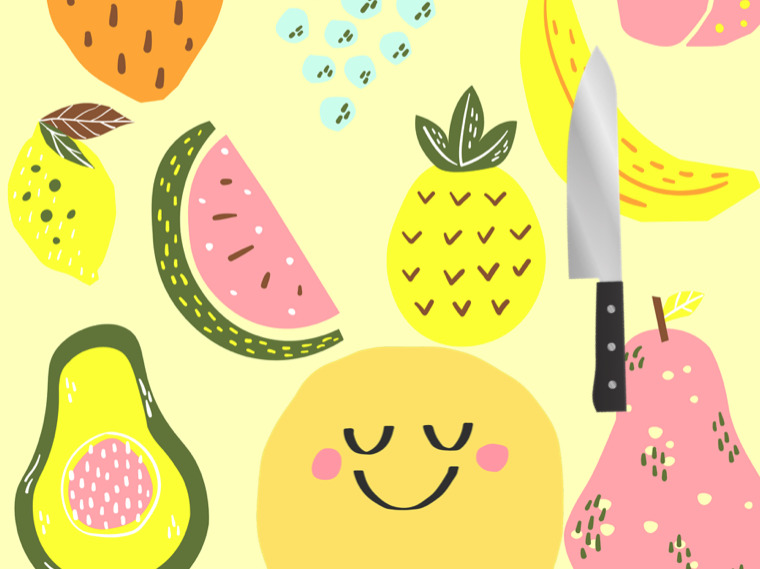
Over the years, I’ve experimented with a range of weird and wonderful stress-busting activities, including yoga, pilates, meditation classes, floatation tanks, massages, acupuncture, and sound healings (to name a few).
I’ll be the first to admit that cash-grabbing wellness gurus and advertisers have sucked me in.
In our capitalist culture, we’re sold this idea that in order to relax, we need to spend big dollars. But I now realise that the best relaxation experiences are cheap or free.
I’ve created rituals around cooking that help me stay calm, grounded, and focused throughout the day.
These days, cooking is my number one way to relax. My kitchen is my happy place, and it can be your happy place, too.
Perhaps this sounds a bit strange. But hear me out.
I haven’t always found cooking to be relaxing or particularly enjoyable.
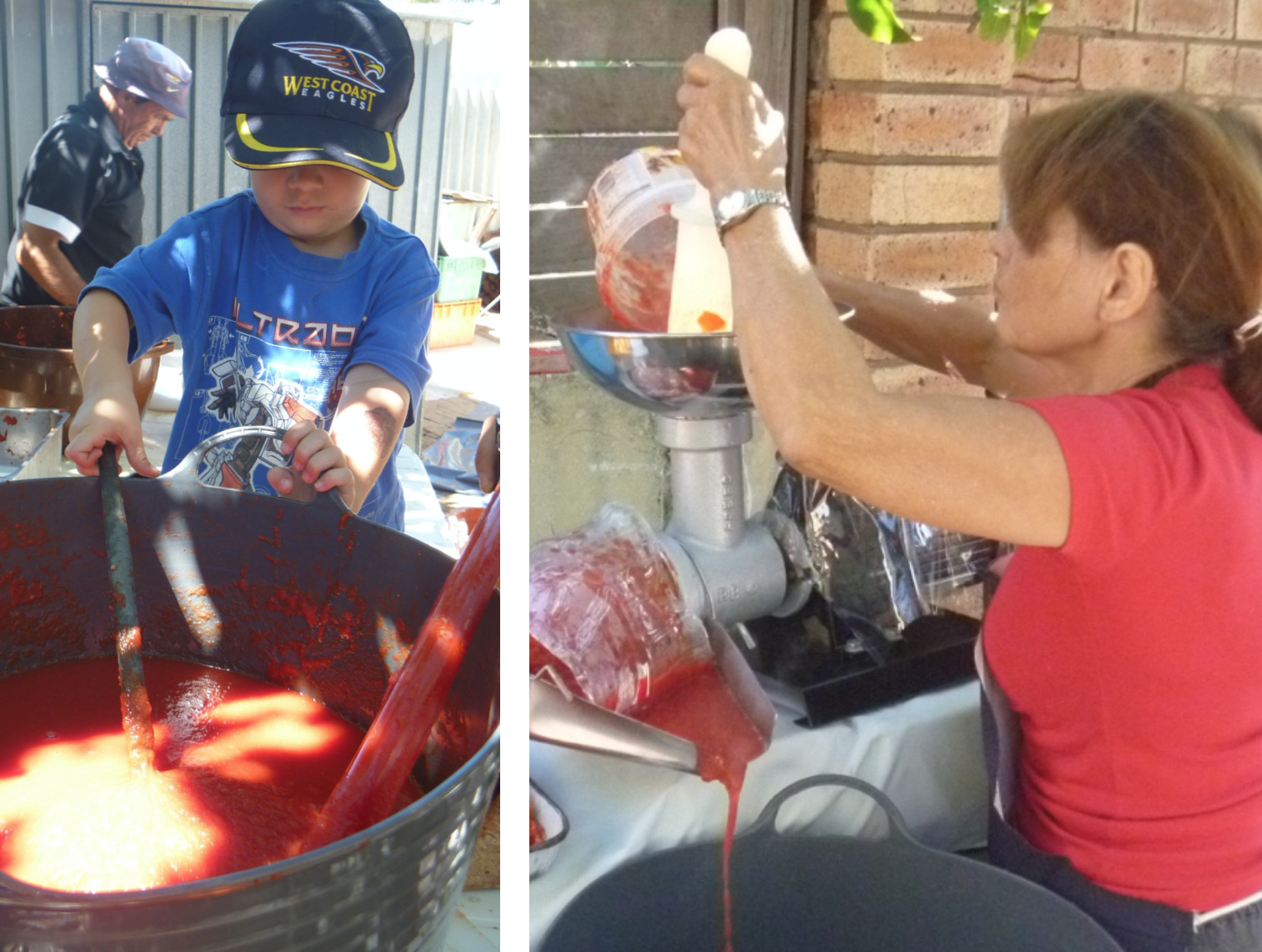
Being half Italian, I used to get involved with the occasional food tradition, such as tomato sauce-making day. But it wasn’t like I grew up with the delicious smells of homecooked food wafting through the house.
My teenage years and early twenties were filled with processed junk foods: a dizzying array of Hungry Jacks combos, greasy fish and chips, and takeaway meat lovers pizzas.
Cooking was a relaxation practice I stumbled upon much later in life.
Since upping my kitchen game and trading the expensive wellness activities for a sharp knife, solid chopping board, and fresh vegetables, my savings and confidence have grown.
To emerge from the kitchen in a calm and tranquil state, a few conditions have to be in place:
1. You cannot feel rushed
2. Your kitchen counter must be clean and clutter-free
3. You need a sharp knife to chop with
4. Your phone must be out of sight (like most things in life, it’s best not to multitask)
If these conditions are met, cooking can feel like a meditation or an empowering yoga class.
I’m not the only person who feels this way.
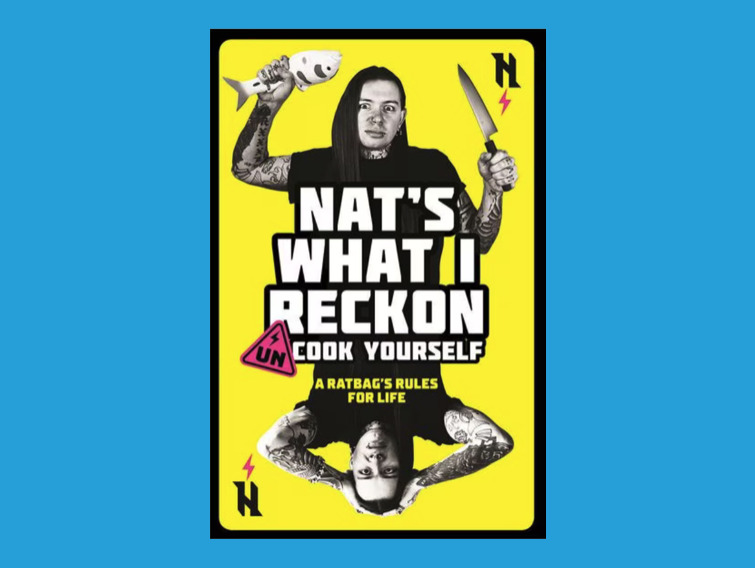
In the book ‘Uncook Yourself: A Ratbag’s Rules for Life’, Nat’s What I Reckon shares how he cooks his way through tough times. He writes:
“I reckon getting in the kitchen and un-cooking yourself from the tough moments in your head every now and then is a way better self-help routine than throwing five grand at some short-lived back pat from a cash grabbing blowhard at a self-help seminar just to tell you you’re not doing life right.”
One reason is you need to focus your mind.
When chopping with a sharp knife, you must pay attention to what you’re doing. If you get distracted, and I have (many times), you might pay the price with a cut to the finger.
Chopping is also a repetitive activity that delivers an immediate outcome. One minute, the bok choy is on the chopping board in full form; the next, it has been chopped and is ready for tonight’s stir-fry.
Cooking also requires you to slow down.
When you’re online, you tend to jump around in a frenzy. But when you’re cooking, you have to follow a recipe step-by-step. This requires focus. This focus helps to clear your mind.
Cooking also gives you a sense of control, power, and agency. As food journalist Michael Pollan says:
“Eating out breeds helplessness, dependence and ignorance, and eventually, it undermines any sense of responsibility.”
When you cook, you’re in control of the process (not some big corporate fast food company). Plus, compared to that commodified wellness experience, cooking is super cheap (all it costs is the price of a few ingredients).
It also produces a nourishing meal at the end. That meal will give you energy, help regulate your mood, and keep you calm and steady.
In the book ‘The Food Mood Connection’, Uma Naidoo argues that to decrease anxiety, you should pay attention to what you’re eating. She writes:
“A crucial part of battling anxiety is making sure your diet is full of foods that are calming and free of foods that put you on edge.”
Fast foods and highly processed foods. These foods (e.g., greasy hot chips and baked goods) are problematic because they lack fibre and the fragile micronutrients and phytochemicals needed for good brain health.
Naidoo recommends increasing your fibre intake by consuming more plants and whole foods, such as beans, brown rice, baked potatoes with the skin on, broccoli, pears, apples, and oats.
A few years ago, I delivered a talk called ‘Rediscovering the Ancient Art of Thrift’ at a local library. In my presentation, I shared the thrifty practice of avoiding eating out and cooking meals at home.
At this point in the presentation, an elderly gentleman put up his hand and said:
“But vegetables are expensive. Why not just get McDonald’s? It’s cheap, and there’s no cleaning up at the end.”
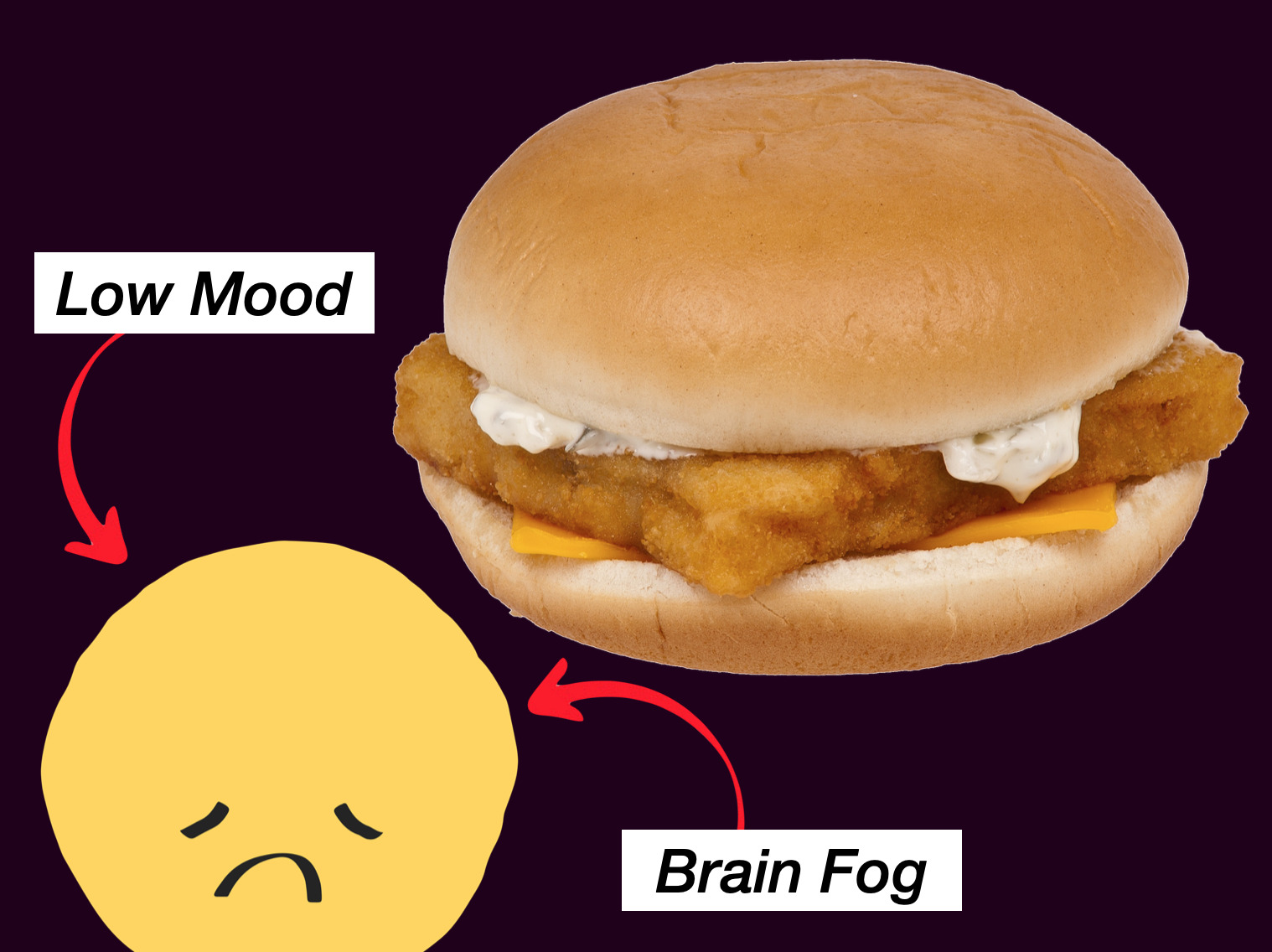
I immediately thought of a friend who, at the time, ate only McDonald’s (for breakfast, lunch, and dinner). His housemates had confided in me that his feet had developed a pungent odour.
Although my diet was far from perfect, I was concerned. If my friend kept going down this path, I could see him heading for serious trouble.
Fast forward a year: How was my friend doing?
He was not well.
He had put on a significant amount of weight and seemed depressed, rarely leaving his room except to get his next McDonald’s meal (back in those days, there was no Uber Eats).
I explained to this elderly gentleman in the library workshop:
“Maybe you’ll save a bit of time and money in the short term [buying the fast food], but eating processed food will cost you down the track. It will cost you in medical bills and poor health. Your quality of life will suffer.”
He nodded, but I could tell he wasn’t entirely convinced.
Until you’ve cut out the processed junk food, allowed a couple of weeks for your tastebuds to readjust, and developed the habit of home cooking, it’s easy to be sceptical. After all, we live in a world that values convenience. Opening an app, pressing a button, and having dinner delivered to your door in less than 20 minutes has some definite appeal.
But every time you order Uber Eats, you miss out on a valuable opportunity to practice slowing down and calming your mind. You also undermine your cooking skills.
If you haven’t developed the habit of cooking or cooking makes you feel anxious, there are a few simple things you can do to cultivate calm and confidence in the kitchen:
Cooking is a messy process. While I may start with a clean kitchen bench, it quickly becomes a mess. That’s how the process goes (I try to clean as I go).
It’s also okay to mess up a meal. Not every meal is going to be an absolute winner. In ‘The Four Hour Chef’, Tim Ferris encourages the reader to see meals that don’t work out as cheap cooking classes. Learn the lesson and move on.
When you think of cooking as one activity, it can feel overwhelming. I divide the cooking process into two stages:
1) Preparing the mise en place: chopping vegetables, taking out utensils, etc, and
2) Pulling it all together: cooking the dish.
In the morning, I take out all the ingredients for a dish so they are ready to go when I need to take a break from my work. I chop earlier in the day and cook the dish in the afternoon/early evening.

If I’m overwhelmed by the idea of chopping vegetables, I break it down to chopping just one vegetable at a time. I’ll say to myself:
“Just chop the capsicum. That’s all you need to do.”
It’s not fun chopping with a knife with a dull blade. A sharp knife combined with a lovely chopping board makes all the difference.
Learning basic chopping skills is a game changer. With the proper technique and a sharp knife, there’s no need to worry about cutting yourself. You can chop with ease.
I took a chopping skills course with the online cooking school Rouxbe, but you can find YouTube videos teaching you good chopping techniques.
You’re not running a restaurant. You don’t have to rush to get meals out to hungry customers. Take your time and enjoy the process of chopping each vegetable.
If approached with the right mindset, cooking can deliver a sense of calm and ground you in the present moment. You also get to experience the mental and physical benefits of a nourishing home-cooked meal. The bonus extra is saving a bit of money.
So, what are you waiting for? Pull out some ingredients and start cooking today.
Research shows active recall (aka retrieval practice) is a highly effective strategy for remembering information. This strategy will take your studies and your grades to the next level.
Active recall involves bringing information to mind without looking at your books and notes.
I have spent the last 30 days experimenting with this excellent learning strategy. In this blog, I’ll share what I did and how I kept the process interesting for my brain.
I no longer need to study for tests and exams.
So, why did I spend 30 days using active recall strategies?
In my line of work, I need to constantly come up with new and original content to present to students. I also need to memorise this content. Why?
Because if I was to read from a sheet of notes or text heavy slides that would be really boring for students. I want to connect with students and to do this, I have to be able to deliver the content off the top of my head with speed and ease.
This is where active recall enters the picture.
Active recall helps to speed up the learning process. It allows you to learn more in less time.
Below I share some of the ways I use active recall to learn new presentation content. Keep in mind, you can use all of these strategies to prepare for an upcoming test or exam.
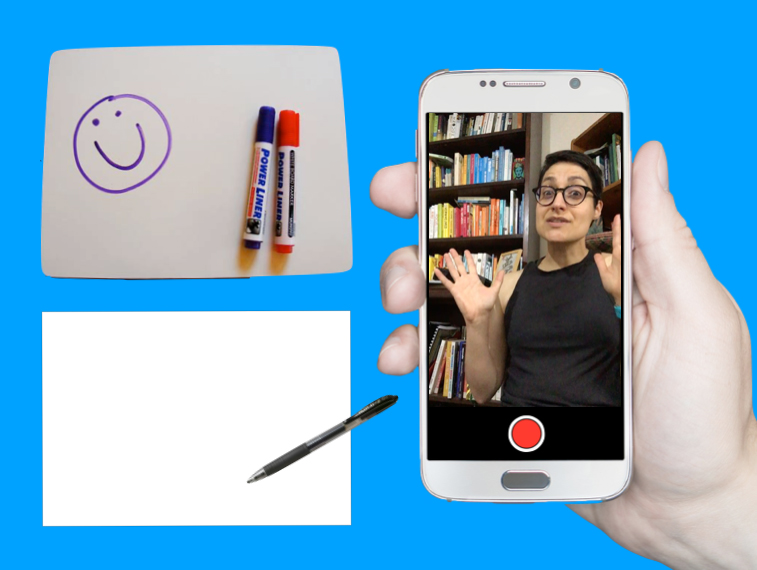
Whiteboards are wonderful learning tools. Here’s how I use a whiteboard to do active recall . . .
I push my speech notes to the side, so I can’t look at them. Then I grab a marker and say to myself, “What can you remember? Go!”.
I write out everything I can remember on the whiteboard. Once I’ve exhausted my memory, I pick up my notes and check to see how I went (using a red marker to make corrections).
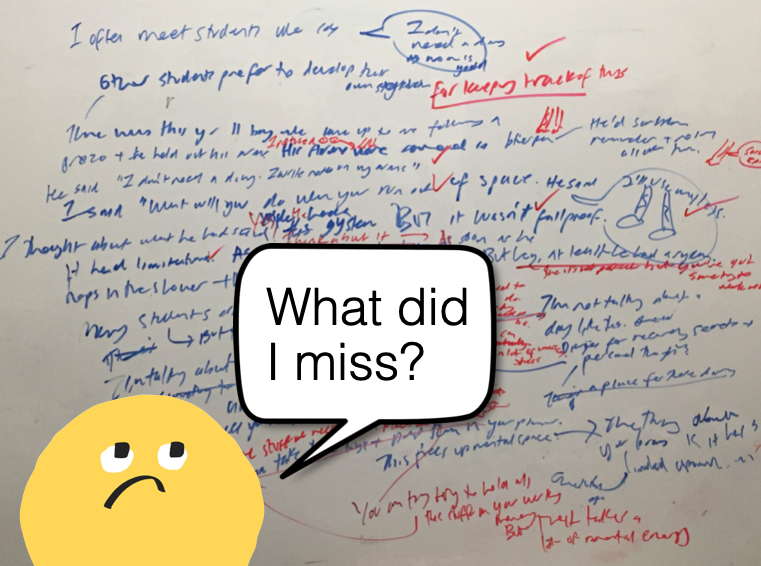
No whiteboard? No problem!
I pick up a pen and sheet of paper and start scribbling out whatever I can remember on the topic. When I get stuck, I pause and take a few deep breaths as I try to scan my brain for the information.
I regularly remind myself that it is okay to not remember the content. “This is how the process goes!”, I say to myself. There is no point beating myself up. That only leads to feelings of misery and not wanting to do active recall practice.
After having a shot at it, I take out my notes, pick up a red pen, and begin the process of checking to see how I went.
Sick of writing? I get it.
Try drawing out the information instead. Alternatively, you can use a combination of words and pictures, which is what I often do.
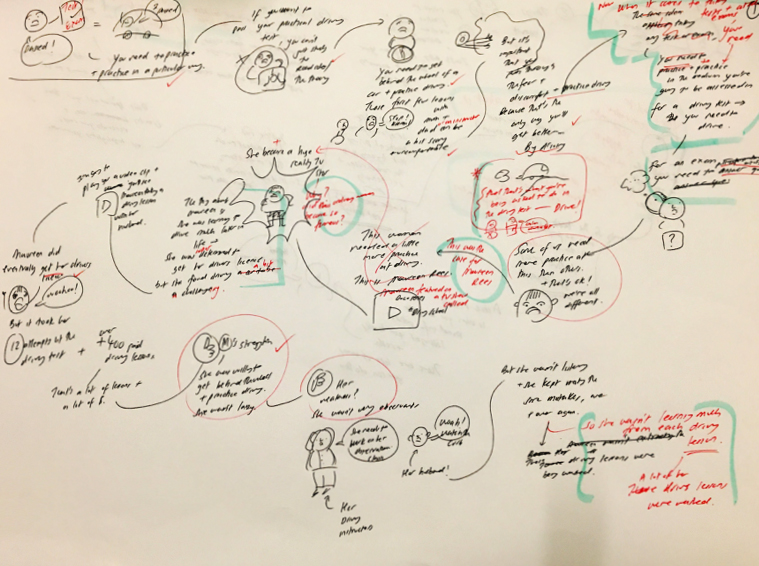
Grab a blank piece of paper (A3 size is best) and create a mind map of everything you can remember on a topic (no peeking at your notes). Then check your notes or the original mind map to see what you remembered correctly and incorrectly.
Writing and drawing out information can take time. If you want to speed up the process, you can talk to yourself.

But don’t do this in your head. It’s too easy to just say “Yeah, yeah, I know this stuff!”. You need to speak it out loud as this forces you to have a complete thought. Then, check your notes to see how you went.
The only downside with this approach is you don’t have a tangible record of what you recalled, which brings me to the next strategy . . .
I make videos of myself presenting the content (without referring to my notes). Although I use special software and tools to make my videos, you don’t need any fancy equipment. Your phone will do the job. Here’s what you can do . . .
Set your phone up so the camera is facing you. Now hit the record button and tell the camera what you’re going to do active recall on. Have a shot at explaining the idea. Then stop recording and hit the play button.

Watching yourself struggle to remember information is often hard viewing. But this is where it’s super important to double down on telling yourself kind thoughts (e.g., “I’m still learning this content. It’s going to be rusty and feel clunky – that’s okay!”).
You need to take a deep breath and keep watching because the video will give you valuable feedback.
For example, if you stop midsentence and you don’t know how to proceed, that tells you something: you don’t know this stuff so well! Make a note. This part of the content needs your attention.
Hand your notes over to a friend, parent, or sibling. Now get them to ask you questions on the content.
I sat with my mum and showed her a print out of my slides for a new presentation. The slides were just pictures (no text).
As I went through the slides, I explained the ideas to mum. I made notes of any sections I was rusty on. Mum also asked lots of questions, which allowed me to think more deeply about the content.
When it came crunch time (a few days before the final presentation), I printed out my presentation slides (16 per page) and used each slide as a prompt. I’d look at the slide and say, “What do I need to say here?”.
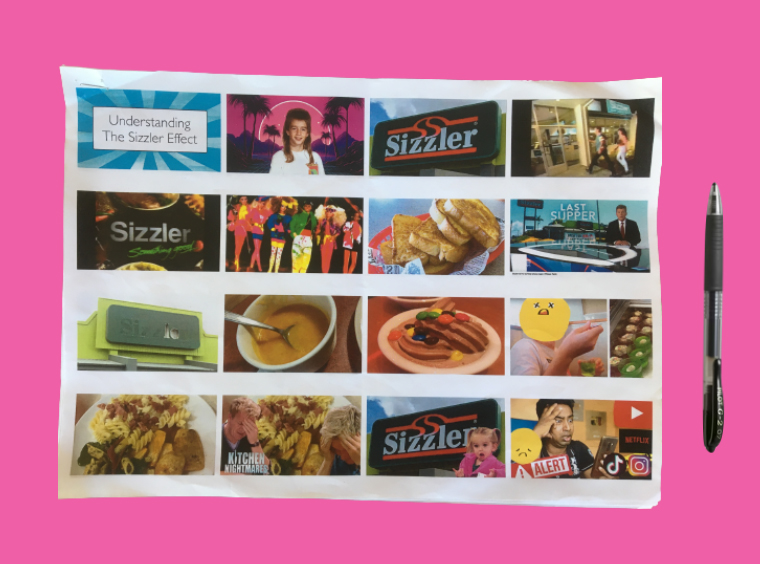
Sometimes I wrote out what I’d be saying in relation to each slide (without looking at my notes). Then I checked my original notes to make sure I hadn’t forgotten anything.
It’s really important that you don’t skip the stage of checking to see how you went, especially as you become more confident with the content.
At times, I found myself thinking “I know this stuff! I don’t need to check my notes” but then another part would say, “You better just check . . . just to be on the safe side”.
I’m glad I forced myself to check because more often than not I would discover that I had missed a crucial point.
Zines are cute little booklets you can create on any topic you like. They are fun to make, so I thought I’d try making a mini zine on the main points of some new content I had to learn.
I folded up an A4 page into a booklet and then I sketched out the main points on each panel.
I create a deck of flashcards on some key ideas (question on one side and the answer on the back) and then I test myself with them.
I read the question and before flipping the card, I write out the answer on a sheet of paper or say it out loud. Then I check to see how I went.
The beauty of flashcards is they are small and portable (they can easily fit in your pocket or bag). Whenever you have a spare minute or two, you can get a little active recall practice in.
It’s not enough to do active recall just once on the content you need to learn. For best results, you want to practice recalling the information several times over a period of time.
I didn’t follow a strict schedule for the 30 days. I had my notes for each important chunk of information I had to learn pinned to eight different clipboards.
Every morning, I’d pick up a different clipboard and I’d practice that specific content. I knew as long as I’d had a good night’s sleep in between practice sessions that the information was being strengthened in my brain.
Doing active recall is a bit like doing a high intensity workout: it can be exhausting. But you must remember, just like a high intensity exercise session is an effective way to train and get fit, active recall is an effective way to learn. Unlike less effective strategies (e.g., rereading and highlighting), you can learn a lot in a short space of time with active recall.
The key is to expect the process to be a little uncomfortable. Don’t fight the discomfort. If you trust the process and persevere, it won’t be long before you begin to see amazing results.
Just because active recall is challenging to do that doesn’t mean you can’t have fun with it.
Using a combination of different active recall strategies is one way to keep things fresh and interesting for your brain. But you may wish to try the following things to add a little boost of fun to your active recall sessions:
• Use a different type of pen
• Use a different coloured pen
• Change the type of paper or notebook you use (e.g., instead of using lined paper, use blank A3 paper)
• Incorporate movement into your active recall sessions (e.g., walk and test yourself with some flashcards)
• Change your study environment (e.g., go to the library or study outside)

Like I said, active recall is challenging to do, especially when you first start learning new content. You can feel awkward and clumsy. For this reason, it’s easy to make excuses to get out of doing it (e.g., “I’m too tired”, “I’m not ready to do it”, and “It’s not the right time”).
This is where you need to harness the power of habits.
Find a set time in your day to do a little active recall practice. For instance, during my 30 days of active recall, I scheduled my practice sessions for first thing in the morning. I knew after I washed my face, I would sit down to practice.
Incorporating active recall into my morning routine worked really well for me. I was getting the hardest thing done first thing in the day. And once it was done, I could relax. It was done and dusted!
At a certain point, I became more confident with the content and I found I was on a roll. I felt motivated to do active recall.
This is when I started to look for spare moments in the day to squeeze in a few extra mini practice sessions.
For example, one day I found myself waiting in a car. I grabbed a paper shopping bag and started scribbling out the content onto the bag. As soon as I got home, I checked the shopping bag against my notes.
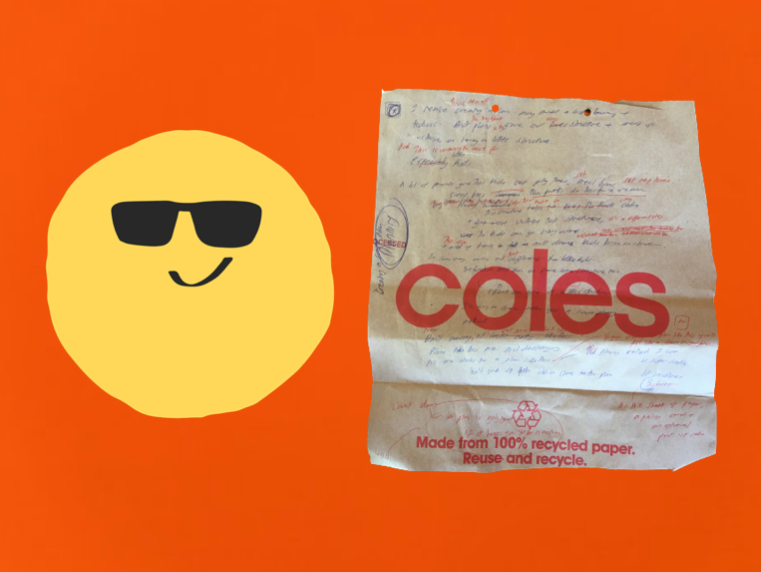
I hope you can see that there’s no one set way to do active recall. This is a highly effective strategy you can be creative with. As long as you’re testing yourself and checking to see how you went, you can’t go wrong.
And if you do make a mistake? It’s no big deal. If you check to see how you went, you won’t embed the error in your long-term memory.