
 Have you ever had a life changing experience? Perhaps something that initially disappointed or upset you but it then propelled you into action to improve things?
At the age of 11 I had one of those experiences. I entered my first ever public speaking competition.
I remember arriving at the competition feeling incredibly nervous. And it wasn’t just because I had to deliver a speech on birds. There I was in my public school uniform (tracksuit pants, a faded t-shirt and dirty sneakers) standing next to contestants from private schools who were all wearing ties, white collared shirts, formal pants and black lace up shoes.
When it came time to deliver my speech, I accidently dropped my palm cards on the floor and nervously raced through the content I could remember. My performance wasn’t great and it was no surprise that I wasn’t selected to continue onto the next round.
As my dad drove me home from the event, I remember feeling disappointed with myself. I vowed that I would enter the competition again and do much better the following year.
In 1996, I re-entered the competition with a speech on the Barbie doll. By this stage, I felt a lot more confident in myself as a speaker and not only did I make it through rounds 1 and 2 (the preliminary final) but I ended up winning the State final.
How on earth did I go from being kicked out in round 1 the first year to winning the entire competition the next year?
The simple answer is – it took a lot of hard work and coaching from others.
You can’t do it on your own – It’s a team effort
A cleverly crafted speech is like a work of art and I don’t think many people realise the amount of work that is required to create an engaging presentation. As brilliant as you may be at the age of 11 or 12, everyone needs help and feedback when it comes to writing a speech. My mum and dad, my school teacher, a university student on her teaching prac and my speech/drama teacher all helped me to write my speech.
 Today for the first time in 15 years, I read over my speech (it was called “Figure of the 90’s” on the negative influence that the Barbie doll has on young girls) and I have to say, it’s not a bad speech!
And before I get a massive ego thinking “How clever was I!” I have to remind myself that I didn’t do it on my own. I had a team working with me.
Key point: Crafting a speech or any piece of engaging writing isn’t easy. It takes hard work and feedback from others. Don’t think you need to do it all on your own.
Learn by doing – Practice makes perfect
A few weeks after I was first kicked out of the competition, my mum found me a speech and drama teacher who I started having private lessons with every week. In these classes I learnt how to pronounce words correctly, vary my voice, control my hand gestures, warm up my vocal cords, etc. I also started doing group drama classes at the Helen O’Grady Drama Academy.
My school teacher, Mrs Prasser, also noticed that I was keen to improve, so she would get me to speak in front of different audiences at school. Sometimes it was just reading from a book in front of the class, other times it was delivering a speech to the entire school and being the MC for a school concert.
 For my second and last chance at the competition, I remember practicing my speech on Barbie almost religiously every day. I could spend up to an hour just perfecting a single phrase. For example, I had to the say the line “Hasta la vista baby” in my talk, so I got my dad to hire a copy of the movie Terminator 2. I played Arnie’s famous phrase over and over, repeating it after him for well over an hour. I was determined to sound as authentic as possible!
Key point: Practice, practice and practice some more. Don’t be afraid to try new things and step out of your comfort zone.
It’s not over until it’s over – Keep up your standards
I never expected to make it to the final of “Speak Up Award”. Having made it to round 2 was enough for me. In my mind, whatever happened from this point on was a bonus.
 Interestingly, a couple of weeks before the grand final I started to feel really bored with my talk (by this stage I had delivered it hundreds of times). I just wanted to the finals to be over! I remember running into my school teacher, Mrs Prasser, at the local shopping centre during the school holidays. She said to me –
“Don’t drop your standards now. It’s not over yet! You keep practising that talk Miss Jane”.
I continued to practice but it was with a sense of burden…I was just going with the motions.
It wasn’t until my dad sat me down a few nights before the grand final and said “Jane, I think you can win this” that something shifted for me. I thought “Maybe dad is right?” I started practising with a new focus and energy. I was determined to get rid of my last palm card so I could fully connect with the audience.
Key point: Don’t slack off. Give it everything you’ve got right until the very end.
Presentation Matters – Look and feel your best
I knew if I wanted to be taken seriously in the finals, I had to look my best. I had to say goodbye to my comfy tracksuit pants and jogging shoes and look like the other private school contestants – well groomed and professional. My primary school realised this too and subsequently lent me a tie, a white blouse and a special pleated skirt.
 The night before the contest, I remember pulling out a pair of black shoes and polishing them with every bit of energy I had. My mum’s reaction to this was –
“What are you doing? Why are you polishing your shoes? Who is going to care what your shoes look like?”
But I knew that every bit of my performance, not just the content of my speech, but the way I carried and presented myself was going to make a difference.
Key point: Focus your energy on the areas that are important. Every little bit counts.
Many years later after I had won the competition, my mum said to me –
“I was skeptical at first but I now understand why you polished your shoes that night”.
She reminded me of my intense focus as a child and the fact that my focus wasn’t on winning either. I was 100% focused on the talk. Not the cash prize or what the audience would think. I was only focused on delivering a great speech. And if I did that, I figured it didn’t matter if I won because I had still played the game like a champion speaker.
I think this is the best way to play the game of life – not being narrowly focused on “winning” or being the best (e.g. having lots of money or stuff) but to throw yourself into whatever activity you’re doing. And if you give it your all, if you play the game like a champion from start to finish, it shouldn’t matter if you win or lose. Why? Because you’ll have a sense of intrinsic satisfaction and joy which no one can take away from you.
Can you think of a time when you felt fully immersed in an activity and you weren’t concerned about the end result? What was it? How did you feel? Post your comments and thoughts below.

The other day, I was getting my haircut when my hairdresser told me something her 15-year-old son had said. His words took her completely by surprise. He said:
“Mum, I need to try harder this year.”
I hear those words a lot. Try harder.
I hear them from students who want to do better at school and from teachers who are trying to motivate students (“You need to try harder”).
But what does it actually mean to “try harder”?
The problem is that this advice is too vague and abstract.
If you don’t have a clear picture of what ‘trying harder’ looks like, you’re in dangerous territory because you’re attempting to motivate yourself towards an abstraction.

In the book Tiny Habits, Professor BJ Fogg explains the problems associated with motivating yourself to achieve a vague goal. He writes:
“You’ve probably seen a well-meaning public-health poster in the doctor’s office that shows lots of colourful vegetables with the headline: EAT THE RAINBOW!
At first glance, you think: Yes, I need to eat better food. But then you’re not sure what practical steps to take. How much green and how much red? That means salad and apples, right? It can’t mean mint ice-cream and red licorice, can it? You are motivated to “eat the rainbow,” but maybe you don’t know how. You feel frustrated and end up being a little hard on yourself.”
I didn’t want my hairdresser’s son to feel frustrated and annoyed with himself. He clearly had good intentions.
I asked my hairdresser, “What does trying harder look like for your son? If he’s trying harder, what is he doing?”
She said she wasn’t sure. So, I kept asking questions.
“Does it look like him sitting down and testing himself with flashcards before a test? Taking notes in class? Listening to the teacher instead of chatting with his mates?”
The answer was clear. She said, “Listening to the teacher! He needs to start listening to his teachers.”
I also mentioned that it would help if he learnt his teachers’ names (you’d be surprised how many teachers tell me their students don’t know their names).
Remembering a teacher’s name, staying focused on what they have to say, resisting distractions, taking notes and reading your textbook may sound easy, but these are skills that require continuous practice.
If you’re not used to doing them, they can feel hard.
Even with years of practice under my belt, understanding new ideas still feels hard. These days, reading feels like weightlifting for my mind!
After getting my haircut, for the next 24 hours, I kept thinking about those words “try harder”.
Something was bugging me about it because I felt it wasn’t helpful to tell yourself to “try harder”. . . and then, like a bolt of lightning, the answer hit me: my hairdresser’s son doesn’t need to try harder. He needs to focus on doing a few specific hard things.

By ‘specific hard things’, I mean concrete behaviours he can do right now (or at a specific point in time) to improve his understanding of his school subjects.
For example, if he wanted to start a home study routine, here are some concrete behaviours I’d recommend he try:
These are just a few behaviours that come to mind when I think about “trying harder” with your studies.
Doing these concrete behaviours just once won’t make you go from good to great. But you’ll be surprised by how much meaningful progress you can make in a single, effective study session.
We live in a world where comfort and convenience are increasingly normalised. We expect things, including learning, to be easy.

You don’t have to cook (thank you Uber Eats).
You don’t have to move (thank you car).
You don’t have to experience boredom (thank you social media and Netflix).
You don’t even have to use your brain anymore (thank you ChatGPT and Claude).
By outsourcing tasks that require physical and cognitive effort, we may save time, but there are hidden costs.
People are losing their skills, destroying their health, and atrophying their brains, all while being flooded with unhealthy levels of dopamine. I’d even go as far as saying that people are losing their lives and what it means to be human.
In every moment, we have a choice: we can do the easy thing that gives us a quick dopamine hit, or we can do the hard thing that gives us a slow and healthy release of dopamine.

When you wake up, you can scroll on your phone or do some physical activity.
At the end of the day, you can order takeaway that is engineered to light up the reward pathways in your brain, or you can prepare a healthy homemade meal.
When you’ve got a spare 30 minutes, you can watch some YouTube or go for a walk outside.
You can use ChatGPT to write your essay, or you can use your brain and build your skills.
You can talk to an AI chatbot and have a friction-free relationship, or you can organise to meet up with a friend.
Every time you choose the hard thing over the easy thing, you build your confidence. You can trust yourself to do hard things and survive them. Over time, as you build your skills, those hard things don’t feel as hard as they once did.
For instance, if the Internet goes down and you’re not dependent on ChatGPT, you know you’ll be okay. You can rely on yourself to think and entertain yourself (thank you brain).
This is why I’m committing to doing hard things this year. I’m challenging myself, and I know I’ll be better for it.
Just to be clear, I’m not talking about self-harm or inflicting extreme pain on myself.
I’m referring to activities that bring up a cringey discomfort and make me think, “Ahhh, I don’t want to do this!”.
These include activities that require sustained focus and/or mental and physical effort, such as writing an article, going for a run, riding my bike to the shops, and meditating.

The simplest way is to ease into doing those hard things. Turn those hard things into tiny habits.
Here is a list of tiny habits for hard things I’m focusing on doing:
Some of these things may not seem like much, but all of these behaviours require mental and physical effort. Remember, there’s a much easier alternative: sitting, tapping, swiping, and scrolling on your phone.
For instance, I don’t need to chop vegetables and cook my meals. I could eat out or order food to my door. This would save me time and effort (cooking my meals can feel like a part-time job).
But I know I would suffer at some point (physically, mentally, and financially).
Chopping vegetables and cooking take effort, but it helps me cultivate calm. When done with a focused mind (not listening to podcasts or talking on the phone), I really enjoy these activities.
If I were to outsource these activities, I’d be going backwards, because I’d most likely lose my valuable cooking skills over time.
Similarly, writing articles like this one feels hard. But hard doesn’t mean bad. It’s satisfying to focus my mind, wrestle with ideas, and write.
Many of us mistakenly believe that an easy life is a better life. But it’s not. A life where you are constantly pursuing pleasure and taking the easy path can lead to anhedonia.
Anhedonia is the inability to experience pleasure in things that were once pleasurable (e.g., a homecooked meal or a sunset). Some people describe it as life in greyscale.

It turns out the more pleasure we pursue, the more pleasure we need and the more pain we experience.
It may sound counterintuitive, but pursuing hard things makes you feel more motivated and more positive about life.
As humans, we want to challenge ourselves. We’re wired for it.
Psychiatrist Dr Anna Lembke encourages us to take on difficult, even painful, activities as a way of “aligning our primitive wiring with our modern ecosystem”. She writes:
“We are survivors. We’re wired for struggle, especially of physical nature. Yet we live in a world in which we’re largely insulated from pain. And not just pain, but also discomfort of any kind. Everything is supplied to us at the touch of a finger. Now we struggle just to get up off the couch. Our modern ecosystem incentivizes inactivity. Inactivity breeds lethargy. Lethargy breeds anxiety and depression. We must fight against this.”
So, forget trying harder. Work out a few hard things you want to do and focus on doing them instead.

On these days, the temptation to procrastinate and distract oneself can be strong.
I recently spent a few days with my family in the countryside, where I enjoyed reading by a crackling fire. But when I found myself back home in my office, I struggled to get back into the swing of things.
I was experiencing a full-blown holiday comedown.
For some context, I had printed out the slides for an upcoming presentation that I needed to practise, but I felt resistance every time I looked at the slides.
My mind screamed, “Nooo! I don’t want to practise!”. Without even thinking, I kept pushing the slides away like a toddler smooshing their vegetables around on their plate.

But at some point, I caught myself in the act. Without berating myself, I managed to turn things around and ease into my practice.
In this blog, I’ll share a couple of simple strategies I use to get a better handle on my procrastination and overcome resistance.
According to Procrastination scholar Tim Pychyl, procrastination isn’t a time management issue. It’s an emotion management issue. If you can get a better handle on your emotions, you’ll have a better handle on procrastination.
Let’s unpack this…
Often, when we procrastinate, it’s because we’re trying to avoid experiencing negative emotions. The task we need to do brings up feelings of discomfort (e.g., boredom, fear, guilt, anxiety, and stress), so we avoid the task to make ourselves feel better.
But avoidance makes no sense when you think about it.
Oliver Burkeman explains the problems associated with avoidance in his book Meditations for Mortals. He writes:
“The more you organise your life around not addressing the things that make you anxious, the more likely they are to develop into serious problems – and even if they don’t, the longer you fail to confront them, the more unhappy time you spend being scared of what might be lurking in the places you don’t want to go. It’s ironic that this is known, in self-help circles, as ‘remaining in your comfort zone’, because there’s nothing comfortable about it. In fact, it entails accepting a constant background tug of discomfort – an undertow of worry that can sometimes feel useful or virtuous, though it isn’t – as the price you pay to avoid a more acute spike of anxiety.”
Dutch Zen Monk Paul Loomans labels the tasks we avoid as ‘gnawing rats’. He says these tasks “eat away at you under the surface”.

Have you noticed that whenever you try to avoid a task, it’s usually still on your mind, using up your precious mental resources?
That’s what Loomans means by the task eating away at you under the surface.
Why does he use the peculiar term ‘gnawing rat’? Looman’s daughter used to have pet rats that would eat loudly under his bed, keeping him awake at night.
Loomans explains that if you can befriend your gnawing rats, you can transform them into white sheep. Just like a white sheep follows you around passively, once you transform a task into a white sheep, it’s a lot easier to make a start.

The question is, how do you transform a ‘gnawing rat’ (a task you are avoiding) into a white sheep?
The key is to approach procrastination from a place of curiosity.
Loomans suggests creating a positive, open relationship with the task you’ve been avoiding. You need to sit with it or visualise the task. Instead of giving yourself a hard time, get curious about why you have such a strained relationship with this task.
Loomans advises:
“… you’re not being asked to immediately do whatever it is that’s gnawing at you. The assignment is only to establish a relationship with it. You let all the various facets sink in and then let them go again.
The rat no longer gnaws at you, and it has settled down. It’s no longer trying to get your attention, but follows quietly behind. It now has white legs and curly fleece – it’s turned into a white sheep.”
I decided to follow Looman’s advice with this presentation I had been avoiding. To begin with, I pulled out my slides and I just sat with them.
I closed my eyes, tuned into my body and asked myself:
“Why am I feeling resistance towards practising this presentation? What’s going on?”
Within 30 seconds, the answer came to me. The resistance came from how I thought I’d feel after doing my speech practice: exhausted and emotionally depleted.
You see, when I practice a presentation, I typically go into turbocharge mode. It’s like I’m delivering the real thing: I gesticulate, project my voice, pace around the room, and rely on my memory and the pictures on my slides to remember the content (I don’t refer to my notes).
All of this takes a lot of mental and physical effort.
So, naturally, when I looked at my slides for this one-hour presentation, I felt flat and heavy.
I equated one hour of presentation practice with having a fried brain by the end.

But then I had a brilliant idea. I thought, “What if this practice session didn’t have to feel like a hard slog? What if it could be fun, light and easy but still effective? What would that look like?”
It immediately occurred to me that I had to shorten my practice session, which brings me to the next strategy . . .
To keep my practice session fun, light and easy, I settled on doing just five minutes of speech practice.
Instead of pacing around my office and practising in turbocharge mode for an hour, I sat myself down with a hot chocolate. I set a timer for five minutes, pulled out a mini whiteboard and started recalling the content (scribbling out and drawing pictures of what I needed to say).
When the timer went off, I checked my notes to see how I went (What did I remember? What did I forget to say?).
Then, I checked in with myself – “How am I feeling after that mini practice session?”. Instead of feeling depleted, I was feeling good! I felt less overwhelmed by this presentation. The resistance had subsided. As Paul Loomans would say, the presentation had transformed from a gnawing rat into a white sheep!
I felt excited, even a little inspired.

I could have easily kept practising for another 10-20 minutes, but I decided to give myself a break to re-energise (I got up and walked on the treadmill for 2 minutes).
This gave me insight into the need to vary the intensity and mode of each study session, depending on my energy levels and what I have planned for the rest of the day. Sometimes it’s good to go into turbocharge mode, but not always.
Not every study/work session has to be hardcore. Work sessions that leave you feeling completely drained by the end can be counterproductive. As Professor BJ Fogg says, “Tiny is mighty”.
Firstly, tiny study sessions are less scary for your brain. Five minutes of speech practice and flashcard practice feels easy. You think, “I can do 5 minutes!”.
In contrast, one hour of study feels scary for your brain, which means you’re more likely to procrastinate.
When you go tiny, it’s also easier to give your full focus to the task at hand. Here’s the thing about focus: focusing your mind takes a lot of your brainpower. And you have a limited supply of brainpower!
As you sit there and study, your brainpower gets depleted. But research shows one way to boost your attentional resources (i.e. your brainpower) is by taking regular breaks. If you study in short focused bursts and then take a break, you can stay refreshed and ensure your study sessions are effective.

But most importantly, tiny study sessions help to create momentum, and they leave you feeling good!
I tend to push myself to the point of exhaustion when I practise my talks. But I can see now that this makes it hard for me to want to practise in the future.
By dedicating just 5–10 minutes to the task and enjoying it, I’m more likely to do another 5 minutes (or more) of practice tomorrow. Doing five minutes of practice every day is infinitely better than doing no practice or cramming a long practice session in the day before.
You’re not going to go from good to great in one tiny study session. But you can make meaningful progress and create the momentum you need to keep going.
So, don’t turn your nose up at five minutes of flashcard practice or 10 minutes of doing a practice test. If done with focus and intention, that’s a solid study session that can set you on the path to success.
Image credit:
Toddler (featured in image 2): “Skeptical” by quinn.anya is licensed under CC BY-SA 2.0.
Rat: “Fancy rat blaze” by AlexK100 is licensed under CC BY-SA 2.0.
I understand this cringe factor.
In high school, goal setting felt forced. I’d think, “Why are they making me do this?” and “What’s the point?”.
However, once I got to university, I realised that goals are a helpful life strategy.
In this article, I want to share my perspective on goal setting and how this strategy has helped me to get things done.
I’m going to tell you:
• What goals are
• Why you’d want to have them
• How to stick at them
• Why you need to protect your goals from destructive outside forces
Let’s go!
Goals are things you want to do. Perhaps you want to write a book, jog around the block every morning, start a podcast, get a part-time job to save money or learn to play an instrument. These are goals.
• Goals give your life a sense of purpose
• Goals give your life meaning and a reason to get out of bed
• Goals help to focus your mind on what you want/need to do
• Goals help you to create a better, less boring life
As Giovanni Dienstmann explains in his book Mindful Self Discipline:
“We all need to aspire to something and feel that we are going somewhere. Otherwise, there is a sense of boredom in life. Our daily routine feels stale and unengaging. As a result, we seek relief through bad habits, and seek engagement through mindless entertainment, news, social media, games, etc.”
Have you ever set a goal, you felt excited, but then that excitement quickly dissipated, and you gave up on the goal?
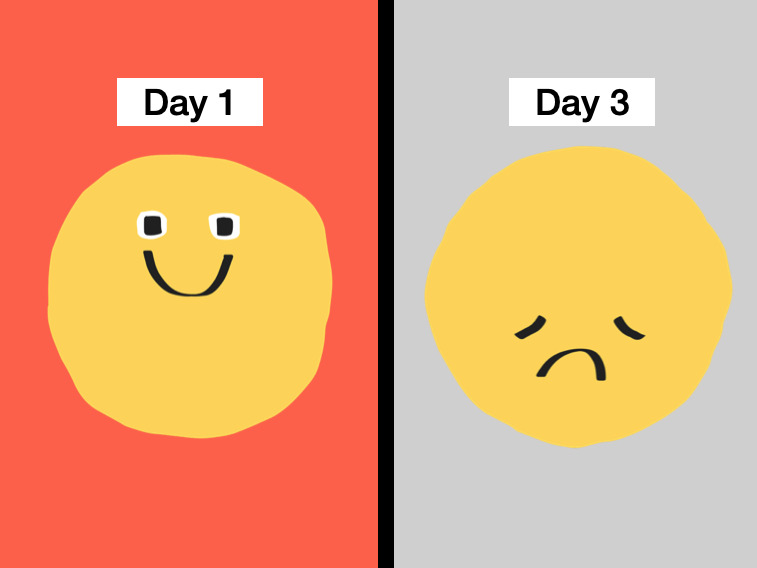
Whenever this happens, it’s easy to think, “Goal setting doesn’t work!”.
However, the problem isn’t with goal setting as a strategy.
The problem is that motivation is completely unreliable (it comes and goes). Plus, you were probably never taught how to achieve your goals in the first place.
In other words, you were set up to fail.
There’s a lot of pretty average advice out there about goal setting. I’ve heard dozens of goal setting pep talks, and many can be summed up like this:
“Set a goal, make it SMART (specific, measurable, achievable, relevant, and time-bound), break it down, blah, blah, blah.”
Most students tune out when they hear these pep talks. You can feel the energy being sucked out of the room.
This advice doesn’t work for most people. And it’s incomplete.
I’ve found that the following simple ideas can make a big difference in helping you move from inaction to action when it comes to pursuing your goals:

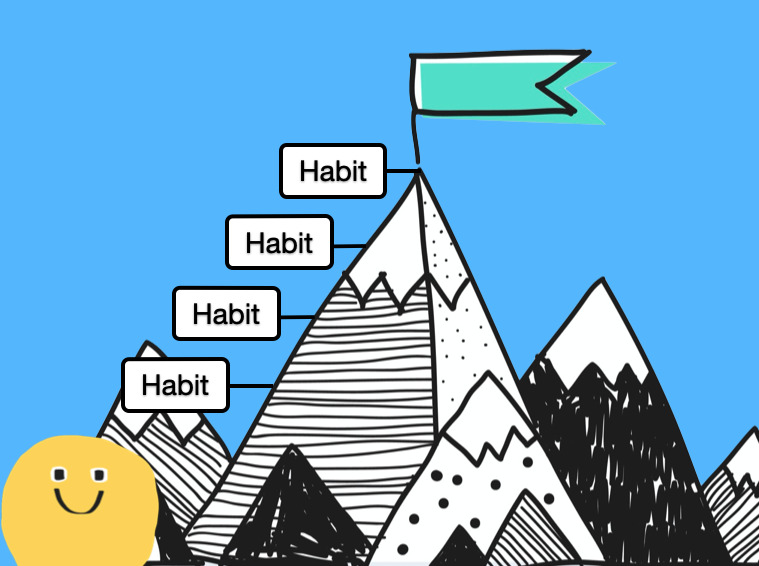
Achieving big long-term goals requires consistently engaging in small behaviours over time. You need to chip away and develop habits to get there.
For instance, after taking a hiatus from writing books (because I felt stuck and overwhelmed by the idea), I finally started writing down my ideas.
By starting small.
I told myself all I had to do was open the Word document and write one sentence. And the sentence didn’t even have to be good! But I had to do this every single day.
If I wanted to write more than one sentence, I could. But one sentence was my absolute minimum. Most days, I wrote at least a paragraph. But when I didn’t feel great, I would show up and write one sentence.
Nine months later, I had a draft manuscript ready to send to my editor.
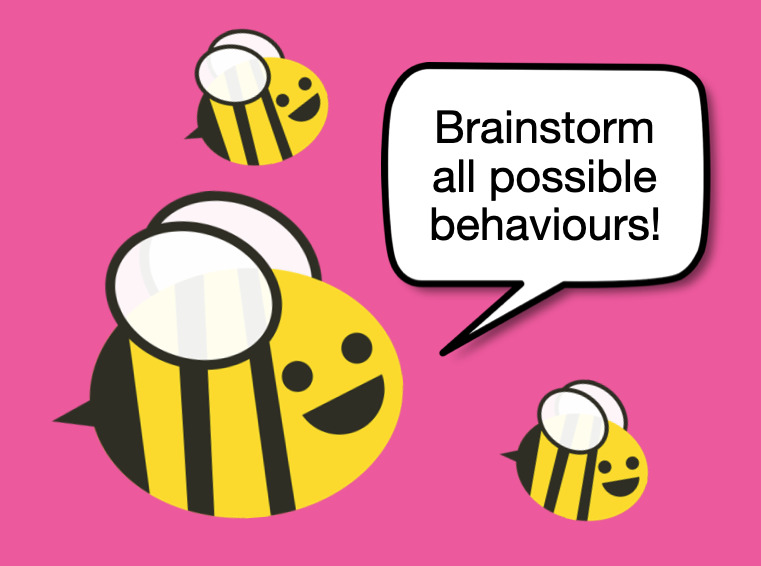
Many different behaviours can help you achieve your goal. The first step is to brainstorm all the possible behaviours that can help you move closer to it.
One way to do this is with BJ Fogg’s tool, Swarm of Behaviors (also known as Swarm of Bs).
Here’s what you do:
You write your goal/aspiration/outcome (whatever you want to achieve) in the middle of a sheet of paper. Then, you spend a few minutes listing all the behaviours that will help you achieve it.
Dr Fogg stresses:
“You are not making any decisions or commitments in this step. You are exploring your options. The more behaviors you list, the better.”
When I was brainstorming behaviours that could help me to write my next book, I came up with the following list:
1. Use an Internet blocker app and block myself from distracting websites
2. Carry a notepad and pen with me everywhere I go (to capture ideas)
3. Write one sentence every morning
4. Speak my ideas into a voice recorder when I go for a walk
5. Use the Write or Die app
6. Manage my inner critic (when it strikes, say to myself, “It can’t be all bad!”)
7. Give myself a pep talk each day (e.g., “Done is better than perfect!”)
8. Do Julia Cameron’s morning page activity (i.e., free writing)
9. Attend a writing retreat
10. Sign up for the ‘Turbocharge your writing’ course
11. Pick up a mind map, select an idea and use it as a writing prompt
Once you’ve finished brainstorming potential behaviours, go through your list and select just a few behaviours to get the ball rolling (I selected #1, #3, and #6).
It’s well worth spending a couple of minutes making each of these behaviours ‘crispy’ (i.e., specific). For instance, for Behaviour #1, I decided which websites I would block myself from using and at what times.

When we work towards big life goals, the process is never neat or linear. Showing up and doing whatever you need to do (even just writing one sentence) can feel like a daily grind. Mild discomfort usually infuses the whole process.
Accept that’s how it is. It will sometimes feel like a hard slog, but the rewards are worth it.
The long-term rewards of working on your goals far outweigh the superficial rewards of scrolling through social media, watching Netflix, etc.
Even if you don’t achieve what you initially set out to do, chances are you’ll still be better off than you were before. Why? Because you’ll have learnt a bunch of new skills and life lessons.
Be careful who you share your goals with. Some people delight in stamping all over your goals and crushing your hopes and dreams.
For example, when I was 10 years old, I started attending drama classes outside of school. These classes were a lot of fun and quickly became the highlight of my week.
I remember thinking, “When I grow up, I want to run a drama academy to help boost kids’ confidence”.
I felt inspired by this idea. Drama had helped me come out of my shell and I wanted this for other kids who were lacking confidence. So, I decided to be brave and share my plans with my primary school teacher at the time.
I was expecting Mr D to say, “Good for you, Jane!”. But instead, he said with a smirk, “How do you think you’re going to do that?”
And then he started grilling me with questions . . .
“Where will you get the money from to set this up?”
“Who is going to come to your classes?”
“Where do you plan on running these classes?”
On and on Mr D went.
Ugh. “Just stop Mr D!” I wanted to scream.
I was left feeling crushed.
So, take it from me: Be careful who you share your goals with. Because some people get a kick out of squashing stuff (e.g., your dreams).
But nowadays, there’s a more powerful (and often overlooked) force that can mess with your goals: social media

If you’re constantly checking social media and looking at what other people are doing, that’s time and energy you could have spent working towards your goals. But that’s only part of the story . . .
Social media exposes you to a hodgepodge of content: the best bits of people’s lives, advertising, conspiracy theories, and outrage-inducing influencers. All this noise messes with your goals by subtly shifting and changing your worldview, beliefs, attitudes, and what you view as important in life.
In his brilliant book Stand Out of Our Light: Freedom and Resistance in the Attention Economy, ex-Google strategist and now Oxford-trained philosopher James Williams shares his struggles with this. He states:
“. . . I felt that the attention-grabby techniques of technology design were playing a nontrivial role. I began to realise that my technologies were enabling habits in my life that led my actions over time to diverge from the identity and values by which I wanted to live. It wasn’t just that my life’s GPS was guiding me into the occasional wrong turn, but rather that it had programmed me a new destination in a far-off place that it did not behoove me to visit. It was a place that valued short-term over long-term rewards, simple over complex pleasures.”
He adds:
“…I found myself spending more and more time trying to come up with clever things to say in my social posts, not because I felt they were things worth saying but because I had come to value these attentional signals for their own sake. Social interaction had become a numbers game for me, and I was focused on “winning” – even though I had no idea what winning looked like. I just knew that the more of these rewarding little social validations I got, the more of them I wanted. I was hooked.
. . . I had lost the higher view of who I really was, or why I wanted to communicate with all these people in the first place.”
When you go on social media, you need to realise that there are thousands of highly intelligent people on the other side of the screen and it’s their job to figure out how to capture and exploit your attention.
In short, the values and goals of these big tech companies are not aligned with your values and goals. Facebook’s first research scientist Jeff Hammerbacher summed it up nicely when he said:
“The best minds of my generation are thinking about how to make people click ads . . . and it sucks.”
Take a moment to think of the people who you admire. How would you feel if you saw them spending vast amounts of time distracted and obsessed with social media?
I’ll leave you with this powerful quote from author Adam Gnade:
“Would you respect them [your biggest hero] as much if you saw them hunched over their phone all day like a boring zombie? No, you want them out there in the world doing heroic things, writing that great novel/song/whatever, saving the planet, standing up for the disenfranchised, or whatever else it was that made you love them in the first place. Let’s try to be as good as our heroes.”
Whatever you want in life, work out what you need to do to get there (i.e., the concrete behaviours), and then roll up your sleeves and get started.