The thing about exams is so much intense energy and emotion goes into preparing for them and then sitting them.
Once you’ve sat several exams, you can feel this urge to just move on with your life. Let’s sweep it all under the carpet and forget about the whole ordeal!
But please, resist the temptation to do this.
It’s well worth taking a few minutes to pause and reflect on a few things.
When you stop and reflect on your performance, this can help you grow and course correct. But it’s a cognitive skill we rarely use or know how to use in the context of exams.
Why do so many students bypass the exam reflection process?
One reason is reflecting on how you went on an exam doesn’t always feel good.
Unless you are top of the class and/or you absolutely nailed the exam, the process can bring up some uncomfortable emotions (especially if the exam was a total disaster).

For example, when I got 5% on my first test at Law School, I was filled with shame and embarrassment. But once I let go of all that emotional baggage and showed myself a little self compassion, I was able to look at where things went wrong.
I quickly realised I had no idea how to study. Instead of thinking I had got 5% because I was intellectually not up to the task of studying law, I realised I’d never learnt how to study effectively.
So, I set to work exploring more effective ways to learn. I also got extra help from the university Teaching and Learning Centre to improve my writing skills. All of this made such a difference. In a short space of time, I saw dramatic improvements in my grades and understanding of legal concepts.
What would have happened if I hadn’t stopped to reflect?
I’m almost certain that I would have dropped out of university.
But by spending some time looking at what went wrong (and not beat myself up about it), I could make improvements.
We live in a culture that is obsessed with being busy. As a result, many of us can’t stand being bored or alone with our thoughts.
So, what do we do?
We fill our days with non stop activity (scrolling through our feeds, texting our friends, and online shopping). All this busy activity robs us of the opportunity to engage in reflection.

As philosopher James Williams states:
“ . . . notifications or addictive mobile apps may fill up those little moments in the day during which a person might have otherwise reflected on their goals and priorities. Users check their phones an average of 150 times per day (and touch them over 2,600 times per day), so that would add up to a lot of potential reflection going unrealized.”
If you can swap a bit of screen time with self reflection, you’ll be amazed at what you can achieve.
The key is to not get too fixated on your grade. Look beyond your grade. Muster the courage to look at and/or listen to the teacher’s feedback.
Now again, this can bring up some discomfort. I don’t know too many people who enjoy someone pointing out their mistakes.
But feedback is super important for learning and growth.
Academic coach Hugh Kearns offers some useful advice on how to deal with feedback in his book 52 Ways to Stay Well: During your PhD, Post-doc or Research Career. Although his advice is in relation to graduate students receiving feedback on their writing from their academic supervisors, it can be applied to handling feedback on your exam performance. He suggests:
• Have a quick look at the document or feedback.
• Have your emotional reaction – cry, get angry, throw something.
• Then do whatever works to calm yourself down. Perhaps go for a walk, have a coffee or chat to someone.
• Once you’ve calmed down a bit, you need to re-engage. Because the longer you leave feedback the worse you tend to feel about it.
• At this point you need to look objectively at the feedback. This is when it can be useful to show it to a third party. They are less emotionally involved and can look at the facts.
Unfortunately, this can happen.
When I was in university I got some assignments back that only had a few ticks and a grade. What was I supposed to do with that?
Hugh suggests when this happens you need to “go and ask for it [feedback]”. And don’t just say, “Give me feedback”. Ask specific questions. You may want to pinpoint one question that you struggled with on the exam and ask how you could improve your answer.

You may also want to reflect on three key areas:
1) How you prepared for your exams;
2) Your exam performance (how you tackled the exam); and
3) What you’ll do differently next time.
Some specific questions to think about include:
• What helped you to prepare for your exams (e.g., past papers, a study routine, and binaural beats)?
• What got in the way (e.g., distractions, ineffective study strategies, and procrastination)?
• Did you cram? Or space out your study?
• Did you read the questions carefully and answer them properly?
• Did you come prepared with everything you needed for the exam?
• If you found yourself feeling stressed in an exam, did you have strategies to decrease your stress levels (e.g., positive self talk, deep breathing, and/or avoiding looking around at other students)?
• What will you keep doing for the next lot of exams?
• What will you do differently next time? List 1 – 3 things.
• What is one small thing you can do today to improve your performance (e.g., go to bed 15 minutes earlier tonight and/or download some past papers)?
No one expects you to be perfect when it comes to preparing for and taking exams. But while the exam experience is still fresh in your mind, it’s a good idea to stop and take stock of what worked, what didn’t work so well, and how you can improve next time.

But if you keep making the same mistakes over and over, it can be demoralising.
In this article, I share 12 common mistakes students make when preparing for exams, and what you can do to avoid making them.
But let me be clear, this article isn’t just for students and it’s not just about exams. It’s for anyone who is up to stuff in life. It’s for anyone who wants to keep learning and growing.
My advice is don’t read this article all in one sitting. Treat it like a practice exam: print it out, put your phone away, and work through 1-3 points at a time. Then, get up and take a fun rest break!
Are you ready to dive in? Let’s go!
Without a doubt, this is where most students go wrong with tests and exams. They don’t give themselves enough time to learn the content properly.
They leave studying until the last minute and try to cram as much information as possible.
First, there are a few things you need to understand about how you learn:
Based on this, start preparing for exams before you feel ready, while you can still think clearly (i.e., you’re not panicking and freaking out).
Not all stress is bad. Stress can be a source of fuel and energy. It can help you focus your mind and swing into action.
But too much stress – the freaking out kind – can mess with your ability to focus and learn. If you’ve reached that point, where you feel like bursting into tears or curling up into the foetal position, you’re experiencing bad stress. You need to stop whatever you’re doing and calm your nervous system.
Start preparing early. The more prepared you are, the calmer you’ll feel and the better you’ll do.
Other strategies you can use to decrease bad stress:

“Be calm and know that you can do this.”
Many students spend all their time leading up to their exams creating beautiful sets of notes. By the time they finish their notes, they’ve run out of time to do practice exams.
Notes can be super handy, but it’s what you do with your notes that really matters. Are you testing yourself with them? Do you create flashcards from your notes and test yourself with those cards?
The best way to ace any exam is to practise pulling information out of your brain. You need to test yourself (i.e., use active recall strategies).
Take it from me, this won’t feel as nice or easy as simply taking notes leading up to an exam. But at least you’ll be grounded in the reality of what you know and what you don’t know.
When your only exam preparation strategy is note taking, you go into the exam with a false sense of confidence (experts call this an ‘Illusion of Competence’).
Sitting tests and exams is also a skill. Whether you do well or not isn’t so much a reflection of your intelligence. It’s more a reflection of your exam technique and how well you have prepared.
Practise in the medium you’re going to be assessed in: do lots of past exam papers (ideally under timed conditions using pen and paper).
Treat it like you’re training for a marathon. At first, you might just do a 30-minute ‘exam’ workout. As you build your strength and stamina, work your way up to 45 minutes, then an hour. Eventually, be brave and attempt the full 2-3 hours.
After wrestling with some exam questions, make sure you check to see how you went (what you got right and wrong). Take note of any gaps in your knowledge, and give that content a bit more time and focused attention.
Distraction is the enemy when it comes to learning. When your attention shifts rapidly from one task to another, you destroy your ability to memorise information.
Multitasking also slows you down (i.e., it take you longer to do your work), whilst speeding up your thinking. Fast and frenetic thinking is the opposite of what you need for deep learning. To deeply understand information, you need slow and deliberate thinking.
Before you sit down to study, deal with distractions from the outset. Put your phone away from your body, on silent in another room. Install an Internet blocker app, such as Cold Turkey or Freedom.

If you use social media, get someone to change the password on your social media accounts so you can’t access them during the exam period.
Do what you need to do to focus your mind for a short, intense burst of study (25-45 minutes).
“Put your phone and other distractions away while studying as this will benefit you in the future … however phones will destroy your future.”
The complex terms, jargon and the text-heavy nature of your syllabus can make it scary to look at. But don’t let those things put you off looking at this document.
Your syllabus is too important to ignore. Referring to this document will help focus your mind and save you hours of time.
Bypass all the jargon and head straight to the unit content section. This section tells you exactly what you’ll be assessed on.
Print this section out so you can easily refer to it without having to go on your computer (and potentially get derailed).
When you start a study session, choose a syllabus point and use an effective study strategy to make it stick (e.g., active recall).
You spent hours re-reading your books, highlighting chunks of information and re-writing your notes before the exam. You can’t understand why you didn’t do better?
I’ll tell you why: you weren’t using effective study strategies.
Swap ineffective ways of studying (e.g., re-reading and highlighting) with effective study strategies, such as active recall.
You can practise active recall in different ways, including testing yourself with a deck of flashcards, doing past exam papers, and teaching a concept to a friend.
You’ve also got dual coding (i.e., using words and pictures to help you learn). I’m a big fan of mind mapping. In fact, I mind mapped my way through my undergraduate degrees in Law and Psychology, and my PhD.
Dual coding is a great way to understand new ideas and how those ideas are connected. But to make those ideas stick, make no mistake: you’ll also need to do active recall practise.

To learn more about how I combine mind mapping and active recall, check out my short online course, Let’s Mind Map!
Entering the exam room (or any important situation) in a chronically sleep deprived state is a terrible idea. Expect to have trouble recalling information and focusing your mind.
Bottom line is: Sleep matters. It matters a lot.
This study found that students who participated in an ‘Eight Hour Sleep Challenge’ and prioritised getting 8 hours of sleep each night leading up to their final exams outperformed those who didn’t take the sleep challenge.

Make getting 8-10 hours of quality sleep a non-negotiable part of your study plan. Plug your phone into charge at least one hour before bed and don’t touch it until you get up the next day.
Remember, sleep is the ultimate performance enhancer. Everything you do, you’ll do better after a good night’s sleep.
“Sleep the night before. Don’t cram.”
By the time you get to your final exam, you’re feeling over it. You’ve lost all motivation to study. You don’t really care how you go. So, you do the bare minimum to prepare. You go in with a plan to … wing it. But winging it isn’t an effective strategy.
If you’re running low in motivation and energy, do little activities to re-energise and feel normal again.
One student shared this piece of great advice that made me laugh:
“Study early, study late, and somewhere in the middle treat yourself to an $11 Medium meatbox from Kebab Lads.”
Perhaps an $11 meat box isn’t the best way for you to restore your energy. But that’s beside the point. The point is you must do things to keep your spirits up during exams.
You’re asking ChatGPT to give you summaries of different topics and create practice exams for you, which you then do on your computer. Perhaps you steer clear of AI, but you type up your notes on your laptop.
The problem is if you’re working at a computer, you’re more likely to get distracted. As soon as it gets boring or difficult, you’ll find yourself running to the fun stuff (e.g., YouTube).
But there’s another big problem that often gets overlooked by schools that invest heavily in EdTech: the Screen Inferiority Effect. Reading on a screen and taking notes using a keyboard are not as effective when it comes to learning as using pen and paper.
As Dr Jared Cooney Horvath writes in his brilliant book The Digital Delusion:
“Learning doesn’t arise from the brain alone, it emerges from the rhythms, movements, and sensations of our entire physical selves.”

Invest in a printer and a big box of A4 paper. Print out your readings, past exam papers, the unit content section of the syllabus, any important emails, and your exam timetable.
By printing out these documents, you’ll shift from passively skimming to active reading. This will allow you to form a deeper understanding and stronger memories of the content.
Students who study in only one location (e.g., at a desk in their bedroom) sometimes struggle to recall information once they get into the exam.
Why would this be?
It’s because information is context-dependent. That means when we study in the same place, our memories become tethered to that environment.
Mix up where you study. You don’t need to abandon your desk, but don’t make it the only place you study.
Do some flashcard practice at the kitchen table, a past exam paper in the library, and explain a concept to a friend outside under a tree. You get bonus points if you can do a past exam paper in the actual exam venue!
When you practise in different settings, you train your brain to be able to recall information anywhere.
Stress is contagious. If you’re hanging around people who are freaking out about exams (saying things like, “I hardly studied! I’m going to fail!”), don’t be surprised if you start to freak out, too.
Before the exam, keep away from people or anything else (e.g., caffeine, too much sugar, and social media) that triggers anxiety in you. It helps to feel calm, steady, and grounded as you walk into the exam room.
After the exam, don’t waste time ruminating about it with your friends. This is a total waste of your time and energy. You can’t change what just happened. What’s done is done!
Instead, shift your focus to what you can control (e.g., taking a fun rest break and preparing for the next exam).
“Get in, do it, and get out!”
I once met a law student who didn’t read the exam question properly. She was visibly distressed as she told me she missed reading the part that said you had to write only two of six essays.
What did she do?
She wrote six essays in three hours.
This may sound extreme, but mistakes like these are all too common.
Read the question carefully. Take your time. It will be time well spent.
As you read the question, look for clue words such as explain, discuss, and compare. These words have different meanings. They determine the approach you need to take to answering the question. Some students find it can help to rewrite the question in a way that makes sense to them.
Not sure what the difference is between the words discuss and explain?
Use effective study strategies, such as dual coding and active recall, to understand and remember the meaning of each clue word.
No one expects you to be perfect at preparing for and sitting exams. Like any skill, this takes practise.
So, what areas could you strengthen? My advice is to focus on just one area.
If you need more sleep, then make getting to bed at a reasonable hour your top priority. If you want to start using more effective study strategies, spend 20 minutes creating a mind map or doing a past exam paper.
A few simple tweaks to your lifestyle and study habits can dramatically improve your ability to focus and learn, as well as how confident you feel walking into your exams.
Research shows active recall (aka retrieval practice) is a highly effective strategy for remembering information. This strategy will take your studies and your grades to the next level.
Active recall involves bringing information to mind without looking at your books and notes.
I have spent the last 30 days experimenting with this excellent learning strategy. In this blog, I’ll share what I did and how I kept the process interesting for my brain.
I no longer need to study for tests and exams.
So, why did I spend 30 days using active recall strategies?
In my line of work, I need to constantly come up with new and original content to present to students. I also need to memorise this content. Why?
Because if I was to read from a sheet of notes or text heavy slides that would be really boring for students. I want to connect with students and to do this, I have to be able to deliver the content off the top of my head with speed and ease.
This is where active recall enters the picture.
Active recall helps to speed up the learning process. It allows you to learn more in less time.
Below I share some of the ways I use active recall to learn new presentation content. Keep in mind, you can use all of these strategies to prepare for an upcoming test or exam.
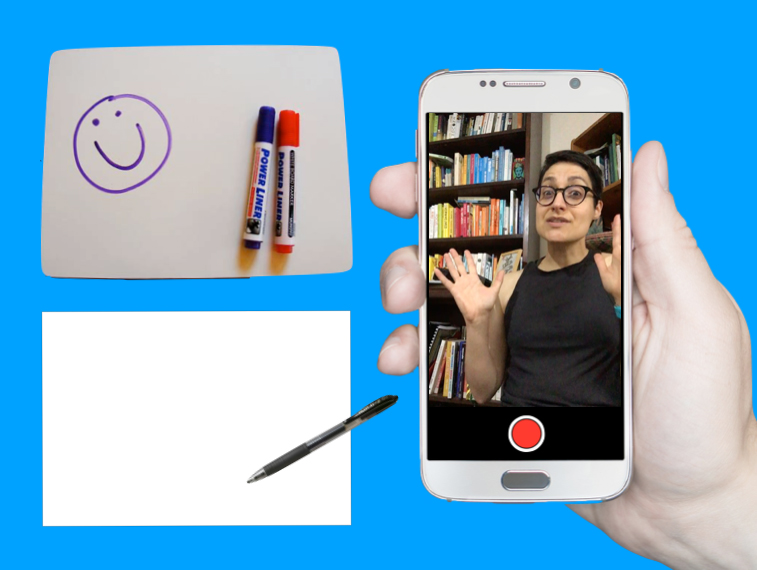
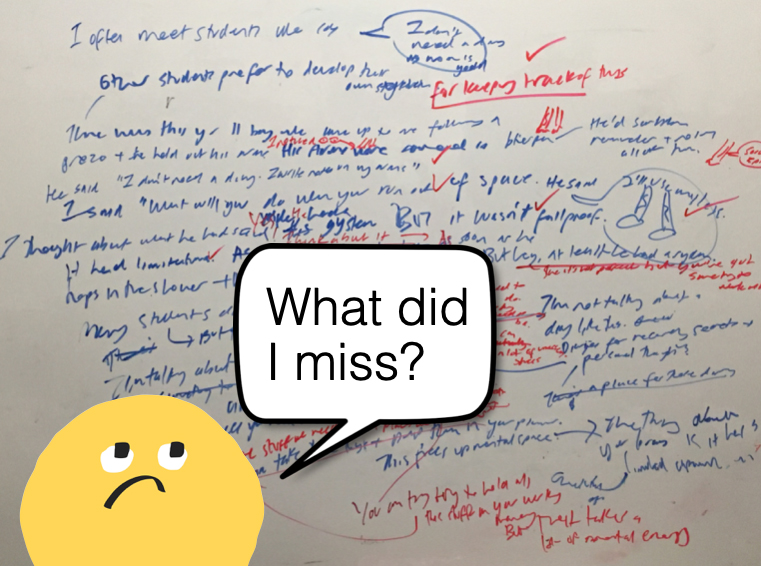
Whiteboards are wonderful learning tools. Here’s how I use a whiteboard to do active recall . . .
I push my speech notes to the side, so I can’t look at them. Then I grab a marker and say to myself, “What can you remember? Go!”.
I write out everything I can remember on the whiteboard. Once I’ve exhausted my memory, I pick up my notes and check to see how I went (using a red marker to make corrections).
No whiteboard? No problem!
I pick up a pen and sheet of paper and start scribbling out whatever I can remember on the topic. When I get stuck, I pause and take a few deep breaths as I try to scan my brain for the information.
I regularly remind myself that it is okay to not remember the content. “This is how the process goes!”, I say to myself. There is no point beating myself up. That only leads to feelings of misery and not wanting to do active recall practice.
After having a shot at it, I take out my notes, pick up a red pen, and begin the process of checking to see how I went.
Sick of writing? I get it.
Try drawing out the information instead. Alternatively, you can use a combination of words and pictures, which is what I often do.
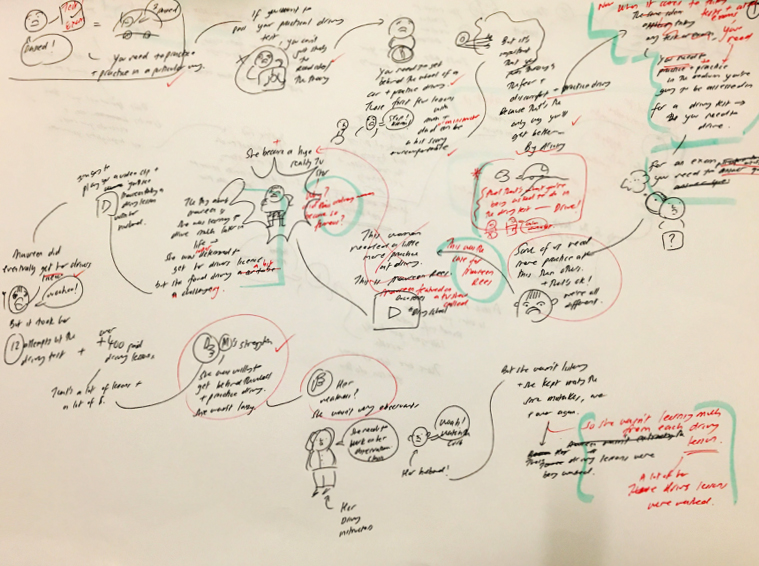
Grab a blank piece of paper (A3 size is best) and create a mind map of everything you can remember on a topic (no peeking at your notes). Then check your notes or the original mind map to see what you remembered correctly and incorrectly.
Writing and drawing out information can take time. If you want to speed up the process, you can talk to yourself.

But don’t do this in your head. It’s too easy to just say “Yeah, yeah, I know this stuff!”. You need to speak it out loud as this forces you to have a complete thought. Then, check your notes to see how you went.
The only downside with this approach is you don’t have a tangible record of what you recalled, which brings me to the next strategy . . .
I make videos of myself presenting the content (without referring to my notes). Although I use special software and tools to make my videos, you don’t need any fancy equipment. Your phone will do the job. Here’s what you can do . . .
Set your phone up so the camera is facing you. Now hit the record button and tell the camera what you’re going to do active recall on. Have a shot at explaining the idea. Then stop recording and hit the play button.

Watching yourself struggle to remember information is often hard viewing. But this is where it’s super important to double down on telling yourself kind thoughts (e.g., “I’m still learning this content. It’s going to be rusty and feel clunky – that’s okay!”).
You need to take a deep breath and keep watching because the video will give you valuable feedback.
For example, if you stop midsentence and you don’t know how to proceed, that tells you something: you don’t know this stuff so well! Make a note. This part of the content needs your attention.
Hand your notes over to a friend, parent, or sibling. Now get them to ask you questions on the content.
I sat with my mum and showed her a print out of my slides for a new presentation. The slides were just pictures (no text).
As I went through the slides, I explained the ideas to mum. I made notes of any sections I was rusty on. Mum also asked lots of questions, which allowed me to think more deeply about the content.
When it came crunch time (a few days before the final presentation), I printed out my presentation slides (16 per page) and used each slide as a prompt. I’d look at the slide and say, “What do I need to say here?”.

Sometimes I wrote out what I’d be saying in relation to each slide (without looking at my notes). Then I checked my original notes to make sure I hadn’t forgotten anything.
It’s really important that you don’t skip the stage of checking to see how you went, especially as you become more confident with the content.
At times, I found myself thinking “I know this stuff! I don’t need to check my notes” but then another part would say, “You better just check . . . just to be on the safe side”.
I’m glad I forced myself to check because more often than not I would discover that I had missed a crucial point.
Zines are cute little booklets you can create on any topic you like. They are fun to make, so I thought I’d try making a mini zine on the main points of some new content I had to learn.
I folded up an A4 page into a booklet and then I sketched out the main points on each panel.
I create a deck of flashcards on some key ideas (question on one side and the answer on the back) and then I test myself with them.
I read the question and before flipping the card, I write out the answer on a sheet of paper or say it out loud. Then I check to see how I went.
The beauty of flashcards is they are small and portable (they can easily fit in your pocket or bag). Whenever you have a spare minute or two, you can get a little active recall practice in.
It’s not enough to do active recall just once on the content you need to learn. For best results, you want to practice recalling the information several times over a period of time.
I didn’t follow a strict schedule for the 30 days. I had my notes for each important chunk of information I had to learn pinned to eight different clipboards.
Every morning, I’d pick up a different clipboard and I’d practice that specific content. I knew as long as I’d had a good night’s sleep in between practice sessions that the information was being strengthened in my brain.
Doing active recall is a bit like doing a high intensity workout: it can be exhausting. But you must remember, just like a high intensity exercise session is an effective way to train and get fit, active recall is an effective way to learn. Unlike less effective strategies (e.g., rereading and highlighting), you can learn a lot in a short space of time with active recall.
The key is to expect the process to be a little uncomfortable. Don’t fight the discomfort. If you trust the process and persevere, it won’t be long before you begin to see amazing results.
Just because active recall is challenging to do that doesn’t mean you can’t have fun with it.
Using a combination of different active recall strategies is one way to keep things fresh and interesting for your brain. But you may wish to try the following things to add a little boost of fun to your active recall sessions:
• Use a different type of pen
• Use a different coloured pen
• Change the type of paper or notebook you use (e.g., instead of using lined paper, use blank A3 paper)
• Incorporate movement into your active recall sessions (e.g., walk and test yourself with some flashcards)
• Change your study environment (e.g., go to the library or study outside)

Like I said, active recall is challenging to do, especially when you first start learning new content. You can feel awkward and clumsy. For this reason, it’s easy to make excuses to get out of doing it (e.g., “I’m too tired”, “I’m not ready to do it”, and “It’s not the right time”).
This is where you need to harness the power of habits.
Find a set time in your day to do a little active recall practice. For instance, during my 30 days of active recall, I scheduled my practice sessions for first thing in the morning. I knew after I washed my face, I would sit down to practice.
Incorporating active recall into my morning routine worked really well for me. I was getting the hardest thing done first thing in the day. And once it was done, I could relax. It was done and dusted!
At a certain point, I became more confident with the content and I found I was on a roll. I felt motivated to do active recall.
This is when I started to look for spare moments in the day to squeeze in a few extra mini practice sessions.
For example, one day I found myself waiting in a car. I grabbed a paper shopping bag and started scribbling out the content onto the bag. As soon as I got home, I checked the shopping bag against my notes.
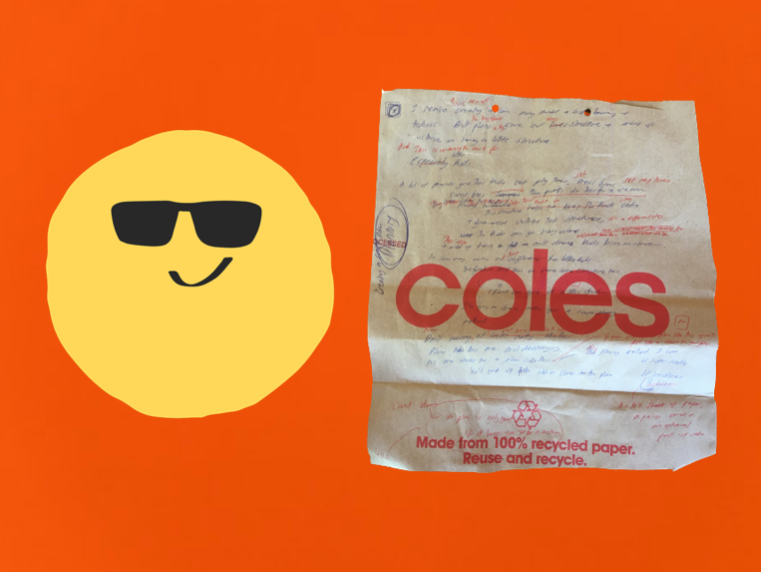
I hope you can see that there’s no one set way to do active recall. This is a highly effective strategy you can be creative with. As long as you’re testing yourself and checking to see how you went, you can’t go wrong.
And if you do make a mistake? It’s no big deal. If you check to see how you went, you won’t embed the error in your long-term memory.

This means you need to prepare yourself mentally and physically for them.
You can work so hard to memorise large quantities of information for an exam, but if you’re not mentally and physically prepared, all that hard work can sadly go to waste.
When it comes time to take your exams, you have to relate to yourself as a professional athlete. Leading up to the day of the big performance (i.e. the exam), you need to eat nutritious food, be in the right frame of mind, manage your nerves, and allow your body to rest. These simple things can make all the difference to your exam performance.
You may be thinking “But isn’t this just common sense?”
It is! But creating healthy habits takes time and practice.
It’s one thing to intellectually know you should be eating well but it’s another thing altogether to incorporate healthy meals and snacks into your lifestyle.
I see a lot of students drinking energy drinks, getting very little sleep, and eating highly processed foods in the days leading up to exams. I have to admit, there was a time when I engaged in these behaviours too. I can tell you from personal experience, this is a recipe for mediocre grades and a miserable existence.
Here are my top 10 tips to prevent burnout and boost exam performance:
Sleep is critical to the learning process, exam performance, and wellbeing. Yet it’s usually the first thing students sacrifice to get more study done.
If you miss two hours of sleep each night for a week, the cognitive effects are as bad as going without sleep for two days straight!
Studies have also found that if you stay awake for 18 hours straight that’s like having a blood alcohol level of 0.05. In other words, it’s like being legally drunk. Your ability to focus, think, and learn will be seriously impaired.
You can’t adapt to getting less sleep. As adolescents, you need about 9-10 hours of sleep per night to be as alert as possible when you wake up.
If that feels unachievable, try to just get an extra 15 minutes of sleep tonight. Gradually increase this each night until you reach your target.
Often students stop exercising when they start preparing for exams. They think “I don’t have time to exercise!”. It’s as if they think they must spend every moment studying. Don’t fall into this trap.
Movement is your friend when it comes to studying for exams.
Research shows engaging in regular physical movement will help you to study more effectively. Firstly, it’s a great way to relieve stress and release feel good chemicals. Secondly, it gets the blood flowing more efficiently to your brain, which can give you a cognitive boost.
One study found students who engaged in 5 minute movement breaks every 17 minutes during a lecture retained more information and could focus better.
Every time you engage in a short movement break, you’re enhancing your study sessions.
Research has found that students who skip breakfast experience a decrease in cognitive performance and alertness compared to students who eat breakfast.
Eating a nutritious breakfast will give you a cognitive boost before an exam. It will also help you to feel fuller for longer, stabilise your mood, and give you plenty of energy to get through the exam.
Here are some healthy breakfast ideas:
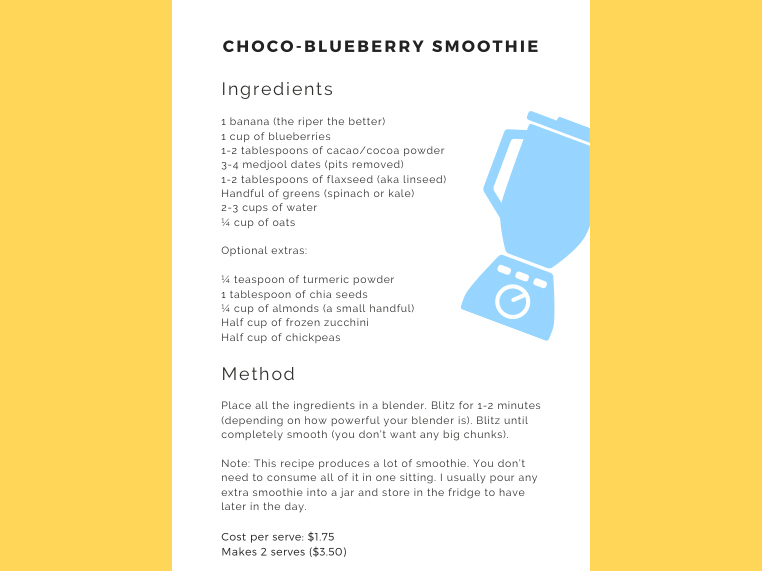
Muesli or porridge with nuts and fresh fruit (e.g., berries) Wholemeal toast with a variety of toppings (e.g., baked beans, tomatoes, and avocado) and a piece of fruit A healthy homemade smoothie (click here for my brain boosting smoothie recipe)
Your brain requires adequate hydration to function properly. Drinking water ensures that your brain receives the necessary fluids to perform tasks efficiently, such as retaining information and problem-solving.
Take regular sips of water as you study. It’s a good idea to have a glass of water or a reusable drink bottle within arms reach.
You may even want to create a tiny habit to remind yourself to engage in this simple behaviour (e.g., “After I finish answering a practice exam question, I will take a sip of water”).
Many years ago, I started thinking that my teachers and lecturers were out to get me. I thought they would mark me down wherever they got the chance. As a result of this distorted thinking, I became too scared to write anything in one of my first tests at law school. After receiving a terrible grade (5%), my brother said to me:
“Remember sis, your teachers want you to do well. They will try to give you marks wherever they can. It’s in their best interest to do so.”
Don’t worry about writing a perfect answer. If you’re unsure, be brave and still write something down. Even if it’s just a few dot points, it’s better than nothing. You may not get any marks for it, but your teachers won’t take marks off.
Just remember, most of the time your teachers are on your side and they want you to succeed. When you do well, it makes them look good.
Chances are there will always be something that you could have studied more thoroughly come the day of your exam. But on the morning of an exam, you can’t do much about that, so there’s no point worrying. Worrying will just deplete your finite energy, which you need to conserve for the exam.
Instead of worrying, try saying this to yourself before each exam:
“I now know so much more than I did before. I’ll be able to answer many questions in this exam.”
Telling yourself this positive micro-thought will allow you to enter the exam in a calm and confident frame of mind.
It’s normal to feel a bit nervous before an exam. But there are certain things and people that can push your anxiety levels into dangerous territory and impair your exam performance.
For example, coffee and energy drinks will skyrocket your stress levels. Similarly, hanging out with people who have a lot of nervous energy and are venting about the exam (“I’m going to fail!” and “I hardly studied!”) are going to leave you feeling distracted and a little jangled.
Before the exam, do your best to isolate yourself from these people. If you’re worried about offending someone who is venting to you, you could say “I’m sorry but I really need to do some last minute cramming”. Then proceed to pull out your notes and pretend to read them.
How many times have you stayed back after an exam to talk to your friends about what you put for each question? Have you ever felt terrible after doing this?
It can be reassuring to know that you wrote the same answer as your friends. But if you find out that you wrote something completely different, you may start to second guess yourself. If you have another four or five exams to go, this may throw you off your game.
This is why I don’t recommend engaging in a postmortem of the exam until you get your results/exam paper back.
When you walk out of the exam room, tell yourself:
“That exam is over. There’s nothing I can do to change how I went. It’s time to move on!”.
You could imagine yourself locking the exam in a box and throwing it off a cliff or rolling it up and stuffing it in a bottle and throwing it out to sea. The point is you need to mentally disconnect from that exam and focus on studying for the next one.

If you come across a question that you’re not sure how to answer, stop for a moment and take a few deep breaths (in for the count of 4 and out for the count of 4).
A simple breath activity you can try is the Box Breathing Technique. This involves imagining yourself breathing along the sides of a box (breathing in for the count of four on one side, out for the count of four on the next side, etc). Repeat this 2-3 times. Then take a look at the question again.
If you are still unsure how to answer the question, move on to another question.
The worst thing you can do is panic (remember, stress impairs your ability to think and recall information).
By engaging in Box Breathing, you can help yourself to remain in a calm and stable state.
Many of us are familiar with writer’s cramp. This can be caused by gripping onto your pen too tightly. Try loosening your grip a little.
Alternatively, experiment with a range of different pens. Some biros require you to press down hard on the page to make a mark, but not gel pens. The ink just flows onto the page!
The reality is, even with a good gel pen, your elbow will start to hurt at some point if you’re taking a 3 hour exam. When it does start to hurt, have a rest for a few seconds (yes, you have time to do this). Stretch your arm out. Shake it a little.
Treat each exam like a mountain hike rather than a 100 metre sprint. Resting for a few moments here and there will be time well spent and will enhance your overall performance.
These simple strategies can help to elevate your exam performance. My advice is to start small. Even if your exams are several weeks away, select one or two of these ideas and start testing them out today. At first, the strategies will require a bit of mental effort. But like anything in life, if you persevere they’ll become second nature to you and they’ll just be things you do without even thinking.
Want to learn more exam strategies? Click here to download a free copy of 70 ways to ace your exams.