

How do you do it without getting derailed by a tsunami of ads, click-bait, notifications and hyperlinks?
Your brain is up against many carefully crafted apps and video games that are designed to steal your attention.
This article is about how you can read online without ending up places you never intended to go.
I’m going to share strategies and guiding principles that help me to stay focused when I’m reading on a screen.
Let’s face it, we all need help with this. The temptation of fun apps and websites are only a few clicks away! But you only have so much mental energy. You need to know how to harness it and direct it towards the things that really matter.
I won’t deny it. I like being able to hold books and articles in my hands. This is why I buy a lot of books and get the Guardian weekly delivered to my door.
Being able to easily scribble down questions and draw pictures in the margins helps me to learn and understand the material.
If the information is really important and/or complex, I highly recommend printing it out. But for all other written works (e.g., blogs, emails, movies or book reviews), try implementing the following ideas and strategies.
The human brain loves comfort. It loves the familiar.
But reading can be challenging and downright uncomfortable for the brain.
If you’re reading an article on a subject that is completely new to you and/or conflicts with your pre-existing beliefs, your brain is likely to have some kind of adverse reaction. It’s going to be like “What is this?! I don’t like this!”.
You’ll feel the urge to escape from this mental discomfort. Therein lies the problem with reading something online . . .
You have lots of easy escape routes (e.g., social media, YouTube, and Netflix). These escape routes give your brain instant relief and gratification. But they also take you further away from your goals and what you need to do (hello, life regrets!).
Don’t give your brain any room to run. Block the escape routes.
Before you sit down to read, set yourself up for a successful online reading experience. For example, here’s what I do:
• I put my phone on silent and place it in another room
• I activate an Internet blocker app called Freedom
• I clear away any clutter on my desk (I dump it in a box)
• I switch off any distracting music that’s playing (generally anything that contains lyrics)

We all know the online world is not the real world. But there’s one irritating feature both worlds have in common: advertising.
The nasty thing about online ads is they are way more targeted (you can thank surveillance capitalism for that!).
Like all advertising, I see online ads as a form of mental pollution. They don’t add anything to your online reading experience, except noise, stress and visual clutter.
Online ads can easily derail your attempts to learn and grow. Plus, they can rapidly deplete your bank balance!
This is why I recommend installing an adblocker plugin to remove ads from webpages, social media and search engines.
Check out AdblockPlus. It’s free and highly effective.
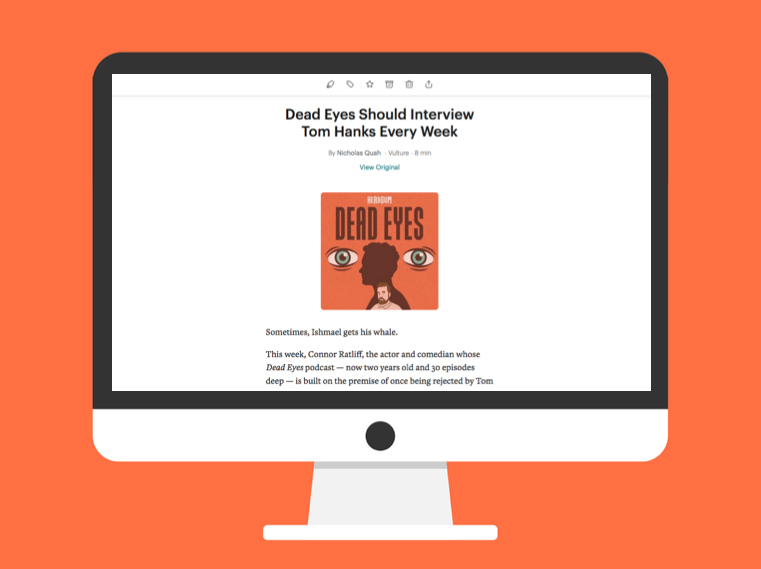
When reading an article, you want to be able to focus on just the content. Most of the time, you don’t need to see side bars, pop-up boxes and other people’s angry comments. This is online clutter that overloads your working memory and depletes your brainpower.
The good news is you can eliminate this clutter by using a free app called Pocket.
Pocket allows you to save articles in your web browser. You can then open the article up without all the other clutter that appeared on the original webpage.
When you open up an article in Pocket, you’ll see a lot of white space around the text. Your brain will say “Thanks!”. Using Pocket makes for a much nicer and easier reading experience.
Take out a notepad and pen and make notes as you read. Not only is it super handy to have something to refer back to but it will help you to understand the information more easily.
Reading may seem like a passive and ‘easy’ activity. But don’t be fooled. Reading requires serious brainpower.
What can help to supercharge your brain to get through all those articles and chapter readings?
I find two things help a lot:
1) Healthy snacks (ideally, within arms reach)
2) Power naps
Before I get stuck into a serious reading session (anything more than 30 minutes), I will sometimes make myself a little platter with veggie sticks, a dip and crackers.
It’s like the act of preparing the platter is helping me to mentally prepare for the task ahead. I’m also combining something tasty with something that can feel hard (i.e., reading). This seems to make the task of reading a complex article a little more pleasant for my brain.
As for the power naps, I typically use these to recharge my brain after reading academic papers.
It’s hard to absorb ideas and learn skills when you’re feeling exhausted. This is why I take power naps and prioritise sleep. It’s not a smart idea to try learning anything new late at night. You’re not going to remember very much.
Hit the sack and commit to waking up early and doing a little reading first thing in the morning.
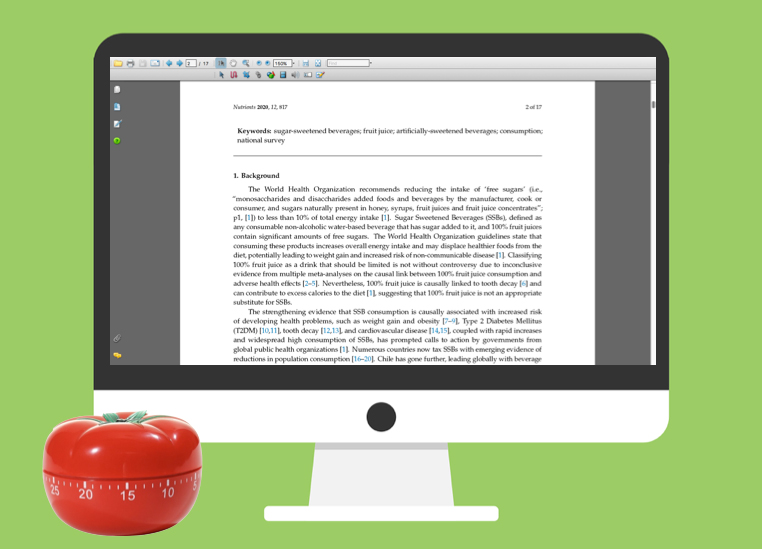
Decide on how long you’re going to read for. Then set a timer and go! Give the articles your full attention for this period of time. I find 25 minutes is a good amount of time for focused reading.
After sitting and reading for 25 minutes, I like to get up, stretch and look out a window to give my eyes a rest.
If you want to be able to remember what you read on a screen, you need to be able to focus your mind. You can’t be jumping around all over the Internet.
But this is not how most of us read online. We skim and scan pages, click and scroll. Like a poker machine, the Internet has trained us to be on the look out for anything that it going to light up the reward pathways of our brain.
You need to appreciate that reading a chapter isn’t going to instantly light up your brain in the same way that social media is designed to do. This is why it’s so important to set yourself up so you can read deeply and get to the end of an article. And if you made it this far, well done!

Before adopting any new technology, the Amish will carefully consider how the device or app could impact their values, community, and way of life.
In these times of rapid change, I believe this is a valuable practice for all of us.
I recently received an email from a company that had developed an AI mind-mapping tool.
The email included a special offer. If I blogged about this AI mind mapping tool, I’d receive a year’s free pro-subscription.
Look, I love free stuff. When I see the word ‘free’, something funny happens in my brain.
I come from a thrifty family who hate waste and excessive consumption. For as long as I can remember, we’ve always received free items from others. Old bikes, broken laptops, and fridges (you name it!): we’d take the stuff, fix it, and use it.
As a family friend used to joke, “If it’s too good to throw away, give it to the Genoveses!”
But as I looked at this offer of a free subscription to mind mapping software, the usual rush of dopamine I’d get when I saw the word ‘FREE’ just wasn’t happening.
I felt nervous and uneasy.
I took a closer look at the website. At first glance, the tool looked quite impressive. You could import text, PDFs, images, and books into it, and the tool would automatically generate a mind map for you within seconds.
The website claimed this was a tool “Empowering 100,000+ thinkers”. It said it could save me time. I could generate and seamlessly edit mind maps. All of this sounded good in theory.
So, why was I having such a strong negative reaction to this new AI tool?
I recently finished reading a book called The Extinction of Experience: Reclaiming Our Humanity in a Digital World.

In this book, author Christine Rosen argues that we are facing a human crisis caused by Big Tech. The widespread adoption of technologies, such as social media, dating apps, and smartphones, has fundamentally altered the human experience — and not for the better.
Interacting with screens all day long and living in virtual worlds that reward us for sharing our most private thoughts has diminished the human experience and left us feeling disconnected.
Rosen argues we run the risk of developing habits of mind and machine-like behaviours that lead us towards an impoverished experience of the world.
In one part of her book, Rosen discusses the decline of skills like handwriting. She states:
“Like species decline, skills decline gradually.”
This sentence made me stop in my tracks. It stood out to me. Why? Because I have felt some of my skills declining in recent years.
So, when I checked out this AI mind mapping tool, I put my Amish cap on and asked myself the following questions:

If I were new to the practice of mind mapping and had only just discovered mind mapping software, things might have been different. I would have had no awareness of what I was missing out on.
But I have been mind mapping by hand, with pen and paper, for over 20 years. I don’t use any fancy apps or software (I never have).
This has been a deliberate choice on my part to preserve and sustain a practice that helps me understand and learn new information in a highly effective way.
I worry that switching from pen and paper to keyboard, mouse, and computer will cause something fundamental to change (and be lost) about my current mind mapping experience and practice.
Before adopting any app or device, you need to get clear on what job you are hiring this piece of technology to do. I use mind mapping to learn and clarify my thinking. Could this mind mapping tool do this for me?
This mind mapping software could produce a mind map for me within seconds. As one student writes in a testimonial on the website:
“I post my own lecture notes to generate a very concentrated mind map for me. I don’t have to spend 3-6 hours writing my own mind maps, which I often can’t do very well.”
Another person leaves a five-star review, “No more messy brainstorming”.
However, all of this completely misses the point of mind mapping.
The process of mind mapping is just as important as the final, often messy, mind map.
When I mind map, I’m not concerned about creating a work of art or saving time (it takes as long as it takes to understand a topic). I want to take my time, settle into the process, and avoid feeling rushed. Mind mapping by hand allows me to do this.

Creating a mind map on a computer screen quickly and outsourcing the job to AI puts me in a speedy, turbocharged frame of mind, which is not conducive to deep learning.
Mind mapping is a practice that forces me to slow down.
This slowing down is super important because the world around me is sending me signals to speed up and go faster and faster! When I’m in turbocharge mode, I’m more likely to get distracted and feel overwhelmed.
I’m trying to resist this frantic pace because I want to do things thoroughly and at my own speed. Watching a mind map get created within seconds isn’t what I want or need. It shifts me into overdrive mode, which makes it much harder to learn.
Mind mapping by hand also allows me to think deeply about ideas and how they are connected. The only way I can see those connections and understand them is by reading through the information, thinking about how I would convey that information as a picture and in mind map form.
When you outsource the process to mind mapping software, you don’t get the same deep understanding as you would if you took the time to do it yourself by hand. It feels superficial. To me, it feels like the McDonald’s of Mind Mapping: fast, convenient, but ultimately, not particularly nourishing for my brain.
Using mind mapping software also bypasses something else that brings me joy and satisfaction: it feels really nice to work with my hands.
As Rosen says, “We have a human need to see, touch and make things with our hands”.
Making a mind map with your hands may not be quick, easy, or convenient, but it provides a very rewarding experience for your brain and soul. Personally, it makes me feel calm, grounded, and more connected to ideas, myself, and the world.
I don’t want to be ignorant or closed-minded. This is why I created a free account with this mind mapping AI tool and attempted to generate three mind maps.
The first mind map was on an article I’d read. The mind map focused on just a small section of the article (conspiracy theories). If I hadn’t read the entire article, I would have missed the important science on this topic.
The second mind map was on creating a meal plan for a trip away. Although the mind map provided some ideas, I was left feeling dissatisfied and uninspired. You can see my hand-drawn mind map on a meal plan, which I created for a family trip, compared to the AI-generated one below.
Which mind map do you prefer?


For the third and final mind map that I tried to create, I entered the following prompt:
“Create a mind map on the book ‘Die with Zero’ by Bill Perkins?”
I encountered this error message:
“System resources have been exhausted. Please try again later.”

Instead of feeling frustrated, I was grateful for this message as it highlighted another problem with using mind mapping software: when the tech goes down or power goes out, you are rendered helpless. It also reminded me of how energy-intensive AI is to run.
I went away and mind mapped this book by hand (I’d just finished reading it and had marked up several ideas). You can see the mind map I created below (it took me approximately 40 minutes to do).

I was curious to see if my mind map would resemble the one the mind mapping software generated. So the next day, I entered the same prompt again. Less than 3 seconds later, a mind map appeared on the screen (you can see it here). Was this a mind map on the same brilliant book I’d just read?
It seemed like AI slop.

I felt disconnected from the ideas. The spirit of the book just wasn’t there! I preferred my own mind map.
There is a freedom in mind mapping by hand, away from screens and without AI. The freedom comes not only from using your hands, brain, and creativity, but also from being able to focus on the task at hand.
It’s all too easy to get distracted when working on a computer. That’s why I have set up a dedicated space in my office, away from screens, where I do my mind mapping practice.

Mind mapping is a sacred practice for me. Doing it on a computer and outsourcing the process feels abstract and detached. I can see and feel what is being lost from the process.
Some tech enthusiasts may label me a “luddite”, but as Rosen says, “not every new thing is an improvement on the old”.
I say, stick with what works. Let’s not overcomplicate something that is simple but highly effective when it comes to learning. Put aside your fear of creating messy mind maps, step away from the screen, and enjoy the experience of making a mind map by hand.

If I’m honest with myself, there was a time when technology was doing me more harm than good.
On Facebook, I frequently fell into the comparison trap (comparing myself to people who had posted delicious dinners, amazing holiday photos, etc).
On Twitter, I’d get baited by trolls (and I’d foolishly take the bait).
Throughout the day, I’d constantly check my phone and email, which left me feeling jittery and chaotic.
Big Tech was constantly hijacking my time, energy, and attention. Every time I retreated to my devices for a quick shot of dopamine, I moved further away from my goals. I didn’t like this, and I knew something needed to change.
Over the past three years, I’ve implemented many practices to regain control of my time, energy, and attention (including deleting all social media).
These practices have made a big difference in my life. But I’m well aware that not everyone feels the same way I do about Big Tech, nor are they in a position to be able to delete all their accounts.
Following a school presentation, I spoke with a small group of year 8 students. I shared with them that I didn’t use any social media, to which a year 8 girl quickly chimed in:
“My grandma has Facebook. What’s your excuse?”
Her words struck me like a bolt of lightning. I didn’t know what to say.
It highlighted how adopting these apps is the norm for a young person.
When everyone else has a smartphone and is using social media (including your parents and grandparents), why would you question using them?
I couldn’t forget the year 8 girl’s words. While I appreciated her candidness, it left me slightly disturbed.
At the same time, it increased my motivation to resist Big Tech. I started searching for role models: people actively resisting Big tech and this hyperconnected, fast-paced way of life.
One community kept popping up in my research: the Amish.
The Amish are often portrayed as being technologically impaired. A classic example is Weird Al Yankovic’s music video Amish Paradise (a parody of Coolio’s mega-hit Gangsta’s Paradise).

In this video, Weird Al sings:
I never wear buttons but I got a cool hat
And my homies agree I really look good in black, fool
If you come to visit, you’ll be bored to tears
We haven’t even paid the phone bill in 300 years
But we ain’t really quaint, so please don’t point and stare
We’re just technologically impairedThere’s no phone, no lights, no motorcar
Not a single luxury
Like Robinson Crusoe
It’s as primitive as can be
While the Amish still mainly travel by horse and buggy and shun many modern technologies, such as televisions, radios, and cars, they are not ‘technologically impaired’ as Weird Al makes out.
When it comes to cultivating healthy digital habits, there is a lot we can learn from the Amish.
The Amish have a set of strategies that guide the adoption and use of different technologies. These strategies have allowed them to avoid being pawns for the goals of Big Tech companies, which make massive profits by seizing people’s attention.
I recently read a fascinating book called Virtually Amish, written by Dr Lindsay Ems. For her PhD research, Dr Ems spoke to Amish people about their relationship to modern technology (e.g., smartphones).

She argues that the Amish take control of their tech tools and thrive. Through adopting similar practices, we can thrive, too.
Below, I share how you can thrive by emulating Amish practices and beliefs around technology:
The Amish are not technophobes. They are ‘technoloselectives’.
They carefully consider the tech tools they’ll adopt and their functionality, tweaking them to help them achieve their goals.
The Amish don’t mindlessly purchase the latest gadgets and gizmos. Instead, they think about their values and goals and how the technology could cause unintended harm to themselves and the wider Amish community.
What are your goals?
Do your tech tools help you achieve them, or do they distract you from them?
The Amish are guided by their values (i.e., the things that are most important to them). Their values underpin everything they do.
So, what exactly do Amish people value?
• Community
• Connections with others
• Living a simple and slow-paced life
• Living a spiritually rich life
• Being self-sufficient
The Amish use these values to guide their adoption of technology.
An example of this can be seen with the arrival of the home telephone (not smartphone). Dr Ems shares how the Amish decided to ban the telephone from being inside the family home.
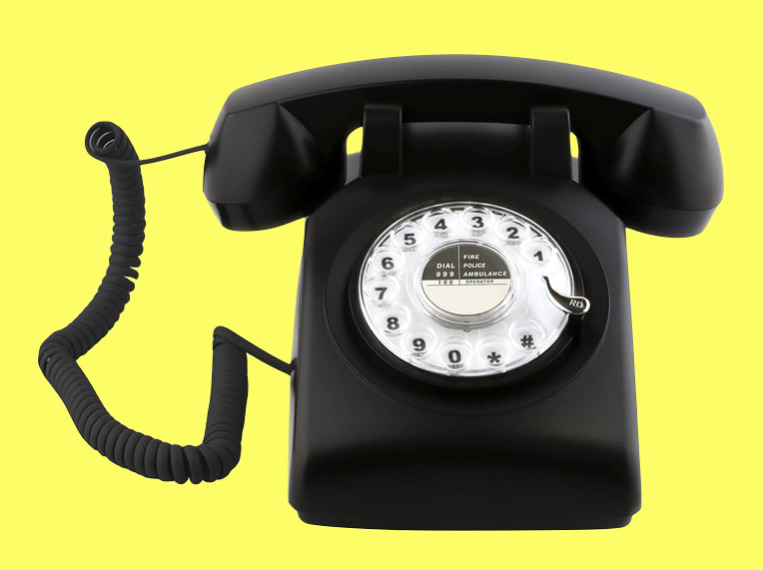
This ban came about after careful consideration and reflection on their values. The Amish value connections with family, friends, and the community. They don’t want to be the kind of person who interrupts a conversation by answering a telephone call. For this reason, telephones are located outside Amish family homes or nearby.
What are the things that are most important to you?
How does technology impact on those things?
Does it enrich those things or diminish them?
The Amish understand that technology can cause harm. Subsequently, they intentionally delay adopting new technology until they see its impact on others.
Does it destroy family life? Does it wreak havoc on their ability to pay attention and distract them from their spiritual life?
If so, the technology threatens their culture and religion, and for these reasons, it should be avoided.
Before adopting a piece of technology, the Amish need to be clear about two things:
1) The functionality of the technology (what it can do)
2) The potential social impacts of the technology
Once they deeply understand these things, it is then decided whether the technology is adopted or not.
It may come as no surprise that Amish people view the smartphone as an incredibly dangerous innovation. Many Amish communities have bans on this device.
How do you feel after spending time on social media?
Have you seen things posted on social media that weren’t true or were exaggerated?

When an Amish person wants to use a new technology, that technology will go through a formal decision-making process.
The community (in particular, the leaders) will consider the future with this technology. They’ll try to imagine how the technology could change their way of life.
Questions the Amish reflect on include:
• What are the advantages and disadvantages of the technology?
• What might come with it that we might not anticipate?
• Could someone get addicted to it?
• Is it a need or a want?
• Can the technology be restrained?
In her book Virtually Amish, Dr Ems provides the example of an Amish business owner asking the community leaders if he could have permission to use a label maker for his business.
After careful consideration, the leaders ruled label makers could be allowed for the following reasons:
• They are not addictive
• They can’t be used for recreational purposes (e.g., playing games or entertainment)
Think of a new technology (device or app) you want to adopt. Could it become addictive?
Many Amish people believe the issue is not whether you use a smartphone or social media but how you use it. It’s important that the Amish remain in control of their use of tech and place limits on it.
It’s also important that the technology is not visible (i.e., you don’t pull your smartphone out in Church or during a conversation). Being discrete in the way one uses technology shows respect for Amish values.
How do you use the tech in your life?
Are you in control of your use?
Amish people think about not just how they use the technology but what kind of person they become when they use it.
This point resonated with me deeply. I can’t say I’ve always liked who I become when I use certain technology.
A few years ago, I babysat my friends’ children when my friends went out for a kid-free meal. I look back and cringe when I think about how the experience unfolded.
Before going to my friend’s place to start babysitting, I got into a heated text discussion with some people in a group chat. Things were said that upset me.
For most of the night, I was on my phone, texting back and forth, not present with these young children. At one point, the little boy tugged on my arm to get my attention. “Aunty Jane, come play!” he said.
What can I say? I felt terrible. This certainly was not my finest moment. I had become the kind of caregiver I am usually quick to judge: distracted and disengaged.
I vowed to avoid trying to resolve issues by text and leave my phone at home next time to be fully present with the kids.
When you use social media, what sort of person do you become?
The Amish take modern tech tools and modify them to help them achieve their goals.
The plain mobile phone is an example of this. Amish people have created a mobile phone that can only make calls. It doesn’t have a camera, games, access to the Internet, or the ability to send text messages.
Similarly, the plain computer allows Amish to make spreadsheets, do word processing, and construct simple drawings. This allows them to complete tasks without being distracted by other things.
In other words, the Amish create what David Kadavy (author of Mind Management, Not Time Management) would refer to as sticky tools. A sticky tool allows you to stay focused on a task without getting distracted.
What sticky tools could you consider adopting (e.g., a basic flip phone and Internet blocker app)?
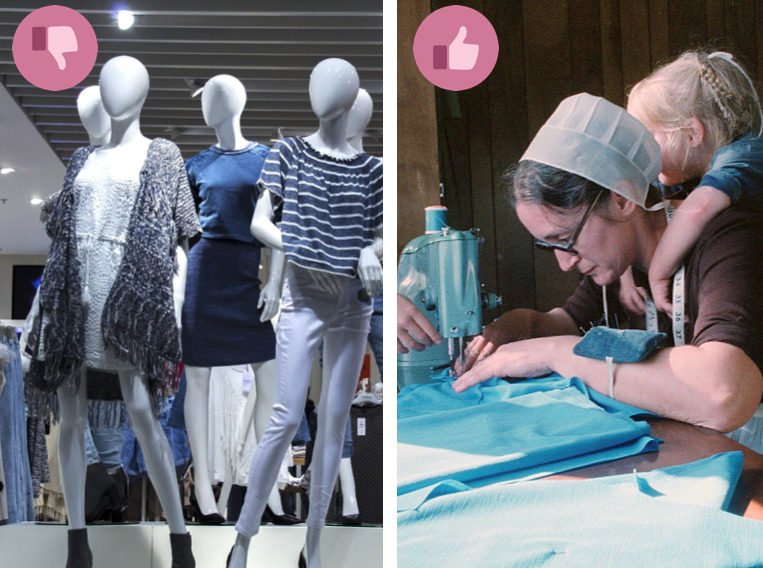
The Amish take pride in growing their own food, raising barns, baking their own bread, tinkering with robotics, inventing, and making their own clothes. They are not big consumers, but they embrace a simple lifestyle and encourage human creativity.
In the modern non-Amish world, many of us are doing the polar opposite of this. We have fallen into the trap of consuming content mindlessly online (e.g., watching people bake bread instead of baking our own bread).
Don’t get me wrong—the Internet is an excellent learning tool to help us build our skills. I have turned to YouTube for many instructional videos on how to make and fix things. But doing this requires discipline because it is all too easy to get derailed by other distracting videos.
The bottom line is this: the more time we spend online, the more ads we are likely exposed to and the more our consumptive desires are stirred up. Is it any wonder so many people feel so dissatisfied with their lives?
Instead of mindlessly consuming, what can you create today?
The Amish embrace tech with inbuilt friction. In fact, inconvenience is considered a virtue.
Dr Ems shares that many Amish technologies intentionally contain ‘speed bumps’ and ‘friction’. The reason for this friction is to prevent Amish people from wasting time on the device.

I’ve found this is one of the positives associated with using a ‘basic phone’.
Last year, I experimented with using a basic flip phone with limited functionality (I could only make calls and send texts). Texting on this phone was so painfully slow that it made me want to avoid getting into long text discussions with people. It was easier to pick up the phone and call people.
Using a smartphone to text your friends may be easier than making a phone call, but as the Amish strongly believe, easier is not always better.
How can you build friction into your tech use?
Can you embrace analog alternatives to decrease your screen time?
How much control do you have over your time, energy, and attention? As Chris Bailey writes in his book How to Calm Your Mind, “On the Internet, our intentions very quickly slip from our grasp.”
If you want to thrive online and offline, consider adopting some of the tech habits of the Amish. By limiting their tech use, the Amish have been able to remain mentally free and protect their way of life.
If more of us adopted Amish tech practices (e.g., being intentional with our tech use and placing limits on it), we’d most likely feel calmer and less anxious. We’d also spend more time engaged in activities that bring us joy and are aligned with what we value.
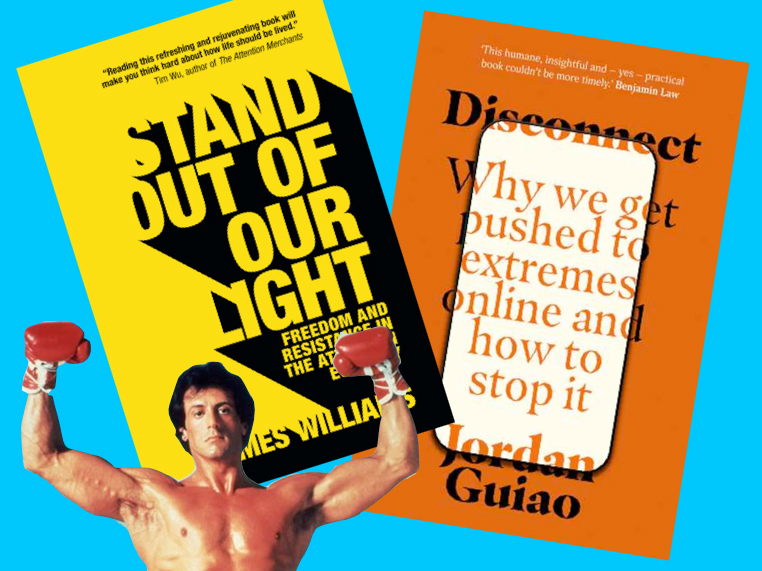
I read some absolute gems.
I’m a firm believer that a good book can change your life. This is why I make time to read every day.
As Australian actor Francis Greenslade advises in his book How I Learnt to Act:
“Read novels and plays and poetry. Read everything. I can’t stress this enough. Reading gives you so, so much. The more you read, the more new ideas you absorb, and the more new situations you experience . . .
The more you read, the greater your powers of concentration. What’s even more beautiful about reading is that it puts you into the head of someone else. It forces you to abandon your view of the world and take on anothers. In other words reading gives you empathy . . .
And it’s never too late to start. Read a book and you’ll become a better actor. But Snapchat and glossy magazines and online games – they don’t give you anything.”
1. Dopamine Nation: Finding Balance in the Age of Indulgence by Dr Anna Lembke
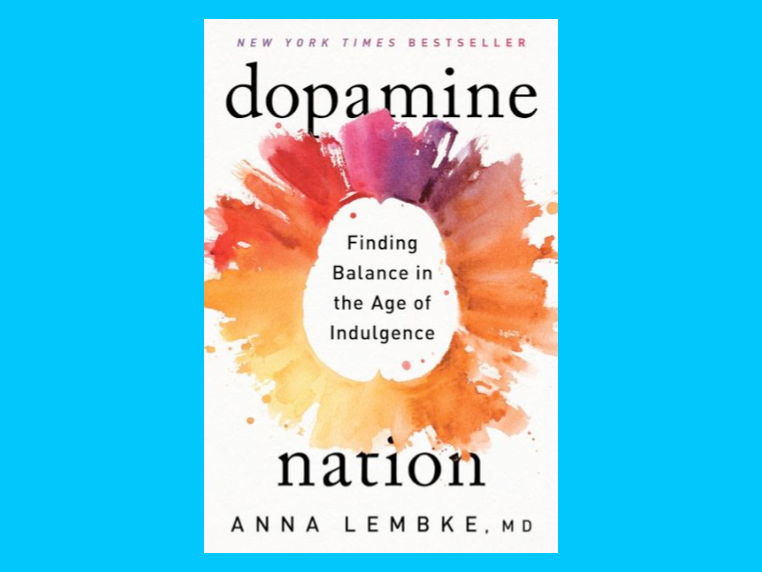
In Dopamine Nation Psychiatrist Dr Anna Lembke argues that in the modern world most of us are running from pain. Whether we’re numbing ourselves with drugs, bingeing on Netflix, gambling, or compulsively shopping online, we’re “distracting ourselves from ourselves”. Lembke states:
“The reason we’re all so miserable may be because we’re working so hard to avoid being miserable.”
Dr Lembke shows readers a path to living a more authentic and fulfilling life.
Spoiler alert: the good life isn’t about having whatever you want, whenever you want. It’s about embracing the discomfort of the present moment and giving our dopamine receptors a chance to regenerate.
2. Stand Out of Our Light: Freedom and Resistance in the Attention Economy by James Williams
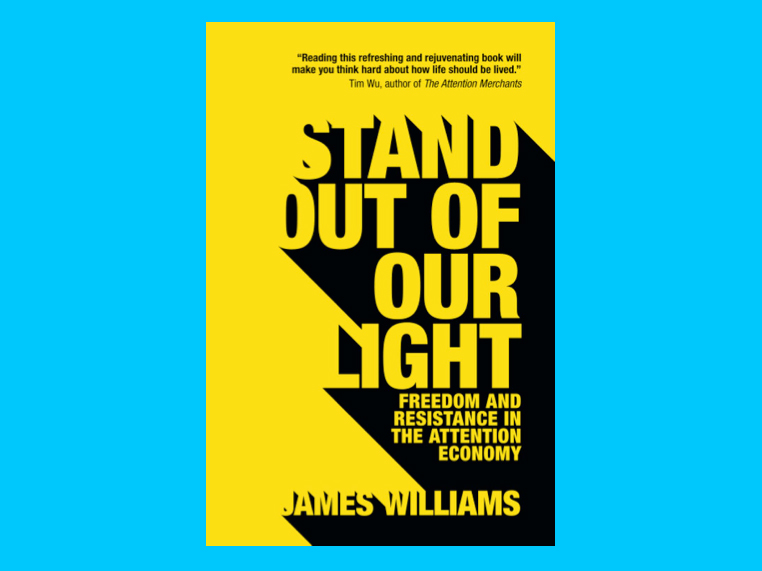
Ex-Google strategist turned philosopher James Williams has written a brilliant book on the importance of reclaiming your attention and fighting back against the persuasive techniques used by the attention economy (i.e., big tech companies).
This book helped me to clearly see that the goals of big tech companies are not aligned with my personal goals. These companies do not have our best interests at heart. Williams argues if you want to be truly free and reclaim your capacity to think, you need to extract yourself from these machines of industrialised persuasion.
3. Stolen Focus: Why You Can’t Pay Attention – and How to Think Deeply Again by Johann Hari
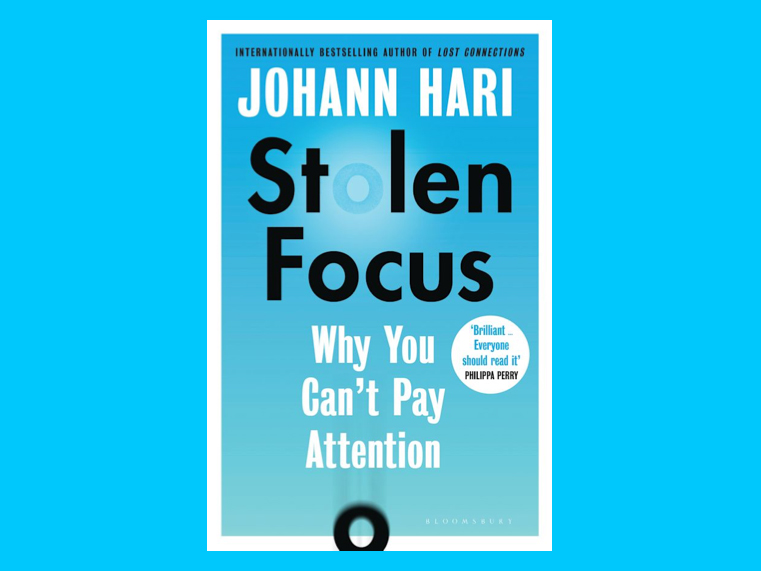
Johann Hari deserves an honorary doctorate for this literary masterpiece. In Stolen Focus, Hari travels the world interviewing experts to understand why our ability to focus has degraded and what can be done about it.
This is a complex, multipronged problem. Hari argues that we need systemic change to solve this crisis of attention (individual action won’t cut it). And this crisis of attention desperately needs our attention. If we stand any chance of solving the major issues we currently face (e.g., climate change), we need to build a social movement to reclaim our attention.
4. Mindful Self-Discipline: Living with Purpose and Achieving Your Goals in a World of Distractions by Giovanni Dienstmann

Being self-disciplined is the key to achieving your goals. But with just one click, you can get sucked into a world of instant gratification. How can you cultivate greater self-discipline in the age of distraction?
Giovanni Dienstmann has thought deeply about this question. In Mindful Self-Discipline he explores the many aspects to cultivating self-discipline. Topics include avoiding the trap of easy dopamine, creating a focus-friendly environment, letting go of unfair comparisons, and cultivating time awareness. This is the best self-help book I have read in a long time. I highly recommend it.
5. Time Wise: Powerful Habits, More Time, Greater Joy by Dr Amantha Imber
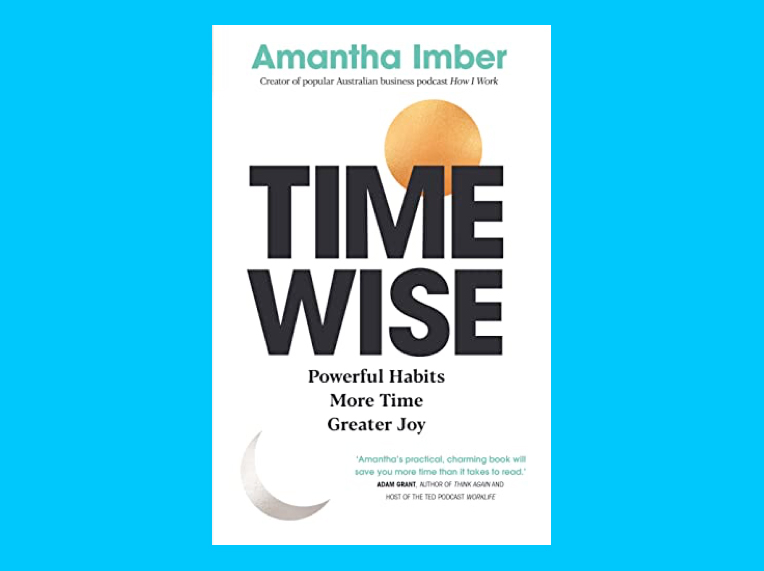
I’m a little sceptical of most productivity and time management books, but I enjoyed reading this book by Dr Amantha Imber. It’s a collection of strategies gathered from her popular podcast ‘How I work’.
I particularly liked the strategies presented to deal with addictive technology.
Some of my favourite strategies included:
• Putting rubber bands horizontally across your phone screen: this acts as a physical barrier to checking your phone.
• Solitude deprivation: Having time to be alone with your thoughts (no inputs from technology). This involves planning when you want to receive inputs from your phone and other devices.
• Creating stopping cues: Social media companies use strategies to keep you scrolling and clicking. To combat features like the infinite scroll, you can create your own stopping cues (e.g., having a set time to log off).
6. Move the Body, Heal the Mind: Overcome Anxiety, Depression, and Dementia and Improve Focus, Creativity, and Sleep by Dr Jennifer Heisz by Dr Jennifer Heisz

Over the years I’ve read a lot of books on the benefits of exercise but this book tops the list!
Neuroscientist Dr Jennifer Hiesz does a superb job presenting the science behind what exercise does for brain health, mental health, and preventing dementia.
Reading this book was like having a light bulb go off in my head. It gave me a deeper appreciation of exercise and how it has helped me to reduce anxiety, keep depression at bay, enhance my focus, and get through challenging times.
7. Disconnect: Why We Get Pushed to Extremes Online and How to Stop it by Jordan Guiao
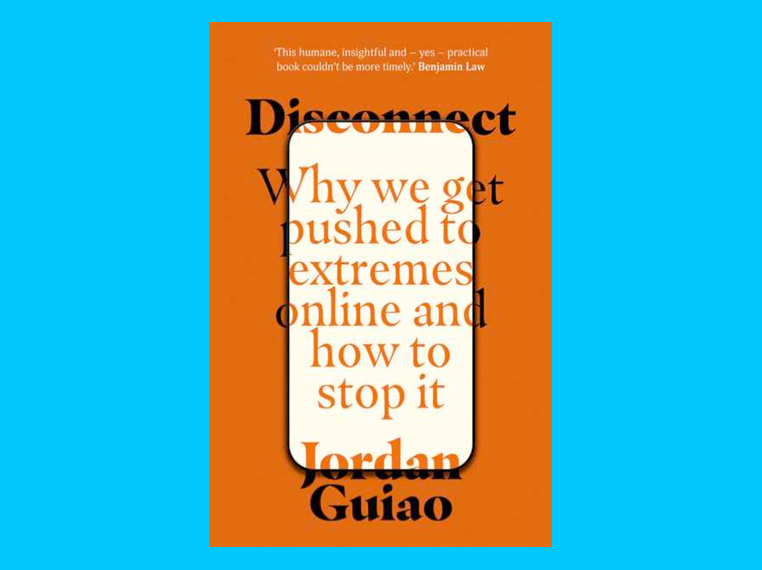
This year I have had more conversations with people who believe in conspiracy theories than in the previous 10 years of my life. It’s alarming. How did we get here?
If you know someone who has fallen down conspiracy theory rabbit holes, this book will help you understand how this happens and what you can do to help your loved ones. Guiao also explores a number of other Internet related issues including social media narcissists, naïve futurists, hateful trolls, and dating app pests.
So, there you have it! Those are my favourite nonfiction books for 2022. They were packed full of life changing strategies and wisdom. I’m grateful to these authors for sharing their ideas with the world.
What books did you enjoy reading this year?
I’d love to hear your recommendations.
