

Before adopting any new technology, the Amish will carefully consider how the device or app could impact their values, community, and way of life.
In these times of rapid change, I believe this is a valuable practice for all of us.
I recently received an email from a company that had developed an AI mind-mapping tool.
The email included a special offer. If I blogged about this AI mind mapping tool, I’d receive a year’s free pro-subscription.
Look, I love free stuff. When I see the word ‘free’, something funny happens in my brain.
I come from a thrifty family who hate waste and excessive consumption. For as long as I can remember, we’ve always received free items from others. Old bikes, broken laptops, and fridges (you name it!): we’d take the stuff, fix it, and use it.
As a family friend used to joke, “If it’s too good to throw away, give it to the Genoveses!”
But as I looked at this offer of a free subscription to mind mapping software, the usual rush of dopamine I’d get when I saw the word ‘FREE’ just wasn’t happening.
I felt nervous and uneasy.
I took a closer look at the website. At first glance, the tool looked quite impressive. You could import text, PDFs, images, and books into it, and the tool would automatically generate a mind map for you within seconds.
The website claimed this was a tool “Empowering 100,000+ thinkers”. It said it could save me time. I could generate and seamlessly edit mind maps. All of this sounded good in theory.
So, why was I having such a strong negative reaction to this new AI tool?
I recently finished reading a book called The Extinction of Experience: Reclaiming Our Humanity in a Digital World.

In this book, author Christine Rosen argues that we are facing a human crisis caused by Big Tech. The widespread adoption of technologies, such as social media, dating apps, and smartphones, has fundamentally altered the human experience — and not for the better.
Interacting with screens all day long and living in virtual worlds that reward us for sharing our most private thoughts has diminished the human experience and left us feeling disconnected.
Rosen argues we run the risk of developing habits of mind and machine-like behaviours that lead us towards an impoverished experience of the world.
In one part of her book, Rosen discusses the decline of skills like handwriting. She states:
“Like species decline, skills decline gradually.”
This sentence made me stop in my tracks. It stood out to me. Why? Because I have felt some of my skills declining in recent years.
So, when I checked out this AI mind mapping tool, I put my Amish cap on and asked myself the following questions:

If I were new to the practice of mind mapping and had only just discovered mind mapping software, things might have been different. I would have had no awareness of what I was missing out on.
But I have been mind mapping by hand, with pen and paper, for over 20 years. I don’t use any fancy apps or software (I never have).
This has been a deliberate choice on my part to preserve and sustain a practice that helps me understand and learn new information in a highly effective way.
I worry that switching from pen and paper to keyboard, mouse, and computer will cause something fundamental to change (and be lost) about my current mind mapping experience and practice.
Before adopting any app or device, you need to get clear on what job you are hiring this piece of technology to do. I use mind mapping to learn and clarify my thinking. Could this mind mapping tool do this for me?
This mind mapping software could produce a mind map for me within seconds. As one student writes in a testimonial on the website:
“I post my own lecture notes to generate a very concentrated mind map for me. I don’t have to spend 3-6 hours writing my own mind maps, which I often can’t do very well.”
Another person leaves a five-star review, “No more messy brainstorming”.
However, all of this completely misses the point of mind mapping.
The process of mind mapping is just as important as the final, often messy, mind map.
When I mind map, I’m not concerned about creating a work of art or saving time (it takes as long as it takes to understand a topic). I want to take my time, settle into the process, and avoid feeling rushed. Mind mapping by hand allows me to do this.

Creating a mind map on a computer screen quickly and outsourcing the job to AI puts me in a speedy, turbocharged frame of mind, which is not conducive to deep learning.
Mind mapping is a practice that forces me to slow down.
This slowing down is super important because the world around me is sending me signals to speed up and go faster and faster! When I’m in turbocharge mode, I’m more likely to get distracted and feel overwhelmed.
I’m trying to resist this frantic pace because I want to do things thoroughly and at my own speed. Watching a mind map get created within seconds isn’t what I want or need. It shifts me into overdrive mode, which makes it much harder to learn.
Mind mapping by hand also allows me to think deeply about ideas and how they are connected. The only way I can see those connections and understand them is by reading through the information, thinking about how I would convey that information as a picture and in mind map form.
When you outsource the process to mind mapping software, you don’t get the same deep understanding as you would if you took the time to do it yourself by hand. It feels superficial. To me, it feels like the McDonald’s of Mind Mapping: fast, convenient, but ultimately, not particularly nourishing for my brain.
Using mind mapping software also bypasses something else that brings me joy and satisfaction: it feels really nice to work with my hands.
As Rosen says, “We have a human need to see, touch and make things with our hands”.
Making a mind map with your hands may not be quick, easy, or convenient, but it provides a very rewarding experience for your brain and soul. Personally, it makes me feel calm, grounded, and more connected to ideas, myself, and the world.
I don’t want to be ignorant or closed-minded. This is why I created a free account with this mind mapping AI tool and attempted to generate three mind maps.
The first mind map was on an article I’d read. The mind map focused on just a small section of the article (conspiracy theories). If I hadn’t read the entire article, I would have missed the important science on this topic.
The second mind map was on creating a meal plan for a trip away. Although the mind map provided some ideas, I was left feeling dissatisfied and uninspired. You can see my hand-drawn mind map on a meal plan, which I created for a family trip, compared to the AI-generated one below.
Which mind map do you prefer?


For the third and final mind map that I tried to create, I entered the following prompt:
“Create a mind map on the book ‘Die with Zero’ by Bill Perkins?”
I encountered this error message:
“System resources have been exhausted. Please try again later.”

Instead of feeling frustrated, I was grateful for this message as it highlighted another problem with using mind mapping software: when the tech goes down or power goes out, you are rendered helpless. It also reminded me of how energy-intensive AI is to run.
I went away and mind mapped this book by hand (I’d just finished reading it and had marked up several ideas). You can see the mind map I created below (it took me approximately 40 minutes to do).

I was curious to see if my mind map would resemble the one the mind mapping software generated. So the next day, I entered the same prompt again. Less than 3 seconds later, a mind map appeared on the screen (you can see it here). Was this a mind map on the same brilliant book I’d just read?
It seemed like AI slop.

I felt disconnected from the ideas. The spirit of the book just wasn’t there! I preferred my own mind map.
There is a freedom in mind mapping by hand, away from screens and without AI. The freedom comes not only from using your hands, brain, and creativity, but also from being able to focus on the task at hand.
It’s all too easy to get distracted when working on a computer. That’s why I have set up a dedicated space in my office, away from screens, where I do my mind mapping practice.

Mind mapping is a sacred practice for me. Doing it on a computer and outsourcing the process feels abstract and detached. I can see and feel what is being lost from the process.
Some tech enthusiasts may label me a “luddite”, but as Rosen says, “not every new thing is an improvement on the old”.
I say, stick with what works. Let’s not overcomplicate something that is simple but highly effective when it comes to learning. Put aside your fear of creating messy mind maps, step away from the screen, and enjoy the experience of making a mind map by hand.

After falling out of the habit of weight training, it feels good to pick up my weights and challenge my body.
At a time of increasing uncertainty, this simple practice helps me to feel strong and powerful. As Professor BJ Fogg says:
“When you feel physically stronger, this feeling ripples out into many other areas of life.”
My muscles were growing, but one part of my body was slowly getting weaker.
What part am I talking about?
I’m talking about my brain, specifically my ability for deep learning and thinking.
About six months ago, it dawned on me that my brain had seen better days. When I confided in my husband about this, he said he felt the same way about his brain.
It wasn’t always like this.
When I was a university student, it was normal to spend several hours each day reading and mind mapping.
Most days, I’d feel confused about a new concept or how one idea was connected to another. I didn’t know the answers to a lot of questions. But I sat with the discomfort, knowing it was a normal part of the learning process.
By the time I submitted my PhD thesis (nearly 10 years ago), I was at the peak of my mental fitness. My brain was sharp and strong.
These days, it feels much harder to think and learn. Too often, I notice that I’m impatient like a toddler. I want the answers quickly.

While learning has never been easy for me, deep learning felt easier 10 years ago because:
Contrast those conditions to the modern environment most of us find ourselves in today:
If you wanted to create a recipe to undermine a person’s ability to learn and think deeply, those would be the perfect ingredients.
Students today find themselves in an environment that actively works against deep learning. In this environment, we are pushed to learn in superficial ways, if at all.
A Guardian piece explored how AI is having a negative impact on students’ ability to study. Survey research conducted in the UK found a staggering 62 per cent of students agreed with the statement, “It’s too easy to find the answers without doing the work myself.”
Only 2 per cent of students said they did not use AI.
In another study, Dr Rebecca Winthrop and her colleagues interviewed hundreds of students and educators about how they were using AI to learn. They found AI was interfering with students ability to learn and undermining cognitive development.
In an interview on Your Undivided Attention, Dr Winthrop said AI was causing cognitive stunting in students. She stated:
“. . . when you assign an essay to a child, a student, they have to think through, what is the data? What is the evidence? Ooh, how does it stack up? Is there a side of the argument that data sits on that isn’t? How do I make a persuasive argument that uses this data and have a position? Those are hugely difficult skills to develop, and they come through practice.
And if you stick in a couple sentences into a chatbot and have it write the essay for you, kids aren’t just merely skipping a couple steps in their homework and being more efficient, they are missing the opportunity to develop their own personal independent thinking skills.”
As humans, we tend to live for the short-term. Thinking about the future and long-term planning are not strengths for most of us, especially teenagers whose brains are still developing.
Now, imagine you’re a young person who finds high school incredibly boring. You’re a little insecure, and you lack confidence in your ability to learn. To make matters worse, you can’t see the point of your subjects and how what you’re learning is going to help you later in life.
Suddenly, a free tool appears in your world that can help you avoid the pain, suffering, and potential humiliation of failure with your school subjects. It can also save you a lot of time.
This tool effortlessly pumps out an essay within seconds when it would take you many hours to write.
Would you be able to resist using this tool?
I’m almost certain I wouldn’t have been able to as a young person.
ChatGPT is incredibly seductive. It’s hard to resist. But resist we must because too much is at stake, especially for young people.
Many people I respect and admire speak enthusiastically about generative AI. There’s this palpable sense that if you don’t get on board the AI train, you’re going to be left behind.
But not everyone thinks this way.
A number of people, including Tristan Harris and Aza Raskin from the Center for Humane Technology and Dr Rebecca Winthrop from the Center for Universal Education, argue that those who become too dependent on AI for support and validation may suffer in the long run.
The use of AI is resulting in unbuilt skills remaining that way (i.e. cognitive stunting) and already built skills diminishing.
For example, a group of researchers from MIT recently released a working paper called Your Brain on ChatGPT. This study took 54 students and asked them to perform a specific task over four sessions: writing an essay.

The students were split into three groups:

The researchers examined students’ brain activity as they worked on their essays to assess cognitive engagement and cognitive load. They found that the brain-only group had higher levels of neural connectivity, which was associated with stronger memory and firmer ownership of the written work.
The researchers stated in the discussion section of their working paper:
“[AI tools] may unintentionally hinder deep cognitive processing, retention and authentic engagement with written material. If users rely heavily on AI tools, they may achieve superficial fluency but fail to internalize the knowledge or feel a sense of ownership over it.”
The researchers did something really interesting in the fourth and final essay writing session: they switched the groups.
The students in the brain-only group could now use ChatGPT to write their essays and the LLM group had to rely on their brains (no more ChatGPT for them).
How did each group do?
The brain-only group performed better when using ChatGPT. These students had already engaged with the ideas more deeply and therefore seemed able to critically examine the information ChatGPT brought up.
In contrast, the LLM group struggled when it came to just using their brains after using AI to write their essays for the first three sessions.
The lead researcher of this study, Dr Nataliya Kosmyna, summed it up nicely when she said in a TV interview, “Use your brain”.
What I take from this working paper is that if you want to have a deeper learning experience and create more original work, it’s best to avoid using generative AI. But if you must use AI, hold off on using it in the early stages of a writing project.
If you feel like you’ve become dependent on AI, it’s not too late to turn things around.
The human brain is incredibly resilient. You can learn to work differently. You can learn how to learn.
In the book The Disengaged Teen, Jenny Anderson and Rebecca Winthrop state:
“More than ever before, what kids need now is to become better at learning. Generative artificial intelligence (AI) is accelerating rapidly, and everyone agrees that the pace of change will continue to be dizzying. Uncertainty is the new norm. No one knows exactly what shifts in jobs and society are in store. What can best protect and prepare our kids? Rose Luckin, a British professor and AI expert is blunt: Make them “good at learning.” The only thing that can insulate them from rapid change and give them the confidence to move forward is the ability to learn and adapt.”

It’s not too late to reclaim your cognitive power. But you’ll have to push your brain to the point of discomfort without using AI.
Just like you can’t build muscle by getting an exoskeleton to lift heavy weights for you, you’ll have to do the work and resist the temptation to outsource tasks to generative AI. But it’s important to get clear on why you want to build cognitive power and resist the allure of AI.
When a man I used to train at the gym with told me he was using AI to write his blog posts, my first thought was, “Why would you want to do that?”
I refuse to use generative AI to write any of my blogs. Why? Because for the most part, I get a lot of satisfaction from writing.
Yes, it can be frustrating and painful to write.
Yes, I usually always feel awkward and clumsy as I put pen to paper or fingers to keyboard.
Yes, it can take a lot of time to write an article.
But writing is a form of thinking. It helps me to make sense of the world. It also gives me a sense of purpose.
When I put a piece of my own writing out into the world, I feel good about it. I wrestled with ideas and, as a result, learnt something new.
If I offload all of my work to ChatGPT, I’ve robbed myself of a valuable opportunity to think, learn, and grow.
As Dr Nancy Colier states in her book The Power of Off:
“We are conditioned to believe that easier means better, that the less we have to do, the happier we will be. But often this is not in line with people’s actual experiences. We feel good when we are productive and engaged, which requires effort.”
It’s only natural to be amazed by the things AI can do. But it’s also important to be fully aware of what this technology could do to our brains, relationships, and the quality of our lives. AI can stunt our growth in many ways.
Based on the research I’ve read so far, I’m not convinced that this technology, the way it is currently being rolled out, is good for young people to use. It’s too easy to become dependent on generative AI, to fall for its hallucinations, and to have cognitive skills atrophy or fail to develop at all. Let’s also not forget how energy-intensive all those data centres are.
This is why I’m resisting using generative AI as much as possible. In fact, I recently quit ChatGPT as part of the grassroots boycott #QuitGPT.
If you care about your brain, people, the health of the planet, and all the things that make life rich and wonderful, stop and think twice before turning to an AI chatbot. Be brave: use your brain, build your skills, and trust your thinking.
Toddler (featured in image 2): “Skeptical” by quinn.anya is licensed under CC BY-SA 2.0.
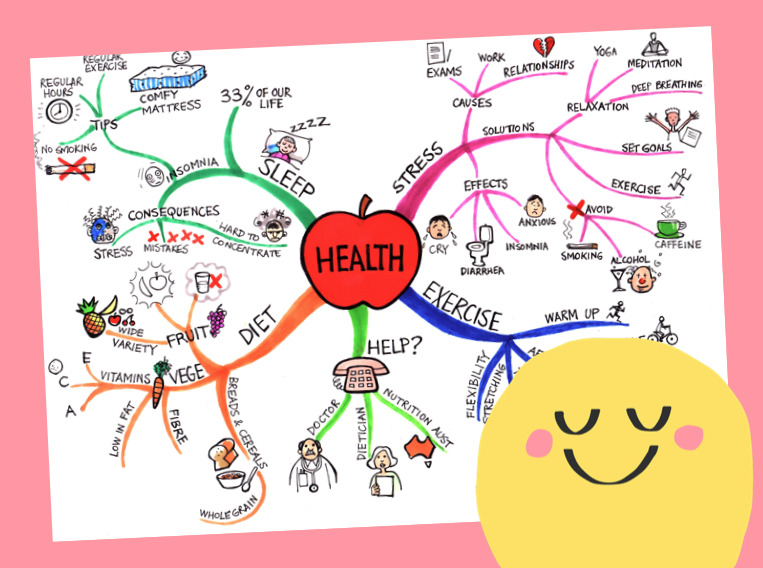
When you start using this strategy, it can feel clunky and awkward. It requires some mental effort to get going.
Why can it feel hard to start mind mapping?
Because it isn’t a habit (not yet, anyway). But once mind mapping becomes a habit, it can feel easy and deeply rewarding.
So, how do you get to that point where mind mapping feels easy? Even fun?
In this article, I will explore how you can create a habit of mind mapping. I’ll show you how to remove friction or pain points so it’s much easier to put pen to paper and absorb ideas.
Let’s start by looking at what gets in the way and stops many people from creating mind maps in the first place. I’ll also share some strategies you can use to overcome each of these barriers.

When you look at a mind map with all the pictures and different colours, it seems like something that would take a fair amount of time and effort to create.
If you’re comparing mind mapping to the time it takes to read your book passively, then yes, mind mapping will take more time. But you need to understand that reading your book passively is not an effective way to learn. In contrast, mind mapping is super effective.
People often fall into the trap of trying to make their mind maps look like works of art. Try lowering your standards and allowing yourself to make a mess when you mind map. This will speed up the process.
Another time trap is trying to mind map as you read and trying to mind map everything you read. I find it’s much faster to read and tab key ideas worth mind mapping later on. Once I’ve finished reading either the chapter or book, I then commence the mind mapping process. By this stage, I have a better understanding of the key ideas and what’s worth mind mapping.
Some people get hung up on the way their mind maps look. They can’t stand looking at messy pictures and scribbled words. If that’s you, perhaps you could take your drawing skills to the next level with some practice and sketch classes. But it’s not necessary.
Mind maps are not there to look pretty. They are there to help you learn. I am a big fan of badly drawn mind maps. If you look at my mind maps from university, they’re not works of art but they contain loads of important ideas. And that’s what matters most when it comes to learning.
Here’s a simple hack: invest in a set of nice, vibrant coloured pens. A bit of colour on the page will make your mind maps more visually appealing.

Mind mapping is straightforward. You draw a central image, curved lines, a few pictures, and write down key ideas. That’s it!
It’s not something you need to read a book about. You don’t need to enrol in a 10 week program to learn how to do this.
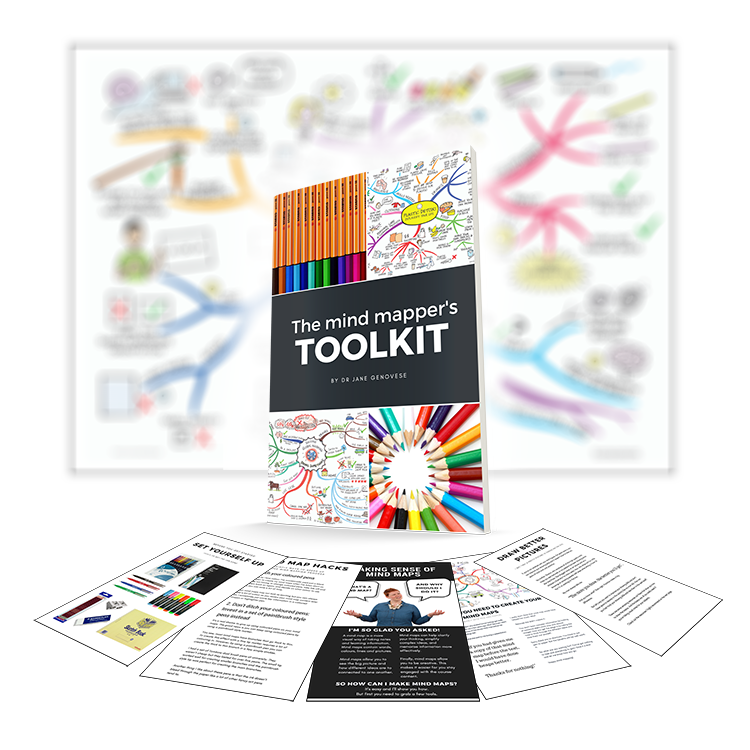
If you want some tips on how to mind map, check out my free Mind Mapper’s Toolkit. It’s a quick and easy read.
It’s important to realise that the first time you engage in any new behaviour, it will most likely feel strange and uncomfortable. You may feel a bit clumsy and awkward. You may have questions, “Am I doing this right?”. All of this is normal and to be expected.
Even something as simple as the pen you mind map with can make or break the mind mapping process.
You’ve probably noticed that some pens don’t feel pleasant to write or draw with. For instance, I’m not a fan of the popular Sharpie pen range. I don’t like the way these pens bleed through the page. And I really don’t like the way they smell.
These may seem like minor irritations and quirks, but trust me, they’re not. Your mind mapping experience will be diminished by a pen that doesn’t feel good in your hand or on the page. And any behaviour that feels unpleasant is much harder to sustain.
I’ve since ditched my Sharpie pens. I mind map with a uniball signo pen and non-toxic Tombow paintbrush pens. As far as coloured pens go, I won’t lie, these pens are pricey! But you can find them online for $25 cheaper than in Officeworks (a big stationery store in Australia).
What I love about these pens is that they are super easy to use, feel lovely to strike across the page, and they won’t leave you with a splitting headache from the ink smell.
Here are some things that have helped me to establish this habit in my life:
When is the best time for you to mind map? Where in your day can you easily slot in a 15 minute mind mapping session?
I like to mind map when I feel fresh and mentally alert (first thing in the morning).
Find an activity that you do every day without fail (e.g., having a shower, eating breakfast or dinner) and use that to prompt you to start a mind mapping session.
For instance, after I have completed my morning routine (workout, breakfast and shower), that’s my cue to sit down and start mind mapping.
Before you start your session, set yourself up with everything you need to mind map. I like doing this the night before my morning mind mapping sessions.
Before I go to bed, I lay out a sheet of A3 paper, my pens, and my timer. The book I am mind mapping is open on the page where I need to start working. The next day, all I need to do is sit down, start my timer, pick up a pen, and away I go!

What’s one thing that can slow down the mind mapping process?
For me, it’s digital distractions (e.g., text messages and notifications).
You probably already know the things that tend to derail you. Create a barrier between you and those things.
For example, my phone is the biggest distraction for me. How do I deal with this? Before I start mind mapping, I take my phone and place it away from my body in another room.
This signals to my brain that my phone is off-limits and it’s time to knuckle down and focus on my work.

Don’t wait until you feel pumped and inspired to create a mind map. Set a timer for 10-15 minutes and start mind mapping (regardless of how you feel).
If you miss a day, don’t beat yourself up. It’s no big deal. Just say to yourself, “Tomorrow is a new day. I will get back into mind mapping then”.

When the timer goes off at the end of your mind mapping session, say to yourself, “Good job!”. Do anything that makes you feel instantly good. I often clap my hands or do a fist pump.
According to Professor BJ Fogg, the secret to wiring in any new habit is to release a positive emotion within milliseconds of engaging in the new behaviour. When you release positive emotions, this releases dopamine in your brain. This makes it more likely that you’ll engage in this behaviour again.

I mentioned this before, but it’s important to repeat it: don’t go cheap with your mind mapping tools. Invest in good pens and paper. My favourite pens for mind mapping are uniball signo pens (0.7 tip) and Tombow paintbrush pens. Regarding paper, I love using Rhodia paper (it feels like your mind mapping on butter).
It may sound a little dramatic, but mind mapping changed my life. I used to read books and then feel frustrated that I couldn’t retain much information. But now, I have a strategy I can easily use to help me understand and remember complex ideas. This gives me confidence when it comes to learning new skills and information.
I encourage you to be playful with this strategy. Don’t get too hung up on how your drawings look. Your top priority is to leave perfectionism at the door and have some fun. Because when it comes to mind mapping, done is better than perfect.

If I’m honest with myself, there was a time when technology was doing me more harm than good.
On Facebook, I frequently fell into the comparison trap (comparing myself to people who had posted delicious dinners, amazing holiday photos, etc).
On Twitter, I’d get baited by trolls (and I’d foolishly take the bait).
Throughout the day, I’d constantly check my phone and email, which left me feeling jittery and chaotic.
Big Tech was constantly hijacking my time, energy, and attention. Every time I retreated to my devices for a quick shot of dopamine, I moved further away from my goals. I didn’t like this, and I knew something needed to change.
Over the past three years, I’ve implemented many practices to regain control of my time, energy, and attention (including deleting all social media).
These practices have made a big difference in my life. But I’m well aware that not everyone feels the same way I do about Big Tech, nor are they in a position to be able to delete all their accounts.
Following a school presentation, I spoke with a small group of year 8 students. I shared with them that I didn’t use any social media, to which a year 8 girl quickly chimed in:
“My grandma has Facebook. What’s your excuse?”
Her words struck me like a bolt of lightning. I didn’t know what to say.
It highlighted how adopting these apps is the norm for a young person.
When everyone else has a smartphone and is using social media (including your parents and grandparents), why would you question using them?
I couldn’t forget the year 8 girl’s words. While I appreciated her candidness, it left me slightly disturbed.
At the same time, it increased my motivation to resist Big Tech. I started searching for role models: people actively resisting Big tech and this hyperconnected, fast-paced way of life.
One community kept popping up in my research: the Amish.
The Amish are often portrayed as being technologically impaired. A classic example is Weird Al Yankovic’s music video Amish Paradise (a parody of Coolio’s mega-hit Gangsta’s Paradise).

In this video, Weird Al sings:
I never wear buttons but I got a cool hat
And my homies agree I really look good in black, fool
If you come to visit, you’ll be bored to tears
We haven’t even paid the phone bill in 300 years
But we ain’t really quaint, so please don’t point and stare
We’re just technologically impairedThere’s no phone, no lights, no motorcar
Not a single luxury
Like Robinson Crusoe
It’s as primitive as can be
While the Amish still mainly travel by horse and buggy and shun many modern technologies, such as televisions, radios, and cars, they are not ‘technologically impaired’ as Weird Al makes out.
When it comes to cultivating healthy digital habits, there is a lot we can learn from the Amish.
The Amish have a set of strategies that guide the adoption and use of different technologies. These strategies have allowed them to avoid being pawns for the goals of Big Tech companies, which make massive profits by seizing people’s attention.
I recently read a fascinating book called Virtually Amish, written by Dr Lindsay Ems. For her PhD research, Dr Ems spoke to Amish people about their relationship to modern technology (e.g., smartphones).

She argues that the Amish take control of their tech tools and thrive. Through adopting similar practices, we can thrive, too.
Below, I share how you can thrive by emulating Amish practices and beliefs around technology:
The Amish are not technophobes. They are ‘technoloselectives’.
They carefully consider the tech tools they’ll adopt and their functionality, tweaking them to help them achieve their goals.
The Amish don’t mindlessly purchase the latest gadgets and gizmos. Instead, they think about their values and goals and how the technology could cause unintended harm to themselves and the wider Amish community.
What are your goals?
Do your tech tools help you achieve them, or do they distract you from them?
The Amish are guided by their values (i.e., the things that are most important to them). Their values underpin everything they do.
So, what exactly do Amish people value?
• Community
• Connections with others
• Living a simple and slow-paced life
• Living a spiritually rich life
• Being self-sufficient
The Amish use these values to guide their adoption of technology.
An example of this can be seen with the arrival of the home telephone (not smartphone). Dr Ems shares how the Amish decided to ban the telephone from being inside the family home.
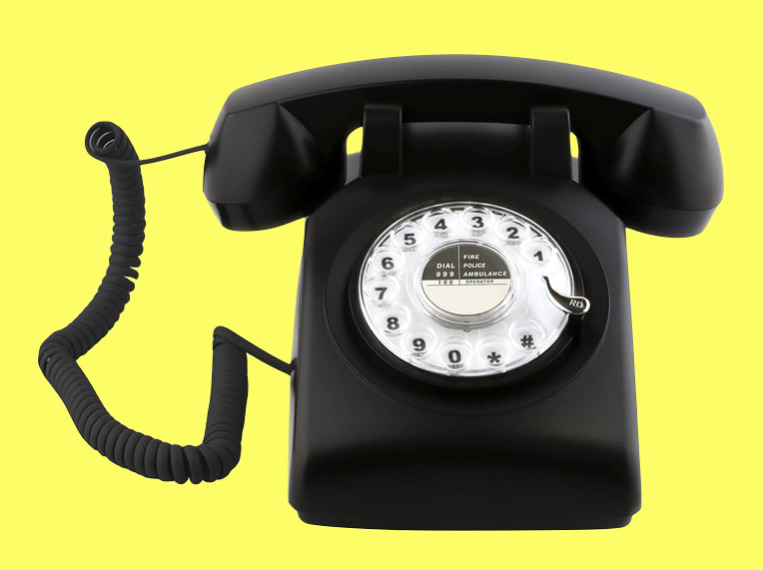
This ban came about after careful consideration and reflection on their values. The Amish value connections with family, friends, and the community. They don’t want to be the kind of person who interrupts a conversation by answering a telephone call. For this reason, telephones are located outside Amish family homes or nearby.
What are the things that are most important to you?
How does technology impact on those things?
Does it enrich those things or diminish them?
The Amish understand that technology can cause harm. Subsequently, they intentionally delay adopting new technology until they see its impact on others.
Does it destroy family life? Does it wreak havoc on their ability to pay attention and distract them from their spiritual life?
If so, the technology threatens their culture and religion, and for these reasons, it should be avoided.
Before adopting a piece of technology, the Amish need to be clear about two things:
1) The functionality of the technology (what it can do)
2) The potential social impacts of the technology
Once they deeply understand these things, it is then decided whether the technology is adopted or not.
It may come as no surprise that Amish people view the smartphone as an incredibly dangerous innovation. Many Amish communities have bans on this device.
How do you feel after spending time on social media?
Have you seen things posted on social media that weren’t true or were exaggerated?

When an Amish person wants to use a new technology, that technology will go through a formal decision-making process.
The community (in particular, the leaders) will consider the future with this technology. They’ll try to imagine how the technology could change their way of life.
Questions the Amish reflect on include:
• What are the advantages and disadvantages of the technology?
• What might come with it that we might not anticipate?
• Could someone get addicted to it?
• Is it a need or a want?
• Can the technology be restrained?
In her book Virtually Amish, Dr Ems provides the example of an Amish business owner asking the community leaders if he could have permission to use a label maker for his business.
After careful consideration, the leaders ruled label makers could be allowed for the following reasons:
• They are not addictive
• They can’t be used for recreational purposes (e.g., playing games or entertainment)
Think of a new technology (device or app) you want to adopt. Could it become addictive?
Many Amish people believe the issue is not whether you use a smartphone or social media but how you use it. It’s important that the Amish remain in control of their use of tech and place limits on it.
It’s also important that the technology is not visible (i.e., you don’t pull your smartphone out in Church or during a conversation). Being discrete in the way one uses technology shows respect for Amish values.
How do you use the tech in your life?
Are you in control of your use?
Amish people think about not just how they use the technology but what kind of person they become when they use it.
This point resonated with me deeply. I can’t say I’ve always liked who I become when I use certain technology.
A few years ago, I babysat my friends’ children when my friends went out for a kid-free meal. I look back and cringe when I think about how the experience unfolded.
Before going to my friend’s place to start babysitting, I got into a heated text discussion with some people in a group chat. Things were said that upset me.
For most of the night, I was on my phone, texting back and forth, not present with these young children. At one point, the little boy tugged on my arm to get my attention. “Aunty Jane, come play!” he said.
What can I say? I felt terrible. This certainly was not my finest moment. I had become the kind of caregiver I am usually quick to judge: distracted and disengaged.
I vowed to avoid trying to resolve issues by text and leave my phone at home next time to be fully present with the kids.
When you use social media, what sort of person do you become?
The Amish take modern tech tools and modify them to help them achieve their goals.
The plain mobile phone is an example of this. Amish people have created a mobile phone that can only make calls. It doesn’t have a camera, games, access to the Internet, or the ability to send text messages.
Similarly, the plain computer allows Amish to make spreadsheets, do word processing, and construct simple drawings. This allows them to complete tasks without being distracted by other things.
In other words, the Amish create what David Kadavy (author of Mind Management, Not Time Management) would refer to as sticky tools. A sticky tool allows you to stay focused on a task without getting distracted.
What sticky tools could you consider adopting (e.g., a basic flip phone and Internet blocker app)?
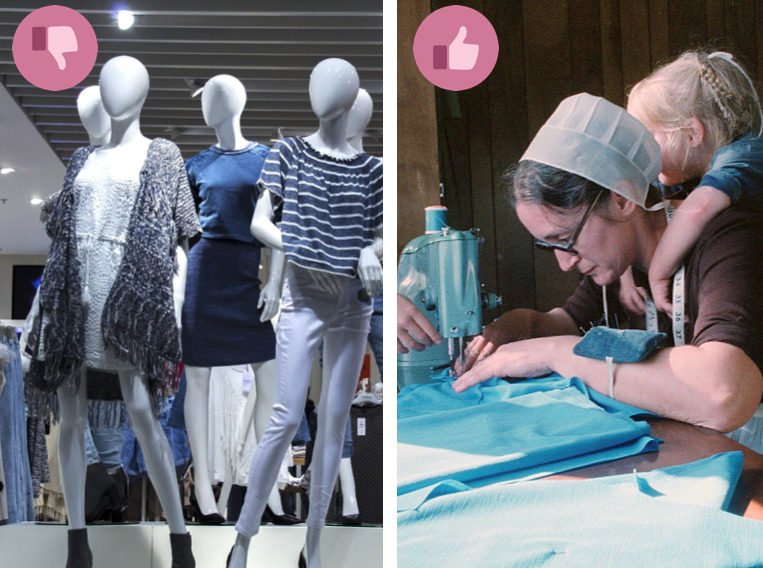
The Amish take pride in growing their own food, raising barns, baking their own bread, tinkering with robotics, inventing, and making their own clothes. They are not big consumers, but they embrace a simple lifestyle and encourage human creativity.
In the modern non-Amish world, many of us are doing the polar opposite of this. We have fallen into the trap of consuming content mindlessly online (e.g., watching people bake bread instead of baking our own bread).
Don’t get me wrong—the Internet is an excellent learning tool to help us build our skills. I have turned to YouTube for many instructional videos on how to make and fix things. But doing this requires discipline because it is all too easy to get derailed by other distracting videos.
The bottom line is this: the more time we spend online, the more ads we are likely exposed to and the more our consumptive desires are stirred up. Is it any wonder so many people feel so dissatisfied with their lives?
Instead of mindlessly consuming, what can you create today?
The Amish embrace tech with inbuilt friction. In fact, inconvenience is considered a virtue.
Dr Ems shares that many Amish technologies intentionally contain ‘speed bumps’ and ‘friction’. The reason for this friction is to prevent Amish people from wasting time on the device.

I’ve found this is one of the positives associated with using a ‘basic phone’.
Last year, I experimented with using a basic flip phone with limited functionality (I could only make calls and send texts). Texting on this phone was so painfully slow that it made me want to avoid getting into long text discussions with people. It was easier to pick up the phone and call people.
Using a smartphone to text your friends may be easier than making a phone call, but as the Amish strongly believe, easier is not always better.
How can you build friction into your tech use?
Can you embrace analog alternatives to decrease your screen time?
How much control do you have over your time, energy, and attention? As Chris Bailey writes in his book How to Calm Your Mind, “On the Internet, our intentions very quickly slip from our grasp.”
If you want to thrive online and offline, consider adopting some of the tech habits of the Amish. By limiting their tech use, the Amish have been able to remain mentally free and protect their way of life.
If more of us adopted Amish tech practices (e.g., being intentional with our tech use and placing limits on it), we’d most likely feel calmer and less anxious. We’d also spend more time engaged in activities that bring us joy and are aligned with what we value.
