

Then another person told me he uses AI to read his email and tell him what he needs to do for the day.
I thought, “Why would you do that?”
Why have we stopped using our brains and completely outsourced our thinking to AI?
In a recent Guardian piece, author Dave Eggers shared what he advises young people when it comes to using AI:
“You’re one of one. You’re unprecedented in the entire line of human history. Only you have your brain. Only you can think of what you can think of. Only you can tell a story in a particular way. Why would you cede that to a machine?”
He went on to say:
“Once you have a machine think for you and write for you, you’re cooked as a species. That’s it. That’s the worse dystopian outcome there could ever be.”
As generative AI and tech force their way into almost every area of our lives, I’m finding that I want to use my hands more, and not in a typing-on-a-keyboard-into-ChatGPT kind of way.
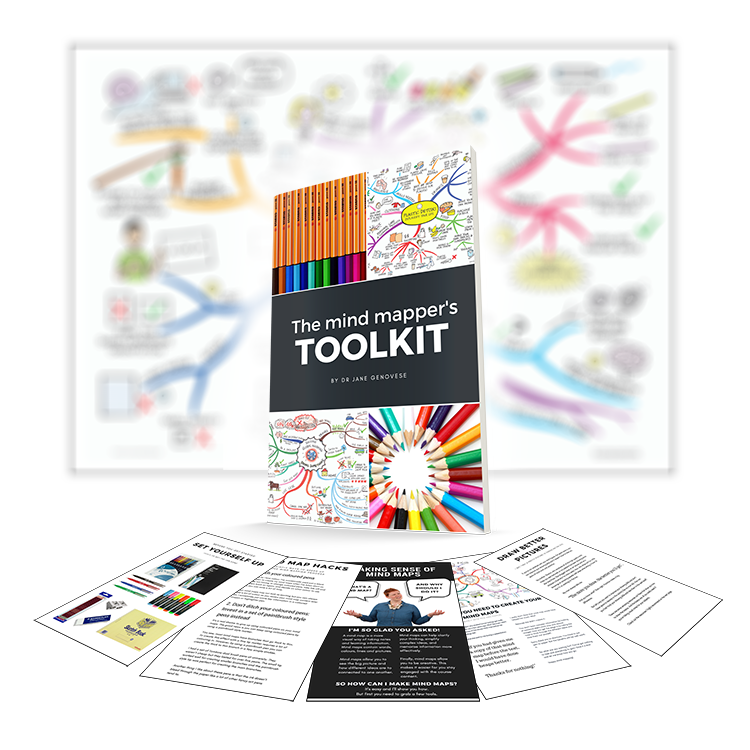
I want to chop vegetables, roll out pizza dough, journal with pen and paper, cut things out with scissors and stick them down on paper, write letters to people, make mind maps, and read physical books.

These are small acts of resistance, but I believe they are vitally important to retaining our humanity and confidence. These acts signal to our brains, “You’re still in control”.
Generative AI may seem powerful, but let’s not forget the tremendous power that lies within our brains and bodies.
There is a freedom and confidence that comes from doing things yourself, whether that be with your hands, your brain, or a combination of the two.
That freedom and confidence are built through sustained practice and being able to push through discomfort. But research shows these things can be eroded very quickly by routine use and overuse of AI.
It’s easy to label those of us who are actively resisting using AI as old-fashioned, luddites or not keeping up with the times. But doing so overlooks some serious issues associated with AI.
When I first discovered ChatGPT, like most people, I was amazed. It had this mystical quality that pulled me in. But as I started to learn more about generative AI (specifically ChatGPT), the magic started to crumble away. I discovered generative AI had a dark side similar to social media. As investigative journalist Karen Hao writes in her brilliant book Empire of AI:
“…in the same way we once thought Facebook was merely a place for posting vacation pictures and connecting with long lost elementary school friends, or for sparking positive and transformative social movements, there is more to the sleek, entrancing exterior than meets the eye. Under the hood, generative AI models are monstrosities, built from consuming previously unfathomable amounts of data, labor, computing power, and natural resources.”

As I started to see red flags around the environmental and exploitative human impacts of AI (e.g., the data annotators in Kenya who train AI are paid less than $2 a day), I also became alarmed by the ways ChatGPT affected my confidence. These red flags were impossible to ignore.
I distinctly remember this one experience where I used ChatGPT to draft a question to ask at a public meeting. Almost immediately after asking the question, I regretted it. I felt like a kid who had cheated on a test. I felt bad that I had outsourced my thinking to a machine.
Since then, I’ve heard several people say, “Using AI isn’t cheating! Don’t feel bad!” but I think we need to be honest with ourselves. We need to look beyond the AI marketing spin and take a good look at what the research literature says.
A recent study involving 1,923 adult participants found that people who were overly reliant on AI experienced decreased confidence in their cognitive abilities and reported feeling less ownership of the ideas. However, people more likely to challenge or reject AI’s suggestions reported greater confidence in their thinking and a greater sense of ownership of their ideas.

Keep in mind that this study was conducted with adults, not students. Students are still developing their cognitive skills and therefore are not in a position to easily challenge or reject AI’s suggestions.
Whilst I believe we are all vulnerable to becoming dependent on AI and using it to avoid thinking, young people are especially vulnerable. AI conditions us to expect immediate answers, which is problematic in a learning environment where we often have to sit with discomfort and work through challenges.
In fact, another recent study found that people who relied on AI were less likely to persist with a task than those who did not rely on AI. What was most alarming was that it only took 10 minutes of using AI to induce these negative effects.

This should set off alarm bells for all of us. Why? Because persistence is a key part of learning and skill acquisition. It’s also one of the strongest predictors of long-term learning.
Until we have guardrails in place, it’s best to challenge ourselves to use our brains without AI assistance as much as possible.
Yes, using your brain can feel scary and uncomfortable. But in my experience, it’s also incredibly satisfying (like lifting heavy weights or running up a steep hill).
I was reminded of this recently when I had to get up and speak at a public meeting. Due to having very little notice about this meeting (only 5 minutes), I had no time to scribble out ideas on what I was going to say. There was no time to practice and deliver a polished presentation. All I could do was get up and speak off the cuff about this issue I care deeply about.
And you know what? I surprised myself. I delivered a solid presentation.
I felt proud that I could rely on my brain to pull together a coherent speech on the spot. No notes. No ChatGPT. It was just me and my brain.

This experience gave me a natural high that lasted for several days!
For me, the AI-reliant experience leaves me feeling degraded as a human and doubting myself. The other experience (relying on my unique brain) leaves me feeling fully alive and powerful.
When you use AI, even for just 10 minutes at a time, you need to be aware that it can change you (and not necessarily for the better). Every task that is outsourced to AI makes you less likely to persist with solving a problem. And unless you’re actively challenging the glitchy AI slop, you’re also crippling your confidence and cognition.
Our tech overlords want to create a friction-free experience where we don’t have to think at all, but they’ve overlooked one key thing about life and learning: it’s a struggle. But that’s how we grow and become stronger.
Be brave. Refuse to take the path of least resistance. Embrace the struggle. Use your brain as much as you can. Remember Dave Eggers’ words of wisdom, “You’re one of one. You’re unprecedented in the entire line of human history. Only you have your brain”. So, use it.

After falling out of the habit of weight training, it feels good to pick up my weights and challenge my body.
At a time of increasing uncertainty, this simple practice helps me to feel strong and powerful. As Professor BJ Fogg says:
“When you feel physically stronger, this feeling ripples out into many other areas of life.”
My muscles were growing, but one part of my body was slowly getting weaker.
What part am I talking about?
I’m talking about my brain, specifically my ability for deep learning and thinking.
About six months ago, it dawned on me that my brain had seen better days. When I confided in my husband about this, he said he felt the same way about his brain.
It wasn’t always like this.
When I was a university student, it was normal to spend several hours each day reading and mind mapping.
Most days, I’d feel confused about a new concept or how one idea was connected to another. I didn’t know the answers to a lot of questions. But I sat with the discomfort, knowing it was a normal part of the learning process.
By the time I submitted my PhD thesis (nearly 10 years ago), I was at the peak of my mental fitness. My brain was sharp and strong.
These days, it feels much harder to think and learn. Too often, I notice that I’m impatient like a toddler. I want the answers quickly.

While learning has never been easy for me, deep learning felt easier 10 years ago because:
Contrast those conditions to the modern environment most of us find ourselves in today:
If you wanted to create a recipe to undermine a person’s ability to learn and think deeply, those would be the perfect ingredients.
Students today find themselves in an environment that actively works against deep learning. In this environment, we are pushed to learn in superficial ways, if at all.
A Guardian piece explored how AI is having a negative impact on students’ ability to study. Survey research conducted in the UK found a staggering 62 per cent of students agreed with the statement, “It’s too easy to find the answers without doing the work myself.”
Only 2 per cent of students said they did not use AI.
In another study, Dr Rebecca Winthrop and her colleagues interviewed hundreds of students and educators about how they were using AI to learn. They found AI was interfering with students ability to learn and undermining cognitive development.
In an interview on Your Undivided Attention, Dr Winthrop said AI was causing cognitive stunting in students. She stated:
“. . . when you assign an essay to a child, a student, they have to think through, what is the data? What is the evidence? Ooh, how does it stack up? Is there a side of the argument that data sits on that isn’t? How do I make a persuasive argument that uses this data and have a position? Those are hugely difficult skills to develop, and they come through practice.
And if you stick in a couple sentences into a chatbot and have it write the essay for you, kids aren’t just merely skipping a couple steps in their homework and being more efficient, they are missing the opportunity to develop their own personal independent thinking skills.”
As humans, we tend to live for the short-term. Thinking about the future and long-term planning are not strengths for most of us, especially teenagers whose brains are still developing.
Now, imagine you’re a young person who finds high school incredibly boring. You’re a little insecure, and you lack confidence in your ability to learn. To make matters worse, you can’t see the point of your subjects and how what you’re learning is going to help you later in life.
Suddenly, a free tool appears in your world that can help you avoid the pain, suffering, and potential humiliation of failure with your school subjects. It can also save you a lot of time.
This tool effortlessly pumps out an essay within seconds when it would take you many hours to write.
Would you be able to resist using this tool?
I’m almost certain I wouldn’t have been able to as a young person.
ChatGPT is incredibly seductive. It’s hard to resist. But resist we must because too much is at stake, especially for young people.
Many people I respect and admire speak enthusiastically about generative AI. There’s this palpable sense that if you don’t get on board the AI train, you’re going to be left behind.
But not everyone thinks this way.
A number of people, including Tristan Harris and Aza Raskin from the Center for Humane Technology and Dr Rebecca Winthrop from the Center for Universal Education, argue that those who become too dependent on AI for support and validation may suffer in the long run.
The use of AI is resulting in unbuilt skills remaining that way (i.e. cognitive stunting) and already built skills diminishing.
For example, a group of researchers from MIT recently released a working paper called Your Brain on ChatGPT. This study took 54 students and asked them to perform a specific task over four sessions: writing an essay.

The students were split into three groups:

The researchers examined students’ brain activity as they worked on their essays to assess cognitive engagement and cognitive load. They found that the brain-only group had higher levels of neural connectivity, which was associated with stronger memory and firmer ownership of the written work.
The researchers stated in the discussion section of their working paper:
“[AI tools] may unintentionally hinder deep cognitive processing, retention and authentic engagement with written material. If users rely heavily on AI tools, they may achieve superficial fluency but fail to internalize the knowledge or feel a sense of ownership over it.”
The researchers did something really interesting in the fourth and final essay writing session: they switched the groups.
The students in the brain-only group could now use ChatGPT to write their essays and the LLM group had to rely on their brains (no more ChatGPT for them).
How did each group do?
The brain-only group performed better when using ChatGPT. These students had already engaged with the ideas more deeply and therefore seemed able to critically examine the information ChatGPT brought up.
In contrast, the LLM group struggled when it came to just using their brains after using AI to write their essays for the first three sessions.
The lead researcher of this study, Dr Nataliya Kosmyna, summed it up nicely when she said in a TV interview, “Use your brain”.
What I take from this working paper is that if you want to have a deeper learning experience and create more original work, it’s best to avoid using generative AI. But if you must use AI, hold off on using it in the early stages of a writing project.
If you feel like you’ve become dependent on AI, it’s not too late to turn things around.
The human brain is incredibly resilient. You can learn to work differently. You can learn how to learn.
In the book The Disengaged Teen, Jenny Anderson and Rebecca Winthrop state:
“More than ever before, what kids need now is to become better at learning. Generative artificial intelligence (AI) is accelerating rapidly, and everyone agrees that the pace of change will continue to be dizzying. Uncertainty is the new norm. No one knows exactly what shifts in jobs and society are in store. What can best protect and prepare our kids? Rose Luckin, a British professor and AI expert is blunt: Make them “good at learning.” The only thing that can insulate them from rapid change and give them the confidence to move forward is the ability to learn and adapt.”

It’s not too late to reclaim your cognitive power. But you’ll have to push your brain to the point of discomfort without using AI.
Just like you can’t build muscle by getting an exoskeleton to lift heavy weights for you, you’ll have to do the work and resist the temptation to outsource tasks to generative AI. But it’s important to get clear on why you want to build cognitive power and resist the allure of AI.
When a man I used to train at the gym with told me he was using AI to write his blog posts, my first thought was, “Why would you want to do that?”
I refuse to use generative AI to write any of my blogs. Why? Because for the most part, I get a lot of satisfaction from writing.
Yes, it can be frustrating and painful to write.
Yes, I usually always feel awkward and clumsy as I put pen to paper or fingers to keyboard.
Yes, it can take a lot of time to write an article.
But writing is a form of thinking. It helps me to make sense of the world. It also gives me a sense of purpose.
When I put a piece of my own writing out into the world, I feel good about it. I wrestled with ideas and, as a result, learnt something new.
If I offload all of my work to ChatGPT, I’ve robbed myself of a valuable opportunity to think, learn, and grow.
As Dr Nancy Colier states in her book The Power of Off:
“We are conditioned to believe that easier means better, that the less we have to do, the happier we will be. But often this is not in line with people’s actual experiences. We feel good when we are productive and engaged, which requires effort.”
It’s only natural to be amazed by the things AI can do. But it’s also important to be fully aware of what this technology could do to our brains, relationships, and the quality of our lives. AI can stunt our growth in many ways.
Based on the research I’ve read so far, I’m not convinced that this technology, the way it is currently being rolled out, is good for young people to use. It’s too easy to become dependent on generative AI, to fall for its hallucinations, and to have cognitive skills atrophy or fail to develop at all. Let’s also not forget how energy-intensive all those data centres are.
This is why I’m resisting using generative AI as much as possible. In fact, I recently quit ChatGPT as part of the grassroots boycott #QuitGPT.
If you care about your brain, people, the health of the planet, and all the things that make life rich and wonderful, stop and think twice before turning to an AI chatbot. Be brave: use your brain, build your skills, and trust your thinking.
Toddler (featured in image 2): “Skeptical” by quinn.anya is licensed under CC BY-SA 2.0.

While I always kept an eye on the amount of petrol in the tank, I also needed to pay close attention to my own personal energy levels.
It was important to avoid pushing myself past empty and depleting my energy reserves because if I did, I would end up feeling emotionally wrecked.
I clearly remember one day when I pushed myself too hard. Looking back, it seems comical now. But I wasn’t laughing at the time.
It was my 24th birthday. I had woken up that morning with great intentions, thinking “It’s my birthday! Let’s make it a great day!”
I was trying too hard to make it a “great day”. I was forcing it, and perhaps that’s partly why everything went pear-shaped. Here’s what happened . . .
I had a school presentation later that day, so I spent the morning preparing for it before driving over an hour to deliver the presentation.
The time slot for the talk wasn’t ideal—my talk was scheduled for the last period on a Friday afternoon—but I was thinking, “Hey! It’s my birthday. Let’s make it a great day!”
What can I say?
The session didn’t go well.
There were IT issues and the students’ minds were elsewhere. But you couldn’t blame the students. They were tired and I was the only thing standing between them and the weekend.
When I wrapped up the session, I felt tired and hungry.
But I foolishly ignored my body’s needs. On an empty stomach, I began the long drive home. I was desperate to get back and be in my own space.
Within 10 minutes, I found myself stuck in peak-hour traffic. But I wasn’t just stuck in traffic; I was also stuck in an anxiety loop.
Psychologist Risa Williams explains an anxiety loop as “a negative thought cycle that makes you feel stuck in a rut”. You can’t rationalise your way out of an anxiety loop. Logic doesn’t cut it.
I kept thinking about how the talk could have gone better, why my birthday had been such a flop . . . these annoying tunes kept playing over and over in my mind and they kept getting louder and louder.
I was about halfway home when something unexpected happened: I began sobbing uncontrollably behind the wheel of my car. I just felt incredibly sad.

I realised it was dangerous to drive while crying, so I pulled over and called my mum.
My mum and I would chat on the phone most days, but I remember this conversation especially well because my mum didn’t pull any punches.
Mum: What’s wrong Jane? Why are you upset?
Me: It’s my birthday and I wanted to have a great day but I just feel so awful. Everything has gone wrong today. The day has been a total flop.
Mum: Jane, have you had anything to eat?
Me: No.
Mum: You’re hungry! I know what you’re like when you’re hungry. You need to find a place to eat.
Me: But there’s nothing healthy to eat around here . . . there are no healthy options.
Mum: I don’t care. Order something. Anything. You need to eat. Go do that right now!
I found a café that was still open (it was 3:30pm) and ordered a burger from the menu.
When the burger came out 10 minutes later, I felt emotionally wrecked.
But after eating that big, juicy burger, I felt instantly better.

The world now felt like a new and different place. I had strength again. With tear-free eyes, a calm mind, and more energy in my system, I got in my car and drove myself home safely.
That experience taught me an important lesson. I learnt I had to stop pushing myself past the point of empty (something I’d done far too often for too many years).
I had to start listening to my body and the signals it was sending me.
Feeling hungry? Have a healthy snack.
Tired? Take a quick nap.
Thirsty? Have a few sips of water.
Sitting for too long and in pain? Get up and move.
Eyes and brain hurting from staring at a screen for too long? Take a break and look out the window.
It also taught me how engaging in small behaviours (tiny habits) can significantly impact how you think and feel.
All of these habits are designed to boost and conserve my energy. That’s the great thing about habits: they conserve your energy by automating your behaviour and combating decision fatigue. As Kevin Kelly states in his book Excellent Advice for Living:
“The purpose of a habit is to remove that action from self-negotiation. You no longer expend energy deciding whether to do it. You just do it.”

These 15 tiny habits are so deeply ingrained that I do all of them most days. I don’t waste time and energy thinking, “Should I go on the treadmill or stay in bed and read a book?” or “Do I do my gratitude practice or eat breakfast?” I have established a routine of healthy behaviours that work for me.
These tiny habits don’t take long to do, and best of all, they stop me from running out of energy and crashing. I also haven’t been sick in over three years (mainly due to Habit #13: Wearing a n95 mask).
You might be wondering why I’m still wearing a mask when covid restrictions have eased. There are a few reasons: I know several people with long covid (and they are suffering). Their quality of life is not what it once was.
I’ve also read a lot of the research on covid. Research shows covid can cause significant changes in brain structure and function.
This study found that people who had a mild covid infection showed cognitive decline equivalent to a three-point loss in IQ and reinfection resulted in an additional two-point loss in IQ.

Other studies have found covid can disrupt the blood brain barrier and cause inflammation of the brain. Since I rely on my brain to do everything, wearing a n95 mask (not a cloth or surgical mask) is a simple and effective habit I’m happy to keep up to protect my brain and body.
At the end of the day, cultivating healthy habits is about noticing the little (and big) things that make a difference and then experimenting with those things.
For example, Habit #3 (Moving on a treadmill first thing every morning) came about when I noticed the dramatic difference in how I felt on the days I ran on the treadmill compared to the days I didn’t (I felt mildly depressed on the days when I didn’t go for a run).
Habit #4 emerged after I noticed that eating a particular breakfast (overnight oats with berries) made me feel amazingly good compared to having a smoothie or a bowl of processed cereal for breakfast (which would spike my blood sugar levels).
Your health influences everything in life—and I mean absolutely everything. It influences how you interact with the people in your life, how well you learn and focus, your energy levels, and how you do your work.
As Robin Sharma explains in his book The Wealth Money Can’t Buy, health is a form of wealth.

Sharma writes:
“If you don’t feel good physically, mentally, emotionally, and spiritually, all the money, possessions and fame in the world mean nothing. Lose your wellness (which I pray you never will) and I promise you that you’ll spend the rest of your days trying to get it back.”
One way you can build your wealth is by cultivating tiny healthy habits.
As I think back to my younger self, 24 years old and ignoring the warning signs my body was sending me, I can’t help but feel a bit embarrassed. But as Kevin Kelly says, “If you are not embarrassed by your past self, you have probably not grown up”.
I’ve grown up a lot. I’ve come to realise developing awareness and taking time out to step back and reflect are critical to living a healthy, grounded life. When you notice what makes you feel good and not so good, you can make tiny tweaks to improve your life.
If you aim to do more of the things that leave you feeling good and less of the things that leave you feeling depleted and fatigued, you can’t really go wrong.
In the words of Psychologist Dr Faith Harper, “Keeping our brains healthy and holding centre is a radical act of self-care”.
On that note, take a moment to check in with your body. What does it need right now? Could you do something small to treat your body and mind with a little more care? Step away from the screen and do it now.
Over the years, I’ve experimented with a range of weird and wonderful stress-busting activities, including yoga, pilates, meditation classes, floatation tanks, massages, acupuncture, and sound healings (to name a few).
I’ll be the first to admit that cash-grabbing wellness gurus and advertisers have sucked me in.
In our capitalist culture, we’re sold this idea that in order to relax, we need to spend big dollars. But I now realise that the best relaxation experiences are cheap or free.
I’ve created rituals around cooking that help me stay calm, grounded, and focused throughout the day.
These days, cooking is my number one way to relax. My kitchen is my happy place, and it can be your happy place, too.
Perhaps this sounds a bit strange. But hear me out.
I haven’t always found cooking to be relaxing or particularly enjoyable.
Being half Italian, I used to get involved with the occasional food tradition, such as tomato sauce-making day. But it wasn’t like I grew up with the delicious smells of homecooked food wafting through the house.

My teenage years and early twenties were filled with processed junk foods: a dizzying array of Hungry Jacks combos, greasy fish and chips, and takeaway meat lovers pizzas.
Cooking was a relaxation practice I stumbled upon much later in life.
Since upping my kitchen game and trading the expensive wellness activities for a sharp knife, solid chopping board, and fresh vegetables, my savings and confidence have grown.
To emerge from the kitchen in a calm and tranquil state, a few conditions have to be in place:
1. You cannot feel rushed
2. Your kitchen counter must be clean and clutter-free
3. You need a sharp knife to chop with
4. Your phone must be out of sight (like most things in life, it’s best not to multitask)
If these conditions are met, cooking can feel like a meditation or an empowering yoga class.
I’m not the only person who feels this way.
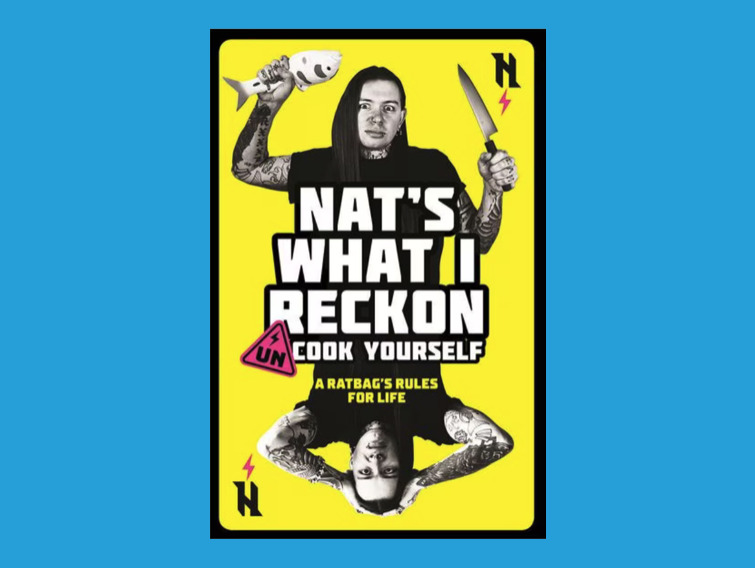
In the book ‘Uncook Yourself: A Ratbag’s Rules for Life’, Nat’s What I Reckon shares how he cooks his way through tough times. He writes:
“I reckon getting in the kitchen and un-cooking yourself from the tough moments in your head every now and then is a way better self-help routine than throwing five grand at some short-lived back pat from a cash grabbing blowhard at a self-help seminar just to tell you you’re not doing life right.”
One reason is you need to focus your mind.
When chopping with a sharp knife, you must pay attention to what you’re doing. If you get distracted, and I have (many times), you might pay the price with a cut to the finger.
Chopping is also a repetitive activity that delivers an immediate outcome. One minute, the bok choy is on the chopping board in full form; the next, it has been chopped and is ready for tonight’s stir-fry.
Cooking also requires you to slow down.
When you’re online, you tend to jump around in a frenzy. But when you’re cooking, you have to follow a recipe step-by-step. This requires focus. This focus helps to clear your mind.
Cooking also gives you a sense of control, power, and agency. As food journalist Michael Pollan says:
“Eating out breeds helplessness, dependence and ignorance, and eventually, it undermines any sense of responsibility.”
When you cook, you’re in control of the process (not some big corporate fast food company). Plus, compared to that commodified wellness experience, cooking is super cheap (all it costs is the price of a few ingredients).
It also produces a nourishing meal at the end. That meal will give you energy, help regulate your mood, and keep you calm and steady.
In the book ‘The Food Mood Connection’, Uma Naidoo argues that to decrease anxiety, you should pay attention to what you’re eating. She writes:
“A crucial part of battling anxiety is making sure your diet is full of foods that are calming and free of foods that put you on edge.”
Fast foods and highly processed foods. These foods (e.g., greasy hot chips and baked goods) are problematic because they lack fibre and the fragile micronutrients and phytochemicals needed for good brain health.
Naidoo recommends increasing your fibre intake by consuming more plants and whole foods, such as beans, brown rice, baked potatoes with the skin on, broccoli, pears, apples, and oats.
A few years ago, I delivered a talk called ‘Rediscovering the Ancient Art of Thrift’ at a local library. In my presentation, I shared the thrifty practice of avoiding eating out and cooking meals at home.
At this point in the presentation, an elderly gentleman put up his hand and said:
“But vegetables are expensive. Why not just get McDonald’s? It’s cheap, and there’s no cleaning up at the end.”
I immediately thought of a friend who, at the time, ate only McDonald’s (for breakfast, lunch, and dinner). His housemates had confided in me that his feet had developed a pungent odour.
Although my diet was far from perfect, I was concerned. If my friend kept going down this path, I could see him heading for serious trouble.
Fast forward a year: How was my friend doing?
He was not well.
He had put on a significant amount of weight and seemed depressed, rarely leaving his room except to get his next McDonald’s meal (back in those days, there was no Uber Eats).
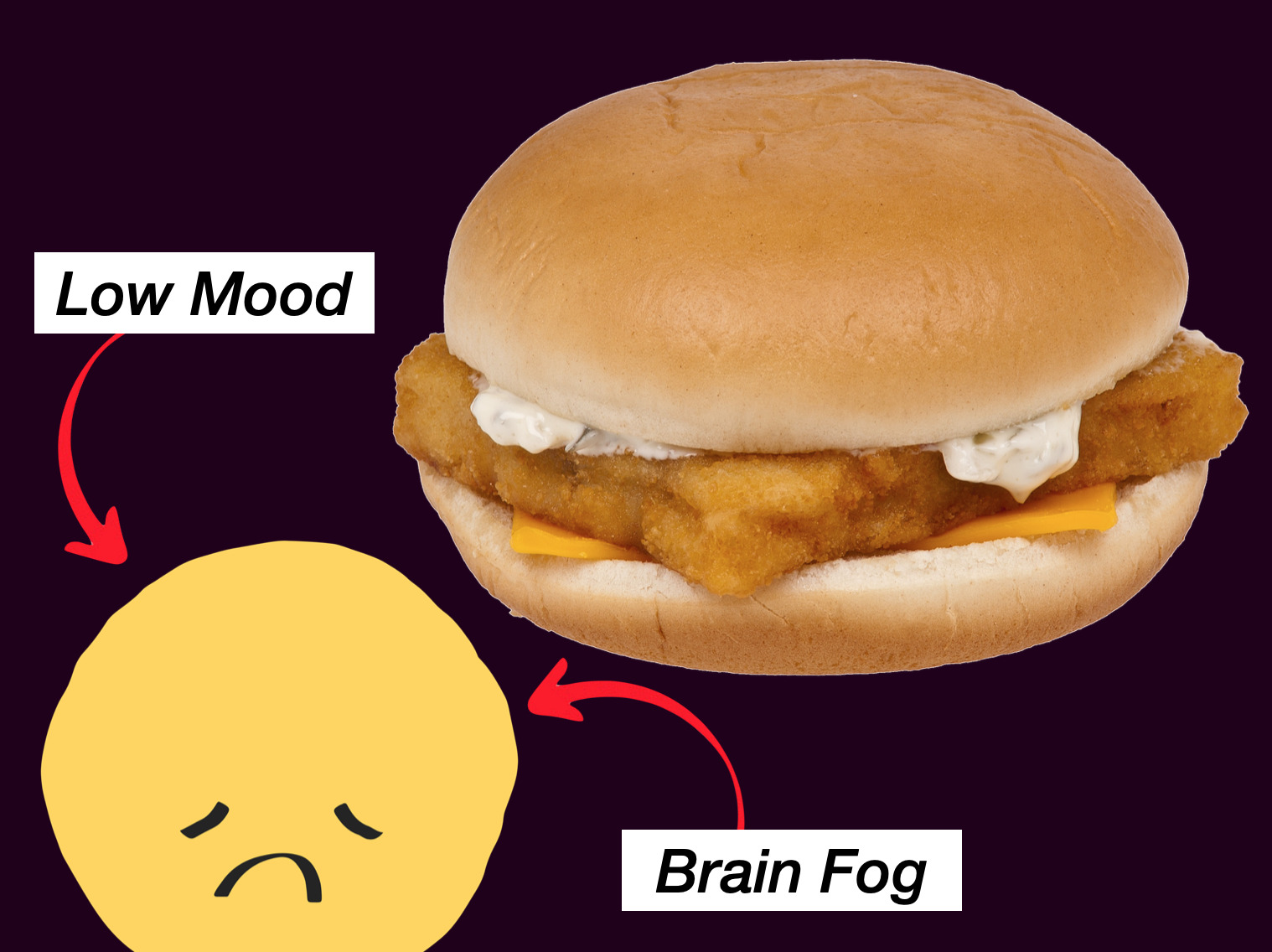
I explained to this elderly gentleman in the library workshop:
“Maybe you’ll save a bit of time and money in the short term [buying the fast food], but eating processed food will cost you down the track. It will cost you in medical bills and poor health. Your quality of life will suffer.”
He nodded, but I could tell he wasn’t entirely convinced.
Until you’ve cut out the processed junk food, allowed a couple of weeks for your tastebuds to readjust, and developed the habit of home cooking, it’s easy to be sceptical. After all, we live in a world that values convenience. Opening an app, pressing a button, and having dinner delivered to your door in less than 20 minutes has some definite appeal.
But every time you order Uber Eats, you miss out on a valuable opportunity to practice slowing down and calming your mind. You also undermine your cooking skills.
If you haven’t developed the habit of cooking or cooking makes you feel anxious, there are a few simple things you can do to cultivate calm and confidence in the kitchen:
Cooking is a messy process. While I may start with a clean kitchen bench, it quickly becomes a mess. That’s how the process goes (I try to clean as I go).
It’s also okay to mess up a meal. Not every meal is going to be an absolute winner. In ‘The Four Hour Chef’, Tim Ferris encourages the reader to see meals that don’t work out as cheap cooking classes. Learn the lesson and move on.
When you think of cooking as one activity, it can feel overwhelming. I divide the cooking process into two stages:
1) Preparing the mise en place: chopping vegetables, taking out utensils, etc, and
2) Pulling it all together: cooking the dish.
In the morning, I take out all the ingredients for a dish so they are ready to go when I need to take a break from my work. I chop earlier in the day and cook the dish in the afternoon/early evening.

If I’m overwhelmed by the idea of chopping vegetables, I break it down to chopping just one vegetable at a time. I’ll say to myself:
“Just chop the capsicum. That’s all you need to do.”
It’s not fun chopping with a knife with a dull blade. A sharp knife combined with a lovely chopping board makes all the difference.
Learning basic chopping skills is a game changer. With the proper technique and a sharp knife, there’s no need to worry about cutting yourself. You can chop with ease.
I took a chopping skills course with the online cooking school Rouxbe, but you can find YouTube videos teaching you good chopping techniques.
You’re not running a restaurant. You don’t have to rush to get meals out to hungry customers. Take your time and enjoy the process of chopping each vegetable.
If approached with the right mindset, cooking can deliver a sense of calm and ground you in the present moment. You also get to experience the mental and physical benefits of a nourishing home-cooked meal. The bonus extra is saving a bit of money.
So, what are you waiting for? Pull out some ingredients and start cooking today.