

Efficiency was the name of the game.
In an attempt to be ‘time smart’, I started ordering my groceries online and having them delivered straight to my door.
Yes, it was convenient.
Yes, it was efficient.
But over time, I saw that this convenience and efficiency came at a cost.
I’m not talking about the $20 monthly subscription fee to the supermarket. I’m talking about the cost to my lived human experience.
Earlier this year, I realised that by having my groceries delivered, I was missing out on a lot of valuable micro-interactions.
I was depriving myself of experiences that made me feel connected to other people and my community.
You may be thinking, “Yeah, big deal, Jane! Don’t you have better things to do with your time than grocery shopping?”
My younger ‘optimised’ self would have thought so. And that’s certainly what the Big Tech companies want you to believe. Big tech wants you to believe that a good life is an optimised life and one that is friction-free.
While I used to think grocery shopping was a waste of my time, I don’t think this way anymore.
Shopping for food in person at your local farmers’ market, bulk food store, or supermarket is an experience worth having. It’s time well spent.

Besides acquiring the best fresh produce and ingredients, the in-person shopping experience offers unexpected micro-interactions.
Here’s an example of what I’m talking about . . .
Last week, I popped into a new supermarket to pick up a few items. I was looking for plant-based sausages, but after going all around the store, I couldn’t find them. I knew I needed help.
I approached a young employee who was busily stacking tubs of hummus in a refrigerator. I asked her if she knew where the vegan products were.
She said, “Oh, I think you’ll find them over here” and then she took off like a rocket. I was practically running with my shopping cart to keep up with her.
I said to her, “Wow, you walk really fast!”
To which she said, “Oh… sorry!”
I said, “No, don’t apologise! I think it’s great!”
We arrived at the plant-based sausages, I thanked her, and she sped off again.
This brief social interaction probably lasted less than 60 seconds, but it made my day. It got my heart rate up and put a smile on my face.
I felt inspired by her young person energy. It also dawned on me that I could probably push myself a little harder in my next workout session.
I’m not exaggerating when I say my life was enriched by this tiny social interaction. Had I just ordered my plant-based sausages online, I would have missed out on this joyous experience.
This experience got me thinking about why I love talking to complete strangers so much. Unless I encounter a total grump, I usually always leave the interaction feeling better than before.
I was curious. Had any research been done on this?
It turns out quite a bit!
Dr Gillian Sandstrom has written a book that explores the many benefits of talking to strangers. It’s called Once Upon a Stranger: The Science of How “Small” Talk Can Add Up To a Big Life.

In an interview, Dr Sandstrom explains some of the benefits of talking to strangers. She states:
“The first benefit that we’ve found consistently is just that it puts you in a good mood. When you talk to a stranger, you usually walk away feeling a bit happier and more connected, which we know is so important for humans.
Another thing from the research is that we tend to learn more than we expect to when we talk to strangers. It brings novelty into our life, makes our life richer. There’s research about how well-being can arise from not only happiness, purpose, and meaning, but this third source: psychological richness. I think talking to strangers gives you richness, because it brings novelty and learning and those kinds of things into your life.”
Famous author Kurt Vonnegut understood this psychological richness that came from talking to strangers out in the world (not online).

He could foresee the problems associated with technology back in 2005 (well before social media, online shopping, and generative AI became widely adopted).
In a PBS interview, Vonnegut tells a story about going to the shops to purchase a single envelope.
Before leaving the house, his wife says to Vonnegut:
“You’re not a poor man. You know, why don’t you go online and buy a hundred envelopes and put them in the closet?”
Vonnegut continues the story, telling the PBS interviewer:
“I pretend not to hear her. And go out to get an envelope because I’m going to have a hell of a good time in the process of buying one envelope.
I meet a lot of people. And, see some great looking babes. And a fire engine goes by. And I give them the thumbs up. And, and ask a woman what kind of dog that is. And, and I don’t know…
And, of course, the computers will do us out of that. And, what the computer people don’t realize, or they don’t care, is we’re dancing animals. You know, we love to move around. And, we’re not supposed to dance at all anymore.”
The ‘Computer people’ Vonnegut referred to are the Tech bros of today. They have designed apps that have made us addicted, isolated, and lonely.
But we don’t have to go down this path. We have a choice.

Instead of choosing convenience, efficiency, and comfort, we can choose real contact with the world and people.
This is why I am resisting using AI. It’s why I don’t use any social media. It’s also why I have now gone back to buying my groceries in person and avoid the self-service checkouts as much as possible (even if it means waiting in line for five minutes).
Sometimes the checkout person is dead tired and doesn’t want to talk (which is fair enough). Or I’ll try to strike up a conversation and the other person doesn’t want to talk (this is rare, but it does happen).
You also need to be careful about who you choose to strike up a conversation with. Some people can be dangerous and unhinged, but in my experience, most people are kind and friendly.
If you have concerns about ‘Stranger Danger’, Dr Sandstrom suggests:
“Choose a situation that feels safe, such as a public place in broad daylight with plenty of people around.”
She goes on to add:
“In my life, instead of being a danger, strangers have been game changers.”
I couldn’t agree more.
Even if you do end up talking to someone who is a grump or not in the mood for a chat, you’ll learn something about yourself and the human experience.
By resisting the pull to be efficient and by seeking out micro-interactions, your life will be a whole lot richer. As Kurt Vonnegut once said: “We are here on Earth to fart around, and don’t let anyone tell you any different.”
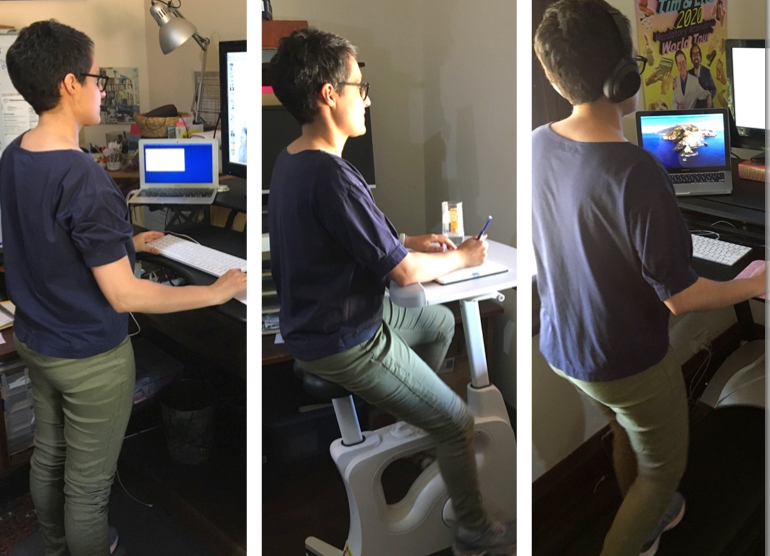
If so, you may want to try using an active workstation.
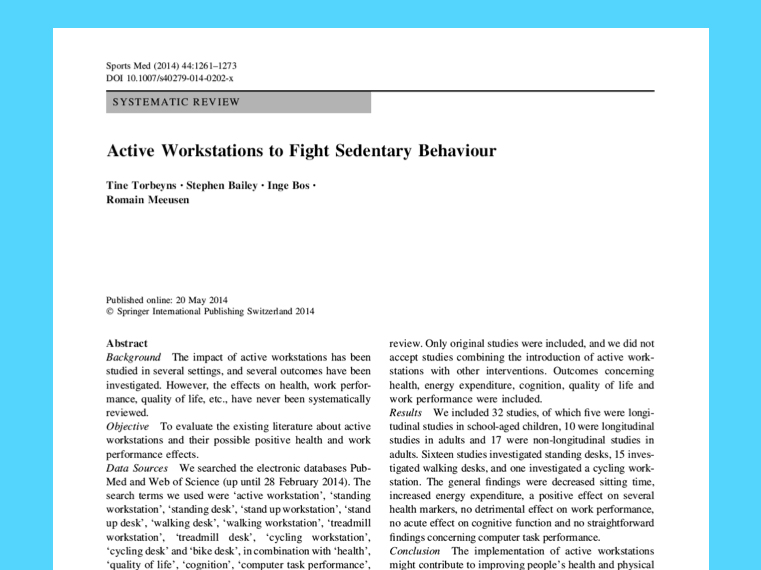
Active workstations (e.g., sit-stand desks, treadmill desks, and spin desks) allow you to incorporate physical movement into normally sedentary study/work tasks.
Research shows combining study with movement can boost your brainpower (e.g., improve your ability to focus and engage in complex cognitive tasks), decreases stress, and make it easier for you to learn.
In this article, I’ll share why it’s a good idea to incorporate some movement into your study sessions. I’ll also take you on a tour of my workspace to show you how I’ve set up my environment to support this habit.
Some people say “Sitting is the new smoking”.
Whilst sitting isn’t as bad as smoking, research shows being sedentary can shorten your life expectancy and lead to chronic diseases.
In the famous double decker bus study, researchers compared the health of inactive bus drivers who sat for most of the day with active bus conductors who climbed on average 600 stairs each day on the double decker buses.
The researchers found the active bus conductors had lower rates of cardiovascular diseases than the inactive bus drivers.

As Dr Michael Greger states:
“Sitting more than three hours a day may be responsible for more than four hundred thousand deaths every year worldwide.”
But what are the immediate negative impacts of sitting for too long?
In the book Move the Body, Heal the Mind Dr Jennifer Heisz states when you sit for long periods of time, your body goes into hibernation mode.
Sitting for 4 or more hours results in a reduction of blood flow to your brain, which can leave you feeling sluggish and less alert.
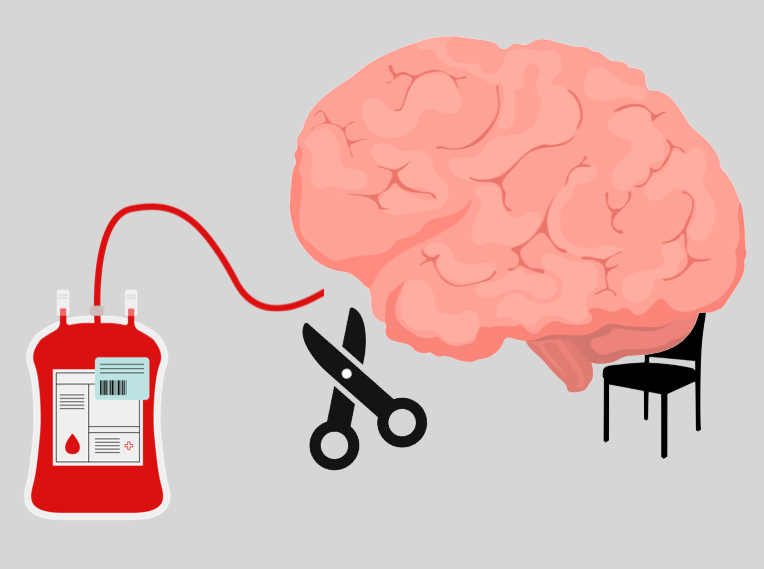
To combat these negative impacts, Dr Heisz suggests getting up from your desk every 30 minutes to take a 2 minute movement break.
But if you can move while you study/work, research shows you can experience even greater benefits.
Several studies have found people who use active workstations experience benefits such as:
• Increased energy levels
• Increased happiness levels
• Less stress
• Greater productivity
• Greater energy expenditure
This is why I’m a big fan of active workstations. They help me to feel good. And if I feel good, it’s so much easier for me to learn and get my work done.
You don’t need to have a lot of money to incorporate an active workstation into your study routine. I’m living proof of this.
On a budget, I created a workspace that contains multiple active workstations and various pieces of gym equipment (e.g., dumbbells, yoga mat, and stretch bands).
My surrounding environment makes it easy for me to be active throughout the day. But not only that, being able to switch between workstations keeps things interesting for my brain.
When it comes to active workstations, you have choices. Below I list three different options for you to consider:
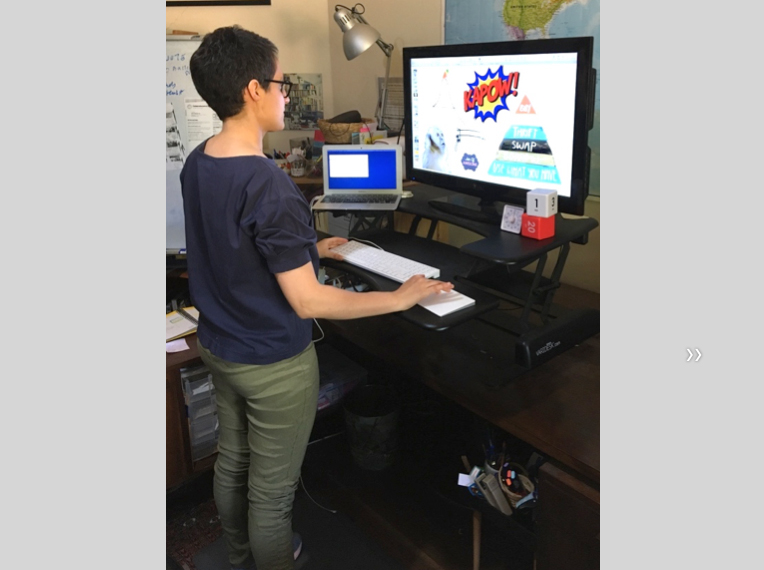
If you are new to the world of active workstations, a sit-stand desk is a great place to start. Using a sit-stand desk doesn’t require as much physical energy as other active workstations (e.g., treadmill desks and cycle desks). They are height adjustable which means when you get tired of standing, you can easily switch to sitting.
But is standing that much better than sitting?
The research suggests it is.
Dr Michael Greger points out:
“Even if you’re standing still, your postural muscles are tensed and stretched to fight gravity.”
When you’re standing, you’re also more likely to move around the room. For example, if I’m standing and I’m stuck on a problem, I will pace around my office or walk over to my whiteboard to sketch out ideas. In contrast, if I’m sitting in a chair it feels harder to get up and shift tasks.
All that being said, standing for long periods can get tiring. It can make your feet feel a bit sore, too. This is why a comfortable pair of shoes is essential. I also recommend placing an anti-fatigue mat or a soft pilates mat under your feet for maximum comfort.

Treadmill desks allow you to walk and work at the same time.
Students sometimes ask me “But isn’t this a form of multitasking? And you’ve just told us we shouldn’t multitask?”
It’s a good point.
Yes, technically using a treadmill desk is a form of multitasking. It involves performing two tasks at the same time (i.e. moving your legs and working on a computer). But here’s what makes it different from driving a car and texting or studying for a test with the TV playing in the background . . .
For most people, walking is an automatic process. You don’t have to use a lot of brainpower to walk.
This is why studies have shown walking at a slow pace while performing most tasks doesn’t negatively impact performance.
But like anything, using a treadmill desk does take some getting used to.
The key is to find the right walking speed and ease into it.
Don’t try to walk too fast, too soon, or for too long.
When I first started using my treadmill desk, I made the mistake of setting the speed to a brisk walking pace. After a few days, I was back sitting in my chair. My treadmill desk was neglected for many months.
But then someone suggested I try a slower walking pace. To my amazement, when I set the speed to 2km per hour, I found it much easier to walk and work.
Bottom line is this: Find a pace that feels right for you.
One downside with treadmill desks is they can be quite noisy (the motor and footfalls). If you’re trying to watch videos or attend an online meeting, I recommend using a pair of headphones.
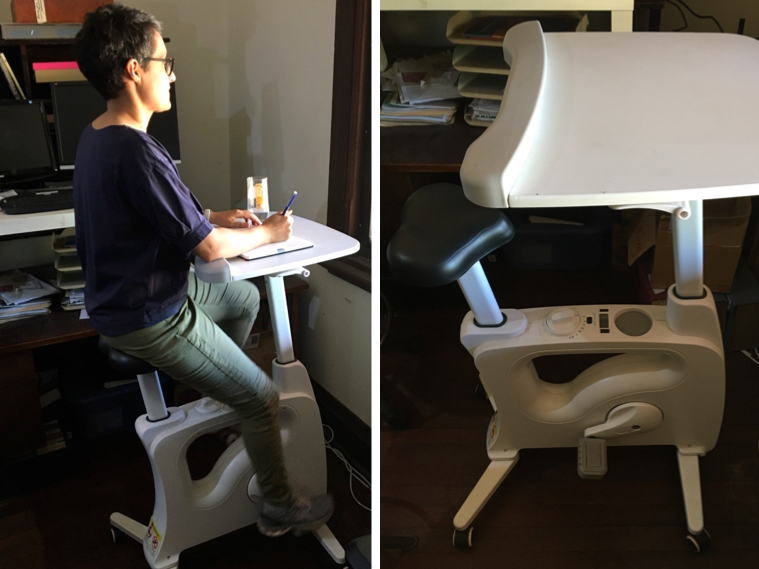
Do you prefer pedalling over walking?
If so, perhaps a cycle desk is for you.
Like a treadmill desk, you need to ease into it. It’s easier to work on a laptop and pedal at the same time if you start off with the resistance on the lowest setting. Once your brain gets used to the fact that your legs are moving while you’re working, you can bump up the resistance.
Most cycle desks come on wheels, which means you can easily move them around the house or outside for a change of scenery. They are also height adjustable which means when you get tired of pedalling, you can hop off and use it as a standing desk.
It’s important to consider the tasks you need to do and whether the task is suitable for an active workstation. As much as I love my active workstations, I don’t proclaim to perform all tasks while I’m standing or moving.
Tasks that require intense concentration or physical dexterity (e.g., drawing) are best performed seated in a chair with your feet firmly planted on the ground. This is why I create mind maps at my kitchen table and my outdoor desk.
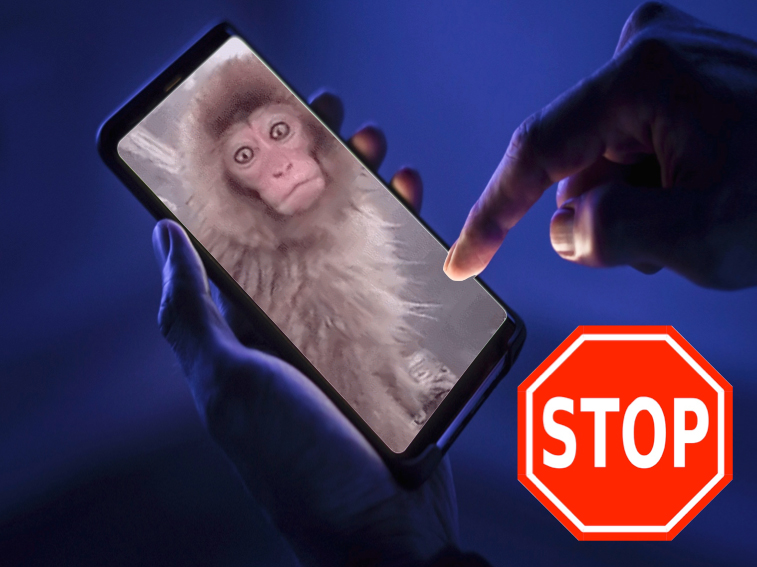
In contrast, active workstations work perfectly for browsing addictive websites and apps. If I feel the urge to watch YouTube videos or scroll through Twitter, I will force myself to go on my treadmill desk or cycle desk.
Using an active workstation stops me from mindlessly consuming content for hours on end. How? The movement acts as a stop mechanism. When my legs get tired, that’s my cue to stop and go do something else.
A lot of people buy active workstations with good intentions to move more but they struggle to cultivate the habit of using them.
This should come as no surprise. Sitting feels easy compared to standing, walking, and pedalling which all require physical effort.
The thing about your brain is it doesn’t like the thought of expending energy. Your brain will come up with all kinds of excuses to get you not to use your active workstation (e.g., “You’re too tired to stand” and “Using your treadmill desk is hard. Give yourself a break today. Go on, have a seat!”).

This is why it’s important to create a daily habit of using your active workstation (even if it’s just for a couple of minutes).
I recommend using the Tiny Habits Method. Engaging in some movement while you work is better than doing nothing.
If you go from sitting all day to standing and walking for hours on end, you’ll feel exhausted at the end of the day (and your chair will start to look very appealing!).
Here are some tiny habits I created to help me use my active workstations:
• When I want to check Twitter, I will turn on the treadmill and set it to speed 2.
• When I close my laptop at the end of the day, I will shift my desk to standing position.
• When I need to plan out a talk, I will grab my notebook and sit on my cycle desk.
You don’t need loads of cash to have an active workstation.
If you jump on Gumtree or Facebook Marketplace, you’ll notice a lot of people are trying to sell treadmills. The images these sellers share are usually of a treadmill in the garage that is covered in dust.
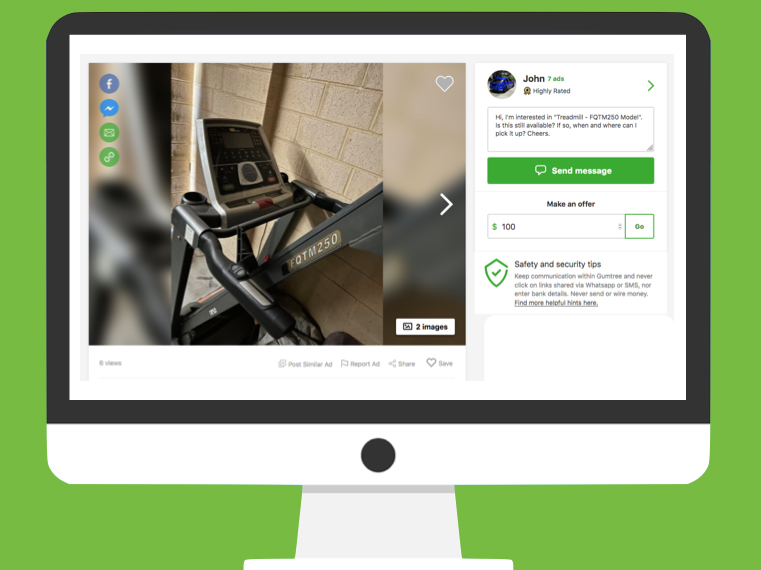
Why not pick a treadmill up for a bargain and convert it into a walking desk?
My treadmill desk cost me less than $50AUD to build. I picked up the treadmill for free. My dad helped me to add a desk to it out of recycled materials and some clamps.
To make it more ergonomic, I added a secondhand sit-stand desk on top ($40AUD off Gumtree). I then grabbed an old secondhand keyboard, mouse, and monitor to make it easy to plug in my laptop and shift workstations.
As for standing desks, you can build your own out of materials such as cardboard boxes and milk crates. The important thing is to get the height right. My husband built his sit-stand desk by placing an IKEA coffee table he found on the verge on top of his desk.
If an active workstation isn’t possible for your living situation, don’t let that stop you from moving as you learn.
Head to your closest outdoor green space (e.g., your local park) with a set of flashcards. As you walk around the park, test yourself.
You can also build in regular movement breaks into your day. Here are some ideas for things you can do:
• Use stretch bands
• Do some stretches and yoga moves
• Put on a song to dance to
• Punch a boxing bag
• Use a skipping rope
Every little bit of movement you do counts. It all adds up.
Incorporating movement into your study sessions is all about finding what works best for you. Whatever active workstation you choose to use, persevere. It takes time to adapt to working in a new way. But if you can stick at it, your brain and body will thank you for it.

The small things pile up. And those small things start to feel like big things.
But you can’t let it overwhelm you.
No matter what is going on in your life right now, you need strategies to help you get out of bed and get on with the day.
Below I’ve listed 10 strategies and tools that I highly recommend.
A really good day starts the night before. The last hour of your day plays a critical role in determining how well you sleep, when you wake up, and how mentally prepared you feel to take on the day.
In the book ‘The Gap and The Gain’, the authors state:
“What you do during this one hour has effects that far outweigh what you do with the other hours of your day. It determines how productive and purposeful you are, as well as influences how well your brain functions. If you use this one hour powerfully, the next 24 hours will be successful.”
In the last hour of my day, I like to do things such as:
• Prepare my breakfast (overnight oats)
• Lay out my exercise clothes for the next day
• Do some gentle stretches
• Tidy my work desk and set things up for the next day
• Fill in my gratitude journal
• Write a short to-do list for the next day (only three things)
• Read a book to calm my mind
I avoid screens an hour before going to bed, too. Locking my phone in a Kitchen safe helps with this.
Being constantly bombarded with notifications, never-ending feeds of information, click-bait, and endless entertainment options can leave us feeling mentally fatigued.
If you want to feel more in control and less exhausted, you need to find ways to stop running to your devices for quick shots of dopamine (instant gratification). Don’t rely on your willpower to do this.
We don’t have superhuman willpower. I’m fairly disciplined but I know I can’t take on the armies of industrialised persuasion (e.g. social media, Netflix, and YouTube).
This is why I have invested in tools that create a solid barrier between myself and my digital devices.
One of these devices is a Kitchen Safe.
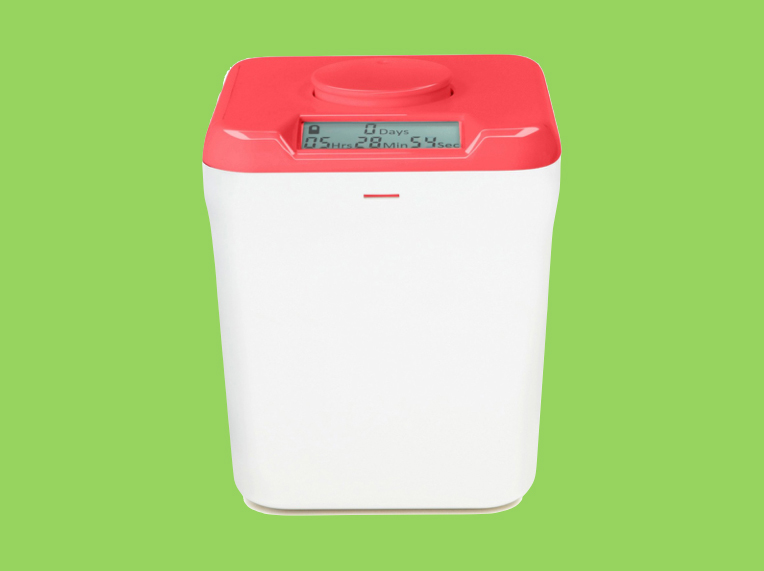
When I work and sleep, my phone is away from my body and locked in this safe. It needs to be locked away because it’s just too tempting otherwise (especially when I’m doing challenging work).
If you don’t want to spend $100 on one of these devices, I get it (it’s a lot of money). A free alternative is to hand over your phone to someone you trust. Or place it on silent in another room.
Electronic timers can help you cultivate time awareness. Setting timers can help you keep track of how long you spend on tasks. They prompt you to wrap things up and move onto the next thing you need to do.
I have various timers scattered all over my house and office. Depending on the task, I usually set them for 10, 20, or 30 minutes before I give myself a break.
Stressing about something? Go for a walk to clear out the mental cobwebs.
Walking is a great way to get out of your head, clear your mind, and refresh yourself.
Whenever I’m feeling overwhelmed, I put on my sneakers, I head outside, and I walk. Usually after a walk, I have a fresh perspective on things. I realise the thing that was upsetting me isn’t such a big deal after all.
Diaries are super handy. They are the ultimate life management tools.
I think of my diary as being like a mini assistant. I open up my diary, I look at the week ahead and it tells me what I need to do, when I need to do it and where I need to be.
I’m going to share a simple trick to make using a diary simple and easy to do:
As soon as you know a test or event is coming up or an assignment is due, write it down. This takes less than 30 seconds to do.
Then have a set time each day when you open up your diary and look at it. That’s it.
Write stuff down in your diary. And look at it.
When you’re stuck in a rut, you need to pull yourself out by being in action. A to-do list can help you with this.
I use an app called Complice to create my to-do lists. I like Complice because it helps me set intentions/tasks that are aligned with my goals.
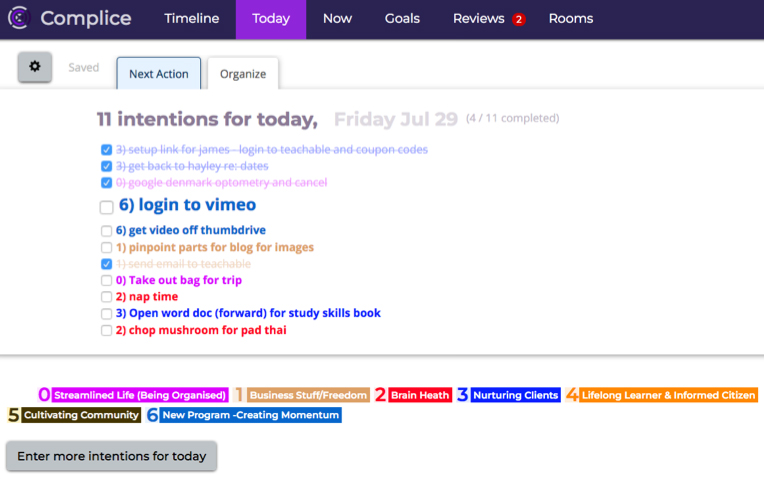
But you don’t need to use a fancy app. A piece of paper and a pen will do the job.
When I need a break from my work or I’m not sure what to do next, I pull out a random game I created (inspired by my friend and Tiny Habits coach Val McKinley).
This game involves a pile of old defunct pens placed in an old jam jar (but you could use pop sticks or little bits of paper). Here’s how the game works:
Each pen has a sticker attached to it. On the sticker is a tiny task (e.g. do one push up, put away one item, hit play on an upbeat song, clean whiteboard, sigh 3 times). When I’m not sure what to do next, I randomly pick a pen (like a lucky dip). I read the task and then I count down . . . 5 . . .4 . . . 3 . . .2 . . . 1! And then I go do that thing.

Every decision you make takes effort and mental energy. But you can conserve some of your mental energy by creating habits.
I’m a huge fan of Professor BJ Fogg’s Tiny Habits Method. He has made the process of creating habits feel fun and easy.
You can practice the Tiny Habits Method by taking Professor BJ Fogg’s free 5 Day Tiny Habits Program.
If you have lots of thoughts swirling around in your head, get those thoughts out of your head and down on paper or onto a whiteboard. This frees up your brainpower and helps you get back on track with what you need to do. Once the idea is captured, you don’t need to worry about it. You can come back to it later.
This is why I have notepads and/or whiteboards strategically placed in locations where I sit and think. For example, by my bed, in the kitchen, on my desk, in my bag, next to the toilet, and in the car.
What do I do with all these ideas that I’ve scribbled down?
Every few weeks, I collect them all up and go through them. Ideas that seemed great at the time but now don’t seem so amazing, I toss. But any good ideas or bits of information, I’ll file away for future projects or action them straight away.
Psychologist Dr Faith Harper recommends creating a set of coping cards to get through tough times. These are cards that contain quotes, mantras, grounding exercises, images or actions that calm you down and/or make you feel better. When panic hits, reach for your cards and go through them.
Dr Harper acknowledges that this strategy is cheesy stating, “It’s cheese with extra cheese sauce”. But it works when it comes to rewiring our brains. Your coping cards are a simple and effective way to help ground you in the present moment when you’re hit with a tsunami of powerful emotions.
Whatever it is you’re currently facing, you can find a way to get through it. These strategies help me to get going and get into the day, regardless of how I feel.
I reckon there’s at least one strategy in that list of 10 that you could benefit from. The key is to try them out and see which strategies work for you. So, why not choose one now and see how you go?

It’s around this time of year that many people set big goals for themselves.
“This year is going to be different. I’m going to be more organised. Eat Healthier. Exercise more . . .”
Does this sound familiar?
Up until recently, this was me. I used to be obsessed with setting goals at the beginning of the new year.
In fact, I was part of an international goal setting community of productivity enthusiasts (yes, there’s such a thing). At the beginning of every year, we would meet up online and work in pomodoros (i.e. 25 minute sprints), setting goals and creating plans for the year.
I’ll admit, I loved it.
Here I was hanging out with people that were just as obsessed with effective work habits and productivity as I was! I felt like I had found my people.
But I recently stopped attending the goal setting sessions.
Quite frankly, I’d had enough.
Now I don’t want to give the impression that I’ve turned into an unmotivated sloth. It’s not like I went from being a hardcore goal setter to anti-goal setting.
These days I’m just less obsessed about being super productive. I’m still setting goals (just different ones and not as many as before). For instance, this year one of my goals is to do more fun activities, such as drawing, drumming and hiking.
Ironically, what I’ve found is in not trying so hard to power through my to-do list, I’m actually getting more meaningful stuff done. Plus, I’m a bit more relaxed about life, which is a good thing.
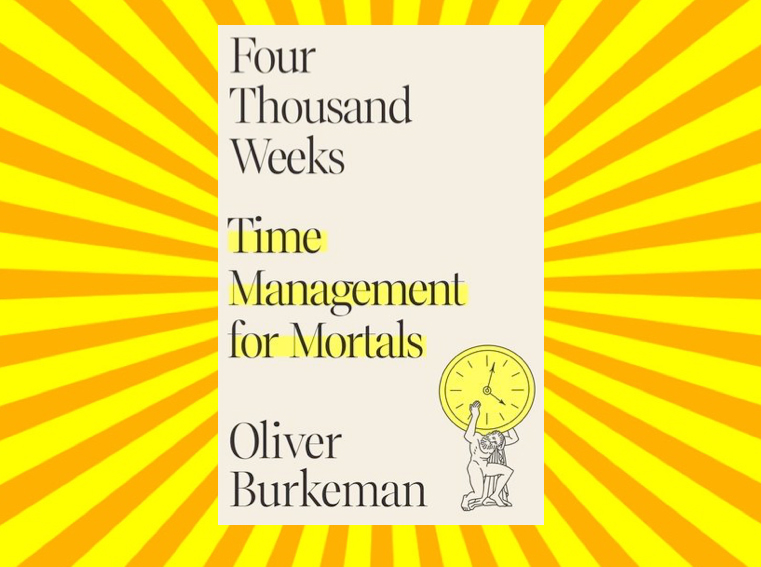
In his brilliant book Four Thousand Weeks: Time Management for Mortals Oliver Burkeman argues that being too focused on the future can suck the joy out of life.
I saw a lot of myself in Burkeman’s story. To give you a little background, Burkeman is a reformed productivity geek. He used to write a column for a newspaper on productivity hacks. So he has experimented with dozens of time management and productivity techniques.
But interestingly, he found very few of these time management techniques actually worked. And the more he used them, the more stressed out and unhappy he became. The book Four Thousand Weeks is Burkeman’s attempt to try and make sense of things.
Four thousand weeks is the number of weeks you get if you make it to the ripe old age of 80.
The idea behind this book is simple: life is short. So what are you going to do with your 4,000 precious weeks?
Burkeman argues many time management books perpetuate myths and false ideas about time. Here are some of the myths:
If you just work harder and more efficiently, you’ll be able to do it all.
If you manage your time well, you’ll eventually get to a perfect place in the future where you are in control of time.
Burkeman says these ideas set up a rigged game. A game in which you try to do more and more to create a better future for yourself.
In trying to create this golden future where your life runs smoothly, you never feel satisfied in the present and you always feel like you’re running behind schedule. As a result, this stops you from enjoying what you’re doing right now. And when you think about it, that’s all we really have (this present moment).
Four Thousand Weeks is packed full of great insights and practical advice. Here are seven ideas from the book that really resonated with me:
It’s an illusion that you’ll be able to crank through all the things on your to-do list to finally clear the decks. Accept that there will always be more to do and your to-list will continue to grow. If you can be okay with that, life becomes a lot less overwhelming.
Burkeman suggests creating two to-do lists:
1) An open to-do list: containing everything you need to do but you’ll never get through.
2) A closed to-do list: containing a fixed number of entries (no more than 10 tasks).
When you complete a task on your closed list, only then can you add another item from your open list.
Burkeman suggests channelling your energy and attention on a handful of things that really matter to you. Don’t take on too many projects.
If you have lots of projects on the go, it’s too easy to not finish any of them. Why? Whenever one project gets a little uncomfortable or difficult, you switch over to another project.
All this bouncing around from one project to another means you end up with a lot of unfinished projects. Burkeman recommends focusing on one big work project at a time.
Any project that is important to you will bring up some discomfort and/or fear. “What if I’m not able to do it?” is a thought I frequently have whenever I start a new project. Since we don’t like experiencing these uncomfortable feelings, there’s always this urge to distract ourselves with digital technologies.
Burkeman suggests we get familiar with this discomfort. If you are able to tolerate the discomfort and get started on an important piece of work, it’s like a superpower. What you’ll find is you’ll be able to complete more important and meaningful tasks, which will motivate you to keep going.

It’s easy to fantasise about the future. I know I’m not the only person to have imagined running a marathon, publishing a best selling book and/or opening up a plant-based café.
In our minds, it’s so easy to see ourselves doing these things perfectly and with total ease and control. But what we usually find is when we attempt to do these things, reality is often out of sync with the fantasy in our heads.
You go for a run and your leg hurts. And by choosing to go for a run, you’re saying no to many other things you could potentially be doing.
Here’s my take on all of this: if given the choice between living in reality or fantasy land, choose reality every time. Sure, it’s messy. It’s imperfect. But it’s the real deal.
Since you only get one shot at this life, you might as well have a go at that thing you’ve always wanted to do (even if it makes you feel clumsy and awkward).

Not everything we do needs to bring us some financial, material or academic gain in the future. Some activities bring us pure enjoyment in the here and now.
Hiking is a perfect example of this. Burkeman says there’s no real purpose to hiking but you do it because it’s an inherently enjoyable experience.
Burkeman argues that an hour spent on social media is not just one hour wasted. That time bleeds into the rest of your day, impacting the way you feel, how you view the world and what you value.
To capture your attention, social media’s algorithms feed you the most sensational, outrageous and conspiratorial content. If you spend hours of your day on these platforms, there’s no question that this will distort your perception of reality.
What I took from this is if you want to think more clearly, get off social media.
Although Burkeman doesn’t go as far as saying this, he does suggest we make our devices as boring as possible. How do we do this?
By removing social media from them and changing the colour to grey scale. This way our devices appear more like tools than toys. It’s also makes it much harder for us to escape the discomfort (see point 3).
JOMO is the opposite of FOMO (Fear of missing out) – it’s the joy of missing out. Rather than feeling stressed out about not being able to go to every social event, celebrate the fact that you can’t possibly do it all nor would you want to!
The irony is the more social events you go to, the more you realise you’re missing out on. You’ll never win this game of trying to do it all, so don’t even bother trying to play. Burkeman continuously comes back to this powerful idea of choosing a few things you want to do from the menu of life.
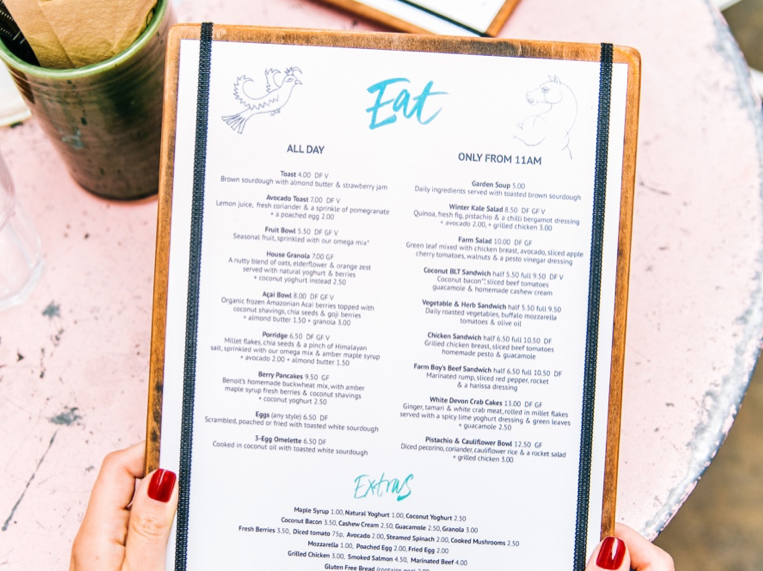
I love this idea of treating life like a menu. When you go to a restaurant you don’t feel the pressure to try every dish on offer. You just pick the dish that appeals to you in that moment and then you forget the rest.
I think this is a great approach to life. You can’t do everything but you can do a few things with your 4,000 weeks. So pick the things that interests you the most and then dive right in and enjoy!