

Not smart enough.
Not pretty enough.
Not successful enough.
This feeling of inadequacy drove me to work in unsustainable and unhealthy ways. I felt desperate to make something of myself in this world.
It took doing a PhD to make me realise why I felt this way and learn how to escape the trap of workaholism and materialism.
Now I can say that I feel satisfied with myself and my lot in life. I am enough. I have enough. I feel successful according to my own definition and metrics of success.
In this article, I share a cautionary tale and a radical approach that can help you feel successful just as you are.
When I was a university student, my good friend became a rep for a multi-level marketing company.
This gave me a glimpse into a world of people at a whole other level of desperation to become “successful” according to Capitalism’s definition of success (i.e., having lots of money and material goods).
As a poor law student, I was invited to several multi-level marketing ‘parties’. The aim of these parties was to get you to buy the products (e.g., makeup, skin creams, and vitamin supplements).
There were also more hardcore gatherings that focused on signing you up to become a rep for the multi-level marketing company, so you’d recruit more people to the scheme and sell more products.
A rep high up in the multi-level marketing company would facilitate these recruitment drives in the comfort of my friend’s family home.
The reps were always impeccably dressed as they sold a grandiose vision of being a sales rep (e.g., international travel, limousine rides, and a life of leisure).

The underlying message being peddled was:
“If you join us, you’ll be making money in your sleep!”
It sounded too good to be true. And that’s because it was.
This particular multi-level marketing company encouraged the reps to engage in personal development through reading.
My friend’s reading list included titles such as Reject Me – I Love It!, How to Win Friends and Influence People, and The 7 Habits of Highly Effective People.

Taped to the walls of her family’s home were cut-out pictures from magazines of luxury cars, cruise ships, and attractive women dressed in stylish clothes. Smack bang in the centre of the wall was a massive hand-drawn picture of a diamond.
When I asked why these images were on the walls, I was told they were reminders of why they were working so hard. The walls were like a massive vision board for the family. These images represented what a “successful” life looked like.
These images made me feel sad and uneasy, because in my eyes, my friend had already achieved so much in her life. She was already successful.
It was even more unsettling when the selling of products moved beyond the multi-level marketing parties and into informal social gatherings.
One social gathering I will never forget. It haunts me to this day.
For some context, I was in my early twenties, and I felt quite insecure about my appearance. Like most young people, I was still figuring out who I was, and what I wanted to do with my life.
So when my friend casually pointed out after a meal that I had bad acne, but she had a skin cream she could sell me, this left me feeling hurt and confused.

I was in a difficult position: did I purchase the expensive skin cream to maintain our relationship? Or did I say no to buying the skin cream, embrace my acne, and potentially hurt my friend’s feelings in the process?
It was a difficult and messy situation I wouldn’t wish on any young person.
My younger self didn’t have the skills or tact to handle this situation with the care it needed, and sadly, our friendship didn’t survive.
I understand why my younger self felt so confused during this period. I can clearly see the lies the multi-level marketing company pushed.
Before I go any further, I want to be clear that my friend and her family, who were reps for this multi-level marketing company, had no malicious intent.
They were good people who were desperate to make a better life for themselves. They were victims of a predatory corporate structure that peddled a bunch of lies to hook people in.
One of the big lies that this multi-level marketing company pushed was the idea that ‘You’re not enough’.
Another big lie was that to be happy and successful, you need a flash car, a fancy house, and lots of money. Oh, and don’t forget the expensive skin creams.
If you don’t have those things, you’re a loser. So, you better hop to it and start selling products and recruiting reps!
Of course, this isn’t just the world of multi-level marketing companies. This is the dominant message of mainstream consumer culture and advertising.
In our lives, we may not be selling skin creams and vitamins for a multi-level marketing company, but we are trading our time and life energy for money. Money that can buy us stuff that advertisers convince us we need.
Ads don’t just sell us products. They sell us particular ideas of success. They tell us what we should value and what is normal. They tell us how we should live our lives.
In the world of advertising:
But we should pause and question these ideas. Why? Because the research paints a very different picture of what brings us happiness and fulfilment (Spoiler alert: it’s not more stuff).
The pictures of luxury goods that were taped to the walls of my friend’s home illustrated what all of us are told to value.
We live in a consumeristic and capitalist culture that celebrates materialistic values. This set of values focuses on extrinsic pursuits such as striving to obtain money, possessions, and an attractive appearance.
Living in this culture, it’s extremely difficult to not internalise these values.
However, research shows that being highly oriented towards materialistic values is harmful to psychological health and personal wellbeing.
Why would it be that pursuing diamonds, nice clothes, and social status fails to make us happy?
In his book The High Price of Materialism, Social Psychologist Dr Tim Kasser argues that our wellbeing comes from satisfying our core psychological needs (i.e., needs for security, competence, and connections to others) and orienting one’s life around materialistic pursuits is a poor way to get these needs met.
Other research has found that once our basic to moderate needs are met, more stuff doesn’t bring us additional happiness.
Evidence for this is all around us. Just look at Billionaires like Elon Musk, Donald Trump, and Sam Altman. Do these people look happy to you?

The people above look restless and miserable, except for Australian gardening show host, Costa Georgiadis (Note: he is not a billionaire and I can’t imagine he’s aspiring to become one).
Others have argued that the reason wealthy people can have so much but still not be happy is because their expectations keep rising. In other words, the more you have, the more you want more.
This is why the author of the book The Psychology of Money, Morgan Housel, argues that the most valuable financial skill you can have is not budgeting but not having to impress other people.
That’s right. Not having to impress other people is the most valuable financial skill you can cultivate.
If you can determine what success means to you, then you free yourself of the trap of trying to get other people’s attention by acquiring more and more fancy stuff.
Not feeling the need to impress other people is a goal well worth pursuing, especially when you realise that no one cares about your house, car and stuff as much as you do.
I want to invite you to join me in a world where I’m enough, and you’re enough.
In this world, if you do the work, you can feel successful, just as you are, today.
You don’t have to wait until you reach the top spot in your class, school, sport, or company. You don’t even need a lot of money or stylish clothes.
How can we feel successful just as we are, with all our imperfections?
In his excellent book Where the Light Gets In, mindset coach Ben Crowe says the secret is to live in alignment with your values and create your own metrics for success.

He believes that if you live in alignment with your values, you are successful. Simple as that.
Instead of plastering your walls with images of all the material items you dream of having, Crowe encourages us to develop a ‘Success list’. The question to ask yourself is,
Before you can answer this, you need to get clear on what you value (i.e., what’s most important to you).
For me, I value my freedom, health, growth and learning, relationships, and community.

With these values in mind, I know I’m being successful when:
Crowe describes what he believes to be a ‘successful life’. He writes:
“It’s a world full of relationships, experiences and memories. A world of confidence and happiness. Most importantly, it’s a world where we determine what success means for ourselves, not by anyone else’s measure. And finally, it’s where success can be in the present moment, not in some future state we may never arrive at.”
Instead of focusing on what you want to have, your focus is on how you want to be and the behaviours you need to engage in to be that person.
I’m not sure if my friend ever made it to the top tiers of the multi-level marketing company, but if she did, I know the feeling of satisfaction or happiness wouldn’t have lasted long.
I once heard Hollywood Psychotherapist Phil Stutz say in an interview, “You’ll never be satisfied in our [Capitalist] culture”.
Just as a multi-level marketing company is set up to make those at the bottom feel desperate to achieve more, consumer culture is designed so most of us never feel satisfied with what we have.
The only path to happiness and fulfilment is to create our own metrics for success; otherwise we will constantly want more because of the powerful influence of advertising.
In the fictional book Alan Opts Out, advertising executive Alan thinks to himself:
“What was an ad man, really, but a homegrown terrorist, convincing people that their lives were not worth living unless they bought new stuff?”
This same advertising executive comes to the conclusion that “you can get by with less than what you have” and that most of us would be happier if we did.
When you feel like you’re enough, you feel happy with yourself and your lot in life. You’re more at ease with yourself. You still want to get out of bed and do stuff, but that desperate energy to get more and be more doesn’t surge through your body.
There’s no need to wait until you get a great job, reach a certain number of subscribers, or earn a PhD to feel successful. Create your ‘Success list’ and start feeling successful today.

I had one of these dreams the other night.
My anxious exam dreams usually go something like this . . .
I’m back in high school and I’m not having a fun time.
I’m freaking out because this exam is in just a few hours. So I’m scrambling. I’m cramming. I’m feeling desperate.
But what I’m doing isn’t working. I’m looking at the page and nothing is going into my brain. I’m filled with this sense of impending doom. But just before I enter the exam room . . . I wake up . . . Phew!
It was just a dream.
I graduated from high school two decades ago!
These dreams usually occur a few weeks before I need to deliver an important presentation. I’m not big on interpreting dreams, but here’s what I believe my subconscious is trying to tell me: “Lift your game. It’s time to start preparing!”
Delivering a presentation is similar to taking an exam. Both activities require you to exert mental effort and be well prepared. They can also bring up a lot of anxiety.
When I deliver a presentation, I have to recall a large amount of content from memory. I also need to keep an eye on the time because running into recess or lunch is not a smart move!
I have to be organised and make sure I have all my props and equipment. I also need to stay calm because if I look stressed, this will make the audience feel stressed and concerned about my wellbeing.
Just like you can’t wing a 3 hour long exam, I can’t afford to wing a presentation in front of a group of 200 students.

I believe the strategies that help me to memorise and deliver presentations can also help you to ace your exams.
Below I share simple things you can do to recall information under pressure and remain calm and grounded in strange and unusual environments.
Some of these strategies may seem a bit over-the-top. But my job is to present ideas to others. If I bomb out, I usually won’t get a second chance to present at the school again. This is why I strive to do my best every time.
When you leave things to the very last minute and feel rushed packing up your gear, there’s a good chance you’ll forget something important.
This is why I gather all my props the night before a presentation. Just before I go to bed, I lay out the clothes I’m going to present in. This means I don’t have to waste my brainpower on this small stuff in the morning.

Just like you need to think quickly in an exam, I need to be able to think quickly on my feet when I present. A solid 8 hours of quality (uninterrupted) sleep helps me to do this.
If I mess with my sleep, I mess with my ability to think.
I’ve developed a strict bedtime routine – I go to bed at the same time and I wake up at the same time. My phone is on silent and charging in another room when I sleep.
Now is the time to develop good sleep habits. Aim to get a minimum of 8 hours of quality sleep each night.

Consider doing some light exercise (nothing too strenuous) before an exam.
Before I deliver a talk, I’ll run on my treadmill or ride my bike for 20-30 minutes. Not only does this make me feel powerful and strong, but it puts me in a positive frame of mind.
It’s a fine line though. If you push yourself too hard (which I have done in the past), you’re going to feel exhausted. You need to make sure you don’t overdo it.
If I do happen to push myself too hard (which doesn’t happen very often as I’ve learnt what works for me), I’ll take a quick 20 minute power nap to re-energise before a talk.
If I’m feeling a bit nervous about delivering a presentation, I don’t make a big deal about it. I view a bit of nervous energy as a good thing.
I think, “I must be excited”.
I’ve also come to see a bit of nervous energy as better than being completely chilled. If I’m feeling super relaxed, I can’t muster enough energy to inject into the room. I’ve also noticed my thinking isn’t as sharp.
If you’re feeling nervous about an exam, say to yourself, “I’m feeling excited!”.
Before I deliver a presentation, I’ll sit and breathe deeply for 2 – 3 minutes. This helps me stay calm, grounded, and focused.
I also put my phone on airplane mode so I’m not distracted by any random texts or calls. At this point, I need to stay in the zone and I can’t have anything throw me off my game.
In the 30 minutes before the exam begins, you need to protect your mental state. Take some deep breaths, put your phone away, and shut out the world around you. Wearing a pair of headphones can also help.

Your brain needs fuel to think and function well. Where does it get that fuel from? Food. So whatever you do, don’t skip breakfast or lunch before an exam.
Before I present, I make sure I eat a healthy meal an hour beforehand. If the talk is at a strange time, I’ll make myself a healthy smoothie. This gives me the energy I need to deliver high energy presentations.
I once cooked up and ate a big vegan schnitzel before I had to deliver an important presentation. I’d never consumed one of these processed schnitzels before, which must have been packed full of salt because I kept sipping on water before the talk.
I remember that I was freaking out because of the unexpected impact of this salty vegan schnitzel. I was thinking, “How am I going to do this? I’m going to need to go to the toilet! Why did you think it was a good idea to eat a vegan schnitzel right before a talk?!”
Luckily, I managed to deliver the talk without any problems. But it was a close call.
I learnt an important lesson that night . . .
Don’t experiment with any new or strange foods before giving a talk. You’re asking for trouble.
Work out what foods make your brain feel good and then stick to those foods before each exam.
If you feel hungry, sleep deprived, or you have a full bladder, these things are going to create some discomfort. It will be hard to concentrate and recall information in the exam.
This is why I always make sure I take care of the basics (e.g., having a healthy breakfast or snack) before I deliver a presentation.
Give yourself plenty of time to get to the exam room. There’s nothing worse than feeling rushed, stressed or getting lost.
This is why I like to set up for a job at least 30 minutes before I need to present. This gives me plenty of time to avoid any technical problems and get grounded.
Since I don’t rely on any notes or palm cards when I present, I need to know my content back to front and inside out.
How do I learn the content?
I use a combination of three highly effective study strategies:
1) Dual coding (using words and pictures to help you learn);
2) Active recall (bringing information to mind); and
3) Spaced practice (spacing out your study, not cramming).
These three strategies are much more effective than rereading and highlighting my notes. I recommend you use these study strategies to prepare for your exams.
Research shows physical movement, including the use of gestures, helps improve understanding and boosts memory.

Whether you’re trying to learn a new concept for an exam or memorise a presentation, don’t be afraid to use your hands and body. Think about what you’re saying. Can you apply a gesture or move your body to help you memorise and improve your understanding of a concept?
You can read more about the power of gestures and movement when it comes to learning here.
Before each exam, keep away from people and places that drain your energy and stress you out. Avoid energy vampires (i.e. people who drain your mental energy and make you feel a bit out of whack) as much as possible. Don’t waste your brainpower on these toxic people. You need all your brainpower for your exams.
Sometimes things will go wrong that are completely out of your control. And you have to just roll with it and do the best job you can under the circumstances.
For example, a few years ago, I did a job where nothing seemed to go to plan. The school receptionist was rude and unhelpful. The venue for the talk wasn’t booked. The students didn’t have chairs to sit on. To make matters worse, it was a boiling hot day and the air-conditioner wasn’t working.
What was I supposed to do?
Having a meltdown wasn’t going to help.
In times like these, you need to remain calm and focus on the things you can do to make things better going forward.
If you have two exams on the same day, you need to think about how you’ll manage your energy levels. You need to conserve your energy.
For instance, if I need to deliver two or three different talks in a day, I manage my energy levels by taking deep breaths, frequent sips of water, and power naps where possible.
Preparing to sit an exam is like preparing to go on stage for a performance. If you can use some of the strategies listed above, you can stay calm, energised, and grounded, which will make a big difference when it comes to recalling information in the exam.
Which strategy will you test out to stay calm and enhance your performance in your next exam?

I was the kid who was always late for school. I’d forget things. I’d lose my stuff. I’d regularly have to check the grimy lost property bin.
When I was younger, I admired people who were organised. Seeing someone with colour-coded files, a neatly arranged bag, and a tidy bedroom was inspiring.
I figured I was just wired differently. Being messy was just how I was—a simple fact of life. My boyfriend (now my husband) even affectionately nicknamed me Mess Pot.
It never dawned on me that perhaps these ‘organised’ people I was so in awe of had been exposed to other organised people and practices from a young age.
It wasn’t until I was in my early twenties that the penny finally dropped.
Here’s what I realised . . .
No one pops out of the womb knowing how to be organised.
If you know how to learn, you can learn how to become organised. It’s not rocket science.
So, that’s exactly what I did.
Over the past 15 years, I’ve taught myself to be organised.
I’ve read many books on the topic, from Marie Kondo’s bestseller The Life Changing Magic of Tidying Up to David Allen’s Getting Things Done.

I’ve experimented with numerous organisational methods, systems and strategies that the authors promised would transform my life from chaos to freedom, control, and ease.
In this article, I share what I’ve learnt from all these books, organisational gurus, and personal experiments I’ve conducted to become organised. I hope this inspires you to develop your own systems and strategies that work for you.
You can follow other people’s systems and methods, but I’ve discovered that it’s best to develop your own organisational system. The organisational system you adopt must align with your values and goals. If it doesn’t, abandon it or tweak it until it feels right for you.
For instance, I love books, and I own many. This is why I yelped out in pain when I read Marie Kondo’s advice on how to deal with books.
In her book The Life Changing Magic of Tidying Up, Kondo advises readers to rip out relevant pages from reference books and discard the rest of the book. There was simply no way I would do that to my precious books!
Central to her KonMari method is holding an object in both hands and feeling the emotion that arises.
If the object sparks joy? You keep it.
If there is no joy? You get rid of it.
I can see how this strategy has enormous appeal. It simplifies the decluttering process. You don’t have to think too hard. But there are dangers in the spark joy approach.
You can end up on a consumer treadmill of discarding items that no longer spark joy and constantly acquiring new ones that do. However, you can bet that the joy will soon dissipate from those new items as you habituate to them.
In addition, this ‘Spark Joy’ strategy also overlooks the functional role of many items in our lives.
My toilet plunger doesn’t exactly spark joy, but it’s incredibly useful when I need it!
The point is you need to trust yourself. Don’t give all your power away to a stylish organisational guru with a cult following and a Netflix series!
Trial and error is the key to getting your organisational groove on. And patience.
Your life won’t be transformed in a day or a week. You have to trust that the solutions will come, but it will take time.
This may sound a bit woo-woo and new age. So, let me frame it another way . . .
On your journey to become organised, pretend to be a scientist. Run some personal experiments.
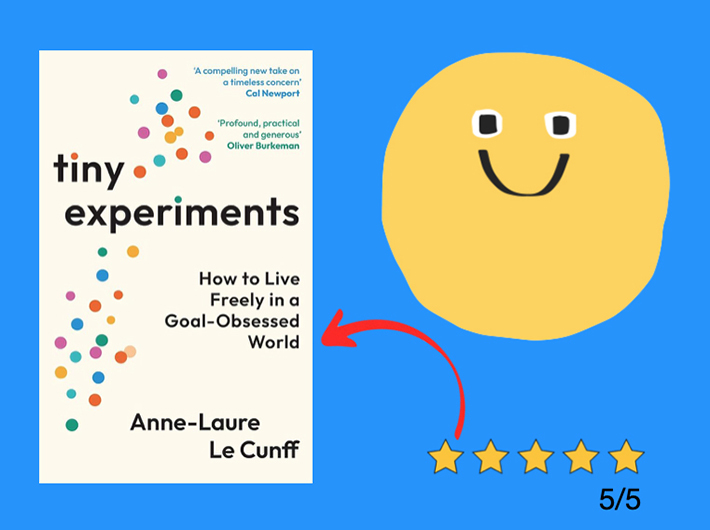
In the book Tiny Experiments, Anne-Laure Le Cunff encourages us to come up with a research question and then turn it into a hypothesis. She states:
“Don’t overthink it. Formulating a hypothesis is an intuitive process based on your past experiences and present inclinations. It should simply be an idea you want to put to the test- an inkling of an answer to your research question.
If you observed that you dread giving presentations, maybe improv classes could help build your confidence. If you feel anxious in the morning, maybe meditation could help regulate your emotions. If you enjoy graphic design, maybe freelancing could help strengthen your portfolio.”
Don’t be put off by this scientific language (e.g., ‘Hypothesis’ and ‘research question’). Running a tiny experiment and formulating a hypothesis is easy.
Here’s an example from my own life . . .
I’ve noticed that when clutter piles up on my desk, I am more easily distracted and feel overwhelmed. So, I came up with the following research question:
“How can I decrease feelings of overwhelm and increase my ability to focus when I’m at my desk?”
My hypothesis to this question was:
“Decluttering my desk by removing all non-essential items will decrease feelings of overwhelm and increase my ability to focus on the task at hand.”
Then, I put this idea to the test and observed what happened.
Some experiments you run will work. Others will flop, but that’s okay. The point is you won’t know unless you run some tiny experiments.
As Anne-Laure Le Cunff states:
“Once you have a hypothesis, you can design an experiment and turn your life into a giant laboratory for self-discovery.”
Through running tiny experiments, I’ve come to realise that being organised isn’t about having a beautifully colour-coordinated filing system or a nicely decorated home.
It’s also not about following 10 simple steps and waking up one day to find that you’ve magically become an organised person.
In our materialistic culture, we are sold a particular idea and image of what it means to be organised. But I’m not buying it. And you shouldn’t either. Why? Because it’s a lie designed to make us feel bad about ourselves, so we buy more stuff!
In stark contrast to the slick images you see online and in glossy magazines, life is messy. It’s a constant struggle.
Purchasing pretty storage containers and having a tidy, organised home won’t make your life less messy and uncertain.
But I can say this: being organised will make it easier to navigate the mess and chaos of life. It will help you focus your time, energy, and attention on what matters most to you.
So, I’m suggesting that you block the influencers and ads from your feed and burn the home lifestyle magazines. You’re going to create your own personal philosophy for organised living.

Being organised is about helping my day go a little more smoothly.
It’s about removing friction and resistance between me and the tasks I need to do. When I’m organised I can easily find what I need, which allows me to dive into my projects: filming that video, cooking that new recipe for dinner, and mind mapping that book I’ve just read.
Being organised is a way to enjoy the present moment more. Instead of feeling overwhelmed by mess and clutter, I feel calm and grounded. It’s easier to focus on the task at hand.
Is it worth taking the time to become more organised and experiment with your own systems and strategies?
Yes. 100%.
Being organised has decreased my stress levels and boosted my confidence. It has also saved me a significant amount of time and energy.
I’ve found that developing a few guiding principles helps ground you in your quest to become organised.
Below, I share my guiding principles and how I’ve integrated each one into my life.
I’m not here to tell you to copy what I do (it’s best to develop your own philosophy, guiding principles, systems, and strategies). However, if you’re unsure where to start, feel free to experiment with the systems and strategies listed below.
Give every item a home. Everything should have a special place in your space.
Professional chefs do this. Before they start cooking a dish, they prepare the ingredients and take out the kitchen utensils they need. There’s a term for this practice. It’s called the mise en place.

Mise en place is a French term that literally translates to ‘putting in place’, but it means a place for everything and everything in its place.
When it comes time for a chef to start cooking a dish, they know where the ingredients and kitchen utensils are. This allows the chef to work efficiently and focus on the task at hand: cooking the dish.
In the book Work Clean, Dan Charnas explains how this concept can be applied outside the kitchen to our everyday lives.
Charnas encourages us to arrange our spaces to remove resistance. He states:
“The less friction we have in our work, the easier it is to do, the more we can do, and the quicker we can do it; and thus the more physical and mental energies we can preserve for other things.”
Mise en place changed my life for the better. I used to spend a lot of physical and mental energy trying to find my keys, wallet, etc., but not anymore.
I now have a designated spot for my keys, hat, wallet, and bag. After using these items, I return them to their special place.
With the mise en place, I no longer waste time searching for items. I can quickly and easily find what I need. You can read more about how I apply mise en place to my life here.
If something is important, I can’t have it stuffed away in a cupboard, drawer, or file. If it’s hidden away, it doesn’t exist.
This is why you’ll see vertical wall hangers in most rooms of my house. These hangers contain key items I frequently use in the space.
By having one item per pouch, I can easily find what I need when I need it.
I get easily overwhelmed by piles of stuff, so I have to be vigilant and stay on top of the mess.
I have a simple trick for keeping my space relatively tidy. I tell myself:
“All I need to do is put away three things. That’s it!”
The sink is overflowing with dishes? I tell myself, “Just do three dishes!”
Laundry is scattered all over the bed? “Just put away three pieces of clothing!”
The kitchen bench is covered in random stuff? “Put away three spices!”
Putting away three items feels easy. And when something feels easy, I’m more likely to get started.
When everything has its special place (see Principle #1: Embrace mise en place), it’s easy to implement this principle.
There’s nothing more frustrating than having a brilliant idea and having no way to capture it. You need to be able to catch thoughts as they occur.
This is why I have whiteboards, markers, pads of paper, and pens placed in key locations.
These random ideas that I capture get thrown into my in-tray to process later on.
Distractions keep you from doing what you need to do. Like a pile of clutter on your desk or boxes obstructing your entryway, distractions are a barrier to your goals and intentions.
If you want to be more organised, you need to deal with anything that could distract you before sitting down to do your work.
Like most people, the biggest distraction I face is my phone.
If I’m constantly checking my phone, I feel scattered, frenzied, and overwhelmed. Everything speeds up. I start to feel like I’m spinning out of control.
I know I have to avoid this mental state at all costs if I want to have any chance of having a productive, enjoyable day.
This is why I have a morning ritual of placing my phone in pocket 1 of my vertical wall hanger in my dining room (well away from my workspace) before I start my workday. Out of sight is out of mind.

I used to feel intimidated by the idea of planning, so I rarely planned my week or day.
But over the past few years, I’ve become a planning machine. Why? Because plans are powerful. Even rubbish plans work wonders!
As Ned Brockman says, plans “help make you less anxious about the howling chaos of modern life.”
Here’s how I create my ‘rubbish’ plans for the week and day:
At the end of every week (on a Sunday), I create a plan for the week ahead.
I do this by reflecting on the week I’ve just had (What did I do this week? Can I claim any wins? Are there any unfinished tasks or people I need to get back to?) and looking at the week ahead (What do I need to do this week?).
I write out all the major to-dos for the next seven days on a list.
This list usually overwhelms me (there’s always a lot to do!). To combat this feeling of overwhelm, I transfer a few tasks from the list to an index card. This is my daily card (the to-do list for the day).
As I complete each task, I mark it off my daily card. As I see more items being marked off, it builds positive momentum and a sense of progress and satisfaction.
I use a paper-based planner and a massive year-in-a-glance calendar to help me keep track of my commitments.

When I can see how many days I have before an important presentation or my next holiday, I feel calmer and more in control.
Using planners also frees up precious mental space for learning as you’re not trying to hold so much information in your working memory.
I’m far from being a minimalist. I love my stuff. But having too much can be overwhelming. More stuff means more things to manage, making it harder to stay organised.
As someone who loves to op-shop, I frequently have to remind myself of the following quote by William Morriss:
“Have nothing in your house which you do not know to be useful or believe to be beautiful.”
Every few months, I’ll collect some items to donate to my local op-shop. Reducing my possessions makes cleaning and organising a lot easier and quicker.
It’s important to remember why you are striving to be organised in the first place. It’s not to impress other people. You are doing this for you.
Being organised helps you pursue your goals and live in accordance with your values. You have to keep your goals front and centre of your mind; otherwise, the goal of being organised can dominate your life. Organising can become a form of procrastination.
This is why I keep coming back to my values and goals (which I have captured on a mind map). This reminds me that being organised helps me to live a good life. But it’s not the point of my life. There are more important things I want to do with my time, energy and attention.
That said, it’s hard to focus on and work towards my goals if I’m completely disorganised. I lose sight of them! You need to find a healthy balance.
If you want to be more organised, I encourage you to experiment with developing systems and strategies that work for you. Come up with an organisational philosophy and set of guiding principles that align with your values.
Why not treat your life as a laboratory and run some tiny experiments to become organised?
Through trial and error, you’ll discover what works and what doesn’t.
Remember, this isn’t about having a perfectly decorated home or trying to impress others. The point of being organised is to allow you to do the things you want to do without as much friction. It’s about living a good life.
This is what my life used to feel like.
I was always in a rush.
Always cutting it fine.
Often running late.
I was late for class.
Late for dinner at friends’ houses.
Late for meetings.
In my world, being late was the norm. It was perfectly acceptable to drag your feet and rock up an hour late to an event.
So, I had to learn the hard way.
One morning, I was running late for school. I rocked up to form room three minutes late, and I knew straight away I was in trouble.
My form room teacher said:
“Jane, go to student services to get a late note. You’ve been late too many times. It’s not good enough”.
When you were told to go to student services, this was bad news. You were being told to do the walk of shame.
I pleaded with her:
“Please, no! Come on! It was my dad’s fault. He was late in driving me to school. My dad is always running late”.
My form room teacher wasn’t buying my excuses.
To this day, I can still remember that walk to student services. I felt frustrated and stressed out of my mind.
It wasn’t fun being late all the time. I wanted to be on time and feel less rushed and more in control. But I had no idea how to break this bad habit.
One thing was clear to me: people weren’t happy when I was late. People would get annoyed. Passive aggressive vibes were always coming my way.
Fast forward 20 years: I’m no longer someone who is always running late and rushing around. I’m certainly not perfect, but I can say I’ve come a long way.
From my experience, I can tell you it’s exhausting being someone who is always running late for things. When you live like this, you add so much unnecessary stress, drama, and anxiety to your day.
Your days take on a frenetic feel as you rush from one thing to the next.
But there’s also a larger cost to society.
This is what the famous Good Samaritan study examined. It looked at how being rushed and time pressured impacted people’s behaviour and thought processes.

In this fascinating study, researchers conducted a psychological experiment with a group of theology students who were training to be church ministers. This was one of those psychological experiments where participants were deceived (they were told the researchers were studying one thing when they were studying something else). Here’s what happened . . .
The participants were told they were participating in a study on jobs for theology students and were asked to fill in some questionnaires (this was the bogus part of the experiment).
The real experiment took part in the next phase . . .
After the questionnaires were filled in, the participants were told they had to deliver a presentation in another university building, which was a short walk away. The students were instructed they would need to tell the story of the Good Samaritan (a story about a Samaritan who helps a stranger who has been robbed, beaten up by bandits and left half dead).
They were handed a map and provided instructions on how to get to the building, which involved passing through a dim, dingy, and drab alley.
Students were placed in one of three groups:
• High-hurry group
• Intermediate-hurry group
• Low-hurry group
After they were handed the map, the students in the high-hurry condition were told:
“Oh, you’re late. They were expecting you a few minutes ago. We’d better get moving. The assistant should be waiting for you, so you’d better hurry. It shouldn’t take but just a minute.”
Students in the intermediate-hurry group were told:
“The assistant is ready for you, so please go right over.”
Students in the low-hurry group were told:
“It’ll be a few minutes before they’re ready for you, but you might as well head on over. If you have to wait over there, it shouldn’t be long.”
While the participants walked to the building where they’d be delivering the Good Samaritan story, they encountered a slumped victim in the alley. This victim was a plant by the researchers.
The victim was an actor who was pretending to be someone in need of help. The actor wore shabby clothes and was slumped in the doorway with his head down and eyes closed. He wasn’t moving.
All the students encountered this actor. As the students walked past, the actor coughed twice and groaned (you couldn’t miss him!).
The participants didn’t know that their behaviour was under surveillance. The researchers observed how the students in each group responded to the actor. Did the participants help the man slumped in the doorway? And if so, how did they help?
Here’s what they found . . .
Low-hurry group: 63% offered help
Intermediate-hurry group: 45% offered help
High-hurry group: 10% offered help
The researchers concluded:
“A person not in a hurry may stop and offer help to a person in distress. A person in a hurry is likely to keep going. Ironically, he is likely to keep going even if he is hurrying to speak on the parable of the Good Samaritan, thus inadvertently confirming the point of the parable. (Indeed, on several occasions, a seminary student going to give his talk on the parable of the Good Samaritan literally stepped over the victim as he hurried on his way!).”
As an aside, after the experiment, the participants took part in a debriefing session where they were told what the research was actually about. The researchers made it clear that they were studying the social forces (i.e. the conditions) a person finds themselves in, and they were not passing judgment on the students’ behaviour.
In life, we can’t always control the conditions we find ourselves in (e.g., a workplace that imposes a ridiculous workload on staff). But some things are often within our control that we can do something about to be less rushed and time pressured.
Doing these things can help us to feel more present, have greater awareness of our surroundings, feel calmer and less stressed, and experience more control of our time.
I’m going to share with you some habits, ideas, and practices you can implement to help you in this area. I’ll start with the simplest habits before progressing to the deeper, more complex practices.
One of the best tools you can buy is a basic watch (preferably one that doesn’t have fancy features like the ability to receive calls or texts).
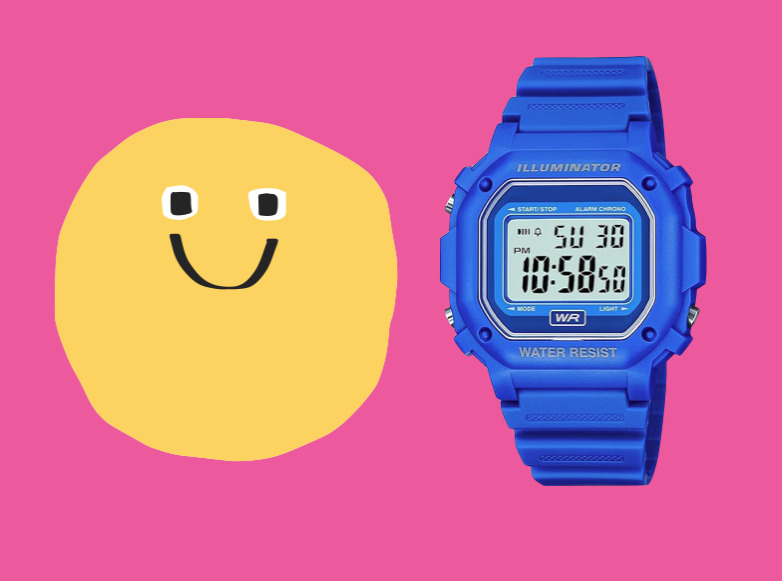
My advice is to wear a watch and look at it regularly.
A lot of people use their phones to check the time, but this can be a time trap (I find my phone way too distracting).
You may look at your phone to check the time but find yourself checking social media while you’re at it. Without any stopping mechanisms in place, you can get sucked in and thrown completely off course.
Tiny Habit:When I wake up in the morning, I will put on my watch.
When I get distracted, I will check my watch and schedule and ask “What do I need to be doing right now?”
The modern world is a distracting place. Even without access to your phone, it’s easy to get derailed. Along with checking your watch regularly, check your timetable/planner/to-do list. Ask the following questions:
• What do I need to be doing right now?
• Am I doing what I need to be doing?
• Is this the best use of my precious time and energy?
Tiny Habit:When I notice I am wasting time, I will look at my to-do list.
A prompt is a reminder. It’s anything that triggers you to move from one task or place to another.
When I need to be somewhere by a certain time, I set my alarm for when I need to leave the house. When I hear the alarm, I grab my bag and take off. No excuses.
You should have a rough idea of how long it takes to get to school or work. Set your alarm for when you need to leave. When you hear your alarm, get moving.
Tiny Habit:
When I hear my alarm, I will pick up my bag and go.
It’s tempting to cram in a few more tasks before you leave for work or school (e.g., sending one more text or watching one more short video). But ask yourself, “Do I have time to do this?”
The answer is most likely no.
Tiny Habit:When I feel tempted to do another task, I will ask “Do I have time to do this?”
When I was a kid, there was no Internet and no smartphones. But we had morning cartoons on the TV.
These cartoons were fun to watch and could easily capture your attention. But you still had some awareness of the time because the time was always displayed in the corner of the screen.

The major problem with most social media apps is they don’t contain clear time cues. This is a deliberate design decision. They want you to lose track of time. Thirty minutes online can feel like three minutes.
The solution is to stay offline in the mornings. If you must go online, have a strict log-off time. I recommend setting an electronic timer for a set time or using an Internet Blocker app to kick you off.
I use an Internet blocker app called Freedom. This app cost me a bit of money but there’s a free alternative called Cold Turkey.
Tiny Habit:
When I feel the urge to go on social media in the morning, I will set a timer for 5 minutes.
Are you feeling time pressured and running late because you’re trying to do way too much?
Our modern culture encourages us to do more, be more, have more, sleep less, etc. It’s not healthy or sustainable.
If this is the case for you (i.e. you’re overcommitted), I realise it may not be your fault. Maybe your boss or teachers have unrealistic expectations about what you can accomplish in a day.
All that being said, your packed schedule may also be due to your inability to say no. Perhaps you feel like you need to say yes to every opportunity that comes your way to build an impressive resume and stand out from the crowd. If so, I get it (I’ve been there).
The major problem with doing too much is it leaves you feeling exhausted. You’re not able to fully engage in the task. As you do the activity, you’re worrying about the next thing you need to do.
If you’re doing a bunch of stuff and not enjoying it, perhaps it’s time to cut back on a few activities.
When you commit to doing less stuff (but more meaningful activities that align with your values), you can do that stuff better. You can also extract a lot more joy from the process.
Tiny Habit:
When I am presented with a new opportunity, I will ask “Is this important to me? Is it something I want to be doing with my time?”
In the book Excellent Advice for Living: Wisdom I Wish I’d Known Earlier, Kevin Kelly states:
“You don’t need more time because you already have all the time you will ever get; you need more focus”.

If you find yourself getting distracted by social media apps and YouTube, it’s time to double down on developing your focus muscles.
You can develop your focus muscles by adopting several different habits that relate to the food you put in your mouth, incorporating regular movement and rest breaks into your day, and creating a focus-friendly environment.
This is an area I’ve been working on for a while. What I’ve noticed is when I focus my mind on one task at a time, I can get twice as much done in the time I have available. But I also find that I enjoy the process a lot more, too.
Tiny Habits:
After I stand on my office mat, I will put away three objects on my desk (removing visual clutter)
When I notice my phone is on my desk, I will pick it up and put it in another room.
After I finish doing a deep work sprint (45 minutes), I will do some gentle shoulder rolls.
These habits may sound lame and boring, but they can inject a sense of power, control, ease and even happiness into your day.
When you’re less rushed, you’re less stressed. Because you’re less stressed, the people around you are also more likely to be less stressed (calm is contagious). It also means we end up with a more helpful and thoughtful society.
In our modern world, where we find ourselves increasingly polarised and tribalised, being less rushed and time pressured is something worth striving for.