

Carry a notepad and pen with you everywhere you go.
As digital media artist Aaron Koblin states –
“They say an elephant never forgets. Well, you are not an elephant. Take notes, constantly. Save interesting thoughts, quotations, films, technologies…the medium doesn’t matter, so long as it inspires you. When you’re stumped, go to your notes like a wizard to his spellbook. Mash those thoughts together. Extend them in every direction until they meet”
You don’t need anything fancy to capture your ideas. In fact, you can pick up a basic little pad of paper and a pen for less than $2.
The fact is unless you’re a memory champion who dedicates several hours a day to rigorous mental training, you won’t be able to remember all the ideas you have during the day.
You see, there are limits to your working memory. You can only hold new information in your working memory for about 20 seconds. If you don’t write it down or use a memory technique within that time, the idea is likely to disappear.
All you’ll remember is that there’s something you should remember. Trust me, that’s not fun.
And if you try to hold onto too much information all at once, you’re asking for trouble. The latest research tells us that you can only hold 4 plus or minus two bits of information at a time. At some point, something has to give.
The solution is simple and it’s insanely cheap – dump your ideas out of your brain and onto paper.
When you consider that you have on average 60,000 conscious thoughts a day, there’s a good chance that a fair chunk of those thoughts are good ideas. Ideas that can move you forward in a positive direction.
Dustin Wax from Life Hacker says don’t let those thoughts march “like lemmings over the cliff and into eternity!” In other words, don’t let your ideas go to waste.
When the notepad and pen are there by your side, there are no excuses. Everything is there. It’s all ready to go. When the idea strikes you can quickly jot it down.
Not only will you capture many good ideas, but you’ll free up precious mental space. This will help you to focus on whatever you need to do in the here and now.
You never know, the extra mental power and ideas may change the direction of a project, or even the direction of your life. Try it and see.

I was the kid who was always late for school. I’d forget things. I’d lose my stuff. I’d regularly have to check the grimy lost property bin.
When I was younger, I admired people who were organised. Seeing someone with colour-coded files, a neatly arranged bag, and a tidy bedroom was inspiring.
I figured I was just wired differently. Being messy was just how I was—a simple fact of life. My boyfriend (now my husband) even affectionately nicknamed me Mess Pot.
It never dawned on me that perhaps these ‘organised’ people I was so in awe of had been exposed to other organised people and practices from a young age.
It wasn’t until I was in my early twenties that the penny finally dropped.
Here’s what I realised . . .
No one pops out of the womb knowing how to be organised.
If you know how to learn, you can learn how to become organised. It’s not rocket science.
So, that’s exactly what I did.
Over the past 15 years, I’ve taught myself to be organised.
I’ve read many books on the topic, from Marie Kondo’s bestseller The Life Changing Magic of Tidying Up to David Allen’s Getting Things Done.

I’ve experimented with numerous organisational methods, systems and strategies that the authors promised would transform my life from chaos to freedom, control, and ease.
In this article, I share what I’ve learnt from all these books, organisational gurus, and personal experiments I’ve conducted to become organised. I hope this inspires you to develop your own systems and strategies that work for you.
You can follow other people’s systems and methods, but I’ve discovered that it’s best to develop your own organisational system. The organisational system you adopt must align with your values and goals. If it doesn’t, abandon it or tweak it until it feels right for you.
For instance, I love books, and I own many. This is why I yelped out in pain when I read Marie Kondo’s advice on how to deal with books.
In her book The Life Changing Magic of Tidying Up, Kondo advises readers to rip out relevant pages from reference books and discard the rest of the book. There was simply no way I would do that to my precious books!
Central to her KonMari method is holding an object in both hands and feeling the emotion that arises.
If the object sparks joy? You keep it.
If there is no joy? You get rid of it.
I can see how this strategy has enormous appeal. It simplifies the decluttering process. You don’t have to think too hard. But there are dangers in the spark joy approach.
You can end up on a consumer treadmill of discarding items that no longer spark joy and constantly acquiring new ones that do. However, you can bet that the joy will soon dissipate from those new items as you habituate to them.
In addition, this ‘Spark Joy’ strategy also overlooks the functional role of many items in our lives.
My toilet plunger doesn’t exactly spark joy, but it’s incredibly useful when I need it!
The point is you need to trust yourself. Don’t give all your power away to a stylish organisational guru with a cult following and a Netflix series!
Trial and error is the key to getting your organisational groove on. And patience.
Your life won’t be transformed in a day or a week. You have to trust that the solutions will come, but it will take time.
This may sound a bit woo-woo and new age. So, let me frame it another way . . .
On your journey to become organised, pretend to be a scientist. Run some personal experiments.
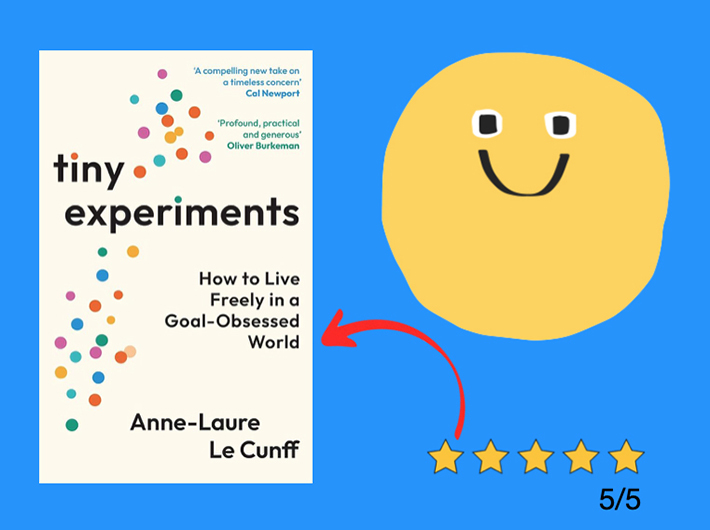
In the book Tiny Experiments, Anne-Laure Le Cunff encourages us to come up with a research question and then turn it into a hypothesis. She states:
“Don’t overthink it. Formulating a hypothesis is an intuitive process based on your past experiences and present inclinations. It should simply be an idea you want to put to the test- an inkling of an answer to your research question.
If you observed that you dread giving presentations, maybe improv classes could help build your confidence. If you feel anxious in the morning, maybe meditation could help regulate your emotions. If you enjoy graphic design, maybe freelancing could help strengthen your portfolio.”
Don’t be put off by this scientific language (e.g., ‘Hypothesis’ and ‘research question’). Running a tiny experiment and formulating a hypothesis is easy.
Here’s an example from my own life . . .
I’ve noticed that when clutter piles up on my desk, I am more easily distracted and feel overwhelmed. So, I came up with the following research question:
“How can I decrease feelings of overwhelm and increase my ability to focus when I’m at my desk?”
My hypothesis to this question was:
“Decluttering my desk by removing all non-essential items will decrease feelings of overwhelm and increase my ability to focus on the task at hand.”
Then, I put this idea to the test and observed what happened.
Some experiments you run will work. Others will flop, but that’s okay. The point is you won’t know unless you run some tiny experiments.
As Anne-Laure Le Cunff states:
“Once you have a hypothesis, you can design an experiment and turn your life into a giant laboratory for self-discovery.”
Through running tiny experiments, I’ve come to realise that being organised isn’t about having a beautifully colour-coordinated filing system or a nicely decorated home.
It’s also not about following 10 simple steps and waking up one day to find that you’ve magically become an organised person.
In our materialistic culture, we are sold a particular idea and image of what it means to be organised. But I’m not buying it. And you shouldn’t either. Why? Because it’s a lie designed to make us feel bad about ourselves, so we buy more stuff!
In stark contrast to the slick images you see online and in glossy magazines, life is messy. It’s a constant struggle.
Purchasing pretty storage containers and having a tidy, organised home won’t make your life less messy and uncertain.
But I can say this: being organised will make it easier to navigate the mess and chaos of life. It will help you focus your time, energy, and attention on what matters most to you.
So, I’m suggesting that you block the influencers and ads from your feed and burn the home lifestyle magazines. You’re going to create your own personal philosophy for organised living.

Being organised is about helping my day go a little more smoothly.
It’s about removing friction and resistance between me and the tasks I need to do. When I’m organised I can easily find what I need, which allows me to dive into my projects: filming that video, cooking that new recipe for dinner, and mind mapping that book I’ve just read.
Being organised is a way to enjoy the present moment more. Instead of feeling overwhelmed by mess and clutter, I feel calm and grounded. It’s easier to focus on the task at hand.
Is it worth taking the time to become more organised and experiment with your own systems and strategies?
Yes. 100%.
Being organised has decreased my stress levels and boosted my confidence. It has also saved me a significant amount of time and energy.
I’ve found that developing a few guiding principles helps ground you in your quest to become organised.
Below, I share my guiding principles and how I’ve integrated each one into my life.
I’m not here to tell you to copy what I do (it’s best to develop your own philosophy, guiding principles, systems, and strategies). However, if you’re unsure where to start, feel free to experiment with the systems and strategies listed below.
Give every item a home. Everything should have a special place in your space.
Professional chefs do this. Before they start cooking a dish, they prepare the ingredients and take out the kitchen utensils they need. There’s a term for this practice. It’s called the mise en place.

Mise en place is a French term that literally translates to ‘putting in place’, but it means a place for everything and everything in its place.
When it comes time for a chef to start cooking a dish, they know where the ingredients and kitchen utensils are. This allows the chef to work efficiently and focus on the task at hand: cooking the dish.
In the book Work Clean, Dan Charnas explains how this concept can be applied outside the kitchen to our everyday lives.
Charnas encourages us to arrange our spaces to remove resistance. He states:
“The less friction we have in our work, the easier it is to do, the more we can do, and the quicker we can do it; and thus the more physical and mental energies we can preserve for other things.”
Mise en place changed my life for the better. I used to spend a lot of physical and mental energy trying to find my keys, wallet, etc., but not anymore.
I now have a designated spot for my keys, hat, wallet, and bag. After using these items, I return them to their special place.
With the mise en place, I no longer waste time searching for items. I can quickly and easily find what I need. You can read more about how I apply mise en place to my life here.
If something is important, I can’t have it stuffed away in a cupboard, drawer, or file. If it’s hidden away, it doesn’t exist.
This is why you’ll see vertical wall hangers in most rooms of my house. These hangers contain key items I frequently use in the space.
By having one item per pouch, I can easily find what I need when I need it.
I get easily overwhelmed by piles of stuff, so I have to be vigilant and stay on top of the mess.
I have a simple trick for keeping my space relatively tidy. I tell myself:
“All I need to do is put away three things. That’s it!”
The sink is overflowing with dishes? I tell myself, “Just do three dishes!”
Laundry is scattered all over the bed? “Just put away three pieces of clothing!”
The kitchen bench is covered in random stuff? “Put away three spices!”
Putting away three items feels easy. And when something feels easy, I’m more likely to get started.
When everything has its special place (see Principle #1: Embrace mise en place), it’s easy to implement this principle.
There’s nothing more frustrating than having a brilliant idea and having no way to capture it. You need to be able to catch thoughts as they occur.
This is why I have whiteboards, markers, pads of paper, and pens placed in key locations.
These random ideas that I capture get thrown into my in-tray to process later on.
Distractions keep you from doing what you need to do. Like a pile of clutter on your desk or boxes obstructing your entryway, distractions are a barrier to your goals and intentions.
If you want to be more organised, you need to deal with anything that could distract you before sitting down to do your work.
Like most people, the biggest distraction I face is my phone.
If I’m constantly checking my phone, I feel scattered, frenzied, and overwhelmed. Everything speeds up. I start to feel like I’m spinning out of control.
I know I have to avoid this mental state at all costs if I want to have any chance of having a productive, enjoyable day.
This is why I have a morning ritual of placing my phone in pocket 1 of my vertical wall hanger in my dining room (well away from my workspace) before I start my workday. Out of sight is out of mind.

I used to feel intimidated by the idea of planning, so I rarely planned my week or day.
But over the past few years, I’ve become a planning machine. Why? Because plans are powerful. Even rubbish plans work wonders!
As Ned Brockman says, plans “help make you less anxious about the howling chaos of modern life.”
Here’s how I create my ‘rubbish’ plans for the week and day:
At the end of every week (on a Sunday), I create a plan for the week ahead.
I do this by reflecting on the week I’ve just had (What did I do this week? Can I claim any wins? Are there any unfinished tasks or people I need to get back to?) and looking at the week ahead (What do I need to do this week?).
I write out all the major to-dos for the next seven days on a list.
This list usually overwhelms me (there’s always a lot to do!). To combat this feeling of overwhelm, I transfer a few tasks from the list to an index card. This is my daily card (the to-do list for the day).
As I complete each task, I mark it off my daily card. As I see more items being marked off, it builds positive momentum and a sense of progress and satisfaction.
I use a paper-based planner and a massive year-in-a-glance calendar to help me keep track of my commitments.

When I can see how many days I have before an important presentation or my next holiday, I feel calmer and more in control.
Using planners also frees up precious mental space for learning as you’re not trying to hold so much information in your working memory.
I’m far from being a minimalist. I love my stuff. But having too much can be overwhelming. More stuff means more things to manage, making it harder to stay organised.
As someone who loves to op-shop, I frequently have to remind myself of the following quote by William Morriss:
“Have nothing in your house which you do not know to be useful or believe to be beautiful.”
Every few months, I’ll collect some items to donate to my local op-shop. Reducing my possessions makes cleaning and organising a lot easier and quicker.
It’s important to remember why you are striving to be organised in the first place. It’s not to impress other people. You are doing this for you.
Being organised helps you pursue your goals and live in accordance with your values. You have to keep your goals front and centre of your mind; otherwise, the goal of being organised can dominate your life. Organising can become a form of procrastination.
This is why I keep coming back to my values and goals (which I have captured on a mind map). This reminds me that being organised helps me to live a good life. But it’s not the point of my life. There are more important things I want to do with my time, energy and attention.
That said, it’s hard to focus on and work towards my goals if I’m completely disorganised. I lose sight of them! You need to find a healthy balance.
If you want to be more organised, I encourage you to experiment with developing systems and strategies that work for you. Come up with an organisational philosophy and set of guiding principles that align with your values.
Why not treat your life as a laboratory and run some tiny experiments to become organised?
Through trial and error, you’ll discover what works and what doesn’t.
Remember, this isn’t about having a perfectly decorated home or trying to impress others. The point of being organised is to allow you to do the things you want to do without as much friction. It’s about living a good life.
This is no accident. This is a deliberate design decision.
It’s the same reason why fast food logos are often warm reds, yellows, and orange tones. These colours jump out at us. They create a sense of excitement and urgency.
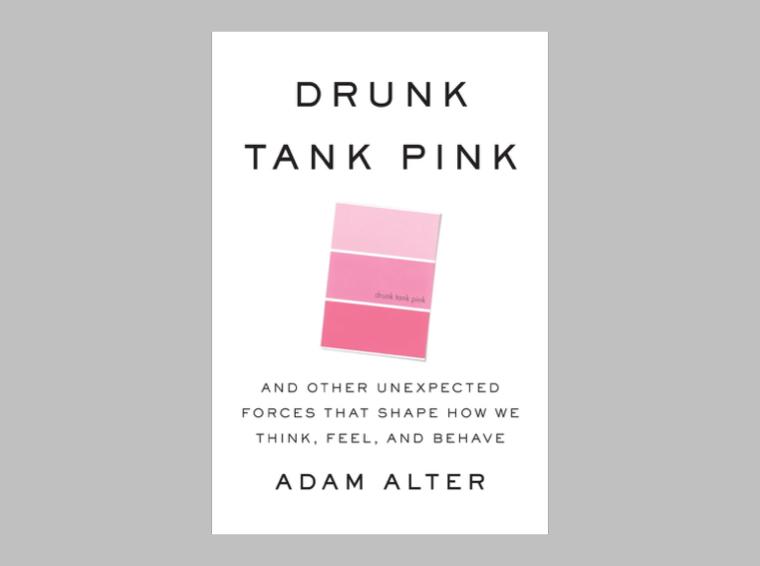
In his book Drunk Tank Pink, Dr Adam Alter argues colour is a hidden force in our lives that can shape the way we think, feel, and behave.
In this blog, I’m going to explore how you can use colour as a tool to help you study more effectively and keep your brain focused and engaged on the task at hand.
There is whole field of research dedicated to exploring the impact of different colours.
One fascinating study looked at the impact of a particular tone of pink (Baker-Miller Pink/Drunk Tank Pink) that appeared to sap people of their energy. Researcher Dr Alexander Schauss found staring at this shade of pink could lower people’s heart rate and pulse compared to staring at other colours.
A 7-month trial was conducted in which prison confinement cells were painted in this pink shade. According to Dr Schauss, when people were exposed for just 15 minutes to this pink colour in their prison cell, it made them more relaxed, less aggressive, and reduced the incidence of violent behaviour.
But before you race off to the hardware store to buy a tin of pink paint, you need to understand a few simple things about the psychology of colour.
The research suggests that colour can act as a powerful trigger. It can cue different emotions, thoughts, and behaviours. For instance, when you see a red Stop Sign or light, this captures your attention.
But how we react to colour also comes down to personal preference and particular contexts. Colour can have different meanings in different contexts (e.g., on Valentine’s Day red generally symbolises romance rather than “Danger! Look out!”).
The bottom line is this: when it comes to colour you need to experiment to see what works for you.
Colour can evoke particular states (e.g., a state of calm or alertness). It can also perk up your brain and transform a dry, boring subject into something that’s a little bit more novel and interesting for your brain.
Below I share 9 ways you can use colour to study and work more effectively.
There’s something about a brightly coloured post-it note that captures our attention. This is why I love using post-it notes to help focus my mind and stay on track.
On a post-it note, I create a list of no more than three things that I need to do. Once I’ve completed those tasks, I scrunch up the post-it and throw it in the bin. This action feels surprisingly satisfying! I’ll then grab a fresh post-it note (often in a different colour) to create a new list.
If I’m not sure how to get started with a task (e.g., Task: Write blog post on colour), I’ll grab another post-it note and I’ll scribble down the first tiny action I can take to kick-start the process (e.g., Tiny action: Open Word document).
If you have trouble finding your study materials for each subject and they all look the same or are scattered all over the house, you can use colour to make it easier for you to find what you need.
Try assigning a particular colour to a subject. This makes it easier to stay organised and identify your materials. At home, I assign a light blue to my exercise files and folders. When it’s time to plan my workout for the day, I look for my light blue files and folders.
A simple and cheap way to colour code your materials without investing in brand new stationery is to gather a collection of paint swatches from your local hardware store. You can repurpose these as labels by cutting them into smaller sections and sticking them on your files, notebooks, etc.
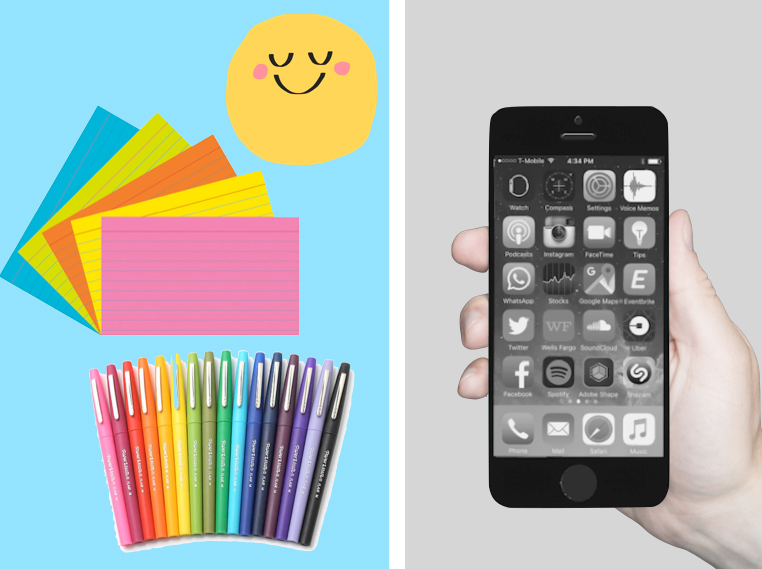
Testing yourself with flashcards is a highly effective way to study for a test and/or exam. You can create your own flashcard decks by purchasing index cards in a range of different colours.
Try assigning certain colours to different subjects. Alternatively, you can simply pick a colour you want to work with depending on how you feel.
There are no hard and fast rules. Feel free to mix up your flashcard colours to keep things fresh for your brain.
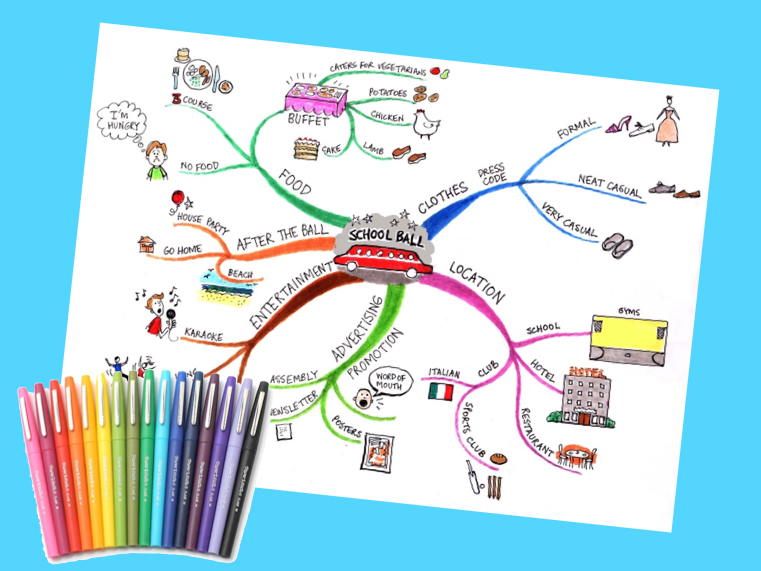
Creating a mind map on a topic is a simple way to combat study fatigue and inject a little colour and creativity into your study sessions.
Although using different coloured pens isn’t absolutely essential for mind mapping, it’s well worth doing. I use different colours to create the different branches on my mind maps.
I have dozens of colourful mind maps at home. Despite my lack of drawing skills, these mind maps look great and are fun to review primarily due to the different coloured branches.
It’s important that you feel good in your study environment. If you feel good in your study space, you’re more likely to sit down and study there.
I’ve decorated my workspace by putting up colourful posters, inspiring and funny pictures, and artwork on my walls.
If you don’t have access to artwork/posters, you can print out colourful pictures and quotes of things that make you feel good. The addition of a few indoor plants can also help to liven up your space as well as purify the air.
Fluorescent highlighters feel really good to use. It can feel both fun and satisfying to strike things off your to-do list. You can also use these pens to time block different tasks/events in your diary and draw your attention to important tasks that you need to do.
Word of warning: When it comes to studying for a test or exam, I don’t recommend highlighting your books and/or notes as a way to learn. I know it feels good but research shows it’s an ineffective way to learn.
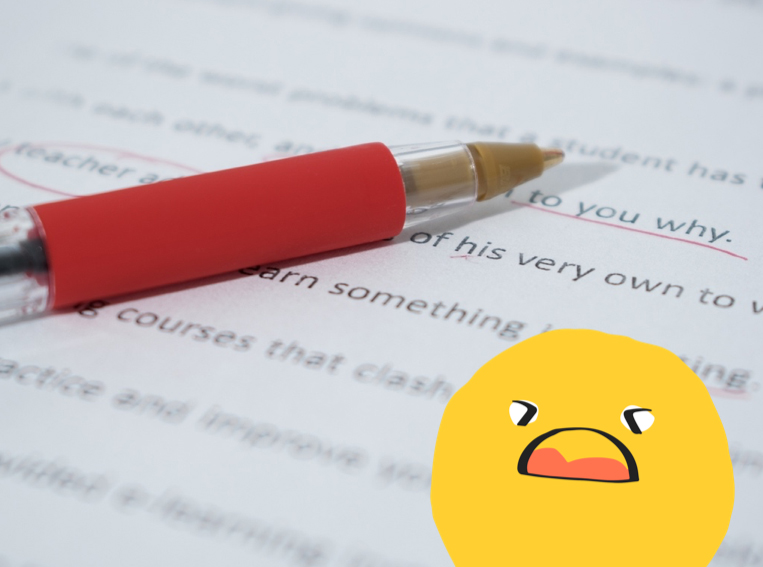
Red pen is often associated with failure and criticism. This is why seeing a teacher’s comments scribbled in red pen can trigger negative emotions in many of us.
Generally, we don’t like reading comments written by others in red pen. It feels nasty! But it turns out if you use a red pen to correct your own work, this can help you to pick up more errors.
Dr Adam Alter discusses one study that looked at the difference between using a blue pen and a red pen to correct an essay. Students who used a blue pen picked up on average 19 errors. In contrast, students using a red pen picked up an average of 24 errors.
But using a red pen has its limitations! If you are trying to solve a problem or taking a test, using a red pen can backfire by activating ‘avoidance motivation’. This is a distracting state of mind that can impair a student’s ability to solve problems and increase stress levels.
As a rule of thumb, use a blue or black pen when solving problems and taking tests. But when you need to cast a more critical eye on your work (e.g., in the proofreading phase), switch to using a red pen.
A lot of us use our phones as an easy way to escape from the boredom and discomfort we experience when doing our work. The apps on our phones are like candy. They are designed to be highly addictive and hijack our attention.
This is where you can be strategic with how you use colour: you can make your phone look more like a tool (and less like a toy) by turning on greyscale mode.
Viewing your phone in greyscale is a completely different experience to using it in full-colour mode. As a year 8 student recently shared with me:
“When I made my phone greyscale, it made it really boring to use.”
Try it and see for yourself!
This strategy may seem juvenile. If it reminds you of being back in primary school and receiving gold stars, hear me out.
Too often we don’t stop to acknowledge and appreciate ourselves for accomplishing tasks. We finish one thing and we immediately shift our focus to the next task on our to-do list.
When you work this way, your work routine can quickly become soul destroying and your motivation can take a dive.
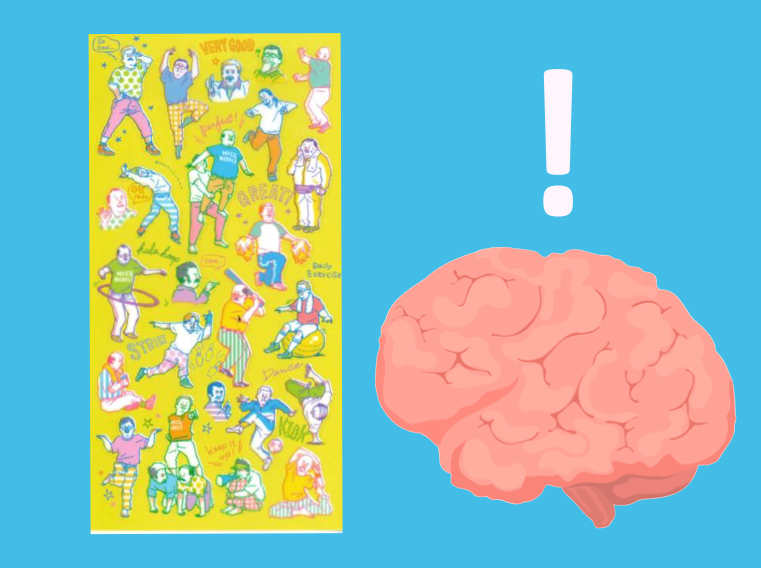
This is why every so often I pull out my fun stamps and colourful sheets of stickers. After completing a task, I pause and acknowledge what I’ve done by giving myself a stamp or a fun sticker. It’s a little celebration.
For some reason, my brain responds particularly well to quirky Japanese stickers featuring ogisan (Japanese grandfathers) exercising. We’re all different, so explore what stamps and stickers work for you.
Colours are lot of fun! Incorporating a little more colour into your studies and work life can take things to the next level and perk up your brain when it needs a little motivational boost.
But the colours that I like may not be the colours that you like. Your colour preferences may also vary from day to day. Notice the colours that make you feel good and have fun seeing how you can incorporate them into your study sessions.

I love the feeling.
I think, “Go me! Look at you go!” as I strike the pen through the list item.
But as good as it feels to cross things off, it’s not really about that. That’s not where the power of lists resides.
The power exists in making the list in the first place. Getting the thoughts out of your head and down on paper.
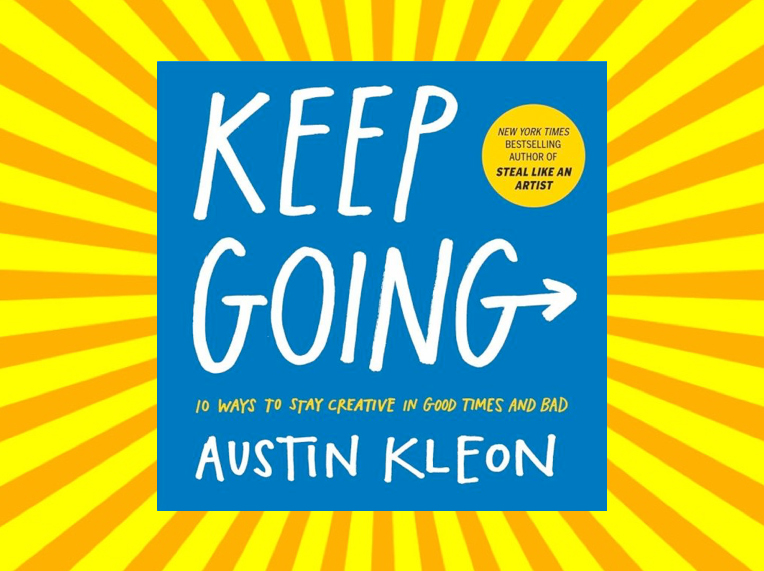
In his book Keep going: 10 ways to stay creative in good times and bad Austin Kleon states:
“Lists bring order to the chaotic universe. I love making lists. Whenever I need to figure out my life, I make a list. A list gets all your ideas out of your head and clears the mental space so you’re actually able to do something about them.
When I’m overwhelmed, I fall back on the old-fashioned to-do list. I make a big list of everything that needs to get done, I pick the most pressing thing to do, and I do it. Then I cross it off the list and pick another thing to do. Repeat.”
When I’m feeling really under the pump, I’ll go for a walk and scribble out a list while I’m walking.
I’m not sure which activity helps me more – the walking or the list making – but by the time I arrive home from my walk, I always feel less anxious and more in control.
If you haven’t been having much luck with to-do lists, you may have fallen into one of the following common traps:

If you look at your list and it says says things like ‘Mum’s birthday’ or ‘Study’, it’s time to make these list items crispy.
Crispy is a Behaviour Design term created by Stanford university Professor BJ Fogg. When you make a behaviour crispy, you get really clear on the specific behaviour you need to carry out.
Here are some examples I came up with to illustrate the difference between fuzzy and crispy list items:
Fuzzy to-do list item: Mum’s birthday
Crispy to-do list item: Call mum to wish her happy birthday after lunchFuzzy to-do list item: Study
Crispy to-do list item: Open Quizlet study deck and test myself for 5 minutes on the bus
When you ‘crispify’ a list item, you tighten it up. You make it crystal clear for your brain what you need to do next. This in turn makes it much easier for you to get started.
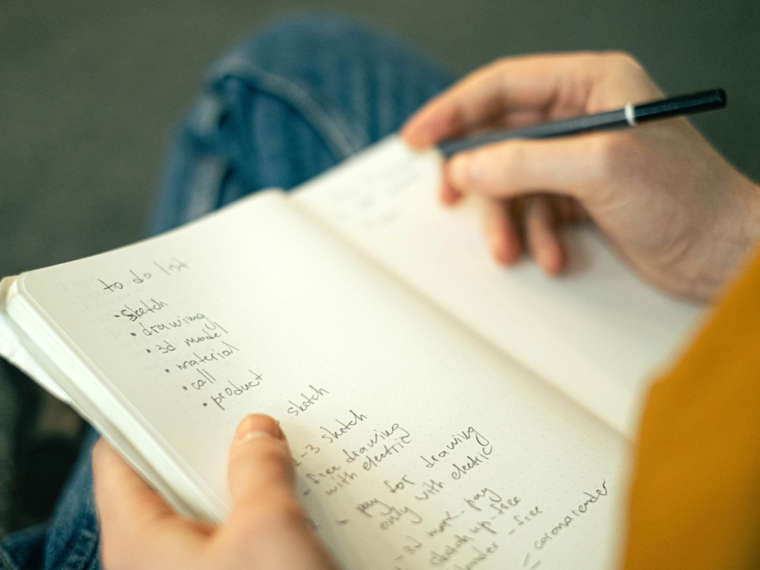
If your list is no longer working for you, feel free to abandon it and create a new one. As Psychiatrist Douglas Puryear says in his book Your life can be better:
“I make lists over and over, all day long. It’s not just about having the list; there is also benefit in making them. Writing down what I need to do is somehow calming and organizing, and therefore motivating. When I write things down, it’s as though I’m on top of them.”
Our brains get bored easily, so try making your list a little bit different every now and then.
Here are some simple ideas on how you can jazz up your next to-do list:
It doesn’t matter what medium or what materials you use to create your to-do list. What matters is that you get everything out of your head and you make each list item crispy.

If your to-do list is causing you to have a mini meltdown, back up. Ask yourself . . .
“Is this list too long? Can I cross a few things off?”
Create a short list from your big list – just three items (post-it notes are good for this). Then put away your long list. When you’ve completed those three items, create a new list of three from your long list.
During times of chaos, lists are your friends. Reach out and use this fabulous tool to lighten your mental load. You don’t need any special skills or talent to do this. Lists are for everyone.