

With only ideas in your head and nothing on paper or typed up on your computer, the sight of a blank sheet of paper or empty word document can be paralysing for many of us.
“Where do I start?” you may ask in an overwhelmed state. You may think to yourself, “Ahh, forget it. Let’s just see what’s happening on Facebook”, “I might just check my email” or “I’ll feel like writing tomorrow, it will be easier tomorrow…hey, I’ll start tomorrow!”
I took part in a fantastic course recently called Turbocharge your writing. It was delivered by Hugh Kearns from Thinkwell. Although the course was created for university academics and PhD students, the writing techniques are useful for all students (in High school, TAFE or university) or any working professional who needs to write as part of their job.
Below is a list of a several strategies Hugh shared to help you get into the groove of writing.
Let’s be honest with ourselves, many of us are waiting for the right moment to start writing. Perhaps we think we will be ready after we finish reading a certain article or maybe we think one day we will wake up and feel inspired to write!
Unfortunately, the movie portrayal of the inspired, passionate writer who locks themselves away for days on end in a cabin to write the perfect bestselling novel has led many of us to believe that one must feel in the right mood to write.
The reality is you may never feel ready or inspired to write. So what should you do? Hugh Kearns suggests we should just start writing anyway.
If we start writing (even if we don’t feel like it) we may find that after 30 minutes or so, as we start to make progress, that we suddenly feel slightly inspired. This in turn makes us want to keep writing.
If you look at the lives of great writers like Stephen King and Bryce Courtney, what you’ll notice is that these people write daily. It’s an ingrained habit.
Woody Allen famously said:
“90% of success is just showing up”.
The same philosophy applies to writing. 90% of success at writing is just turning up to write!
In the Turbocharge your writing seminar, the facilitator talked about the idea of ‘assuming the position’ to write. By this, he meant sitting down either at your computer or with a pen/pencil in your hand, ready to write. That’s the first step to getting any writing done. You’re just turning up to start the writing process (and my sense is that often this can be the hardest part).
Hugh then talked about the idea of nailing your feet to the floor to force yourself to write for “Two Golden Hours”. He then warned us that during the first 45 minutes of this process, most people experience some level of anxiety and discomfort. It’s common to have thoughts such as “I can’t write this”, “I rather be doing something else” or “This is really hard…”.
This is completely normal but often what happens is people think that something is wrong when they experience this anxiety. They think that because they’re finding it hard to write, perhaps they should stop and often that’s exactly what they do. Big mistake. “If you just hang in there, the anxiety will eventually disappear” said Hugh Kearns.
It’s a myth to think you need to start at the very beginning of your piece of writing and perfect the first sentence before you go on to write the rest.
Forget the first sentence. That will come in time. I recommend putting all your ideas down on paper and work with that to begin with.
If you need to have some kind of structure in place before you begin the writing process, try jotting down your ideas on a mind map or writing each idea on post-it notes so you can shuffle them around to create a structure. Once you’ve done this, don’t think you need to start writing your introduction or the first paragraph of your essay. Start with the idea you feel most comfortable with and go from there.
If you’re feeling stuck, write about what you are feeling stuck about. Set your alarm for 5 or 10 minutes time and whatever comes to mind, put it down on paper.
The key is to keep your hand moving. Don’t stop writing until the alarm goes off.
Try this out and I bet you’ll be surprised with what kind of insights and creative solutions you come up with.
If you are trying to make writing a daily habit, then you want to foster positive experiences writing. A few weeks ago, I tried writing at 9pm on a Friday night when I felt exhausted. How do you think that went? Not great. It was a horrible experience which ended in tears of frustration. Consequently, I didn’t pick up a pen to write for days.
The fact of the matter is writing is a complicated and mentally exhausting task. For this reason, it doesn’t make sense to write when you’re tired. Write when you feel most alert and have the energy to do so.

The other day, I was getting my haircut when my hairdresser told me something her 15-year-old son had said. His words took her completely by surprise. He said:
“Mum, I need to try harder this year.”
I hear those words a lot. Try harder.
I hear them from students who want to do better at school and from teachers who are trying to motivate students (“You need to try harder”).
But what does it actually mean to “try harder”?
The problem is that this advice is too vague and abstract.
If you don’t have a clear picture of what ‘trying harder’ looks like, you’re in dangerous territory because you’re attempting to motivate yourself towards an abstraction.

In the book Tiny Habits, Professor BJ Fogg explains the problems associated with motivating yourself to achieve a vague goal. He writes:
“You’ve probably seen a well-meaning public-health poster in the doctor’s office that shows lots of colourful vegetables with the headline: EAT THE RAINBOW!
At first glance, you think: Yes, I need to eat better food. But then you’re not sure what practical steps to take. How much green and how much red? That means salad and apples, right? It can’t mean mint ice-cream and red licorice, can it? You are motivated to “eat the rainbow,” but maybe you don’t know how. You feel frustrated and end up being a little hard on yourself.”
I didn’t want my hairdresser’s son to feel frustrated and annoyed with himself. He clearly had good intentions.
I asked my hairdresser, “What does trying harder look like for your son? If he’s trying harder, what is he doing?”
She said she wasn’t sure. So, I kept asking questions.
“Does it look like him sitting down and testing himself with flashcards before a test? Taking notes in class? Listening to the teacher instead of chatting with his mates?”
The answer was clear. She said, “Listening to the teacher! He needs to start listening to his teachers.”
I also mentioned that it would help if he learnt his teachers’ names (you’d be surprised how many teachers tell me their students don’t know their names).
Remembering a teacher’s name, staying focused on what they have to say, resisting distractions, taking notes and reading your textbook may sound easy, but these are skills that require continuous practice.
If you’re not used to doing them, they can feel hard.
Even with years of practice under my belt, understanding new ideas still feels hard. These days, reading feels like weightlifting for my mind!
After getting my haircut, for the next 24 hours, I kept thinking about those words “try harder”.
Something was bugging me about it because I felt it wasn’t helpful to tell yourself to “try harder”. . . and then, like a bolt of lightning, the answer hit me: my hairdresser’s son doesn’t need to try harder. He needs to focus on doing a few specific hard things.

By ‘specific hard things’, I mean concrete behaviours he can do right now (or at a specific point in time) to improve his understanding of his school subjects.
For example, if he wanted to start a home study routine, here are some concrete behaviours I’d recommend he try:
These are just a few behaviours that come to mind when I think about “trying harder” with your studies.
Doing these concrete behaviours just once won’t make you go from good to great. But you’ll be surprised by how much meaningful progress you can make in a single, effective study session.
We live in a world where comfort and convenience are increasingly normalised. We expect things, including learning, to be easy.

You don’t have to cook (thank you Uber Eats).
You don’t have to move (thank you car).
You don’t have to experience boredom (thank you social media and Netflix).
You don’t even have to use your brain anymore (thank you ChatGPT and Claude).
By outsourcing tasks that require physical and cognitive effort, we may save time, but there are hidden costs.
People are losing their skills, destroying their health, and atrophying their brains, all while being flooded with unhealthy levels of dopamine. I’d even go as far as saying that people are losing their lives and what it means to be human.
In every moment, we have a choice: we can do the easy thing that gives us a quick dopamine hit, or we can do the hard thing that gives us a slow and healthy release of dopamine.

When you wake up, you can scroll on your phone or do some physical activity.
At the end of the day, you can order takeaway that is engineered to light up the reward pathways in your brain, or you can prepare a healthy homemade meal.
When you’ve got a spare 30 minutes, you can watch some YouTube or go for a walk outside.
You can use ChatGPT to write your essay, or you can use your brain and build your skills.
You can talk to an AI chatbot and have a friction-free relationship, or you can organise to meet up with a friend.
Every time you choose the hard thing over the easy thing, you build your confidence. You can trust yourself to do hard things and survive them. Over time, as you build your skills, those hard things don’t feel as hard as they once did.
For instance, if the Internet goes down and you’re not dependent on ChatGPT, you know you’ll be okay. You can rely on yourself to think and entertain yourself (thank you brain).
This is why I’m committing to doing hard things this year. I’m challenging myself, and I know I’ll be better for it.
Just to be clear, I’m not talking about self-harm or inflicting extreme pain on myself.
I’m referring to activities that bring up a cringey discomfort and make me think, “Ahhh, I don’t want to do this!”.
These include activities that require sustained focus and/or mental and physical effort, such as writing an article, going for a run, riding my bike to the shops, and meditating.

The simplest way is to ease into doing those hard things. Turn those hard things into tiny habits.
Here is a list of tiny habits for hard things I’m focusing on doing:
Some of these things may not seem like much, but all of these behaviours require mental and physical effort. Remember, there’s a much easier alternative: sitting, tapping, swiping, and scrolling on your phone.
For instance, I don’t need to chop vegetables and cook my meals. I could eat out or order food to my door. This would save me time and effort (cooking my meals can feel like a part-time job).
But I know I would suffer at some point (physically, mentally, and financially).
Chopping vegetables and cooking take effort, but it helps me cultivate calm. When done with a focused mind (not listening to podcasts or talking on the phone), I really enjoy these activities.
If I were to outsource these activities, I’d be going backwards, because I’d most likely lose my valuable cooking skills over time.
Similarly, writing articles like this one feels hard. But hard doesn’t mean bad. It’s satisfying to focus my mind, wrestle with ideas, and write.
Many of us mistakenly believe that an easy life is a better life. But it’s not. A life where you are constantly pursuing pleasure and taking the easy path can lead to anhedonia.
Anhedonia is the inability to experience pleasure in things that were once pleasurable (e.g., a homecooked meal or a sunset). Some people describe it as life in greyscale.

It turns out the more pleasure we pursue, the more pleasure we need and the more pain we experience.
It may sound counterintuitive, but pursuing hard things makes you feel more motivated and more positive about life.
As humans, we want to challenge ourselves. We’re wired for it.
Psychiatrist Dr Anna Lembke encourages us to take on difficult, even painful, activities as a way of “aligning our primitive wiring with our modern ecosystem”. She writes:
“We are survivors. We’re wired for struggle, especially of physical nature. Yet we live in a world in which we’re largely insulated from pain. And not just pain, but also discomfort of any kind. Everything is supplied to us at the touch of a finger. Now we struggle just to get up off the couch. Our modern ecosystem incentivizes inactivity. Inactivity breeds lethargy. Lethargy breeds anxiety and depression. We must fight against this.”
So, forget trying harder. Work out a few hard things you want to do and focus on doing them instead.

On these days, the temptation to procrastinate and distract oneself can be strong.
I recently spent a few days with my family in the countryside, where I enjoyed reading by a crackling fire. But when I found myself back home in my office, I struggled to get back into the swing of things.
I was experiencing a full-blown holiday comedown.
For some context, I had printed out the slides for an upcoming presentation that I needed to practise, but I felt resistance every time I looked at the slides.
My mind screamed, “Nooo! I don’t want to practise!”. Without even thinking, I kept pushing the slides away like a toddler smooshing their vegetables around on their plate.

But at some point, I caught myself in the act. Without berating myself, I managed to turn things around and ease into my practice.
In this blog, I’ll share a couple of simple strategies I use to get a better handle on my procrastination and overcome resistance.
According to Procrastination scholar Tim Pychyl, procrastination isn’t a time management issue. It’s an emotion management issue. If you can get a better handle on your emotions, you’ll have a better handle on procrastination.
Let’s unpack this…
Often, when we procrastinate, it’s because we’re trying to avoid experiencing negative emotions. The task we need to do brings up feelings of discomfort (e.g., boredom, fear, guilt, anxiety, and stress), so we avoid the task to make ourselves feel better.
But avoidance makes no sense when you think about it.
Oliver Burkeman explains the problems associated with avoidance in his book Meditations for Mortals. He writes:
“The more you organise your life around not addressing the things that make you anxious, the more likely they are to develop into serious problems – and even if they don’t, the longer you fail to confront them, the more unhappy time you spend being scared of what might be lurking in the places you don’t want to go. It’s ironic that this is known, in self-help circles, as ‘remaining in your comfort zone’, because there’s nothing comfortable about it. In fact, it entails accepting a constant background tug of discomfort – an undertow of worry that can sometimes feel useful or virtuous, though it isn’t – as the price you pay to avoid a more acute spike of anxiety.”
Dutch Zen Monk Paul Loomans labels the tasks we avoid as ‘gnawing rats’. He says these tasks “eat away at you under the surface”.

Have you noticed that whenever you try to avoid a task, it’s usually still on your mind, using up your precious mental resources?
That’s what Loomans means by the task eating away at you under the surface.
Why does he use the peculiar term ‘gnawing rat’? Looman’s daughter used to have pet rats that would eat loudly under his bed, keeping him awake at night.
Loomans explains that if you can befriend your gnawing rats, you can transform them into white sheep. Just like a white sheep follows you around passively, once you transform a task into a white sheep, it’s a lot easier to make a start.

The question is, how do you transform a ‘gnawing rat’ (a task you are avoiding) into a white sheep?
The key is to approach procrastination from a place of curiosity.
Loomans suggests creating a positive, open relationship with the task you’ve been avoiding. You need to sit with it or visualise the task. Instead of giving yourself a hard time, get curious about why you have such a strained relationship with this task.
Loomans advises:
“… you’re not being asked to immediately do whatever it is that’s gnawing at you. The assignment is only to establish a relationship with it. You let all the various facets sink in and then let them go again.
The rat no longer gnaws at you, and it has settled down. It’s no longer trying to get your attention, but follows quietly behind. It now has white legs and curly fleece – it’s turned into a white sheep.”
I decided to follow Looman’s advice with this presentation I had been avoiding. To begin with, I pulled out my slides and I just sat with them.
I closed my eyes, tuned into my body and asked myself:
“Why am I feeling resistance towards practising this presentation? What’s going on?”
Within 30 seconds, the answer came to me. The resistance came from how I thought I’d feel after doing my speech practice: exhausted and emotionally depleted.
You see, when I practice a presentation, I typically go into turbocharge mode. It’s like I’m delivering the real thing: I gesticulate, project my voice, pace around the room, and rely on my memory and the pictures on my slides to remember the content (I don’t refer to my notes).
All of this takes a lot of mental and physical effort.
So, naturally, when I looked at my slides for this one-hour presentation, I felt flat and heavy.
I equated one hour of presentation practice with having a fried brain by the end.

But then I had a brilliant idea. I thought, “What if this practice session didn’t have to feel like a hard slog? What if it could be fun, light and easy but still effective? What would that look like?”
It immediately occurred to me that I had to shorten my practice session, which brings me to the next strategy . . .
To keep my practice session fun, light and easy, I settled on doing just five minutes of speech practice.
Instead of pacing around my office and practising in turbocharge mode for an hour, I sat myself down with a hot chocolate. I set a timer for five minutes, pulled out a mini whiteboard and started recalling the content (scribbling out and drawing pictures of what I needed to say).
When the timer went off, I checked my notes to see how I went (What did I remember? What did I forget to say?).
Then, I checked in with myself – “How am I feeling after that mini practice session?”. Instead of feeling depleted, I was feeling good! I felt less overwhelmed by this presentation. The resistance had subsided. As Paul Loomans would say, the presentation had transformed from a gnawing rat into a white sheep!
I felt excited, even a little inspired.

I could have easily kept practising for another 10-20 minutes, but I decided to give myself a break to re-energise (I got up and walked on the treadmill for 2 minutes).
This gave me insight into the need to vary the intensity and mode of each study session, depending on my energy levels and what I have planned for the rest of the day. Sometimes it’s good to go into turbocharge mode, but not always.
Not every study/work session has to be hardcore. Work sessions that leave you feeling completely drained by the end can be counterproductive. As Professor BJ Fogg says, “Tiny is mighty”.
Firstly, tiny study sessions are less scary for your brain. Five minutes of speech practice and flashcard practice feels easy. You think, “I can do 5 minutes!”.
In contrast, one hour of study feels scary for your brain, which means you’re more likely to procrastinate.
When you go tiny, it’s also easier to give your full focus to the task at hand. Here’s the thing about focus: focusing your mind takes a lot of your brainpower. And you have a limited supply of brainpower!
As you sit there and study, your brainpower gets depleted. But research shows one way to boost your attentional resources (i.e. your brainpower) is by taking regular breaks. If you study in short focused bursts and then take a break, you can stay refreshed and ensure your study sessions are effective.

But most importantly, tiny study sessions help to create momentum, and they leave you feeling good!
I tend to push myself to the point of exhaustion when I practise my talks. But I can see now that this makes it hard for me to want to practise in the future.
By dedicating just 5–10 minutes to the task and enjoying it, I’m more likely to do another 5 minutes (or more) of practice tomorrow. Doing five minutes of practice every day is infinitely better than doing no practice or cramming a long practice session in the day before.
You’re not going to go from good to great in one tiny study session. But you can make meaningful progress and create the momentum you need to keep going.
So, don’t turn your nose up at five minutes of flashcard practice or 10 minutes of doing a practice test. If done with focus and intention, that’s a solid study session that can set you on the path to success.
Image credit:
Toddler (featured in image 2): “Skeptical” by quinn.anya is licensed under CC BY-SA 2.0.
Rat: “Fancy rat blaze” by AlexK100 is licensed under CC BY-SA 2.0.
About 10 years ago I met the beloved Australian celebrity Costa Georgiardis from the television show Gardening Australia.
I was blown away by Costa’s energy and enthusiasm.
He was exactly like he appeared on TV. But he wasn’t hamming it up for the camera. Costa was the real deal.
He was high on life.
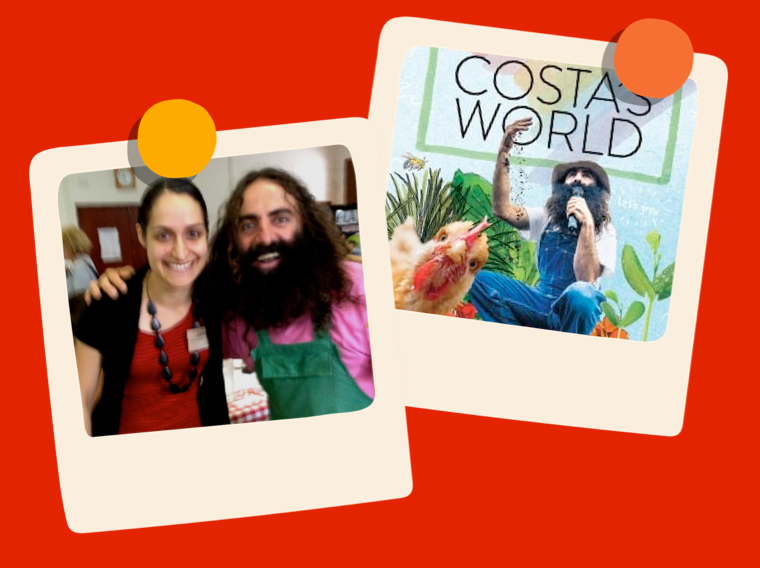
I’ve heard that people often ask Costa “Why are you so energetic?”, “Why are you so up?”, and “Don’t you get tired?”
Some people feel tired just being around Costa (check out this video to get a sense of Costa’s energy).
What’s the difference between motivated and energised people and less motivated people who struggle to get off the couch?
According to Stanford professor Dr Andrew Huberman the difference has everything to do with dopamine.
In this blog post, I want to explore how dopamine works and how you can adjust your dopamine levels to experience more motivation, focus, and energy in a safe and healthy way. Let’s go!
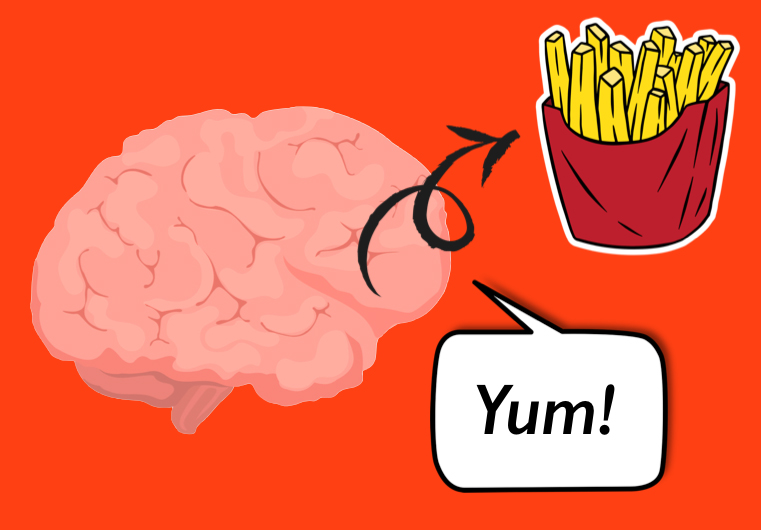
Dopamine is a neurotransmitter that is involved in reward processing. Your brain releases this molecule whenever it anticipates a reward.
In a healthy brain and environment, dopamine plays an important role in keeping you motivated, focused, and on track with your goals.
Unfortunately, this natural feedback system can be hijacked by big tech companies and fast food corporations.
Tonic dopamine is your baseline level of dopamine that circulates through your system. People who are generally enthusiastic and motivated have a high baseline dopamine. But if you struggle with motivation and often feel lethargic, chances are you have a low baseline dopamine.
But then there’s phasic dopamine. This is where you experience peaks in dopamine above your baseline level. These peaks occur as a result of engaging in certain behaviours and/or consuming certain substances.
For example, social media companies train users to seek out quick, easy, and frequent hits of dopamine. Fast food companies engineer foods that have just the right amount of salt, fat and/or sugar to release big spikes in dopamine. This make you want to eat more of the food product and keep going back for more.
It’s important to understand that these peaks in dopamine don’t last.
After engaging in a dopamine-rich activity, you will experience an inevitable drop in dopamine. And this drop will be below your baseline level.
It should come as no surprise that when you’re in a dopamine deficit state you don’t feel very good. You experience pain and discomfort.
According to Psychiatrist Dr Anna Lembke this is our brain’s way of trying to bring everything back into balance and establish homeostasis.
In the book Dopamine Nation Dr Lembke talks about how pleasure and pain are experienced in overlapping regions of the brain. She states:
“Pleasure and pain work like a balance”.
If you tip to the side of pleasure or pain, self regulatory mechanisms kick in to bring everything back into balance.
But you never want to tip to one side for too long. Dr Lembke states:
“With repeated exposure to the same or similar pleasure stimulus, the initial deviation to the side of pleasure gets weaker and shorter and the after-response to the side of pain gets stronger and longer, a process scientists call neuroadaptation . . . we need more of the drug of choice to get the same effect.”
In other words, consuming more of a dopamine-rich substance or behaviour is bad for your brain. It will leave you in a dopamine-deficit-state.
And when you’re in this state, it’s much harder to do your school work.
There are a number of simple things you can do to regenerate your dopamine receptors and increase your baseline dopamine. I’ve listed several strategies below.
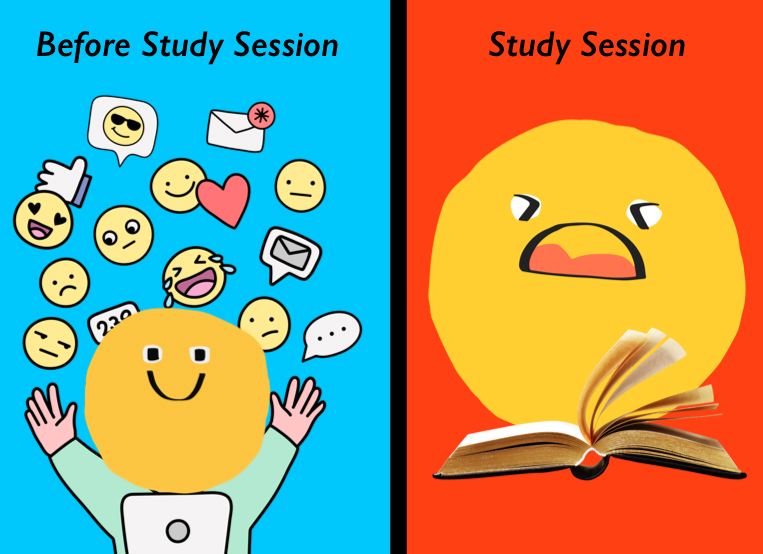
Before you start your work or study, you want to avoid engaging in activities that will cause spikes in dopamine. If you watch TikTok videos or play video games before sitting down to do your homework, this is going to make your work feel a lot more painful and boring.
Here’s why . . .
Dr Huberman states that how motivated you feel to do a task depends on your current dopamine levels and what previous peaks in dopamine you have experienced. This is important to understand because with this knowledge, you can create routines and habits to conserve your dopamine and motivation for pursuing your goals.
With this in mind, I’ve recently simplified my morning routine in the following ways:
• I don’t start the day by looking at my phone or computer
• I exercise without listening to music
• I have a healthy breakfast of overnight oats and berries rather than a super sweet smoothie
• I have a cold shower (more on why I do this below)
Whilst this may sound boring, it’s had a dramatic impact on how easy it is for me to get stuck into doing my work.
The term ‘Dopamine Detox’ is a little misleading since it’s technically not possible to detox from dopamine. Nevertheless, the idea is a good one.
When you engage in a dopamine detox, you’re taking a break from engaging in dopamine-rich activities (e.g., consuming junk food, going on social media, and watching Netflix). This will give your dopamine receptors a chance to regenerate.
After taking a dopamine detox, you’ll probably notice that simple things like eating basic wholefoods or going for a walk are much more pleasurable. As Dr Huberman points out:
“Our perception for dopamine is heightened when our dopamine receptors haven’t seen much dopamine lately.”
Research shows that cold water therapy (i.e., being submerged in cold water) can increase your dopamine by 250% above your baseline level.
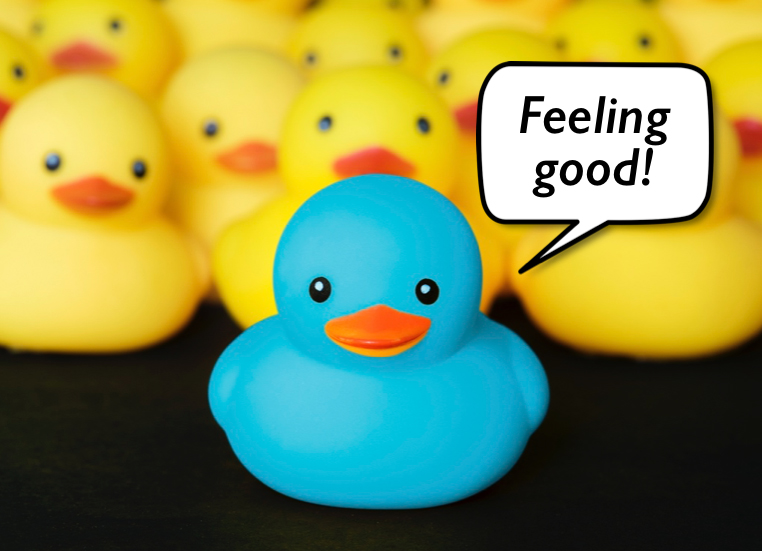
Let’s put that in context:
Chocolate increases dopamine by 150% above baseline
Alcohol increases dopamine by 200% above baseline
Nicotine increases dopamine by 225% above baseline
Cocaine increases dopamine by 350% above baseline
Amphetamines increases dopamine by 1100%
You need to remember that these peaks in dopamine are followed by a sudden crash below your baseline level. Let’s not overlook the fact that chronic substance abuse causes brain damage and can be fatal.
Unlike other addictive substances, cold showers create peaks in dopamine that can last for several hours. You also don’t experience the subsequent dramatic crash below your baseline level.
Word of warning: Before you turn on the cold shower tap or start running an ice-bath, it’s important to be aware that people can go into shock when plunging themselves into cold water. Please be careful!
If cold showers aren’t really your thing, try increasing your dopamine with exercise. Exercise has been found to increase dopamine by 130% above your baseline level.
In the book Move The Body, Heal The Mind, neuroscientist Dr Jennifer Heisz says:
“Exercise increases dopamine and repopulates dopamine receptors to help the brain heal faster during recovery [from addiction]. Although all forms of exercise can do this, runner’s high may do it best.”
Look for ways to make it harder to engage in the dopamine-rich activities. Create barriers and/or friction points to stop you from mindlessly seeking quick shots of dopamine.
For example, I recently noticed I had a problem with compulsively checking my phone. Whenever I felt bored or lonely, I’d check my phone to see if I’d received any messages. I didn’t like the fact I was doing this but I found it hard to stop. What could I do?
I could use a dumb phone.
I found a ‘seniors’ flip phone that allowed me to do basic things like make calls and send texts. But sending texts is not easy! I have to type in each letter and change from upper to lower case. It really puts you off wanting to text your friends.
Since switching to a dumb phone, the number of times I touch my phone each day has significantly decreased.

As you do your work, praise yourself for the effort you’re putting in. Doing this can increase the dopamine you have for the activity.
Dr Huberman suggests saying the following while you’re doing painful work:
“I know this is painful. But you need to keep at it. Because it’s painful, it’s going to increase my dopamine later and I’m doing this by choice.”
We live in a dopamine-rich world. It’s so easy to flood your brain with quick hits of dopamine that feel good in the moment but leave you feeling flat and irritable shortly after. These peaks in dopamine make it harder for us to pursue our goals by undermining our motivation.
No matter what your current dopamine baseline is, just remember this: you have the ability to increase your dopamine in a healthy and sustainable way. Kick-start the process today!